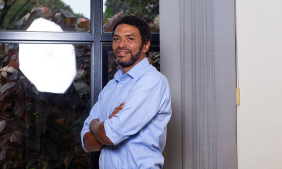
If the first four parts of this MadMen, Dreamers and Deal-Makers series were about the machine, how it was built from accidents, battered by economics, bruised by burnout, and handed to a new generation, this part is about something stranger. What happens when the machine learns to think? Not “think” like a creative director pacing in Kololo at 2 am, or a media buyer staring at a GRP spreadsheet. Think in code. In predictions. In prompts. When the tools you once used to execute your ideas start quietly suggesting ideas of their own. For nearly four decades, Uganda’s advertising engine…
This Is Premium Content. Subscribe And Save On Unlimited Access With Our Best Offers!
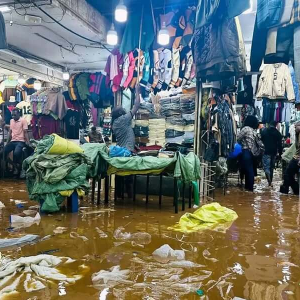
When Uganda’s capital city floods, it is often framed as a natural disaster. The skies open up in fury, the drains overflow, and Kampala drowns under its own chaos. But the truth, stark and uncomfortable, is that our floods are man-made. They are not the wrath of the heavens; they are the consequence of greed, negligence, and broken governance. And at the centre of it all stand institutions we once believed were different, Uganda’s banks. As political will falters and environmental enforcement collapses under the weight of corruption and patronage, banks have become crucial. They are the last institutions still…
This Is Premium Content. Subscribe And Save On Unlimited Access With Our Best Offers!
Uganda’s High Court has issued a decision that reshapes the rules of engagement in tax disputes. The decision gives clarity on the much-contested 30% deposit requirement and reins in the contempt powers of the Tax Appeals Tribunal (TAT). The case arose when Nile Breweries disputed additional tax assessments issued by the Uganda Revenue Authority (URA) for VAT and excise duty. Nile Breweries had already paid its self-assessed taxes but challenged URA’s additional demand, which it viewed as unlawful. While seeking an injunction before the Tax Appeals Tribunal, a condition was imposed that Nile Breweries pays 30% of the tax “in…
This Is Premium Content. Subscribe And Save On Unlimited Access With Our Best Offers!
After a two-year probe, COMESA’s Competition Commission has forced Uber to rewrite parts of its rider contract. The Commission says the parts of the contracts mislead and unfairly tilt risk to customers. At the heart of the case was a basic question: should a global platform be free to set terms that weaken local consumer protections? The Commission decided the answer was no. It closed the investigation after Uber agreed to amend its Terms & Conditions. The changes now bar the company from routing disputes in Kenya and Uganda through Dutch law, clarify when prices can change mid-journey, and limit…
This Is Premium Content. Subscribe And Save On Unlimited Access With Our Best Offers!
As Uganda’s economy gains momentum in its post-pandemic rebound, a quiet contradiction is taking shape in the financial sector. On the surface, there’s cause for celebration. Mobile money volumes are…
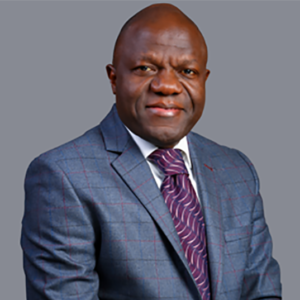
In accordance with Rule 36 of the Uganda Securities Exchange Listing Rules 2021, the Board of Directors (the “Board”) of Stanbic Uganda Holdings Limited (SUHL) has appointed Mr. Baker Magunda as an Independent Non-Executive Director and Chairman of the Board. His appointment takes effect from 2nd June 2023. He replaces, Japheth Katto who has retired. Mr. Magunda currently serves as the Chief Growth Officer at Dance Africa Corporation and until recently worked with Diageo PLC in various capacities such as CEO, Guinness Nigeria PLC; CEO, Diageo Ethiopia Hub, and Indian Ocean Markets; CEO, Guinness Cameroon SA and Managing Director of…
This Is Premium Content. Subscribe And Save On Unlimited Access With Our Best Offers!
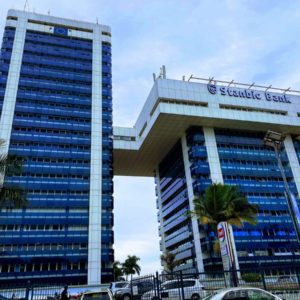
Fitch, the international credit rating agency, has retained the Stanbic Bank Uganda’s National Rating at ‘AAA (uga)/Stable’, the highest possible on a national scale in its latest report issued last week. The rating agency also upgraded Stanbic Bank Uganda’s Viability Rating (VR) to ‘b+’ from ‘b’ due to improved capital buffers relative to its risk profile. VR is the assessment of the bank’s standalone creditworthiness. The VR reflects the concentration of the bank’s operations in Uganda’s relatively weak operating environment as well as SBUL’s leading market position, large capital buffers supported by internal capital generation, diversified and healthy revenue streams…
This Is Premium Content. Subscribe And Save On Unlimited Access With Our Best Offers!
Stanbic Holdings Uganda Limited has released its performance for 2022, reporting record-breaking growth across all parameters. SUHL is part of the Standard Bank Group, Africa’s largest Bank and is comprised of 5 subsidiaries which include: Stanbic Bank Uganda Limited, the leading commercial bank in Uganda; Stanbic Properties Limited, a real-estate company; SBG Securities Uganda Limited, an investment and brokerage firm; Stanbic Business Incubator Limited, an enterprise development institution and FlyHub Uganda Limited, technologies and innovations company. SHUL reported that profit after tax went up 33% to UGX357.4 billion from UGX269.3 billion in 2021. Assets surged 3.9% from UGX8.7 trillion to UGX9.1…
This Is Premium Content. Subscribe And Save On Unlimited Access With Our Best Offers!
MOGAS is now free to do business for the next six months and conclude talks with a one Ola Energy Ltd which was willing to take over MOGAS and pay off a debt that the oil marketer owes Stanbic Bank Uganda. In a recent development, Maestrol Oil and Gas Solutions Limited famously known as MOGAS Uganda Limited, had been placed under receivership by Stanbic Bank Uganda. This follows MOGAS’ failure to pay back 12 loans it borrowed from Stanbic Bank totalling to UGX 43,181,259, 828 (which includes both the principle and the interest). According to Vincent Lubuulwa, Stanbic Bank’s senior…
This Is Premium Content. Subscribe And Save On Unlimited Access With Our Best Offers!
Trading in the second quarter of 2020 registered a tremendous decline as Uganda’s equity markets continued to feel the impact of the COVID-19 pandemic. “While the ultimate growth outcome is still uncertain, and an even worse scenario is possible if it takes longer to bring the health crisis under control, the pandemic will result in output contractions across the vast financial markets,” reads an excerpt from the periodic report. It further states that, although Uganda is gradually easing the lock down measures instituted to contain the spread of the pandemic, the adverse consequences of the global impact of the pandemic on financial markets could persist through the remaining part…
This Is Premium Content. Subscribe And Save On Unlimited Access With Our Best Offers!