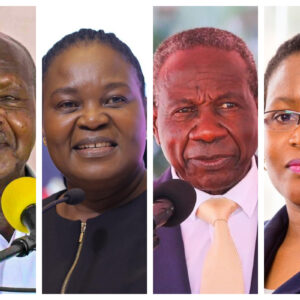
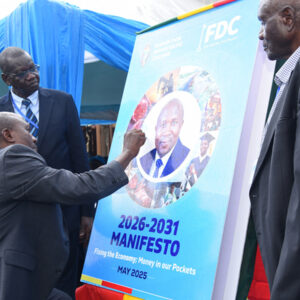
When the Forum for Democratic Change (FDC) unveiled its 2026–2031 manifesto, attention quickly turned to its economic agenda. The party, one of Uganda’s largest opposition forces, is promising what it calls a “production-led” economic model, a shift from what it labels government’s “consumption-driven and debt-fueled” approach. In pages devoted to the economy, illustrated with charts and diagrammes, FDC sets out a plan for fiscal discipline, industrialisation, job creation, and equitable growth. Its core argument is that Uganda must reduce borrowing and imports, while boosting production, processing, and exports to achieve sustainable prosperity. The debt question Central to the manifesto is…
This Is Premium Content. Subscribe And Save On Unlimited Access With Our Best Offers!
As Uganda heads toward the 2026 general elections, the debate is increasingly focused on the economy. At the heart of the opposition National Unity Platform’s (NUP) 2026–2031 manifesto is a bold pledge: to rescue the economy from stagnation, corruption, and elite capture. It is the promise that seeks to redirect the economy toward productivity, self-reliance, and prosperity for ordinary citizens. NUP, founded in 2004 as the National Unity, Reconciliation and Development Party (NURP) and rebranded in 2019, is now Uganda’s largest opposition force. It is led by Robert Kyagulanyi Ssentamu (Bobi Wine) as President, supported by Deputy Presidents John Baptist…
This Is Premium Content. Subscribe And Save On Unlimited Access With Our Best Offers!
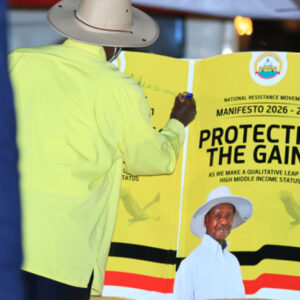
As Uganda heads into another electoral cycle, the National Resistance Movement (NRM) has unveiled its 2026–2031 Manifesto, branding it a programme for “consolidating socio-economic transformation.” The document doubles as both a balance sheet of what the party says it has delivered since 1986 and a forward-looking plan for the next five years. At its heart, the manifesto sets out a vision of industrial growth, agricultural modernisation, financial inclusion, and digital innovation. It also places heavy emphasis on stability, infrastructure, and regional trade. It frames these as foundations on which Uganda’s next phase of transformation will stand. The economic broad vision…
This Is Premium Content. Subscribe And Save On Unlimited Access With Our Best Offers!
For decades, Uganda’s trade story has been defined by its deepening integration into regional markets, rising dependence on Asia, and enduring ties with Europe. But when you look past the big numbers and focus on balance of trade, who buys more from Uganda than Uganda buys from them, the picture of Uganda’s “real” trading partners changes dramatically. Uganda’s external trade has expanded significantly in the past five years. Exports more than doubled from $5.3 billion in the 2020/21 financial year to $10.6 billion in the 2024/25 financial year. Imports also rose, from $8.3 billion to $13.2 billion over the same…
This Is Premium Content. Subscribe And Save On Unlimited Access With Our Best Offers!
A leaked memo from the Office of the Prime Minister reveals that the government of Uganda plans to review and possibly approve borrowing proposals amounting to over USD 1.6 billion (UGX 5.8 trillion) during a cabinet-level meeting scheduled for Wednesday, March 26, 2025. The meeting, convened by the Prime Minister, is expected to consider 12 separate loan requests from various ministries and government agencies, targeting key sectors such as roads, energy, water, health, agriculture, and financial services. Loan proposals listed in the memo: €186.97 million and an additional €19.46 million from the African Development Bank for the Busega–Mpigi Expressway. €198.6…
This Is Premium Content. Subscribe And Save On Unlimited Access With Our Best Offers!
East African Community (EAC) Partner States’ commitments to the free movement of capital, services and goods is the bedrock of trade integration in East Africa, EAC Secretary General, Hon. (Dr.) Peter Mathuki, has said. Dr. Mathuki said that the commitment of Partner States was especially critical in the removal of tariff and non-tariff barriers and the harmonisation of standards. Dr. Mathuki said trade integration was crucial, particularly now that the Community is expanding with the admission last year of the Democratic Republic of Congo and as the Federal Republic of Somalia awaits her turn to join the bloc. The Secretary-General…
This Is Premium Content. Subscribe And Save On Unlimited Access With Our Best Offers!
Uganda has joined the race to host the East African Monetary Institute – EAMI, the precursor to the East African Central Bank. The Institute which other partner countries like Kenya, Tanzania and Burundi are fighting to host is aimed at creating single currency for the region. Giving a state of EAC address in Arusha Tanzania, one year since he assumed office, the Secretary-General of the regional block, Dr Peter Mathuki said that the Institute is supposed to set a roadmap for having one currency in the region. He revealed that four countries including Uganda are competing to host the…
This Is Premium Content. Subscribe And Save On Unlimited Access With Our Best Offers!
By Dr. Jane Nambakire Mulemwa Following the announcement of the Final Investment Decision (FID) in February 2022, and the recent accession of the Democratic republic of Congo (DRC) into the East African Community (EAC), the case for regional and international cooperation in the sustainable exploitation of natural resources has never been stronger. This is primarily because the East African Crude Oil pipeline (EACOP) project not only traverses Uganda and Tanzania but is designed to be a regional pipeline with potential linkages to DRC and South Sudan. In July 2019, the Petroleum Authority of Uganda (PAU) joined the Energy Regulators Association…
This Is Premium Content. Subscribe And Save On Unlimited Access With Our Best Offers!
The Democratic Republic of Congo (DRC) has officially been admitted to the East African Community (EAC). “HISTORY IS MADE! EAC Heads of State OFFICIALLY admit the Democratic Republic of the Congo (DRC) into the East African Community. H.E Uhuru Kenyatta, Chair of the Summit of EAC Heads of States announces during the 19th Extra-Ordinary Summit of EAC Heads of State #WelcomeDRC,” a tweet from the EAC says. The admission of DRC means that the community now has 7 members namely Uganda, Kenya, Tanzania, Rwanda, Burundi, South Sudan and now DRC. The EAC was founded in 1967, collapsed in 1977, and…
This Is Premium Content. Subscribe And Save On Unlimited Access With Our Best Offers!