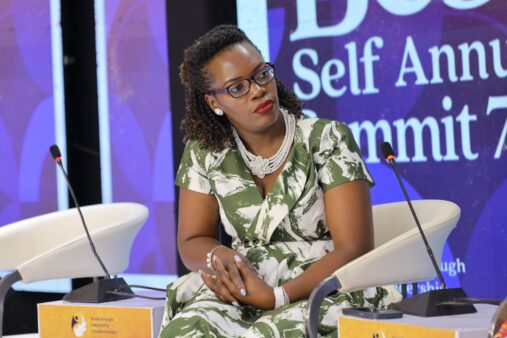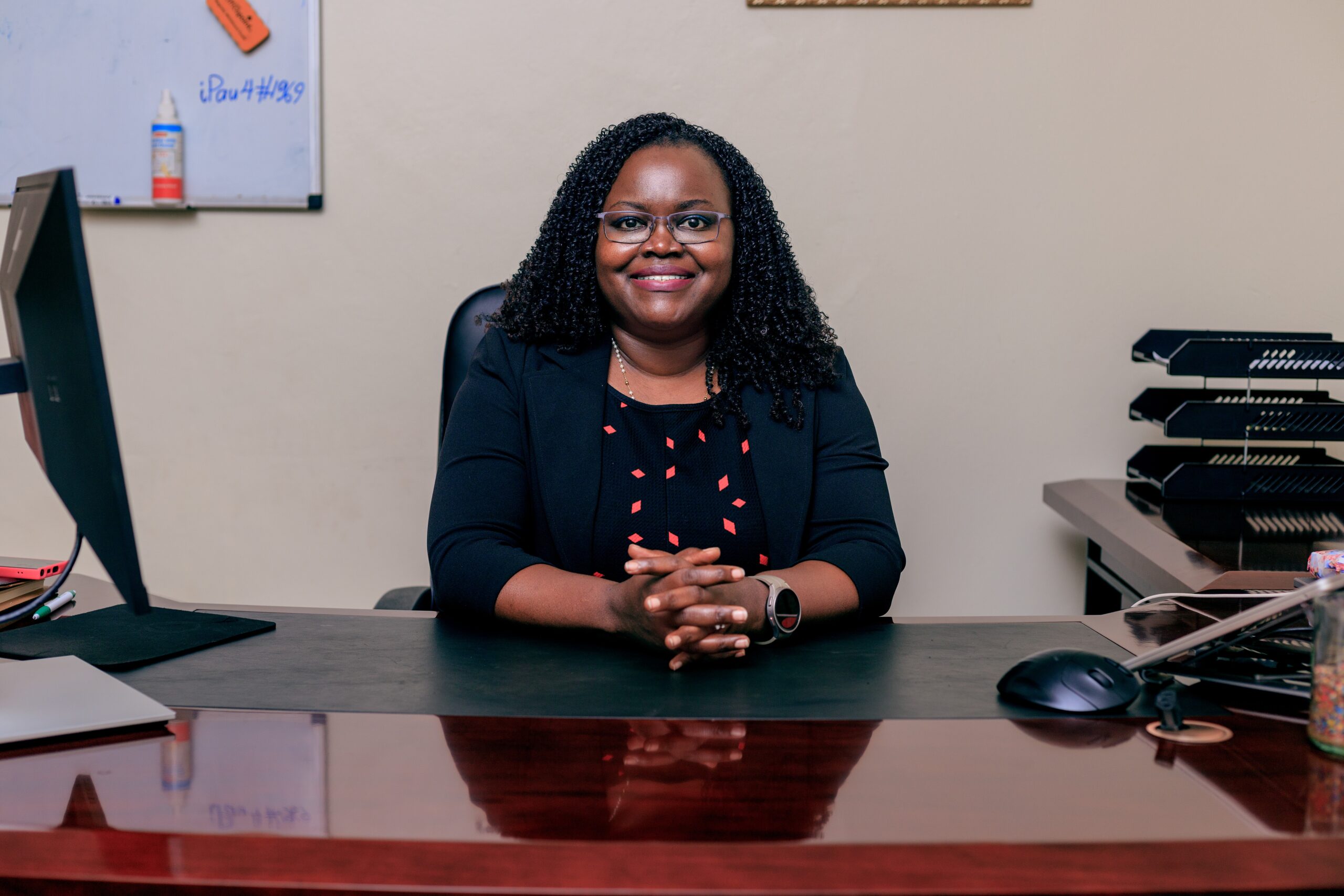
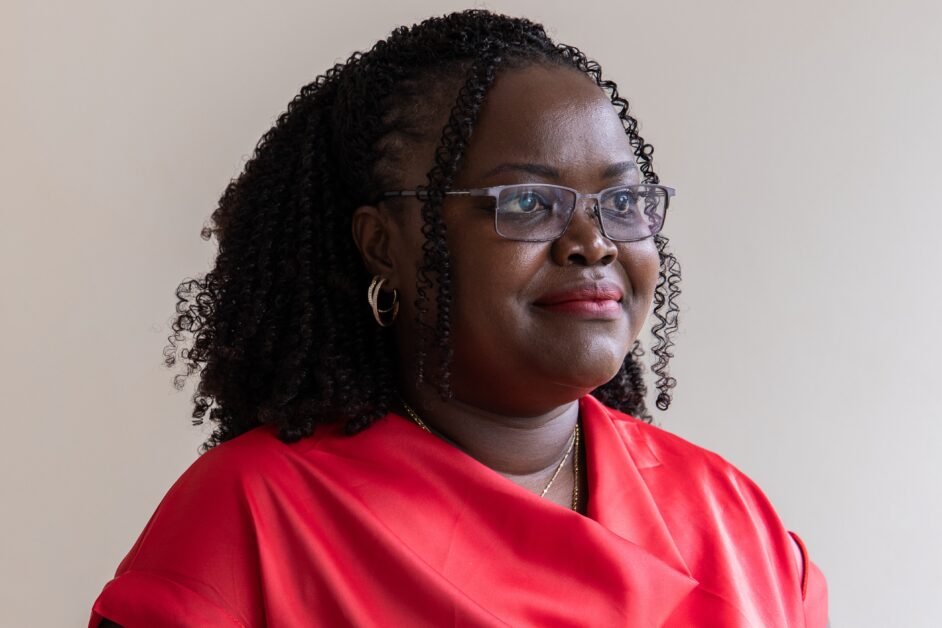
In a world with many pains, treating people humanely is fundamental. It is the simple joys that restore hope to people, and Miriam Opwonya Laker-Oketta has experienced that firsthand.
She has seen how a small gesture of kindness can ease pain. Yes, she is humane and stands for what she believes in. Treating people with dignity, her smile warms rooms and reminds people that they matter.
Miriam is the Country Director at Innovations for Poverty Action (IPA), where she leads IPA Uganda’s strategic direction, partnerships, and operations. Before joining IPA, she was Senior Research Advisor and Research Director at GiveDirectly. Here, she oversaw a global portfolio of 20+ cash transfer trials and served as the organisation’s evidence spokesperson.
Previously, she was Co-Principal Investigator on multiple-country studies and Senior Clinical Research Scientist at Makerere University’s Infectious Diseases Institute. She was also on the Board of the CALPNetwork. Miriam is a medical doctor with advanced degrees from UCSF and LSHTM, and a Fellow of the International Women’s Forum Leadership Program (INSEAD & Harvard).
She shares about her journey and experiences in an interview with the CEO East Africa Magazine.
Who is Miriam?
First of all, Miriam is a lady, a mother, a wife and a catechism teacher at Mbuya Catholic Church. I am also currently the Country Director of IPA Uganda.
What experience shaped and changed the way you look at life?
One of the key ones was joining medical school. Growing up, I knew we did not have too much, and I thought we were comparatively poor. So we grew up in a neighbourhood that I later realised was quite affluent. We lived around embassies and among people who worked with companies such as Shell. So, in hindsight, my understanding of poverty was limited.
That changed in my third year of medical school when we began clinical rotations, and I started seeing patients. I remember one particular young man who was 19 years old and was going through a sickle cell painful crisis. His family could not even afford Panadol.
That put life into perspective. Suddenly, not being able to afford chips and chicken every day no longer felt like deprivation. It felt like luxury.
I remember looking at that family and realising, my goodness, people are living at this level of poverty. That experience changed the trajectory of my life. Even though I trained in medicine, I have never worked for a private, for-profit institution.
I have consistently worked with organisations that look out for people living in extreme poverty because of that one experience in my third year. It was also very humbling because it made me realise that the things I had been complaining about were immaterial.
What first drew you into development and poverty reduction work?
That experience in the third year planted the seed, but my later experiences deepened it. In my fourth year, I volunteered in what used to be called Nsambya Home Care. It was a department within Nsambya Hospital that was looking after people living with HIV who were also in poverty.
This was 2001, before antiretroviral therapy was available. At that time, many sick people were dying in the slums, and there was really little hope of healing. The hospital went out into the slums and looked after patients in their homes.
After that, I worked at Lacor Hospital in Gulu during the war. Again, I saw poverty up close. As I continued working in medicine, whether in war settings, in urban slums or with people living with HIV before ARVs, one thing became very obvious to me: people in poverty came to the hospital later, and when you asked why, it almost always had to do with money.
Either they could not afford transport to the hospital, or the little money they had had other priorities at home, or coming to the hospital meant they could not work that day, and so their family would not eat.
Because they arrived late, their outcomes were poorer.
Was there a defining moment that shaped your career path?
I remember a term we used in medical school called the “blanket sign”. I looked for it in textbooks and could not find it, hence asking one of our supervising doctors about it. This is what it meant: in Uganda, patients often come to the hospital with their own bedding. So during a ward round, doctors looked at one’s beddings, and it was of poor quality.
Aware that no one wants to bring their worst to the public, they would infer the patient’s socio-economic status and prescribe accordingly. If the blanket looked good, they assumed this patient could afford additional investigations or more expensive treatment. So from very early on, I began to see clearly the relationship between poverty and health.
Then, after about 20 years of practising medicine and carrying these questions with me, I came across the concept of cash transfers. That means giving money directly to people living in poverty with no strings attached, allowing them to use it as they see fit. Several organisations give money but stipulate its use. Then I came across GiveDirectly, which was giving substantial sums, about $1,000 per household, and simply telling people to use it as they saw fit.
Because my background is in medicine and research, I wanted to see the evidence. So I began to look for properly conducted research, and what I found was remarkable. In 2020, I told my husband, “I’m moving into development.” He said, “Miriam, that’s a midlife crisis.” But I explained my thinking to him and applied to GiveDirectly. I was taken on as Global Head of Research.
My role there was to generate evidence across the 15 countries where we were operating and show whether giving people in poverty large sums of money actually changed their lives. We studied impacts on livelihoods, education and other outcomes, but for me, because I had come from medicine, I was especially interested in one question: can this improve health?
And yes, we saw major changes. One of the striking findings, which received a lot of international media attention, was that giving people in poverty cash with no conditions reduced infant mortality by over 45 percent, almost 50 percent. There is no other intervention in the world right now that reduces infant mortality by that amount.
I later moved from GiveDirectly to IPA because IPA also focuses on generating evidence for all forms of poverty interventions. The difference is that IPA takes it a step further. The evidence we generate is tied to what governments are already prioritising, because we know that research often ends up sitting on shelves. If the government is interested in a particular issue, then the evidence is far more likely to shape policy.
That is why IPA works closely with governments and has embedded labs in ministries. In Uganda, we have them in the Ministry of Education and the Ministry of Gender. We have started work with the Ministry of Water and Environment. The goal is that policies are not driven by personal opinion, but by evidence about what actually works. We also work with the government to evaluate the policies.
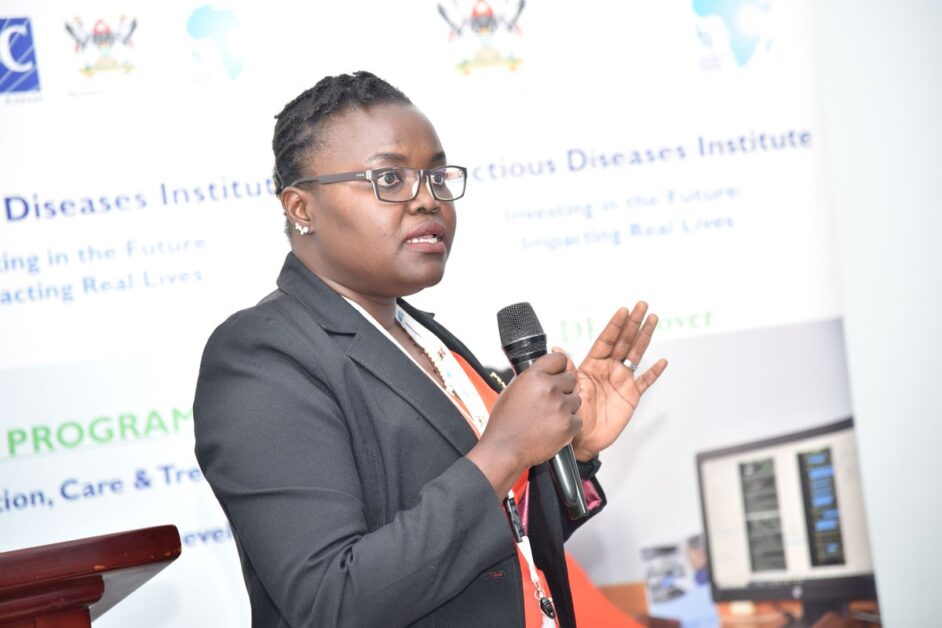
There has been criticism of direct cash transfers, with some people asking how you can simply give money to people and not account for it. What would you say to that?
People often say, “They will use it for alcohol,” or “They will waste it on drugs.” But when you look closely at poverty, it is very unusual that poverty comes from poor decision-making. Poverty is usually generational.
I often say that birth is the first lottery. None of us chooses where we are born, and the house we are born into determines our outcomes most of the time. If you are born in a home where your parents value education and can support it, they will put you in school and make sure you finish. If you are born in a home that cannot afford school, or does not see value in it, by age 15, a girl may simply be told she is now old enough to marry.
Most people in poverty did not choose to be there. They were born into that situation.
Across the globe, in all the countries where we worked, we saw the same pattern. You give people money and, honestly, the results can be astonishing. Sometimes I joke that perhaps we are the ones who should be ashamed about how we use money. You give someone $1,000, go back three years later, and you cannot believe what they have built.
I often speak about one woman refugee in Kiryandongo, who received $1,000 in 2021. By the time we met her again in 2024, she had more than Shs18m to her name. She had started a poultry franchise.
There was another woman, a teacher who used the cash to start a school because she wanted her children to attend a school where she herself taught. It started with two pupils. Three years later, the school had over 200 children, and several people were employed there.
I also remember a gentleman in Kenya whose family had fallen apart and who had turned to alcohol. When we gave him money, his life changed. He bought fishing nets, then later a boat, and he told us very plainly, “I was drinking because I was depressed.
You come home, and your children are looking at you, yet you have no money, and your wife is there.” By the time we met him again, his family was back together.
So I have learned through all these years that people do not choose to be poor. A few may make choices that contribute to their hardship, but overwhelmingly, poverty is generational and cyclic.
Some people argue that if someone does not know how to manage Shs1,000, they will not know how to manage Shs10,000. Do you combine cash transfers with financial literacy training?
Let me answer that by asking a question. When you started working and got your first salary, did someone first give you a financial literacy class because you were moving from pocket money to a monthly income? When you got a promotion, did anyone say, “Now that your salary has gone up, we must first train you before you receive it”?
This is a mindset we have towards people in poverty. If I do not need financial literacy training simply because my income increases, why do we assume a poor person must need it?
We once had a conversation with recipients in Rwanda because we wanted them to answer these questions for themselves, using randomised controlled trials, which were common in the medical field.
There was a young single mother in her 20s who had received cash, leased land, later bought land, and now had a cow. During that discussion, one gentleman said something very powerful. He said, “When I have 1,000 francs, I budget for 1,000 francs.
Why should I budget for 10,000 when I only have 1,000?” In other words, people budget according to what they have. When all you have can only cover food for the day or transport to a casual job that is what you budget for. But when you have more, you budget for land, cattle, business and school fees.
He pointed to the changes in their lives: land acquired, cattle bought, people employed. So the problem is not that poor people do not know how to budget. They know what they want but have insufficient capital to act on the ambitions and plans they already have.
We have seen the same in the USA, Mexico, and even in Karamoja, where we had a big project
In your role as demanding IPA Uganda Country Director, what keeps you personally motivated on difficult days?
Two things. The first is that I can see the work makes a difference in people’s lives. We cannot reach everyone, because no organisation has the resources to do that, but even changing one life is significant. To know that someone has moved out of extreme poverty, or at least to a better place than where they started, gives me hope.
I am also very vocal about the work we do because it met a gap in my life. So when I hear others talk about impacting other people, it motivates me.
The second thing that motivates me is my children. I want them to see that even when we are blessed with more material goods than others, we should not forget those who have less. I want them to grow up knowing that we can help with our knowledge, with our influence and even with our resources.
As such, it has impacted how they talk about money and helping. So even on days when I am really tired, I remind myself that while we may be changing lives out there, I am also modelling something for my children that I hope they will carry forward.
Looking back at your career journey, what key experiences prepared you for leadership?
There have been several, but I always go back to my Primary Three teacher, Mr Michael Nsimbi. Before we entered his class, people would say, “Oh my goodness, Mr Nsimbi is tough, you will be in trouble.” But he was the first teacher I had ever seen who treated children equitably.
School brings together people from all walks of life, but he made me feel loved and seen. For instance, for those from a poor family, those who felt ostracised were never invisible to him. He knew their names and gave them opportunities to lead songs on stage. At the same time, the children who were bright were also seen. Every one of us felt valued.
He also broadened our minds beyond academics. Almost every other afternoon, he would have us put our heads down on the desk, and then he would read to us, Greek mythology, stories from elsewhere, and literature that transported us. He made me realise that as a human being, you can impact lives profoundly and gently.
Then there were the opposite experiences: poor leaders, harsh teachers, people who shouted at students, humiliated people and ruled by fear. In medical school and elsewhere, I met such people. I do not function well in environments where people are shouted at. So I decided that no one who worked with me would be treated with indignity, even when I am quite tough.
My father also shaped my view of leadership. He worked in finance and was already in a senior role while I was growing up. We would hear his staff speak about him, or a driver would pick us up and say, “Your father is really kind to us. He respects us. He talks to us well.” So I grew up seeing that leadership is not only about rank; it is about how people feel in your presence.
What is one field experience in Uganda that has deeply changed how you think about poverty and solutions?
One experience comes to mind immediately. It was at Lacor Hospital in 2002 or 2003, when the war was still going on. I was rotating in obstetrics and gynaecology at the time.
One evening, I was on call, but the clinic activity had greatly reduced, so I thought I would get a cup of tea and return. As I was crossing in front of the gate, I saw a woman being brought in on a bicycle, but a baby hung between her legs. I ran back, received them, took them to surgery and did everything that could be done.
Thankfully, the woman survived, but the baby died.
Afterwards, I asked the family, “Why did you wait so long when this woman was in labour?” They said, “Doctor, we could not get transport.” But all they needed was a bicycle.
Related
 Promoters Will be Required to Withhold 6% or 15% on Payments Made to Artists in New Tax Measures
That was devastating to me. Here was a woman who had carried a healthy pregnancy for nine months and lost her child because nobody cared, but because she could not afford to get to the hospital. It made me think: how many preventable deaths are happening in Uganda and around the world simply because of poverty? Let someone die after everyone has done their best, but such deaths should not have happened.
That experience remained with me.
Then, as I paid more attention, I noticed how institutions were trying to respond. At Lacor, for example, they created a shelter within the hospital and encouraged women in late pregnancy to come and stay there before labour if they lived far away.
The idea was to provide a place for them to wait safely and then remain for several weeks after birth. It was a way of protecting them from precisely that sort of tragedy.
Later, at Nsambya Home Care, I saw another side of it. I remember one patient with AIDS, but also a treatable cancer, but the family had absolutely no means to do anything. Sometimes found a family looking relieved, and you knew the patient had died. The death of the patient brought relief because the family could now stop spending time caring for them and return to work to feed everyone else.
Those are the kinds of experiences that made me realise that there has to be something beyond individual medical treatment. That is what drove me to the development space.
How have you kept going after witnessing things like that?
For me, what kept me going was the difference that even a small act could make. Even when you cannot save a life, you can bring comfort, kindness and dignity.
Sometimes simply showing up in a home and saying, “Where does it hurt?” or giving a little medicine, or praying with a family, or playing with their children made a real difference. You would see the family’s faces change. Even if the suffering was not removed completely, there was a moment of relief, of human connection.
I remember one boy we cared for at Nsambya Home Care who lived with his grandmother because his parents had died. He once told me in Luganda, “Doctor, I rotted a long time ago,” meaning he already felt dead inside. The family’s only source of food was a mango tree and maize. If there was fruit, they ate; if not, they did not.
Sometimes I would buy a small cake and share it with the children there, and you could see how happy they became. It may sound like a very small thing, but for that day, it changed something in their lives. My question to myself became: why should I leave this work simply because the private sector pays more?
I could save lives there, too, yes, but here I could bring healing, prevent suffering and sometimes even just bring a little joy, and that mattered enough.
IPA is known for evidence-based approaches. How has data and research shaped the way you design or support programmes that change lives?
My research interest started early. Even while working in Nsambya Home Care, I began noticing patterns and asking questions. In clinical medicine, our seniors often say that certain things come in threes. For instance, if you saw a case of intestinal obstruction today, be prepared to see two or three others within the week. That made me curious. Even in community health work, I wanted to know things like: what proportion of the people we are seeing are women? Why are certain patterns repeating?
I remember asking my boss many WHY questions, and she eventually said, “Miriam, you have a researcher’s mind. Unfortunately, this organisation will not help you grow that skill, so if you find a place that can accommodate that, let me know and I will write you a good reference.”
At IPA, that curiosity is central. When an organisation says it wants to implement an intervention, maybe in education, cash transfers, water and sanitation, our role is to ask what impact they are looking for and then study whether the intervention actually produces it.
Evidence matters for two big reasons. First, it prevents harm. Some interventions sound good but can have harmful consequences. For example, if you give money to a household without thinking through family dynamics, it might create conflict over who receives it. We saw this in GiveDirectly’s early years, and the evidence helped us adapt. We changed the approach so that where there was a husband and wife in a household, they would decide between themselves who received the money.
Second, evidence prevents waste. If you are giving food aid somewhere, but people really need something else and simply sell the food for cash, then you are not solving the problem. Or you may build schools and improve education quality, but children still do not attend because the real barrier lies elsewhere. Unless you study the situation, you risk investing heavily in something that does not address the true problem.
Beyond good results
Even when an intervention works, we ask why it worked, for whom it worked, and whether it could work at scale. One example is technology-facilitated gender-based violence. It is an area that has not received enough attention, yet technology is now everywhere and women are being abused through their devices.
IPA began asking: how big is the problem, who is most affected, and how do we measure it? We got funding to start that work, developed tools for reporting such abuse, and are now moving towards designing interventions with the government. Even if something works in a small community in Kampala, that does not mean you can simply press play and expect it to work identically across all of Kampala or the whole of Uganda.
We also do evidence generation in the scaling phase. Did it work at scale as it did in the pilot? If not, what needs to change to make it effective in a bigger setting? Those are the kinds of questions that matter if real change is to happen.
Is there a person or community encounter that reminded you why this work with IPA matters?
I have only been at IPA for a short time, so my direct field experience there is still limited. I have mainly been supporting the technical side and getting projects moving. But if I look across my career as a whole, there are so many stories.
One I often remember is that of a junior soldier we worked with in a research study. We also had a very senior soldier in the same set of patients, and I would mentally compare the two. This junior soldier was very poor. His leg had been deformed after being shot and not treated properly. When he first came to us, he could hardly speak because he was so timid and scared.
But because of the way we treated him, with consistency and dignity, he gradually opened up. Unfortunately, he died, but his whole family knew us because he often spoke of the kind doctors he had met. And after his demise, his wife came back to share that and say thank you. That kind of moment stays with you. It reminds you that the person before you is not just a statistic.
How do you balance the corporate demands of managing operations, partnerships and performance with the human side of serving vulnerable communities?
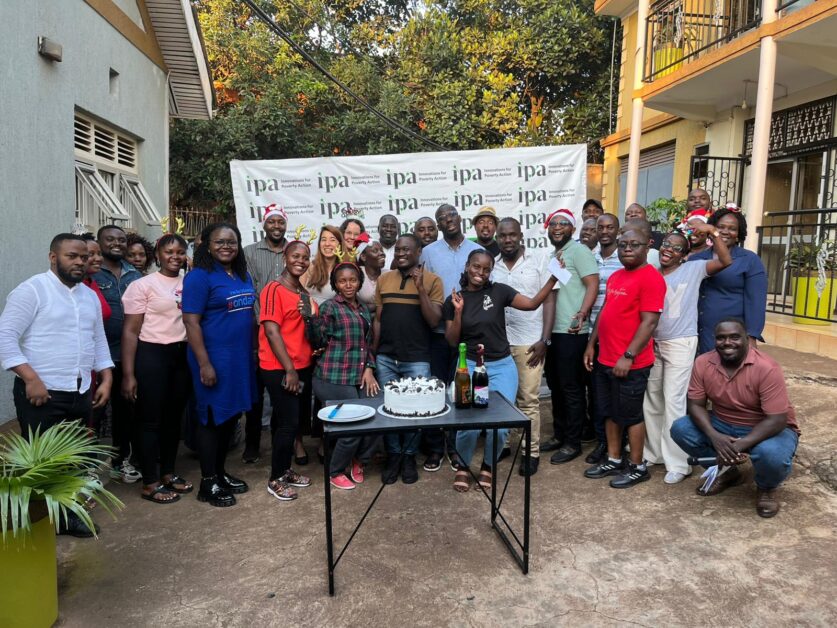
First of all, I have a good team. Wherever I have worked, I have been blessed with strong teams, and at IPA, I found an excellent one. One of the things I have learned as a leader is to be humble enough to know that you do not know everything. The people around you are often better than you in their areas of expertise.
So when I need something done with the government, I know which colleague can handle that well. If I need gender expertise, I know where to turn. If HR needs attention, I trust HR to do the work and then meet with me weekly. Allowing people to use the power and expertise they already have frees me to think strategically.
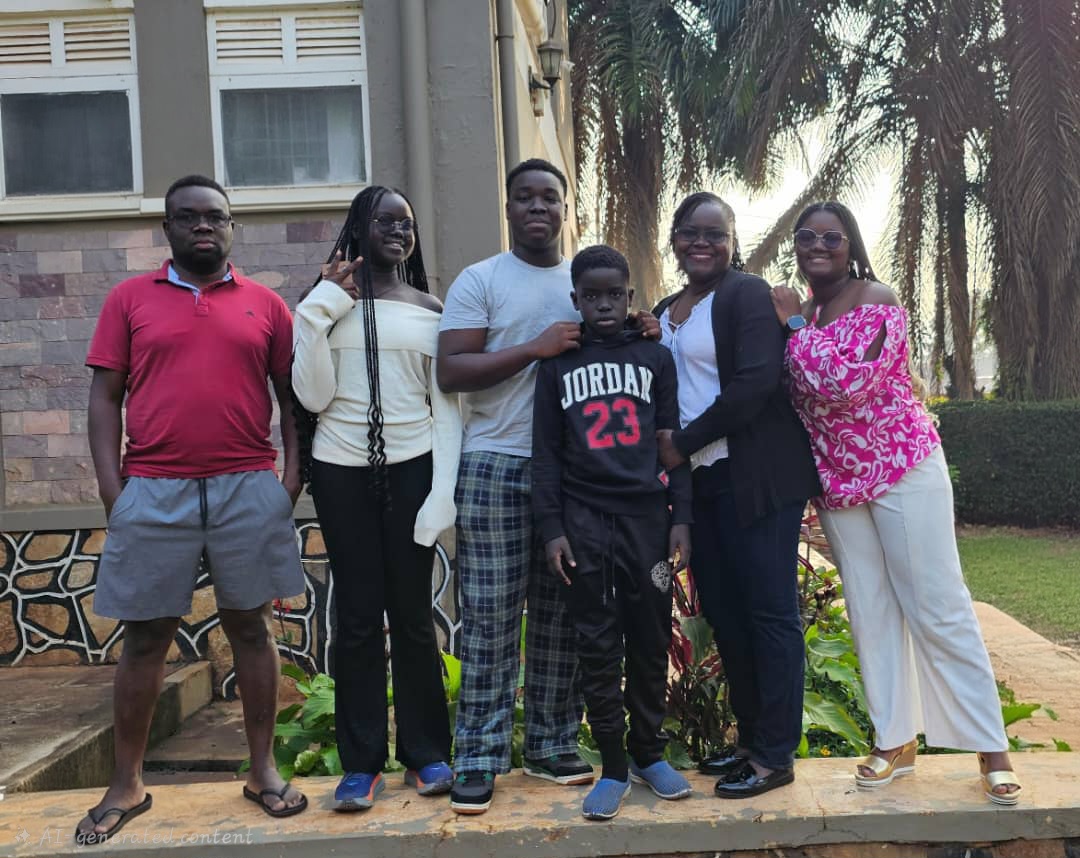
The other side of that balance is my family, especially my husband. I cannot overstate his role as a present father. My work has always been intense, with a lot of travel and demand. My husband left formal employment and built a photography business that allows him to be a more present parent.
Without that, I do not think my career would be where it is, and even if it were, I do not think I would be in a good mental space. Having that support at home makes all the difference.
Uganda’s development space is crowded. How do you ensure IPA’s partnerships with government, donors and NGOs translate into real, measurable impact for ordinary people?
After the disruptions we saw last year, many organisations assumed 2026 would be better, but we are now in what feels like a very different landscape. Funding from the US was reduced, and other countries followed. While philanthropy stepped in for a while, that kind of support is limited. I feel that we are in a year when many organisations will have to reassess who they are, what they offer, and how they remain relevant.
At IPA, we are taking a step back and asking what the real needs are now. It is not business as usual any more. We are asking what exactly we bring to the table, not only because we want to survive as an organisation, but because we want to respond to the actual needs in the development space.
One thing I appreciate about IPA is that we do not work in isolation. If another organisation is already doing work in maternal health, adolescence, or water, we ask how we can collaborate. Maybe we can help them strengthen their evaluation systems. Maybe we can jointly seek funding to study or improve their programme design. We see partnership as essential.
The same applies to government. Through our embedded labs, we can sit with ministries and do proper needs assessments. Sometimes the data the government needs is already there, but has not yet been analysed well. So we ask: what do you already know, what do you still need to know, and how can we help you generate or interpret the evidence so that policies reflect reality?
As a woman leading a major research and policy organisation, what leadership challenges have you faced, and what advice would you give to young women aspiring to similar roles?
Perhaps the reason I have managed some of those spaces is that I have never walked into them first as a woman. I walk in as a human being who can do the work before me.
I have worked a lot in international organisations and sometimes found myself in rooms where I was the only black person, or one of very few women. But I did not begin by counting those things. I began by asking: Can I do this work well? That mindset helped me.
At the same time, you do hear comments. Sometimes it is overt, sometimes subtle. People may suggest you are only there because you are a woman, or because of some form of preferential treatment. I remember in medical school a male student from one of the elite schools saying to the women, “You people are only here because of the 1.5 points.”
In that moment, I thought, fine, even if some women came in through affirmative action, so what? Many men have always been handed advantages on a silver platter. Sometimes women do need a deliberate pull upwards.
The lessons…
Beyond attitudes, there are also the practical realities of being a woman in the workplace. I became very aware of them over the years. I remember telling male classmates in medical school how fortunate they were not to have to think about menstruation in an environment with terrible toilets. You are trying to concentrate on surgery, but also worrying whether your pad is leaking because there is nowhere decent to manage yourself.
I also remember a field trip to Mozambique where we were handed lesus. At first, I thought that we were not allowed to wear trousers, only to be told that these were our toilets. They would work as shields, should the need to ease ourselves arise. These are realities men do not have to think about in the same way.
Later, after I had a baby, I became acutely aware of workplace structures that ignore women’s needs. I was returning to work while breastfeeding, and there was nowhere to pump. Your breasts hurt, your milk leaks when you think of your baby, and there is no space to manage that.
At the Infectious Diseases Institute, we advocated for a pumping room and a breastfeeding room. Because there was no better space available initially, they let us use the boardroom at lunchtime. We used to joke that we were going for a board meeting. Eventually, they gave us a fridge to store milk.
So I have become very intentional as a leader about equity. If a colleague is pregnant and the early months are difficult, does she really need to be in the field? If she wants to go, fine, but if desk work can be done, that should be an option.
When someone is struggling during menstruation, why should she not work from home? So we have introduced work from home options where the staff attend the meetings you need to attend, deliver what needs to be delivered, and where you do it from can be flexible.
My advice to young women is to show up as capable human beings first. Do not let stereotypes become the frame through which you view your own value. But I would also say: support other women, because many have not grown up with affirmation.
How are you building other women for high-level leadership?
The first thing I do is tell women to enter spaces with confidence. I tell them not to come in first with the idea, “I am a woman in this room.” I say that because the brain is very easy to deceive.
If you tell yourself each morning that you are not enough, your mind will respond to that. In the same way, if you enter a room already expecting to be dismissed because you are a woman, all the stereotypes you have absorbed will be triggered and you may shrink before anyone even says a word.
So I encourage women to show up as intelligent, capable people who can do the work. The ‘woman’ question can be handled along the way, but it should not be the first thing controlling your confidence.
The second thing I do is affirm women. Many women have not grown up being affirmed. So when they do a piece of work well, I say so. If I want one of them to lead a meeting, I let her know I trust her to do it and that I am there to support.
In appraisals, when something has not gone well, I try to handle it constructively: what happened, what can be improved, and how do we grow from this? This is to help them overcome the stereotypes.
I also try to remind women that I am not fundamentally different from them. If I have reached this level, it is not because I am better. Often, it is because I had opportunities others did not have. There are women smarter than me who never got the openings I got. So once you reach a leadership role, you should not forget where you came from.
And I also say very honestly that some of the people who helped me most were men. Men remain gatekeepers in many spaces, so they also need to recognise women’s struggles and help create access. But when women do rise, we must not become the kind of leaders who are harsher on other women than men are.
As you look ahead, what legacy would you want to leave behind at IPA and in the communities you serve?
In both places, I want the legacy to be that she saw me as a human being and treated me as a human being.
There is a saying I once heard, and it stayed with me because it is true: people will forget the things you did for them, but they will never forget how you made them feel.
That is the only legacy I really want. I want people to say that even if I had to make hard decisions, even if someone lost a job, I handled it with humanity.
I want the communities we serve to say we treated them with dignity. And I want my children to be able to look back and say that wherever their mother went, she treated people well. That, for me, is enough.