“This is a transformative synergy of the financial and education sectors,” said Denis Kizito, Director of Market Supervision at the Capital Markets Authority.
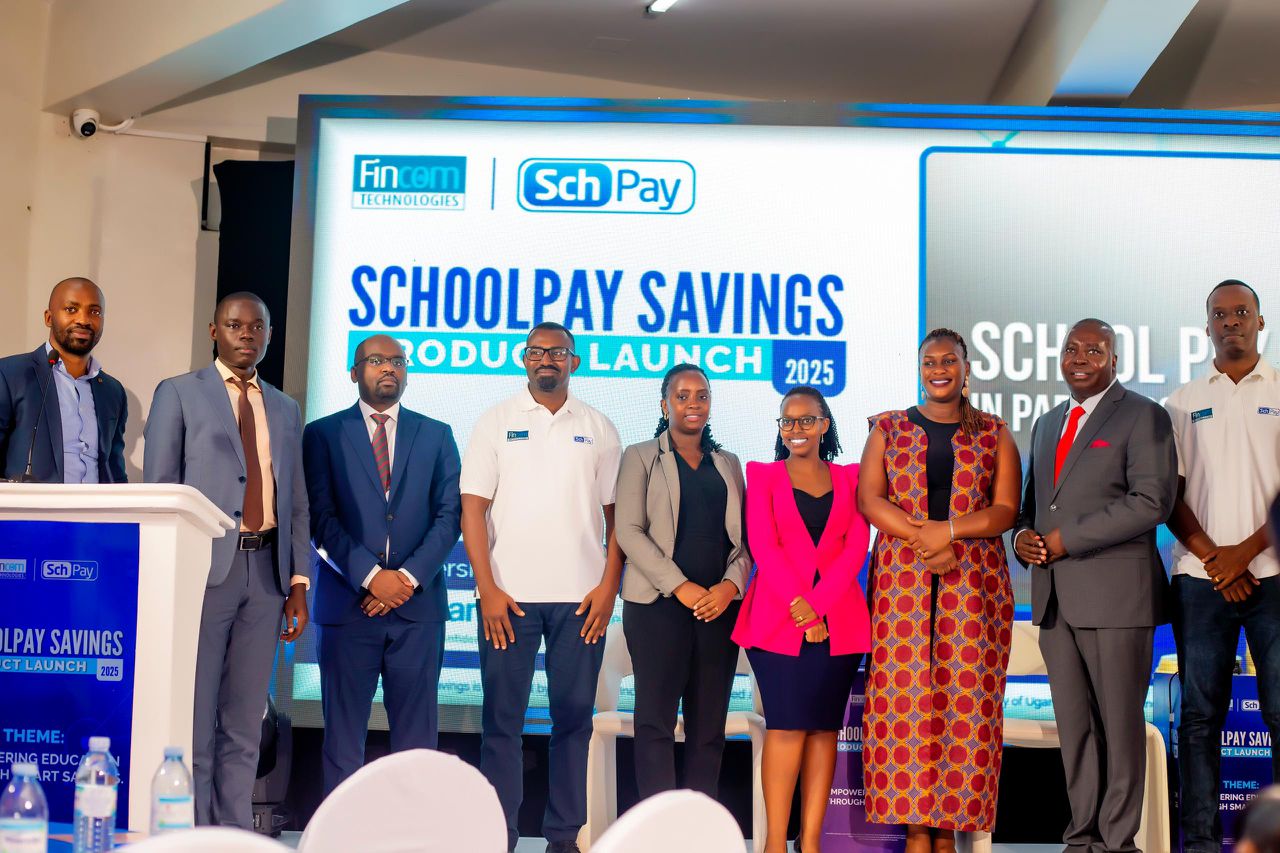
Speaking at the launch of SchoolPay Savings at Fairway Hotel in Kampala, he said, “It’s a testament to the power of collaboration, bringing together Sanlam, FinCom, and Airtel.”
The burden of school fees, Kizito said, remains a challenge despite education being crucial.
Therefore, he noted the solution partly addresses that challenge by providing a simple and convenient way to save.”
A shift from long queues to seamless payments
In the early 2000s, term openings were often marked by long queues at banks.
But over time, things have changed.
Now, with 10 years in the market, support from 21 banks, and six million users, FinCom Technologies — the company behind the innovation — is transforming how parents pay school fees.

A game-changer for Ugandan parents
Osbert Muganga, the Service Cops head of new markets, said the new product, SchoolPay Savings, could be a major relief for parents.
“This partnership is a statement of how far we’ve come,” he said.
The service addresses financial anxiety and the scramble associated with school fees payment every term, faced by millions of parents.
SchoolPay Savings offers a secure, flexible, and rewarding way for parents to gradually set aside money for their children’s education.
The savings do not just lie idle, but earn attractive returns.
“This platform allows [parents] to save. We are selling more than a financial app — it’s peace of mind for the parents,” Muganga said.
“It gives them dignity knowing their children won’t be called out or chased from school.”
Partnerships driving local innovation
Japheth Aritho, Airtel Money managing director, said the product is an answer to a long-held dream.
“Back then, it was either full fees or nothing – but SchoolPay is changing that narrative,” he said.
 Ruparelia Group Wins Key Entebbe Land Case, Clearing Path for the New Mega Speke Resort and Convention Centre, Entebbe
Mr Aritho said FinCom was creating homegrown solutions, noting that: “Africa does not need a foreigner to solve our problems.”
With no fixed schedules or minimum balance requirements, parents can start saving from as little as Shs5,000.
Any saved money earns an 8% annual interest, calculated daily.
Mr Aritho noted that African problems are unique, and SchoolPay is providing the solution.
“Instead of panicking when fees are due, parents can now watch their money grow while saving flexibly for their children’s future,” he said.
Overcoming barriers to digital payments
Bank of Uganda National Payments System officer Justine Namata said that, whereas 29% of young women save via mobile money, they withdraw the savings to pay school fees.
“Many are not aware that they can pay fees using the same platform. Therefore, it is important to train users on how to use the platform,” she said.
Namata also highlighted areas fintechs need to improve, such as public mistrust in payment systems and poor network coverage.
These, she noted, limit digital adoption, including high transaction costs, which she said the Central Bank was already discussing with fintechs.
Why adopt SchoolPay savings?
The solution can be accessed by dialing 185, which directs users to a menu that has a variety of services, including Select School Fees.
Users will be prompted to the SchoolPay services, which will prompt them on how they can save.
The savings are securely invested through Sanlam’s regulated Unit Trust Scheme, managed by Sanlam Investments East Africa.
The partnership marks a new dawn for parents who now have the option of progressively paying their children’s school fees.