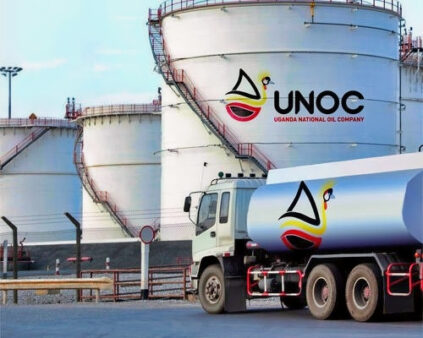
The Uganda National Oil Company (UNOC) was established as a limited liability company under the 2013 Petroleum Act more than 10 years ago.
Of course, the oil sector has seen heightened activity in the last five, but at the end of it, UNOC has been the silent pusher, ensuring that Ugandans get the best bargain from a resource they have waited for far too long.
Beyond this, UNOC has also sanitised the local oil marketing space occupied by speculators, who had long exaggerated pump prices for a profit.
Uganda consumes close to 7 million litres of fuel daily, with more than 90 percent imported through Kenya and the rest through Tanzania.
Previously, Uganda was largely dependent on oil marketing companies (OMCs) to import its petroleum products.
However, in 2020, President Museveni argued that this reliance was not beneficial because OMCs had refused to listen to Ugandans about escalating fuel prices.
Therefore, he said, the model was inefficient because it allowed middlemen to exaggerate retail prices for a profit.
As such, in 2020, the idea of an exclusive petroleum import mandate under Uganda National Oil Company (UNOC) was brokered and was regularised under the Petroleum Supply (Amendment) Act, 2023.
This meant that instead of relying on OMCs, UNOC would take charge, ensure that prices were not manipulated, and eliminate speculators from the petroleum value chain.
UNOC also had to use this opportunity to build its capacity to handle both internal and external future oil marketing prospects.
Thus, it was an urgent need for both the country and UNOC even as several obstacles stood in the way, which delayed the first oil delivery to July 2024, for a consignment that had been anticipated to arrive in February last year.
Notwithstanding the delays, UNOC, riding on the shift from the Open Tender System (OTS) to the Government-to-Government System (G2G), finally acquired a licence from the Kenya Pipeline Company at the beginning of 2024 to import oil. The first consignment docked at Mombasa in July 2024.
This marked a new chapter, which Proscovia Nabbanja, the chief executive officer of UNOC, a wholly owned government entity mandated with managing the commercial interests of Uganda’s oil, says was critical to ensure Uganda’s energy security. The new chapter also streamlines sector governance by enabling UNOC to concentrate on the commercial aspect of oil, maximises economic benefits by allowing Uganda to participate directly in the oil and gas value chain, builds strategic partnerships, and negotiates favourable terms that align with national interests, among other things.

The new direction has, however, brought UNOC closer to the people, who had for long felt the pain of an unending spike in fuel prices, but also helped the country to appreciate that with the right people in charge – things can move – and pretty fast.
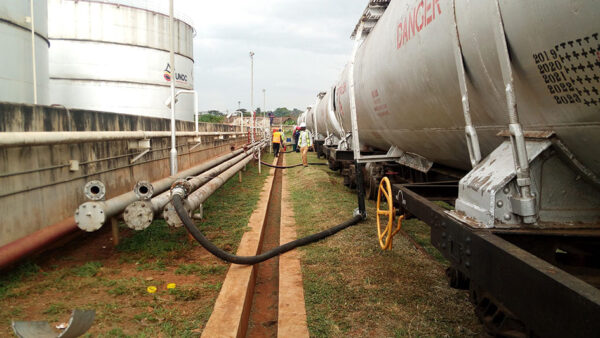
For instance, in less than a year, UNOC ensured that Uganda became energy secure by taking on the sole responsibility of importing oil and putting in place supporting infrastructure, such as storage terminals, to support petroleum product imports, stabilise market prices by eliminating speculation, and generate revenue.
According to Nabbanja, this was a milestone that helped to consolidate UNOC as the lead agency that continues to place Uganda in a better position to manage its interests in the oil sustainably.
Other ventures by UNOC
In addition to direct government investments such as the oil roads and the international airport at Kabaale, in Hoima District, UNOC has directly invested about $1b in oil and gas projects. Together with project partners CNOOC and TotalEnergies, it fast-tracked the signing of the Final Investment Decision for the integrated Tilenga, Kingfisher, and EACOP projects. It also secured an exploration license for the Kasurubanu block and ensured environmental protection through initiatives such as the Alliance for Climate Resilience, which focuses on reforestation and carbon reduction.
UNOC has also ensured that Uganda’s oil talent is managed well. Nabbanja says that UNOC, as an organisation, has already benefited from a large pool of talent. UNOC, being the “engine to drive the sector towards social, economic transformation … needs to put people first, to fuel the engine.”
Prospects
Under its radar, UNOC has several prospects in the oil and gas sector, such as the development of the Kabalega petrol-based industrial park, the 60,000 barrels per day refinery and the development of liquefied petroleum gas, which positions it as a key player in the country’s economic and energy landscape
Related
 Dutch Development Bank FMO Extends USD 20 Million Facility to I&M Bank Uganda to Boost SME Financing
The Kabalega Petrol-based industrial park is expected to house heavy and medium industries, including petrochemical industries, fertiliser, agro-based industries, cold chain, warehousing, and logistics hubs for industrial gas, among others.
From this, Nabbanja says, the government estimates to generate about $4.9b in macro-economic benefits and $11.9b per annum to the National Capital formation, increase Uganda’s balance of payment position by $849m per annum, a net fiscal impact of $1.2b per annum and create about 35,000 job opportunities.
Beyond this, UNOC will develop a refinery that will process 60, 000 barrels of crude per day to meet local demand for petroleum products and contribute to import substitution, whose macroeconomic benefit to gross domestic product is projected to be $3.4b, capital formation impact ($8.3b), employment (32,000 jobs), annual balance of payment ($591m) and net fiscal impact of $804m.
UNOC will also develop the Kampala Storage Terminal and Uganda’s Liquified Petroleum Gas capacity, with the terminal – a strategic 320 million litre-hub for the storage and trading of petroleum products within the local market and forward market – linked to the refinery by a 210-kilometre pipeline.
On the other hand, UNOC has already begun launching an LPG business line, which will be key in the government’s push for Ugandans to transition from biomass fuels to cleaner energy.
Nabbanja says the government expects “substantial amounts of LPG from both the upstream and refinery to a tune of 340 metric tonnes per year combined”.
As already mentioned, UNOC is exploring ways to align with global technology trends, such as the nexus of AI, Energy, and Climate. This requires that companies adopt technology to power their energy needs and use the same technology to create efficient and resilient energy systems.
Therefore, UNOC hopes to continue adopting technology that drives our business with efficiency, predictability, safety, and reliability. We can’t remain behind,” she says.
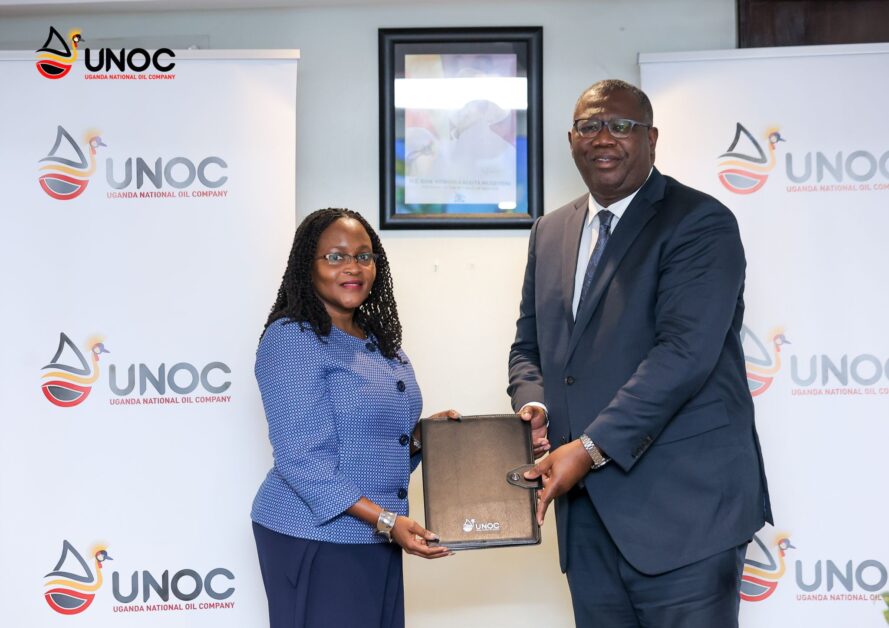
Who is Proscovia Nabbanja – the drive behind UNOC?
Under the Uganda National Oil Company (UNOC), Nabbanja has been pushing to ensure that Uganda gets the best value out of its oil in a sustainable manner. However, beyond this, she has also ensured that Uganda eliminates oil marketing companies from its petroleum value, who have previously been accused, especially by President Museveni, of exaggerating local fuel prices for profits.
She is one of the few women driving Uganda’s oil sector. With more than 24 years of experience in the petroleum industry, including a previous role as the chief operating officer (upstream) at UNOC, she is one of the few women in the sector.
Before joining UNOC, Nabbanja worked as a principal geologist in the Ministry of Energy, pivotal in reviewing technical proposals, field development plans, petroleum resource estimates, and petroleum data management.
As the chief executive officer, she has steered UNOC in key projects such as the East African Crude Oil Pipeline (EACOP), upstream Tilenga, and Kingfisher, exploring opportunities for new ventures such as refinery and storage terminals and petroleum products trading.
She has also ensured that Uganda is strategically involved in the regional and global oil markets. She has negotiated significant milestones such as the Final Investment Decision for major oil projects, secured an exploration block for UNOC, and implemented the exclusive petroleum importation mandate.

Her leadership primarily centres on leveraging oil and gas resources to enhance economic growth and strengthen Uganda’s energy security. She emphasises the country’s potential to become a regional hub for oil and gas trade, especially through strategic infrastructure developments like the Kampala storage terminal.
She is also passionate about UNOC’s capacity to create jobs, spur industrialisation, and ultimately contribute to productivity and social-economic transformation.
Another gallant achievement is being awarded the National Oil Company Executive Of The Year Award in recognition of her pivotal role as a team leader. She received the award as this year’s Sub-Saharan Africa International Petroleum Exhibition & Conference climaxed in Lagos, Nigeria. It is the second time she has brought the accolade home, following a similar one in 2023.
Her vision is to ensure that UNOC sustainably contributes to the petroleum and oil value chain, grows into a globally recognised entity, maximises returns for Uganda, and creates value for generations.
Her target is to steer oil-and gas-related initiatives that will help Uganda generate significant economic benefits, with an expected $47b return in the next 25 years.