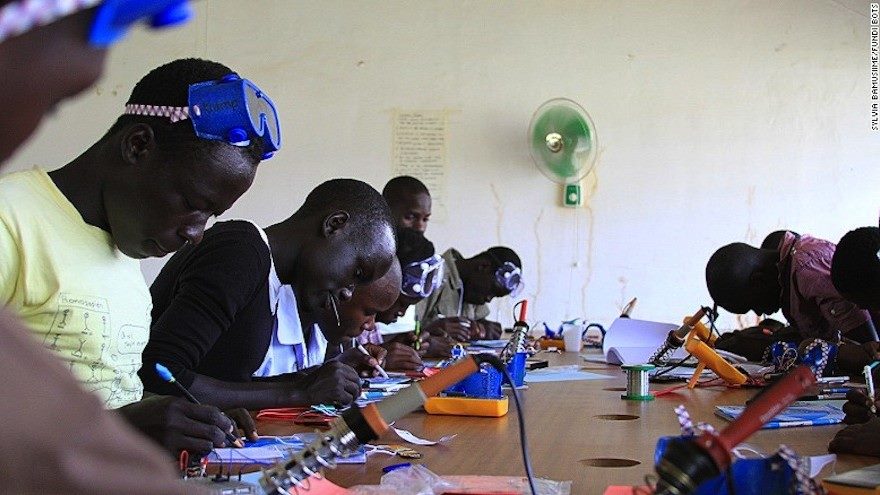
Every once in a while, students and lecturers at Makerere University unveil some innovative ideas and even products sometimes. You probably remember the sanitary pads made out of papyrus, an app that detects pneumonia easily, or a mobile phone based scanner for pregnant women among many others. Usually, these innovative ideas win international awards.
Today, I am not sure what happened to the pads or the pneumonia app and indeed many other ideas and products. Only Kiira Motors seems to be progressing albeit on a snail’s pace.
These young innovators after they have left the university usually go on to do whatever they need to survive. Some end up underemployed and many unemployed. There is an engineer who graduated at Carnegie Mellon who, I am told, now works as a personal assistant somewhere after failing to find a job in his field. You can easily blame him for not starting a business, for not being innovative.
 MTN and Stanbic: A Comparative Look at Two Market Leaders
Anybody who has ever done business in Uganda will tell you that the hardest job is to be self-employed. And there is no country anywhere in the world that has ever developed when the majority of its people are self-employed. The majority of people should be employed earning a predictable income — that is how a middle class is built.
Unlike in developed countries where it might be easy to live in your parents’ garage and work on your idea, sometimes a Ugandan graduate after university is instead expected to start looking after their siblings and/or parents. So the country ends up loosing its innovative force doing what they have to do to survive.
The reason for this situation is further illustrated in the Makerere University Visitation Committee report. “The government should develop a strategy for research and innovations, a commitment to a set of coherent, mutually reinforcing policies aimed at achieving a specific competitive goal,