
One of the major cornerstones of the Ten-Point Program which formed and still forms the bedrock of the NRM government is the building of an independent, integrated, and self-sustaining national economy that would stop the leakage of Uganda’s wealth abroad.
The ten-point programme, written during the 1981-1986 bush war, was defined by its architects as a set of “proposals for a political programme that could form the basis for a nationwide coalition of political and social forces that could usher in a new and better future, for the long-suffering people of Uganda.”
To bring back this wealth, it was important to build a vibrant and robust export sector, but for a long time and due to several years of misrule between 1971 to 1985, a huge chunk of Uganda’s economy was reduced to ruins with coffee being the only significant export, as there was not manufacturing or a vibrant services sector to talk about. Until 1994 coffee exports (USD357 million) formed 77.3% of Uganda’s export revenues- totaling to USD461.6 million. The remaining 22.7% of export revenue (USD104.7 million) was largely made up of other traditional agriculture crops such as tea, tobacco and beans- but even then, these were being produced on a largely subsistence basis.
At the core of building a strong economy was fighting household poverty by increasing household earnings, thus the many programmes such as Entandikwa (credit scheme), Poverty Eradication Action Plan (PEAP), Bonna Baggagawale, Operation Wealth Creation etc., that have successively been put in place, often in succession of each other and building on the successes of the previous one.
Given the strategic importance of agriculture to both food security and the economy- it is the biggest contributor to Uganda’s GDP; employment and export earnings, most of the plans, have had a strong agriculture component. For example, under the Plan for the Modernisation of Agriculture (PMA), a cornerstone of PEAP, six core areas for public action in agriculture were identified, namely: research and technology, advisory services, education for agriculture, access to rural finance, access to markets, and sustainable natural resource utilisation and management.
Vision 2040 and transforming Uganda
In 2007, Cabinet approved the National Vision Statement, “a transformed Ugandan society from a peasant to a modern and prosperous country within 30 years” which would later culminate into the creation of the Uganda Vision 2040. Under Vision 2040, as it is known, the Government of Uganda’s masterplan is to change Uganda from a predominantly low income to a competitive upper middle income country within 30 years with a per capita of USD 9,500 by 2040.
At the centre of this strategy was to increase manufactured exports as a percentage of total exports from 4.2% to 50% and ICT goods & services as a % of total exports from 0% to 40%. To achieve this, government would among others initiatives, increase and diversify exports and ensure stable supply to meet market targets; identify new export destinations in regional and emerging markets; ensure that the exports are competitive and meet international standards; develop an effective incentive system to attract and expand investments in export commodities. During the Vision period, manufacturing of consumer, investment and Hi-Tech goods, and value addition to agricultural products would be promoted. The working assumption was the manufacturing of consumer goods would also have a double effect of reducing on the import bills, thus creating a favourable balance of payments.
The National Planning Authority, working with other government institutions and other stakeholders launched Vision 2040 on 18th April 2013.
Since the launch of Vision 2040, a number of strategic interventions have been launched, for example Operation Wealth Creation (OWC). Launched in July 2013 by President Yoweri Kaguta Museveni, OWC seeks to create a system that facilitates effective National Socio-economic transformation with a focus of raising household incomes for poverty eradication and sustainable wealth creation. The programme directly and indirectly addresses and or coordinates such vital production related issues such as the quality of both planting and breeding inputs and outputs, the management of post-harvest losses, weak infrastructure (roads, power, water for production and storage facilities) as well as access to finance and management of land rights.
From USD461.6m to USD3.7bn in export revenue
Fast forward, after 24 years of hard work by government, individual households and several other stakeholders Uganda’s export sector has really taken off- by the end of 2018 the value of Uganda’s exports has grown by more than 689% from USD461.6 million in 1994 to USD3.7 billion.
As per statistics available from Bank of Uganda and Uganda Bureau of Statistics (UBOS), 2019 is on course to be yet another year of growth in export revenues. In the 11 months of 2019, up to November 2019 alone, export revenue had reached USD3.74 billion which is 3% or USD102 million above the USD3.64 billion posted in 2018.This was despite the crush of exports to Rwanda- previously Uganda’s second largest destination for exports, after Kenya, within the Common Market for Eastern and Southern Africa (COMESA)- , the 21-country bloc that is Uganda’s largest export trading community, accounting for nearly 40% of all export revenues.
Today the country is no longer reliant on coffee- although coffee is still a significant revenue earner, it now forms just 12% of total export revenues- USD 436.4m in 2018 and USD 406.7 in the first 9 months of 2019, thanks to the revitalization of several other sectors as well the introduction of new exports such as flowers that were previously non-existent.
For example, flowers which were nonexistent before 1994 as an export, debuted in 1995 with 290 tonnes being exported, fetching USD4 million then, but by end of 2018 production had reached 6,260 tonnes, a growth of over 2,000%, fetching an impressive USD 61 million annually.
Other sectors, such as tea have been revamped, farmers given access to better varieties and as a result boosting production from 2,676 tonnes in 1994 to 70,362 tonnes by end of 2018- a growth of 2500%. As a result export revenues have also grown by nearly 650% from USD11.85 million to USD89 million annually.
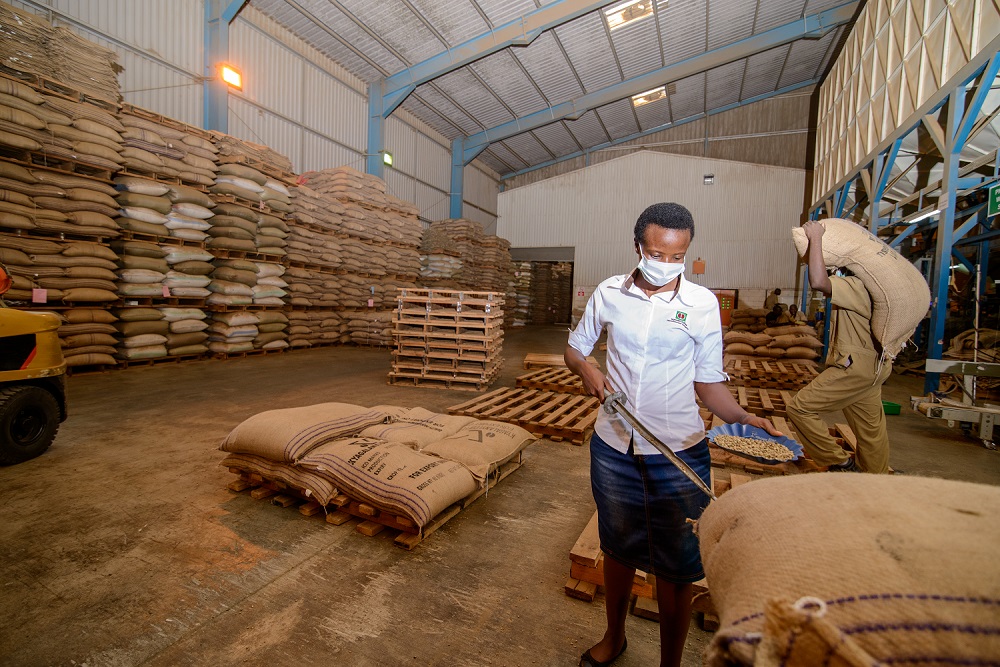
But coffee too has been revamped- production has gone up by 287% from 1,077,898 bags in 1991 to 4,170,517 60kg bags by end of 2018.
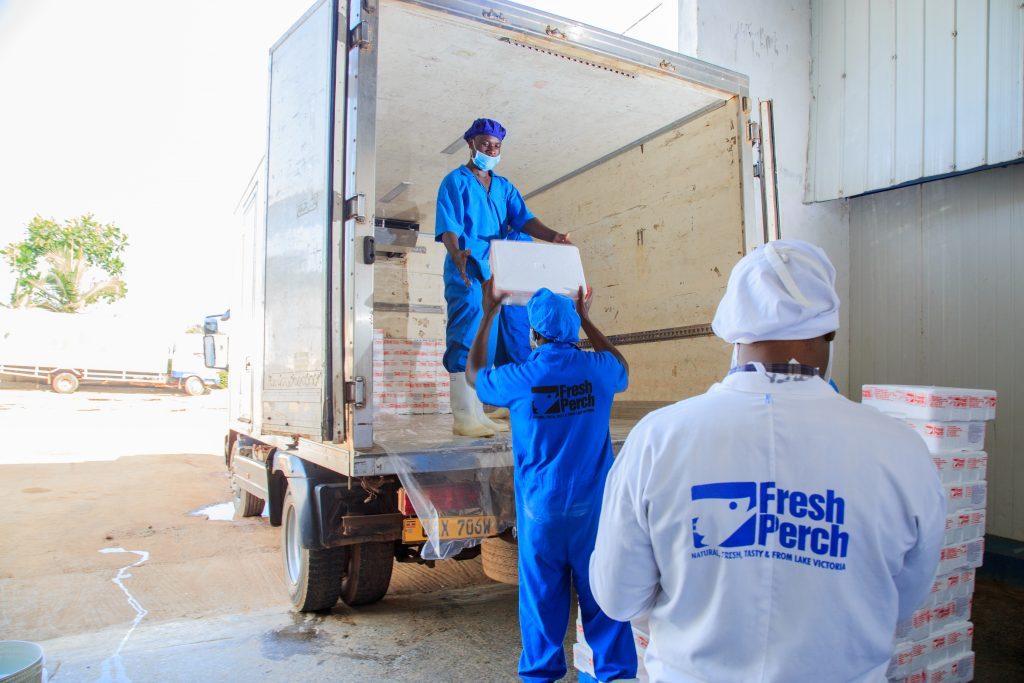
Other exports fetching significant amounts of export revenue as at end of 2018, include Gold (USD515 million), Fish (USD171.5 million), Tobacco (USD78.5 million) and Maize (USD107 million).
Overall, the last 5 years (2015-2019) have seen a much faster growth in export revenue- a compounded annual growth rate (CAGR) of 7% compared to 2010-2014 when CAGR was 5%.
The robustness in export revenues has also been witnessed in the informal cross-border trade category as well, whose commodities are largely agricultural. For example before 1999, there was no inform cross border trade to talk but since then, the value of informal cross border trade has improved from USD6 million, according to Bank of Uganda and Uganda Bureau of Statistics to USD552 million- a growth of over 92 times or 9,100%.
Building a resilient and competitive export sector
The resilience of Uganda’s export earnings, it appears is largely being boosted by value addition- a message so passionately preached by President Museveni that at one time, he referred to Uganda as being a supermarket economy, that imports more and then it exports, thus ending up being a market for other countries. This has been boosted by increased investment in Uganda and flow of Foreign Direct Investment (FDI) from US$625.7 million in 2016 to USD802.6 million in 2017, rising a much further 67% to close 2018 at a record USD1.3 billion according to the United Nations Conference on Trade and Development (UNCTAD) World Investment Report for 2019.
Equally important, Uganda has also invested significantly in creating an enabling environment especially transport, energy and water infrastructure as well as access to financial services.
According to the Annual Transport Sector Performance Report for FY2018/19, the total national paved road network in FY/2018/19 stood at 6,348.7km (up from 987 kms in 1986) against the National Development Plan (NDP) II target of 6,000 Km by 2021. The National Roads network in a fair to good condition stood at 93% for paved roads and 75% for unpaved roads against the target of 85% and 72% respectively.
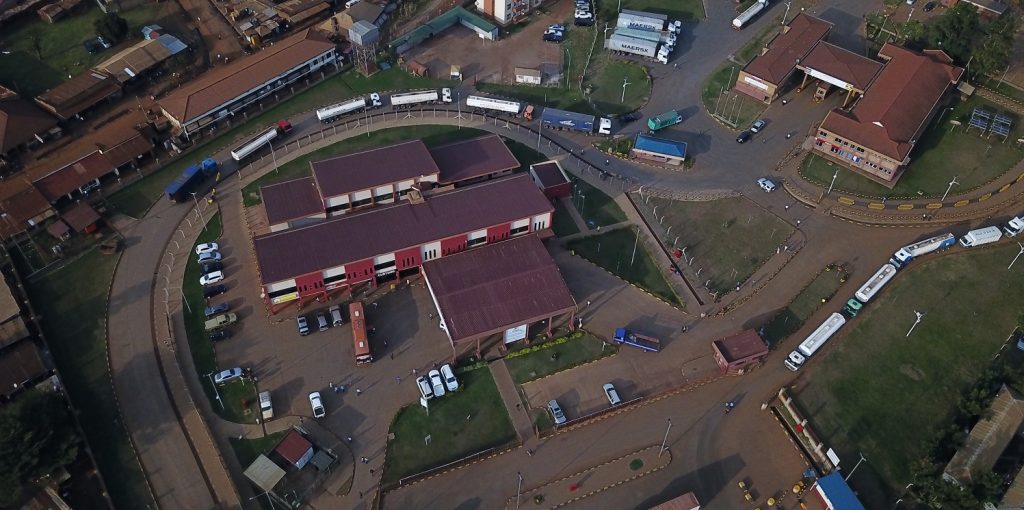
The exports too have been supported, by enabling technologies such as the implementation of the Single Customs Territory (SCT), operationalizing of the One Stop Border Posts (OSBPs), the Regional Electronic Cargo Tracking System (RECTS) and the Uganda Electronic Single Window (UESW) all of which have simplified the exporting process, making Uganda’s exports more competitive.
For example, under the Uganda Electronic Single Window (UESW) championed by Uganda Revenue Authority (URA) provides a platform on which all parties involved in trade and transport can lodge standardized information and documents at a single point to fulfill all import, export, and transit -related regulatory requirements. Since inception, URA has been able to register tangible reduction in the clearance time and costs of doing business; transparency in the supply chain; high turnover due to ease of import, transit and export clearance procedures and increased revenues. This has resulted into reduced turn-around time at the border from 3 days in FY 2015/16 to 2 hours in FY 2017/18 as well as improved truck turnaround time from 4 to 8 trips (Mombasa to Kampala).
Government has also invested significantly in electricity production closing 2019 with over 1,182MW in installed capacity. When the 600MW Karuma Dam is launched this year, generation is expect to reach over 1,782MW and then top 2,500 MW by 2025 with a number of other projects in the pipeline. Equally important, over the last three years, government has deliberately reduced the cost of power for especially the extra-large commercial users by 21 from UGX367.5 per unit to UGX289.2 in Q1 2020. To enable Ugandan business produce competitively, Umeme’s extra-large and large industrial customers, pay 59% and 50% lower rates than domestic rates respectively while, medium industrial and commercial customers pay 20% and 11% less than the domestic consumers respectively.
Addressing the Forum for China – Africa Cooperation on September 4th 2018, President Yoweri Kaguta said that while the current rate of return on investment in East Africa was 11%, with the investments the country was investing in “improved supply of electricity and lower transport costs, the rate of return on the investment will go to 15%.”
The export trade has also been aided by a fairly favourable monetary policy that has seen interest rates reduce from 40% in the early 90s to an average of 20% over the last 10 years, allowing credit to private sector to burgeon by leaps and bounds – by 706% from about UGX1.83 trillion in June 2007 when BOU started tracking total commercial bank credit- to UGX14.75 trillion by end of 2019.
Growing export revenues and reducing poverty
According to the 2016 Poverty Assessment Report by World Bank, Uganda has reduced monetary poverty at a very rapid rate. The proportion of the Ugandan population living below the national poverty line declined from 31.1% in 2006 to 19.7% in 2013. Similarly, the country was one of the fastest in Sub-Saharan Africa to reduce the share of its population living on $1.90 PPP per day or less, from 53.2% in 2006 to 34.6% in 2013.
In the 10 years to FY2016/17 average household income for rural areas more than doubled, growing by 112.2% from UGX142,778 in 2005/06 to UGX303,000 in 2016/17 while urban household income also grew by 129.5% from UGX306,278 to UGX703,000 according to the Uganda National Household Survey Reports by Uganda Bureau of Statistics. On average household income for Uganda (rural and urban) grew by 143% from UGX170,891 to UGX416,000 in the same period.
According to the World Bank report poverty reduction among households in agriculture accounts for 79% of national poverty reduction from 2006 to 2013. The increase in income derived from agriculture was mainly due to favorable prices domestically and internationally as well as good weather.
“Favorable prices reflect improvements in market efficiency as a result of sound policies (investments in infrastructure, economic liberalization, and better trade services) but also positive changes in supply and demand conditions outside of Uganda,” noted the World Bank Report.
“In addition, peace in northern Uganda also contributed to poverty reduction by allowing farmers to take advantage of stable and favorable prices to double their crop income. Urbanization, which accounted for one tenth of poverty reduction from 2006 to 2013, was also a contributing factor given the strong welfare gains from rural to urban migration,” further noted the report.
Conclusion
With the Final Investment Decision in the oil & gas sector imminent and plans for the Standard Gauge Railway that is expected to reduce the cost of freight transportation from the seaport of Mombasa by 69% from the current average of USD 160 per tonne to an average of USD 50 per tonne- saving the economy over USD 1.5 billion annually, Uganda’s export sector can only grow one direction- upwards.