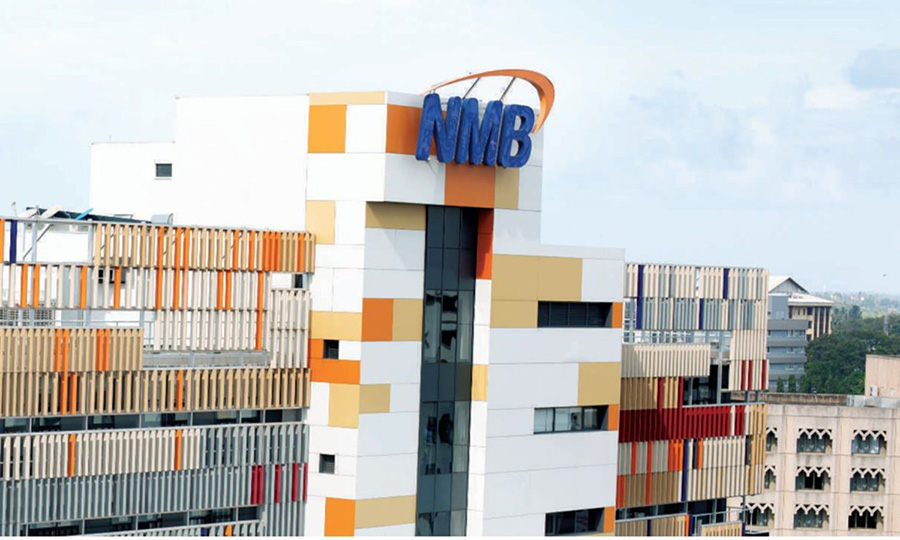
In an economy navigating shifting macroeconomic tides, NMB Bank Plc continues to tower above its peers as Tanzania’s most profitable and resilient financial institution.
The lender’s 2025 third-quarter Interim Financial Results reveal not just another quarter of strong performance, but a compelling case study in disciplined growth, prudent risk management, and efficient capital deployment.
A trillion-shilling engine of growth
NMB Bank’s balance sheet expanded to an unprecedented TZS 15.5 trillion, representing a 16% year-on-year growth from September 2024.
This positions NMB as not only Tanzania’s largest bank by assets, but also one of East Africa’s best-managed lenders.
The foundation of this performance lies in strong customer deposit growth, which surged by 20% year-on-year to hit TZS 11 trillion.
This remarkable increase reflects deepening customer trust, successful product diversification, and the bank’s growing dominance in both retail and corporate banking.
Meanwhile, loans and advances to customers rose 14% year-on-year to TZS 9.5 trillion, underscoring NMB’s central role in funding Tanzania’s economic activity, from SMEs and agribusinesses to infrastructure and consumer finance.
Equally impressive is the bank’s asset quality, with non-performing loans (NPLs) contained at 2.7%, well below the regulatory benchmark and far superior to regional averages.
This stability speaks to disciplined credit underwriting and robust recovery mechanisms that have become hallmarks of the NMB model.
Strong earnings and sustained profitability
For the nine months ending September 2025, NMB Bank delivered yet another period of stellar earnings:
- Profit Before Tax rose to TZS 776 billion, up 13% year-on-year.
- Profit After Tax climbed 14% to TZS 543 billion, compared to TZS 475.9 billion in the same period last year.
- Net Interest Income reached TZS 879.5 billion, reflecting healthy loan book expansion and disciplined pricing.
At the same time, non-interest income grew steadily, supported by strong fees and commissions, foreign exchange gains, and digital transaction growth.
The bank’s Cost-to-Income Ratio stood at an enviable 38%, a testament to tight cost control and operational efficiency.
NMB’s profitability ratios further underscore its financial strength. The Return on Average Assets remained at 5%, while Return on Average Equity stood at 26%, both metrics reflecting top-tier performance across the region.
Operational excellence and cost discipline
Despite inflationary pressures and rising operational costs in the financial services sector, NMB has continued to manage expenses with precision.
Total non-interest expenses for the nine months reached TZS 497.8 billion, a moderate increase from TZS 445.8 billion the previous year, well below the pace of revenue growth.
The bank’s digital transformation journey has been central to this operational efficiency. With 242 branches and over 4,000 employees, NMB has evolved into a hybrid institution that leverages technology to deliver value at scale.
Its mobile and online banking platforms have expanded financial access, especially in underserved areas, while simultaneously driving down transaction costs.
CEO Ruth Zaipuna said in notes published with the interim financial results that the digital strategy reflects NMB’s broader commitment to “empowering customers through simple, secure, and convenient banking.”
Shareholders’ value and dividend strength
NMB’s earnings growth continues to translate into solid returns for shareholders. Total Shareholders’ Funds rose to TZS 2.89 trillion, up from TZS 2.70 trillion in the previous quarter.
The strength of this equity base underscores both capital adequacy and management’s ability to balance profitability with prudence.
The bank maintained its paid-up share capital at TZS 20 billion, while retained earnings rose sharply to TZS 2.86 trillion.
In keeping with its progressive dividend policy, NMB disbursed TZS 214.4 billion in dividends during the reporting period, rewarding investors while preserving adequate capital buffers for future growth.
 Standard Chartered Kenya Targets Nakumatt Properties in $14.3 Million Debt Recovery Battle
The resulting basic earnings per share improved to TZS 1,449, up from TZS 1,264 a year earlier, representing a 15% rise and reinforcing NMB’s appeal among retail and institutional investors alike.
Liquidity and cash flow strength
Beyond profitability, the bank’s liquidity position remains formidable. Net cash generated from operating activities rose to TZS 902.1 billion, up from TZS 546.6 billion in the same period last year, proof of NMB’s robust internal cash generation.
The bank’s investing activities recorded a net outflow of TZS 176.4 billion, primarily linked to strategic investments in fixed assets and securities, while financing activities posted a net outflow of TZS 408.6 billion, reflecting dividend payments and debt settlements.
Overall, cash and cash equivalents increased to TZS 2.1 trillion, maintaining a solid liquidity cushion.
This ensures NMB can fund continued credit expansion and absorb any short-term market volatility.
Governance and accountability
The interim report, prepared under International Financial Reporting Standards (IFRS) and Tanzania’s Banking and Financial Institutions Act (2006), bears the signatures of the bank’s top leadership.
The statement was jointly signed on October 24, 2025, by:
- Ruth Zaipuna, Managing Director & CEO
- Juma Kimori, Executive Director, Finance & CFO
- Benedicto Baragomwa, Chief Internal Auditor
- David Nchimbi, Board Chairman
This governance continuity has become a defining factor in NMB’s consistency. Under Zaipuna’s leadership, the bank has cemented its reputation for transparency, efficiency, and market leadership, both domestically and in the East African region.
Strategic outlook: Strong finish to the year
While the interim report did not include a formal management commentary, the financial indicators collectively point to a highly positive outlook for NMB Bank as it heads into the final quarter of 2025.
Three themes stand out:
- Resilient Core Banking Growth:
With deposits up 20% and loans up 14%, NMB’s traditional banking engine remains strong. The bank is expected to leverage this base to expand its SME, agribusiness, and corporate segments. - Digital and Operational Efficiency:
The 38% cost-to-income ratio underscores the benefits of sustained investment in technology. Digital onboarding, mobile lending, and online payments continue to drive customer growth, convenience, and margin preservation. - Prudent Risk Management:
The NPL ratio of 2.7% reflects disciplined credit control in a challenging economic environment. Management’s conservative provisioning approach, evident in the TZS 65.4 billion impairment charge, positions the bank well against potential shocks.
Market performance and investor sentiment
NMB’s stock remains one of the most actively traded counters on the Dar es Salaam Stock Exchange (DSE).
As of early November 2025, the share price hovered around TZS 8,000, reflecting investor confidence amid consistent profitability and a stable dividend policy.
In the 12 months to October 2025, the stock registered a total indicative trading liquidity of $72.48 million (TZS 56.2 billion), or an average of $6 million per month, one of the highest among listed financial institutions in the region.
Analysts note that NMB’s valuation premium is well-earned. The bank’s fundamentals, double-digit earnings growth, high return on equity, and low NPL exposure continue to justify its leading market capitalization.
Risks and challenges ahead
As with any large financial institution, NMB remains exposed to a range of macroeconomic and operational risks.
- Credit Risk: Managing a TZS 9.5 trillion loan book demands ongoing vigilance. The bank’s low NPL ratio reflects effective risk assessment, but continued diligence is essential amid evolving economic conditions.
- Market Risk: Volatility in interest and exchange rates could pressure net interest margins and trading income.
- Operational Risk: Safeguarding cybersecurity and service reliability across 242 branches and expansive digital platforms remains critical to maintaining public trust.
Nonetheless, the bank’s proactive risk governance and consistent profitability cushion it against such headwinds.
The big picture: NMB’s enduring leadership
NMB Bank’s 2025 third-quarter results tell a story of scale, strategy, and sustained success.
In an increasingly competitive landscape, the bank continues to set the standard for Tanzania’s financial services sector, balancing growth with prudence, profitability with inclusion, and efficiency with innovation.
Its leadership team, led by Ruth Zaipuna, has proven that size does not preclude agility.
Instead, by focusing on customer-centric innovation, cost discipline, and robust governance, NMB has built a model of sustainable banking that resonates with both investors and regulators.
As the bank approaches the close of 2025, its strong balance sheet, low-cost operating model, and deep market penetration suggest it will maintain its position as Tanzania’s banking powerhouse, anchoring growth, fueling enterprise, and delivering consistent value for shareholders and customers alike.