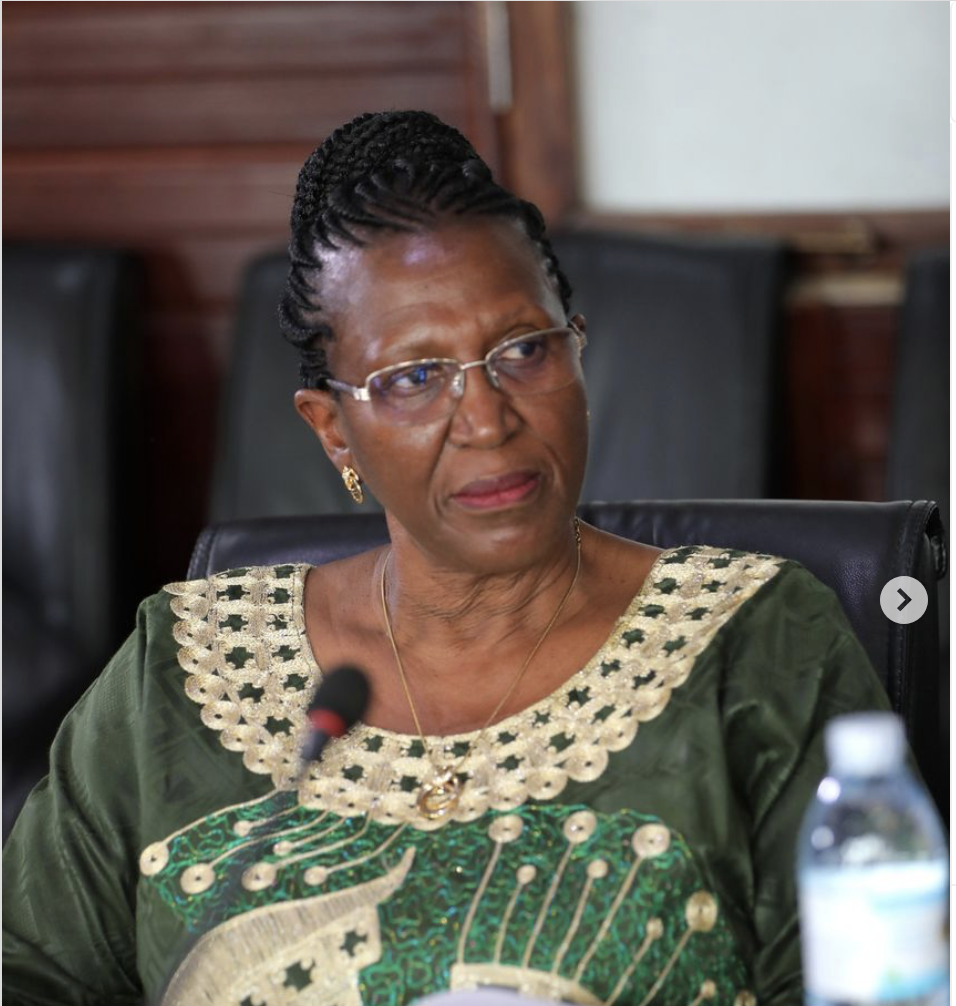
Mrs Mary Oduka-Ochan has had an illustrious career, spanning various roles from marketing to social development. And throughout the years, she has made a mark and continues to do so. She shares her journey, lessons, and tips with CEO Magazine.
Tell us about yourself
I am a child of God, and this is one of my most important identities. Apart from this, I am a wife, mother, grandmother, and a friend to many. I also want to believe I am a people person who particularly invests in the development of young people.
Professionally, I consider myself a development specialist and social scientist because I am engaged in both development and social science work. However, I hold a Bachelor of Commerce in Marketing and a Master’s in Development Science.
While I have now retired, I am still actively engaged in many activities. I currently serve as a director on several boards, I do consultancy, and volunteer for several organisations.
Which boards do you sit on?
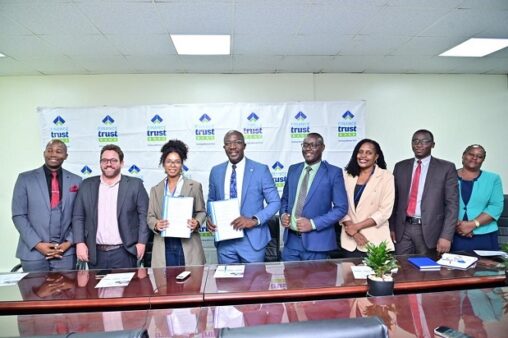
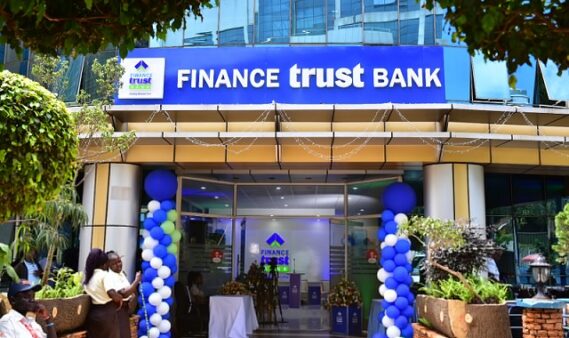
I currently serve on the boards of the Petroleum Authority of Uganda, Finance Trust Bank, and the Women’s International Peace Centre.
I also chair the board of E-Capital Investments, and am a deacon at Watoto Church, which is like being a board member. I am also one of the eminent women of the Women’s Situation Room of Uganda.
What was your first job, and what did you learn from it?
I was an office messenger (tea girl and cleaner) during my Senior Three holidays. I had just lost my father that year, and someone helped me secure this temporary job. From this, I learned that no job was too low for anyone willing to learn something new.
In my Senior Four and Senior Six vacations, I also worked at Uganda Television as a programme producer and also helped out in the film library. Here, I was identified as a potential news anchor, for which I was allowed to read short news clips. I continued to work on and off UTV through my three years at university.
Then, unlike today, employers interviewed potential students even before graduation. I was interviewed by Uganda Airlines Corporation and received a conditional offer pending the official release of our results.
After an intensive three-month orientation, I was confirmed as the Marketing Officer in charge of Tours and Charters. Uganda Airlines Corporation was still in its nascent stage, having commenced its operation in 1977, thus in the process of designing and developing several policies, programmes, and strategies.
I was, therefore, tasked to develop the tours and charter section. With Uganda already chartering planes, the charter arm was already in existence, but not so for tours, where we had to start from scratch.
Fortunately, through friends working in East African Airways, I linked up with their former colleagues at Kenya Airways, from whom I learned a lot. That support was coupled with that from Uganda Airlines colleagues, making it possible for me to learn a lot about airline operations and to develop the relatively new tours arm.
I would say I am blessed because I have been thrown into new roles, which have pushed me into learning new skills and ideas.
This experience taught me the importance of networking, taking initiative, and not being scared of new opportunities. I also learned the importance of accepting that processes can be slow, thus taking it a day at a time while asking questions and learning.
I am also thankful that I had a supervisor who was receptive. He had vast experience, which he freely shared, easing the workload.

You have worked in diverse environments. How has the experience been?
It has enabled me to meet people from diverse backgrounds, with diverse skills, and with diverse opportunities.
If one door closes, I can always try another, which has been useful. In some of the organisations, I got the opportunity to travel and establish international networks, in addition to local ones. I have maintained many of these friends and contacts after retirement. Some have helped me secure consultancies because they know my capabilities.
I have not been restricted to one area, and at one point, I wondered why I had done marketing because most of my work has been in development. But looking back, I have come to realise that what I learned from marketing, such as strategy, communication, multitasking, analytics, ecetera, has helped me in my development work.
You carry too much experience at both the management and board levels. What would you tell a board that is seeking positive returns this year?
One thing that cuts across is integrity. You may have good systems in place, but if you don’t have the proper people to manage them, you are in trouble.
Secondly, while statistics show economic growth, the speed at which it is happening is not as fast as expected. Moreover, growth disparities are increasing. On the Finance Trust Bank board, I remind us that while we must make money, it should never be at the expense of the vulnerable.
That is why I am glad to sit on that board where I am one of the founding members and the founding secretary. The reason for starting this organisation, which has metamorphosed into a bank, was to enable low-income women to access credit, despite the cost of servicing such small loans.
Thus, the board should look at inclusion in their products, without taking their eyes off profitability.
Even as a member of the Petroleum Authority of Uganda board, after benchmarking with other countries, while looking at how Uganda will earn from its oil, I also focus on the impact this will have on the ordinary people. Therefore, the focus is not just on investors getting back their returns.
Beyond this, I also focus on identifying, managing risks and compliance by paying attention to both internal and external risks, including geopolitical risks and technological disruptions, among others.
 Vivo Puts Two Downtown Kampala Shell Stations up for Sale Amid Congestion Concerns
What makes one fit to sit on a board?
There are several things, and having served on the board, we have developed a standard for selecting new board members. One of these is experience and the skillset that aligns with the board’s needs.
That is coupled with how long one has served at the senior management (decision-making) level, knowledge of the area, as well as being trainable.
Then there is character, where integrity plays a big role. There are also interpersonal skills because you are not only dealing with board members, but there are other stakeholders and senior management.
So one must be amiable, bold, assertive (not easily phased out) yet not aggressive, and able to ask hard questions.
Why do we still have a few women on boards?
It is a combination of factors. While the most mentioned is the lack of experience or credentials, my question is, “How many women have been at the senior management level, from where this pool of experienced women can be taken from?”
I would suggest that boards focus on onboarding women with potential, who can bring different perspectives to the board. Inclusion and diversity should be the goal. Furthermore, organisations should intentionally target training of women to enable them to gain the required experience.
Secondly, we must deal with gender stereotypes and biases that have led boards to avoid onboarding younger women because of their multiple roles.
Some have gone as far as deliberately looking for older women for ‘biological’ reasons to avoid absence due to maternity leave. Rediculous as it sounds, this is happening, although we now have new ways of working, such as virtual meetings.
Some give quotas for women on the board. While this is not bad, some boards abuse it by picking any woman to fill the spot without any proper criteria. It is a matter of ‘ticking the box’, which is tokenism.
Again, some boards suffer from male chauvinism, which can be overwhelming for a young woman who might be coming onto the board for the first time. This creates a less welcoming and supportive environment
Board nominations and appointments have relied on networks, both formal and informal, which, unfortunately, are mostly dominated by men, thus limiting the visibility of women. I am glad to note that more women are joining or establishing networks, which should hopefully result in more board representation.
Mentorship is also still low, yet crucial. I would like to see older women coming up to support the young ones to get exposure. It should be intentional.
As a consultant, what would you tell someone seeking to get into consultancy?
Consultancy is a game of networks. Your networks will speak for you in rooms you are not. Thus, you must network socially and professionally because most consultancy work is based.
Secondly, consultancies are not frequent, so when one comes along, do it to the best of your ability. Unfortunately, many consultants are failing because they hoard work, and since most is time sensitive, they delegate it to others who may not deliver the same quality of work.
It is also crucial to honour timelines; never commit to doing anything if you feel you will not deliver in time. Also, read widely to ensure you are abreast of events.
Who is Mary Oduka-Ocan?
Mrs Oduka-Ochan is a development and social science specialist. She has more than 42 years of experience in financial planning, marketing, strategic planning, programme design management, institutional and organisational development, communication, and banking.
She is the founder secretary of the Uganda Women’s Finance and Credit Trust, which transformed into the first women’s bank in Uganda- Finance Trust Bank.
She has previously worked as the Irish Aid Programme country senior HIV & AIDS specialist for East, Central and Southern Africa. At Irish Aid Uganda, she was the senior adviser and head of the social service delivery Cluster.
Before that, she was the country director of the Agency for Personal Services Overseas (Irish State Agency) and Kenya.
She also previously worked as the executive director of Africa Development Assistance (an East African regional NGO) and the assistant secretary for Women’s Affairs in the Uganda Peoples’ Congress (UPC) Secretariat. She was also a marketing officer at the defunct Uganda Airlines Corporation.
Apart from this, she has provided various consultancy services over the years.
She has also served on different boards, including E-Capital Limited, Finance Trust Bank, Uganda Women Trust, ActionAid International Uganda, Women International Peace Centre, Preventing Families from HIV/AIDS, and the HIV/AIDS Development Partners Group in Uganda.
Her latest appointment is on the board of the Petroleum Authority of Uganda as a member.
Mrs Oduka-Ocan holds a Master’s in Development Studies from the University College Dublin and a Bachelor’s degree in Commerce (Marketing) from Makerere University.