As the technology landscape evolves, the telecommunications sector continues to undergo rapid changes, many of which impact policy, regulation, and the livelihoods of individuals.
Over the years, Uganda has made significant efforts to ensure data is preserved, taxes are collected, and service delivery is improved.
However, this journey has not been without challenges, notably the introduction of the Over-the-Top (OTT) tax, which triggered public protests and presented an existential threat to a sector that has a multiplier growth impact.
Nevertheless, the Uganda Communications Commission (UCC), as the sector regulator, has over the last 25 years worked to ensure that all stakeholders are well-served.
And in the process, it has made some landmark decisions to make communication seamless, affordable, and accessible for all. Some of the landmark decisions include:
Over-the-top (OTT) tax
The telecommunications sector remains a major tax contributor to Uganda’s economy.
The taxes vary depending on the type of telecommunication service offered. Traditionally, voice services—both local and international—played a dominant role in generating tax revenue.
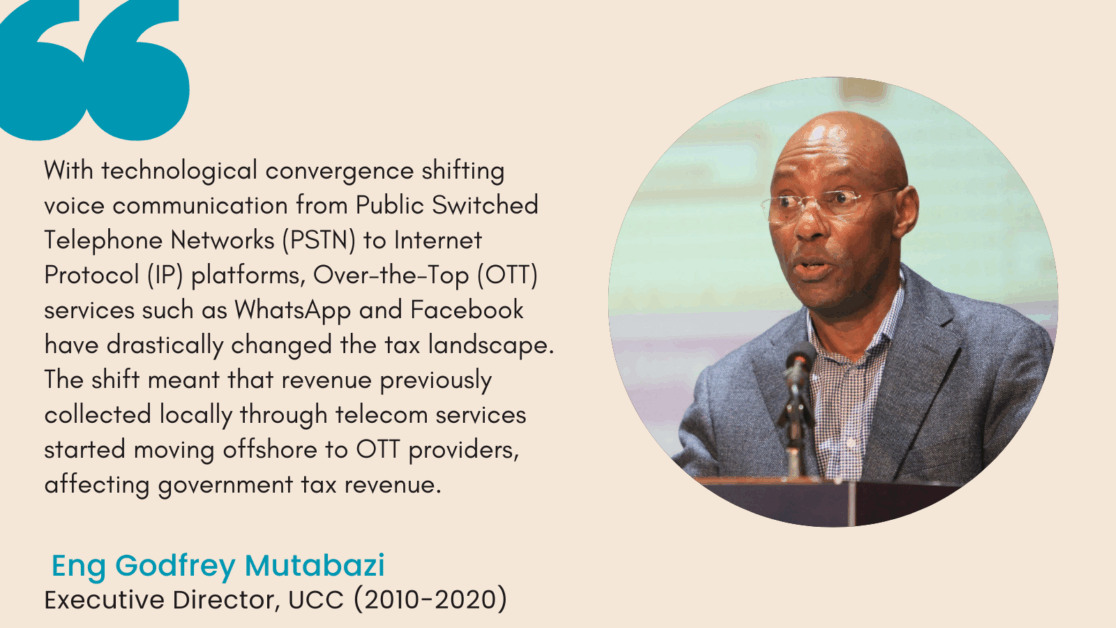
However, with technological convergence shifting voice communication from Public Switched Telephone Networks (PSTN) to Internet Protocol (IP) platforms, Over-the-Top (OTT) services such as WhatsApp and Facebook have drastically changed the tax landscape.
The shift meant that revenue previously collected locally through telecom services started moving offshore to OTT providers, affecting government tax revenue.
In response, Uganda introduced the OTT tax to recover part of the revenue lost due to this technological convergence.
Former UCC Executive Director Godfrey Mutabazi explained then that “countries around the world are in discussions to establish legal frameworks for taxing OTT providers.
Therefore, he noted, Uganda had acted to fill a tax gap, especially given the lack of international treaties to tax global IP platform service providers.
The introduction of OTT sparked considerable debate.
However, continued dialogue between the government, mobile network operators, and other stakeholders led to innovations and remodelling of the tax that was considered regressive.
SIM card regulation
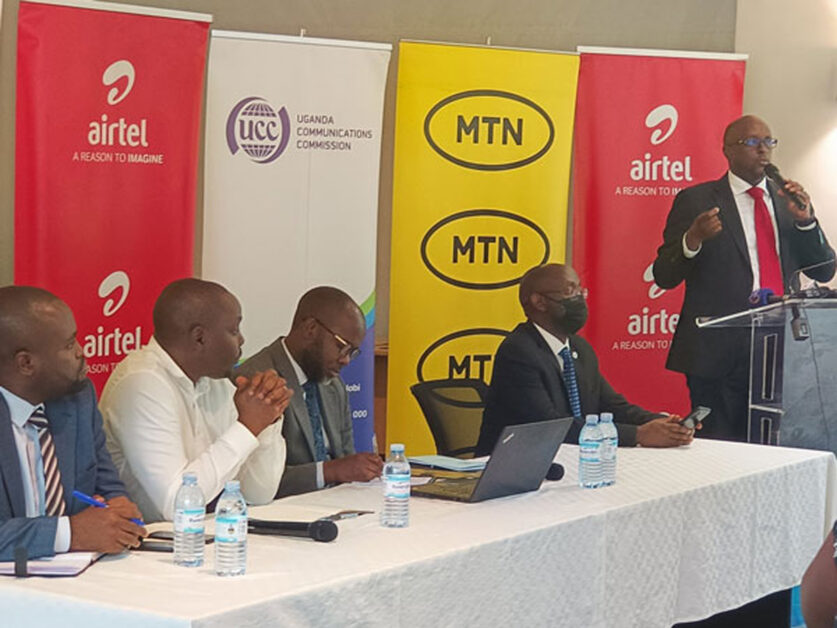
In 2024, UCC introduced stringent measures to address persistent challenges around SIM card replacement, registration, and upgrades.
The need arose due to growing issues faced by individuals without National IDs or those whose biometrics were missing.
Key highlights of the new regulations include:
- SIM card replacements, swaps, edits, and upgrades are only allowed at telecom operator customer service centres or authorised agent shops.
- Applicants must appear in person.
- SIM cards can only be issued in the name under which they were originally registered.
- In cases of lost IDs, a police letter must be presented and verified by a National Identification and Registration Authority (NIRA) officer.
UCC was to play a supervisory role, working closely with NIRA and other stakeholders to safeguard customer data integrity and ensure smooth service delivery.

Spectrum licensing
The radio frequency spectrum is essential for all wireless communication, from basic remote control devices to aviation and satellite systems.
However, being a limited and valuable resource, its management demands efficiency to prevent signal interference.
Under the Uganda Communications Act 2013, UCC is mandated to allocate, license, standardise, and manage spectrum usage.
Over time, the Commission has developed regulatory tools in line with international best practices and Uganda’s commitments to the International Telecommunication Union.
These include:
- The Uganda Communications Commission Radio Spectrum Management Guidelines (2017), replaced the 2009 guidelines.
- The Guidelines on Establishment and Operation of an FM Station (2019).
In 2023, the ICT Committee, led by Nathan Igeme Nabeta, tabled a report that emphasized the need for efficient, economical, and rational spectrum utilization.
The amendments in the regulation sought to improve mobile broadband coverage and enable the deployment of newer technologies like 5G.
 World Bank bans PwC Africa, Rwanda and Kenya affiliates from Bank Group-financed projects over fraudulent practices
“These regulations support national development goals by improving broadband connectivity, encouraging ICT use across sectors, and fostering competitive markets,” Nabeta noted.
For instance, Uganda proposed to charge $60,000 per MHz on the 700MHz band, which is lower than Tanzania’s $74,600 and Kenya’s $125,000, making it a more attractive investment market.
Digital taxation
Uganda’s ICT sector contributes over 9% to GDP, making it a crucial part of the country’s fiscal framework.
UCC has played an instrumental role in the development and implementation of digital taxation frameworks, particularly in collaboration with the Uganda Revenue Authority (URA).
Although UCC does not directly impose taxes, it actively engages in policy development and stakeholder consultations to shape digital taxation. Key aspects include:
Withholding Tax: A 15% final withholding tax applies to income earned by non-resident companies providing digital services in Uganda. This replaced the 5% Digital Services Tax.
Other digital taxes include a 1% tax on electronic payments, a 15% excise duty on digital content services, and taxes on internet data and airtime.
UCC’s involvement ensures that the digital economy operates within a regulated environment that balances government revenue needs with innovation and service accessibility.
Termination of scratch airtime cards
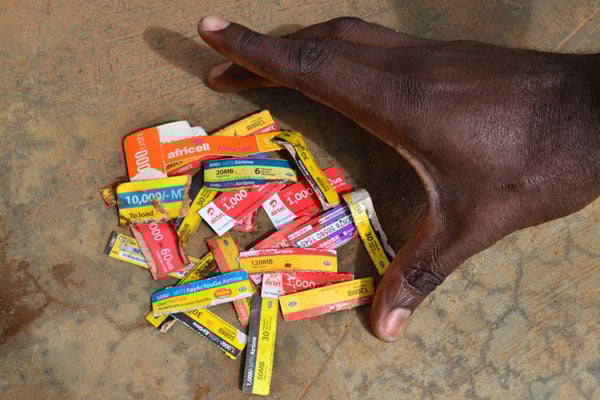
Do you remember your search for a pen cover or a coin to scratch an airtime card?
Gen-Zs, you may not be familiar with this but that was how we accessed airtime.
However, it all came to halt in March 2018 when UCC gave an order banning the use of these by June 2018.
It was a frenzy because people had to learn a new way of loading airtime. Done under the reign of Mr Mutabazi, it was a change of an era to further digital airtime.
The then MTN sales and distribution general manager, Annie Tabura, said that electronic airtime would give their agents a chance to increase their commission earnings, which stood at Shs300 for a Shs10,000 scratch card.
On the other hand, Airtel Uganda sent an email that it was realigning the commission for online airtime dealers to match that of mobile money dealers. That saw a reduction in commission from 7 to 5 percent for distributors and 6 to 4 percent for airtime transactions.
UCC said the ban on scratch cards was a way to deal with criminals, as open airtime selling was propagating their dealings.

Development of rural communications and information technology
Previously known as the Uganda Communications Universal Service and Access Fund (UCUSAF), the Rural Communications Development Fund (RCDF) was established under the Uganda Communications Act of 1997.
This fund was established per the Commission’s mandate to establish and manage a dedicated resource to support the development of communications and ICT services, particularly in rural areas of Uganda.
Its main aim is to contribute to universal access and usage of communication services by supporting the establishment of projects in areas considered commercially unviable—those that are unserved or underserved by market players.
RCDF has been implemented in three key phases: Cycle I (2003–2009), Cycle II (2010–2016), and Cycle III (2017–2023). The third cycle marked a strategic shift towards promoting digital inclusivity that extends beyond rural-urban divides.
Now operating under the name UCUSAF, the fund is focused on achieving digital inclusion through sustainable interventions and meaningful collaborations.
Its approach is guided by four strategic themes: Access, Adoption and Usage, Value Creation, and Cooperation. These themes align with five strategic objectives:
(a) Expanding broadband access
(b) Increasing the use of digital devices and services
(c) Promoting ICT-based applications and services
(d) Supporting informed, data-driven decision-making
(e) Strengthening collaboration across sectors
Though UCUSAF operates as a semi-autonomous initiative, it remains a department within the Uganda Communications Commission (UCC).