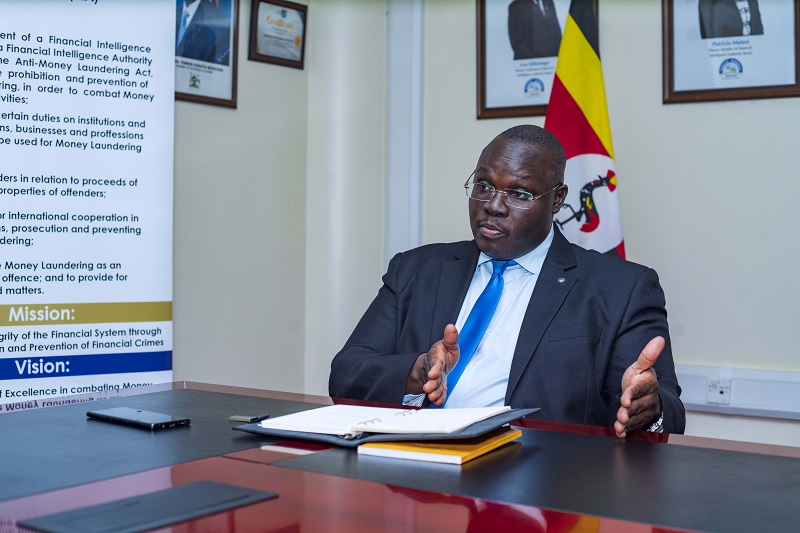
In simple terms, tell us about the Financial Intelligence Authority, its mandate, and why it’s important for a country like Uganda?
The background to this all was the phenomenal growth in organised crime in the 1980s. Very few people were getting convicted of organised crime especially drug trafficking because the drug traffickers (the mafias) in America and in Europe would find a way of making sure that witnesses don’t get to testify, either by killing them off or by intimidating them or bribing them off.
The response by the justice system was that at least if you cannot prosecute the person, at least you can prove that this person’s known economic activities do not justify the wealth they have- if they cannot prove the sources of these finances, even if you are not able to lay a finger on the actual crime, then that should constitute a crime called money laundering.
Then in 1989, the G7 countries created the Financial Action Task Force (FATF). FATF is an intergovernmental organization to develop policies to combat money laundering. In 2001, its mandate was expanded to include terrorism financing. One of the major recommendations by FATF was that because of the unique nature of the crime, it cannot be combated the same way as other crimes, so there should be specialized units called Financial Intelligence Units (FIUs) to handle these crimes. The role of the FIUs was to be a link between financial institutions (reporting entities) especially the banks and the law enforcement agencies.
The main reason why there was a need to create these FIUs units as a buffer in-between, was that the reporting entities such as banks should be able to file suspicious transaction reports, without breaching the confidentiality clauses, which are the cornerstones of the banking law across the world. So the reporting entities are by law required to file their suspicious transactions and all other such transactions that meet certain criteria, set out in the law to us and we then analyse and make the determination whether there is something more to it. And if there is, then the responsibility now lies with us to report to the law enforcement.
Law enforcement means the investigative or prosecutorial bodies, it includes the regulators like the central bank, the Capital Markets Authority, and the Insurance Regulatory Authority and also it includes the administrative organs, for example, Uganda Revenue Authority (URA), Uganda Registration Services Bureau (URSB), Uganda Wildlife Authority (UWA) and any other. So for example, if we know that it is a tax-related matter, but it falls below the threshold of a crime, we send it to URA. Actually, we have sent more reports to URA than to police and IG for suspected cases of breaches of the tax law, tax evasion, and other things.
After the creation of FIA, one of the key legislation was to ensure that we are empowered to receive information from the banks, analyse it and disseminate it to the law enforcement entities. Over time, our coverage was expanded to beyond banks, they now brought in the whole financial sector. The same principle was spread to advocates, Casinos (which also includes internet casinos), Real estate agents, Dealers in precious metals and gems, brokers/dealers or investment advisors licensed under the Capital Markets, insurance companies, Registrars of Companies, Registrars of Land, etc. – in total 15 categories, who are also called accountable persons in the law. So these entities now file their suspicious transaction reports, to FIA which does the analysis, and this leads to law enforcement.
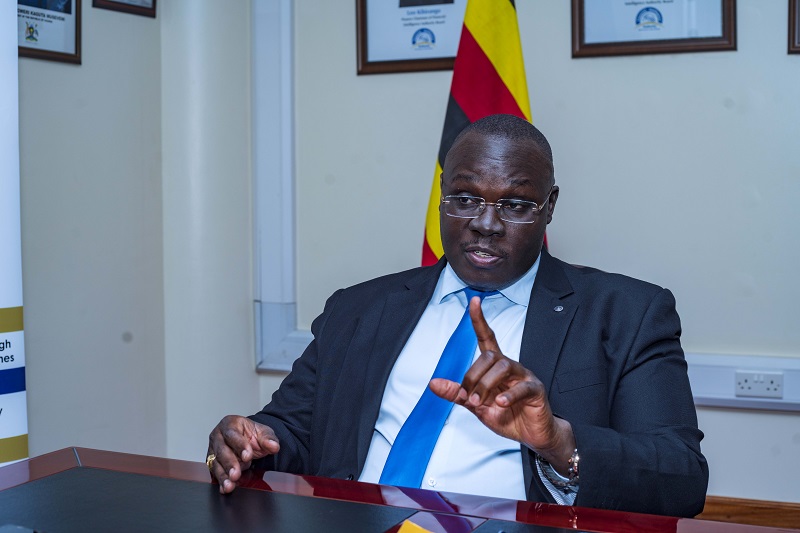
So in the case of Uganda, we receive information and analyse and if it is a matter to do with public sector corruption, we send it to the Inspectorate of Government (IGG) and if it is to do with anything else, other than that, we send to the police.
Subsequent to the 9/11 attacks in America, the same principles are applied to terrorism financing, so it now became, money laundering and terrorism financing (ML/FT). The same rules applied- the reason being that it was realised that the means through which terrorists moved money to finance their activities were the same as that of money launderers- moving money anonymously, through different means. The purpose might be different but the means by which they were moving the money was the same- the only difference being that in money laundering all the funds must be illicit in nature while for terrorism financing, somebody might have earned the money legitimately but for some reason, they choose to finance terrorism. So someone could be a trader, and maybe he wants to sponsor the overthrow of a certain government and therefore decides to finance those who are fighting. There are many parts of the world where there are so many conflicts and the parties involved in some of those wars and conflicts have been declared terrorist groups. So anyone who funds those becomes the financier of a terrorist group but yet they could have earned their money through legitimate means, but now they are putting it to criminal purposes.
What is the core mandate of the Financial Intelligence Authority?
The establishment of the Financial Intelligence Authority is Part 4 of the Anti-money Laundering Act 2013, as amended in 2017. We are a body corporate and the objectives are:
- To enhance the process of identification of crime, and the combating of money laundering and the way we do it is what I have just described above;
- Number two is to ensure compliance of this law- the many compliance obligations imposed on persons in this act;
- Number three is to enhance public awareness and the understanding of matters related to money laundering;
- Then number four is to make available, whatever information we have collected to competent authorities to facilitate the administration and enforcement of the laws of Uganda;
Number five is international cooperation- we exchange information that we have, either on request or spontaneously, information that we deem relevant for other countries. That is why most FIUs are urged to join the Egmont Group- a united body of 164 FIUs created to provide FIUs around the world a forum to exchange information confidentially to combat money laundering and terrorist financing (ML/TF). Uganda is one of the newest members.
In addition to the above, slightly over a year ago, the cabinet of Uganda also gave us an additional responsibility to do due diligence on entities that wish to enter into public-private partnerships with the government or one its agencies, although most of our requests so far have been from the Ministry of Finance. So in summary that is our mandate and why we exist.
You have been in existence for six years now. What are some of the key highlights thus far?
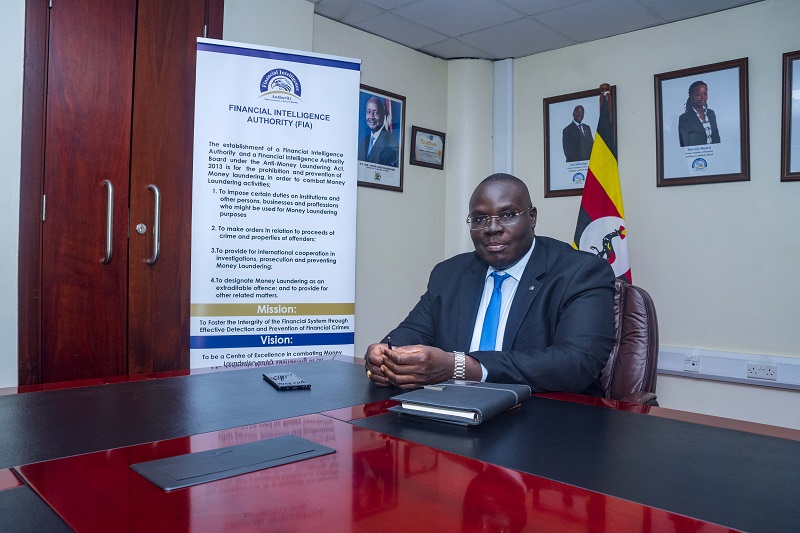
First, it is not a highlight, but it is worth mentioning, is the creation of the authority. Uganda had come under so much pressure because in the Eastern and Southern Africa, we were the only country that did not have an FIU- everyone was wondering what was happening in Kampala. So the FIA was established by the AML Act in 2013 and effective take-off and appointments by the Ministry of Finance was from 1st of July 2014. The first year was for setting up the systems and setting up offices.
Since then, our highlights have been many but I will focus on the major four. First was the conducting of the anti-money laundering/ combating of terrorism financing risk assessment. The assessment report was approved in August of 2017 by the cabinet, but the process started in 2016. This risk assessment is very important, because Uganda had never done a national risk assessment before, so this was the baseline- other future risk assessments will be based on this.
Although the FATF does not describe a time-line in which it should be done or renewed, it is accepted worldwide that the best practice, is to do it after every three years, so we are now about to either update the current one or to do a new one based on how significantly we have improved or declined from the baseline. A risk assessment is a core requirement of the FATF- countries must be able to understand their risk. Although FATF does not prescribe how a country goes about understanding its risks, which countries these risks come from, but also know which countries consider us to be risky. It is a two-way thing. We also must be able to understand which crimes generate the highest proceeds- for example in our case, fraud is the number one. Fraud is of course wide but it has subsets- it has corruption, theft, cybercrimes, including identity theft and embezzlement. That is number one by far. The gap between number and number two is so big- I would say half is fraud-related. All these other categories- wildlife trafficking, human trafficking, and counterfeits; could easily be clustered together or trade places in terms of prevalence.
Those who have read our national risk assessment have categorized it as one of the best in terms of quality, because, with most self-assessments, people tend to sweep things under the carpet. We have also highlighted some policy proposals therein to deal with these challenges.
The number two highlight would be the mutual evaluation report that was done in 2016. Again every country is required to undertake a mutual evaluation report which is an assessment of how they are complying with the international money laundering standards. So the process of assessment started in 2014 and we concluded it in April 2016 with a report. That exercise is so demanding because in the report you have to identify how you are complying with each of the 40 FATF standards as well as how effective the system is. Unfortunately for us, to be able to assess our effectiveness, we are required to look at the statics for three years, yet by the time our assessment team was on the ground in 2015, the anti-money laundering law had just been passed, so it was not a surprise that we scored below average on all the 11 areas where effectiveness is measured; I would say, naturally, because we were being assessed on the effectiveness of a law and systems which had just been created.
Number three is getting Uganda off the FATF grey list in 2017. As a matter of fact, one of the reasons we were put on the grey list in 2014 is because there was no FIU. The FATF grey list is a watch list for countries that are not doing too well in complying with international standards. And this list was compiled based on an assessment that was done in 2005 when we had no law, no FIU. The grey list- unlike the blacklist, which speaks for itself, basically says that although there is not enough institutional frameworks, the country has committed to working with FATF to address those issues within a two-year plan. If on the other hand, the country does not do so in the two years, then they should be on the blacklist. So in our case, we worked so hard, that we were removed from the list, in 2017. So that was high light number three.
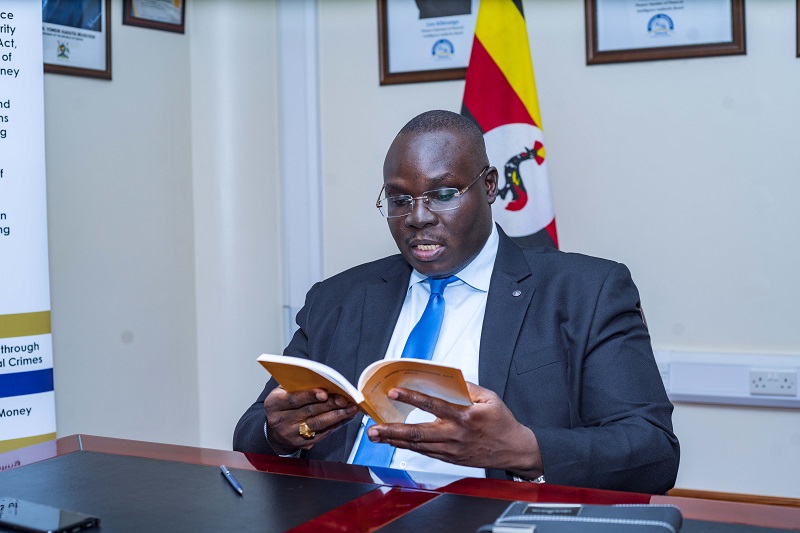
The fourth highlight is the admission of the FIA to the Egmont Group in July 2019. This is very important for us because it is a sign that as an FIU we have now matured. The Egmont Group is the only group that brings together all FIUs at an international level to enhance international cooperation especially in the exchange of information. The admission process is very rigorous because before you are admitted you must meet certain minimum standards, and one of them is that first of all you have to show that you are operationally independent and you have provisions in the law that show you are independent, for example, control of your finances, the security of tenure of the chief executive, and the chief executive has operational control of the organization. So we were assessed and we passed all this and so am happy to report that we were admitted in July 2019. Of all our neighbours in the region, only Tanzania is a member- others are not yet.
Also worth noting is that in terms of admission, from the time were created, to the time of admission, we were the fastest ever- from 2014 to 2017 within a span of fewer than five years, we had matured.
In terms of progress- of the things that you were created to bring to an end, would you, for example, say that there has been a reduction in Uganda in money laundering, fraud, etc.?
No.
Remember I told you that we got off the FATF watch list in 2017, but unfortunately we are back. This time around, they are happy with our laws; we have all the laws in place- all the institutions in place but they are not effective. Of all the 11 areas that FATF measures, I am happy to say that the only areas they say we were very effective, was the FIA. They said that as far as they are concerned, FIA is very effective in doing its part, but remember, fighting crime is a chain- it is not only one entity. Our role is to receive, analyze, and disseminate information regarding crime.
Those to whom we have been disseminating have not done a good job, according to FATF.
It is under what we call immediate outcome seven- that you must demonstrate that you have an effective system for investigating and prosecuting money laundering cases, and terrorism financing cases and we failed to demonstrate that. It is now on our action plan; we agreed at our meeting in Morocco, that Uganda would be given two years, from February 2020 when we were put back on the list, to demonstrate our effectiveness in investigating and prosecuting money laundering cases, and terrorism financing cases.
The reason why they came to that conclusion, and for us, it is very frustrating because we were able to demonstrate through numbers and quality, that we have sent a certain number of reports to police and the IG, but from IG and police what goes to court is such a small number. The major question then was that, is the quality of our reports so poor, that they don’t warrant an investigation, or is it because those who are supposed to handle have capacity issues? The FATF then came to a conclusion, having looked at the quality of some of the reports and they said the quality is good, but then it appears, the problem lies with those that are supposed to investigate, because those who are supposed to prosecute, can only prosecute what has been investigated. It would have been different if they went to court and they are losing cases, no they are not losing.
So we have been asked to demonstrate and one of the areas they have said we should be trained on and improve is our national coordination- so that is one of the items that we have not done very well. That means that in the next two years, we have to work to improve our systems. We are hoping that because we have been identified as posing a risk, then we’ll have to work to address, that risk.
As FIA, while we are happy with our own progress as an institution, the fact that our other sister institutions are not up to scratch, it is incumbent on us to develop a national strategy as a country to shift the needle. What we have been having is different stakeholders having their own strategies within their organizations and not at the national level. Right now, the national task force on ML/FT has been meeting, to finalize the national strategy, as Uganda- not FIA, the central bank and ministry of finance, each pulling out their own.
We were also asked to identify and plug the issue of the discrepancy between the statistics of the most prevalent crimes as identified in our national risk assessment and the statistics of prosecution- because if we are saying that for example money laundering, drug trafficking etc. are very high, and then there is no corresponding number of investigations and prosecutions, then that means there is a big problem. The FATF board wants to see, that if we are saying that drug trafficking is a problem, and Uganda is a transit route, can we demonstrate that we have made efforts to cooperate with the source as well as the buying countries to plug the gaps? Right now, there is no evidence of such cooperation. The same with wildlife crimes- Uganda is not a source country, we are a transit country- so if we are a transit a country and we know it, why haven’t we plugged the gaps? Is there evidence of cooperation with the source and destination countries? That is the other area we need to fix- we need to do that for drug trafficking, wildlife crimes, human trafficking, minerals trafficking, and also fraud.
We also need to do risk-based supervision of the financial services sector. The FATF said that the supervision we have been doing is so general for compliance, but we must demonstrate that we are now doing anti-money laundering specific supervision and that it is based on risk. Before you do that, you must first determine which areas pose a lot of risks- for example, which products, then you go to the institutions that trade in such products. That means that the central bank, the Insurance Regulatory Authority and Capital Markets Authority, and other regulators including ourselves, have to train ourselves to do risk-based supervision. These were the major shortfalls that were identified- that is why we are saying that we have a very long way to go and as you can see, none of this is directly attributable to the FIA, but because we work as a team, we rise and fall together.
Being on the blacklist is quite obvious, but what does it mean to be on a grey list? Why is it so bad?
It is bad to be on the grey, because one, you are identified publicly that you have significant weaknesses, which are of concern to the global community. Currently, there are 18 countries in this list, which is updated every time the FATF meets- our next meeting is supposed to be in June 2020 in China, but we wait to be updated whether it will happen or not.
In fact, the official name for the grey list is: countries under monitoring and blacklisted countries are those where a call for action has been made- the grey list is an informal term. Being greylisted is an expression of concern by the global community, but it is also to communicate that the country has made a commitment, an action plan with FATF to address those issues. In Uganda’s case, we have a two-year plan, running from February 2020 to May 2022.
Again when you are grey-listed, FATF emphasizes that it does not call on its members, to do extra due diligence to that country, but rather, it simply informs them that this is the status of the country and anyone who wants to deal with institutions in that country should be aware of the potential risks associated to that country. Being grey-listed, for example, impacts the decision-making for those who want to engage in foreign direct investment, especially those with a low-risk appetite would be worried about such a statement. While those who have a high-risk appetite may not be worried, there are those who will sit on the fence and say, since it takes two years to get off the list, let’s suspend our decisions for two years or let’s go to a safer country.
Another problem is that when a country is identified as being on the grey list, the FATF requires its other members to report to it, each time they are meeting- and this is three times a year, what steps they have taken to protect themselves when dealing with institutions in the grey list countries. Some countries issue warnings and write to their private sector and say this country is on a watch list so when you are dealing with them be aware. If you have been cautioned like that and things go wrong, that means that you cannot blame anyone. If you are aware that these issues are there and you went ahead to deal with that country, for example if you are in the banking industry and you went in and you ended up contaminating your money or the industry with illicit flows, you will not have the defense that you didn’t know. Some organisations/people will prefer to stay away altogether. That’s the challenge of being on the grey list.
 Inside the Balance Sheet: CFO Doreen Kyomugisha on Building Capital Strength and Financial Discipline at SanlamAllianz General Uganda
But with all these international agencies, FIUs, FATF and Egmont Group and the many other international and local laws on money laundering and terrorism finance, why isn’t it stamped out yet? Corruption seems to be on the increase.
Corruption is a global problem, although admittedly it is prevalent and its impact is more devastating in developing economies than the developed economies. Similarly, crimes like financial crime will always be there because of the very nature of man- greedy and selfish as aptly captured in the book, Lord of the Flies by William Golding. The darkness of man’s heart, his being inherently evil is well captured and unless you put rules to hold him back, he will wreak havoc on earth.
Yes, the rules are there, but we should be asking ourselves, are the laws deterrent enough? One of the biggest efforts the world is undertaking is taking the profit out of the crimes i.e. do not allow the criminals to benefit from the crimes they have committed. One of the most effective ways, other than imprisoning them is to take away what they have acquired from their illicit actions. The problem is that in Uganda’s case we have tagged the confiscation of the proceeds of crime to conviction. So if the law is that you can’t take away these things until somebody is convicted, and you know the conviction rate is so poor, that means the criminals know that all they have to do is to ensure that they are not convicted and then their assets will be safe.
The law has been in the pipeline for so long and in my view, unless you have civil or non-conviction based forfeitures, in this country, we’ll continue having this- even if we created a million institutions because institutions can only apply the law. Then once you have the legal basis for civil assets forfeiture, then you can now become effective because you now need to set up a mechanism in managing those assets. In some countries, they have set up organizations whose sole role is to manage those seized assets. In other countries they leave it to different stakeholders- everyone manages what they have seized.
For example, whatever we do here, we feed the police or IG, but if that information does not lead to a conviction then it would have been in vain. All the good work would have been in vain because you have not convicted a person, therefore they cannot forfeit assets. Then this has a ripple effect because others will watch and say if the other crook could get away with it, I will also try my luck.
You may want to ask, what are those things that make the convictions rates very low? One is the low capacity of the investigative bodies; two, there is corruption and people are compromised while investigating these cases. Actually those will be the two main actors. There is also a lack of the tools and lack of proper facilitation- many of the anti-corruption agencies, including ours, are underfunded. It is like going into the boxing ring with one hand or even both hands are tied behind you in some cases. Even if you are a heavyweight, they will knock you out.
For example, most of these investigations require forensics. If you are going to investigate a forgery, you will require handwriting experts, yet we have less than 5 handwriting experts in the country. So if the handwriting expert is going to take a month or two or three, sometimes six months to produce the report, that means that the investigation is not going to move. If you require a forensic audit, there is only one Auditor General to do a forensic audit and already they are overwhelmed with their other statutory obligations. If you asked them to do a forensic investigation that will take more than a while. The only forensic audits that have been done are those for high profile cases because there is a lot of pressure and interest, but ask yourself what happens to those where there is not much pressure?
Could it be a problem that most of your investigations are done in secrecy? Don’t you think if the investigations were in the open, the public would volunteer some information and make your work easy?
It is true that in some things, we could do better and one of them is access to declarations made by public officers. I think a mechanism has to be found to make this information, publicly available. People do not have the opportunity to comment on the truthfulness or otherwise, of the declarations made by the public servants. There was a time I think 20 years ago when the then IGG, Justice Jotham Tumwesigye published the declarations- there was too much outcry; people were looking at certain declarations and said this was a joke.
Also, the attitude people have towards the corrupt is also one that does not discourage the thieves. In many of our communities, especially the rural communities, people do not know how their sons and daughters earn a living. If they see a beautiful structure coming up, they will praise him or her; they will not really question how they got the money so fast. In some Asian countries, for example, Japan, they take such things as family honor and reputation seriously that people would rather die than soil a family’s honour. But here we don’t have such things, because not only is the society docile, but it also praises rather than shun those who amass assets, regardless of the means; that, for me is one of the biggest challenges that we have.
The digital era has changed the way how financial crimes are committed and the proceeds transmitted or shared. How ready are FIA and other anti-corruption agencies ready to deal with such?
It is true the means by which people commit a crime has transformed. While technology creates opportunities, for development, it also creates opportunities for criminals. Like I said earlier many of the enforcement agencies are not well equipped to respond quickly. For example, in the police, we may have a cyber-crimes unit, but the question is: beyond creating the unit and giving it the name, the people there, are they able to live up to the challenge? There are certain crimes like the dark web, which provides anonymity to criminals. If you are not able to detect the crime or even if you are able to detect the crime as the victims are easy to find, but you are not able to know the persons behind the crime, how will you bring them to book?
Technology-based crimes are on the rise globally and by their very nature, criminals tend to be a step ahead of law enforcement, because it is difficult for law enforcement to anticipate and react to a crime that has not happened. However, law enforcement must be able to have the capacity to react very quickly to emerging trends. For example one of the reasons why there has been reluctance from the regulators to accept cryptocurrency is because of its anonymity, and criminals love anonymity. While it’s a very good technology and some people thrive on it because of the many opportunities it has provided, but you have to weigh the benefits of the technology versus the potential challenges- regulatory and criminal. But in our case here, we have seen in the recent past very many people who have lost colossal amounts of money- billions of shillings to people purporting to be cryptocurrency dealers. The challenge has been that our response as a country has been very painfully slow and this is an issue for policymakers to decide and then guide us to the operational people. The approach seems to be, sit and wait for the rest of the world to see which direction they are taking, and in my view, that is not the correct approach.
For example, let’s take the issue of crypto assets. We have proposed as FIA, that virtual assets service providers should be made reporting entities under the anti-money laundering law. These providers have been defined by FATF as those who deal in crypto-assets and this could be the exchanges or the traders and so on. We will then be able to monitor them for ML/FT compliance- we made this proposal, one year ago.
Under the law, the minister of finance can amend the second schedule to The Anti-Money Laundering Act that lists the entities that report to the FIA. We made the recommendations one year ago, to the minister and our reason was that this is an area that is very vulnerable and could be used by criminals and right now there is no regulatory oversight.
So while Uganda grapples with the question of licensing crypto providers, we should in the meantime make them reporting entities. But it has taken a lot of time- the ministry took a lot of time to make a decision, but eventually, they did and the motion to seek approval of parliament has been laid and referred to the committee of parliament on finance planning and economic development. Right now they are dealing with budget matters and they have assured us that once the budgeting process is done, that is one of the priority issues they will attend to. That has been our response because right now there is no enabling provision for us to enter that space directly, so this is an interim measure. But whether on a broader scale, the country is going to allow them to operate, it is taking too long to be answered, but in the meantime, the criminals are defrauding the public.
Besides the issues enumerated above, what are the major challenges that you face as FIA?
We are still a young organisation and the challenges we have are unique to new organizations. There are about five significant challenges that we face as FIA- some of them are specific to FIA and others are broader.
One of them is the fact that ours is a cash economy- some of the provisions of the law are not tailored for a cash economy like ours. Some countries have been very efficient because they are able to say that for example, any transaction above USD10,000 should be done through the banks. That allows the FIU to see all these transactions. The rules are so tight and everyone obeys that rule- everything is traceable. But such a rule can’t be applied here- because here someone can take UGX1 billion in cash and buy a house and it will not raise eyebrows and we probably won’t know. That is why we have proposed that over a 10-year period, the government of Uganda should put in place a strategy to reduce cash transactions and encourage other electronic options- a lot of our focus has been on the banks- but supposing the banks are okay, how do we capture everything else happening outside the bank?
Number two is the informal nature of businesses- because we have so many informal businesses, there is no formal accountability because if something is informal you can’t monitor. You have a father and son starting a business from their personal savings and their personal and business transactions all go through the same account; you can’t separate which is which.
The third issue is the porous nature of our borders. For example one of the key cornerstones of the anti-money laundering legislation is that anyone entering or exiting the country with UGX30 million and above, should declare it to customs and then customs within 48 hours relays this information to us. But now because of porous borders, those who don’t want to declare have very easy alternatives and these alternatives are motorable; they just move. If you have stolen a million dollars and you want to carry it across the borders without declaring, there are many possibilities of doing so.
These three are very significant for us and yet they are outside the confines of FIA.
The fourth one is low budget allocations. You can’t do certain things unless you have the money- it is that plain.
The fifth one is the very low levels of awareness in the public, then law enforcement agencies, and even among the reporting entities of our mandate. If there is awareness then you have their support but if you are going to a place and people are not aware of you and your mandate; some entities don’t even know they are supposed to report to us- you go there you pull the law, and they tell you they didn’t know.
Those are the main challenges and of course, we have also made proposals on how to overcome them.
In light of the achievements and challenges highlighted, what do you see being the next focus in five to ten years?
Currently, we are developing our strategic plan for the next five years and one of the key things we are looking at is to strengthen the capacity of the FIA to carry out our mandate.
Our plan is anchored on three things and the first one is strengthening our capacity to carry out our mandate. We are doing this by advocating for increments in our budget, as well as human resourcing because we must have the numbers to be able to combat the other challenges that we face.
Number two is getting Uganda off the grey list by 2022. It is not going to be an easy thing, because there are so many things that we must do as FIA and others by our sister agencies. In addition to what I mentioned earlier, we must do certain risk assessments- one of them that is very critical, Uganda must establish a beneficial ownership register because we know so many people have been hiding through briefcase companies and we must work together with URSB to establish who are the owners of these entities? We must do a risk assessment of legal persons and entities, the trusts, and the rest- you know how shady some trusts can be. And then we must also do an assessment of the NGO sector to determine what vulnerabilities and risks are there in terms of terrorism financing.
Number three, we must plan and carry out a mutual evaluation assessment- the current one was done in 2016 and the next one is due in 2023 or 2024. But because of this coronavirus, we might be forced to push everything ahead by 6 months or a year depending- but we will do it in 2023 or 2024. We must work very hard because it’s not only about doing a report; but we must do it well because right now our effectiveness is low. We want to make sure that at least we move our score to attain half or more of the 11 critical areas. The FATF is happy if you score high or substantial, but if you score low or moderate, it means you are below the pass mark. So if you are rated at anything low or moderate, you must come up with plans to address your issues- anything that is high or substantial, then you need to maintain. Those are the three key things that we need to achieve in the next five years.
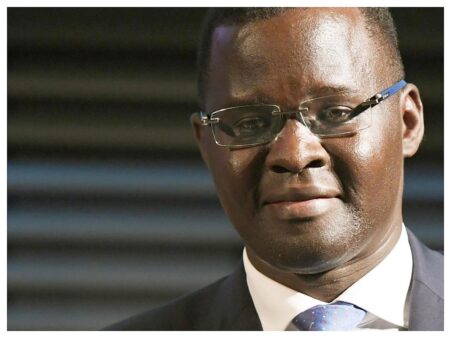
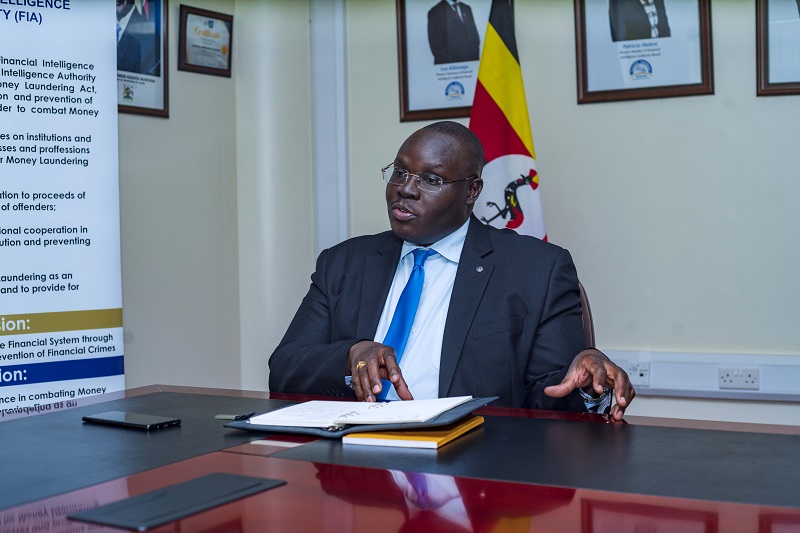
Sydney Asubo; a short bio
Sydney Asubo is presently the Executive Director of the Financial Intelligence Authority, effective 1st September, 2015. He is the pioneer Chief Executive Officer of the Authority.
His past immediate position was that of Director of Legal Affairs at the Inspectorate of Government which is the main anti-corruption agency in the Republic of Uganda.
He has previously worked as a Senior State Attorney in the Directorate of Public Prosecutions in Uganda. He has extensive experience in both prosecuting serious crime and in Criminal Justice Policy work. He has represented Uganda in many international criminal justice fields, particularly financial crime-especially corruption, anti-money laundering, and combating terrorism financing.
He is a task force member in the Eastern and Southern Africa Anti-Money Laundering Group. Currently, he is the Chairman of the Evaluations and Compliance Working Group, of the Eastern and Southern Anti-Money Laundering Group, which brings together 18 member countries. He is also a member of the Africa/Middle East Joint Group, a working group of the Financial Action Task Force, which is the global standard-setting body for fighting money laundering and the financing of terrorism.
He is a Review expert under the United Nations Convention Against Corruption (UNCAC) and participated as such during the review of Uganda’s Compliance with UNCAC. He also participated in the Review for Compliance with the UNCAC as an expert, for Togo, India and Burkina Faso.