The Bank of Uganda has increased the Central Bank Rate (CBR) by 50 basis points to 9 percent.
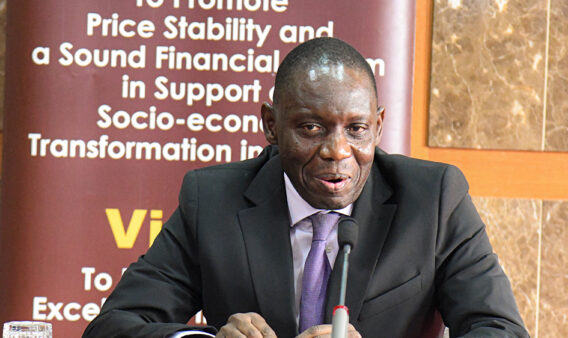
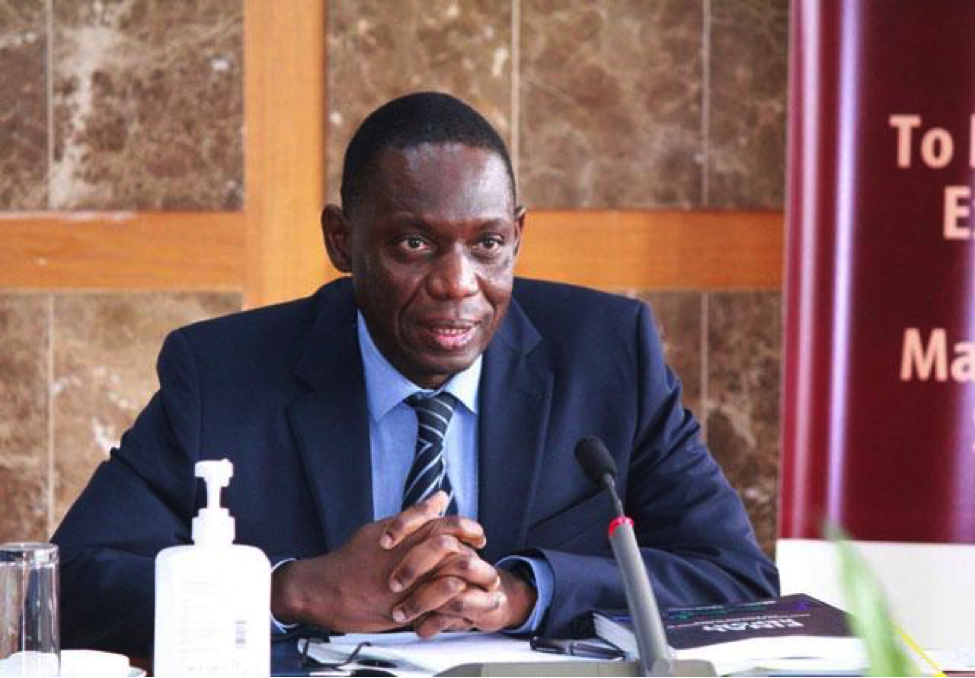
The revelation was made by Michael Atingi-Ego – Deputy Governor in a Monetary Policy Statement for August 2022 on Thursday.
“The economy continues to face strong cost-push inflation pressures from the external environment, dry weather conditions, and exchange rate depreciation amidst weak domestic demand. The annual headline and core inflation rose to 7.9 percent and 6.3 percent in July 2022 from 6.8 percent and 5.5 percent in June 2022, respectively. Annual food crop inflation continued to rise from 14.5 percent in June 2022 to 16.4 percent in July 2022 and annual Electricity, Fuel and Utilities (EFU) inflation rose from 14.2 percent to 17.2 percent in the respective months,” he said.
The BoU forecasts show that inflation for 2022 remains in the range of 7.0 to 7.4 percent.
Accordingly, the inflation outlook is driven by the lagged impact of higher exchange rate depreciation, dry weather that has resulted in the sharp rise of food crop prices and a complete pass-through of global inflationary pressures.
BoU says that the risks to the outlook for inflation are tilted to the upside and they include:
- A further intensification of geopolitical tensions which could ignite a renewed surge in oil prices.
- Faster policy rate tightening by advanced economies which could result in higher depreciation of the shilling.
- Continued escalation of global inflationary pressures amidst persistently higher world food and energy prices as well as lingering supply shortages.
- Higher domestic food prices should the dry weather conditions become more protracted.
- A threat of inflation expectations getting significantly de-anchored.
However, Atingi-Ego says that there are downside risks which include; weaker domestic household consumption and investment expenditure as tighter financial conditions and higher inflation reduce disposable incomes, emergence of a global recession which could dampen global inflationary pressures much faster than currently assumed, resulting in a decline in imported inflation.
Other downside risks include a rebound in favourable rainfall across the country which could lead to bumper food crop harvests and global production and distribution disruptions could ease, and global policy tightening could result in faster declines in energy and goods prices.
Quarterly GDP estimates by the Uganda Bureau of Statistics (UBOS) indicate that the economy contracted by 1.6 percent quarter-on-quarter in March 2022.
 Africa Loses Over $10 Billion to Breast Cancer as Experts Call for Strategic Investment in Women’s Health
Atingi-Ego says that all sectors of the economy contracted with the services sector are taking the biggest hit.
“In addition, the Composite Index of Economic Activity (CIEA) has continued to signal a slowdown in economic activity. The growth of the CIEA reduced from a quarter-on-quarter growth of 2.1 percent in December 2021 to 1.4 percent in March and June 2022. The growth of the CIEA slowed down to 3.9 percent year-on-year in June 2022 from 4.6 percent in March 2022.”
Overall, BoU says economic growth prospects have been dimmed further with increasing risks of a global recession, and weaker consumer and business sentiments as high inflation and commodity prices, continue to erode households and business incomes and financial conditions tighten.
“Economic growth is now projected in the range of 2.5-3.0 percent in 2022, partly reflecting the effects of higher costs of production arising from fuel and transportation on activity, but will rise to 5.0-6.0 percent in 2023, in part supported by public investments and recovery in demand as inflationary pressures begin to wane.”
The Deputy Governor says the risks to the growth outlook are tilted to the downside, including the emergence of global recession, escalation of geopolitical conflicts, heightened global economic uncertainty, and higher inflation.
Other downside risks are a further decline in consumer confidence, heightened exchange rate volatility and extended weakening of investor optimism. In the medium term, the economy is projected to grow in the range of 6.5-7.0 percent, supported by public and private investments in the oil sector.
“In the near term (12 months ahead) BoU forecasts that, inflation pressures will continue to rise. While the current increases in the CBR are meant to bring back inflation to its medium-term objective of 5 percent, these have had the indirect effect in lowering the pace of depreciation of the exchange rate, which is expected to cushion the inflation pressures. In addition, the Committee noted the recent support from the tightening of fiscal policy to address the current inflationary pressures. The Committee therefore decided to raise the CBR by 50 basis points to 9.0 percent. The band on the CBR remains at +/- 2 percentage points. The margins on the CBR for the rediscount and bank rates will remain at 3 percentage points and 4 percentage points, respectively. Consequently, the rediscount and bank rates will be 12 percent and 13 percent, respectively. Going forward, the MPC considers that the monetary policy stance will have to be tightened even further if inflationary pressures persist to ensure that inflation reverts to its medium term target of 5 percent.”