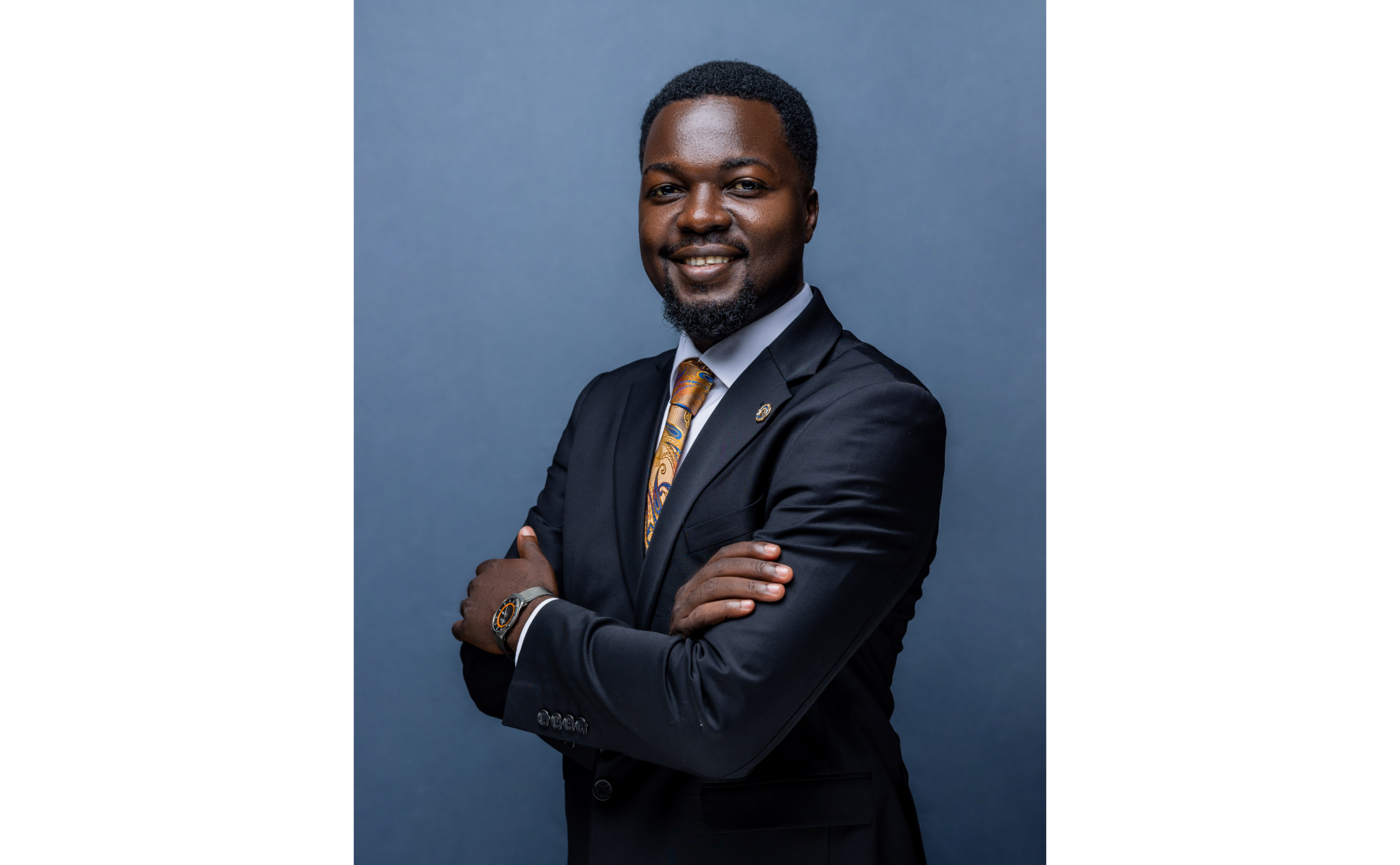
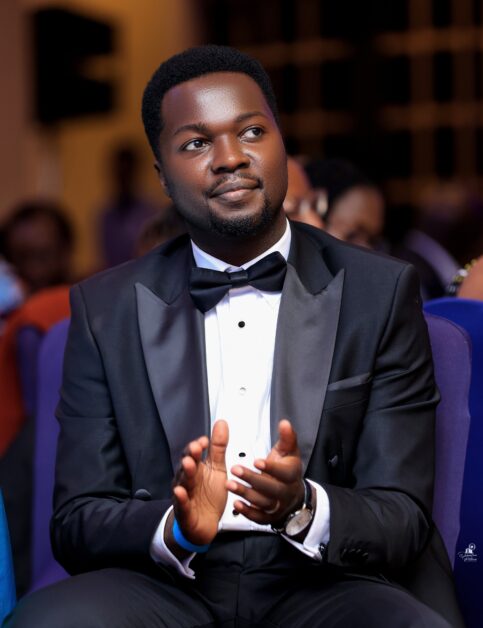
Kenneth Rubango is the Director of Biomedical Engineering at the Joint Medical Stores (JMS). JMS is a private-Not-For Profit Non-Governmental Organisation that was established in 1979 as a joint venture between the Uganda Catholic Medical Bureau (UCMB) and the Uganda Protestant Medical Bureau (UPMB). He is also the sitting president of the Rotary Club of Muyenga Tank Hill. He spoke to the CEO East Africa Magazine about his love for positively impacting lives.
Biomedical engineering isn’t a field we hear about often. We see what it does, but not who does it. How would you describe what you do at JMS and why it matters to the everyday Ugandan patient?
At JMS, I’m part of a team that selects the best-value medical equipment, designs hospital buildings, and develops the software that runs them. This matters to every patient because the spaces and technologies that surround them can either accelerate or slow down recovery.
It’s like being in an airport; if it’s not obvious where to go, you might miss your flight. Similarly, hospital design must manage patient and staff movement efficiently while remaining mindful of operational costs.
If a hospital isn’t efficient, these costs trickle down to the patient, making quality healthcare unaffordable.
When it comes to equipment, we don’t necessarily pick the latest technology. Rather, we get the best value for our environment, one that can withstand dust, inconsistent electricity and other local challenges to reduce maintenance frequency and the attendant costs.
Our aim is not the cheapest option but the most reliable and sustainable one.
This matters because every time a patient visits a health facility, they expect the equipment to work for diagnosis, treatment, and prevention. We prioritise equipment uptime and functionality, providing a lifetime warranty on all medical equipment we supply.
That means JMS performs preventive maintenance for the equipment’s entire life, ensuring it remains operational and safe plus repairs in case of failure. In essence, our work gives patients a higher chance of survival.
You mentioned hospital design, which many assume is the architect’s job. How do you fit into that ecosystem?
We work closely with architects, civil, electrical and mechanical engineers. However, hospitals are unique facilities, not residential buildings and often require biomedical expertise during the design stage.
For example, an X-ray room cannot have windows, yet we frequently find designs that include them. When we step in late, we must redo electrical works or break walls, increasing the cost of construction, which eventually burdens the patient, yet it is avoidable.
We don’t replace architects or engineers; we complement them. Our training and regular ward rounds allow us to understand patient flow, helping us spot inefficiencies early. For instance, too many reception areas create confusion and increase staffing costs. Hospitals should be designed like airports, intuitive and obvious.
Good design makes operations efficient, helping hospitals break even sooner and remain sustainable. Otherwise, you risk ending up with a beautiful but non-functional “white elephant.”
You also mentioned software. What kind of systems are you talking about?
Hospitals need various software systems to run efficiently. One example is our Medical Equipment Inventory Management System, which we developed at JMS.
It helps hospitals track all their equipment, its condition, and service history, automatically reminding them when maintenance is due. We give this system to our clients free of charge because when they perform well, so do we. This system works in tandem with our lifetime warranty.
Beyond that, hospitals need Enterprise Resource Planning (ERP) tools and integrated systems that connect supply chain, finance, patient management, and operations.
We help hospitals procure this because a strong supply chain must have visibility from the manufacturer all the way to the patient. When systems “speak” to each other across this chain, healthcare becomes more responsive and resilient.
What’s been the most exciting transformation you’ve witnessed in your field?
One of the most exciting ones has been our teleradiology service. Traditionally, radiologists, who interpret medical images, are only found in larger hospitals, yet imaging equipment exists even at smaller Health Centre IVs.
Our system allows clinicians at these centres to take images and send them online to radiologists elsewhere for expert interpretation.
The turnaround time is world-class; within two hours for regular cases and one hour for urgent ones, comparable to the UK or US, but at a fraction of the cost.
We’re proving that quality healthcare doesn’t have to be expensive. As biomedical engineers, we are guided by the Hippocratic Oath, “Do no harm.” Every selection we make puts the patient first.
Another milestone was through Oxylife 2020 Uganda Ltd, a JMS subsidiary. In 2021, we introduced the only licensed medical-grade oxygen in Uganda’s private sector, certified by the National Drug Authority. Before that, some facilities unknowingly used industrial-grade oxygen meant for welding, a serious safety risk.
Our insistence on compliance with international standards was rooted in our duty to protect patients’ lives. I advise patients to always ask hospital authorities where they source their medical oxygen for their safety.
Uganda’s healthcare sector has limited resources. How do you balance innovation with affordability?
Our strength lies in our deep understanding of technology. Engineers create what doesn’t exist; we design solutions fit for purpose.
Because we understand equipment inside out, we know what features are essential and what’s necessary in our context.
Just like most smartphones have more computing power than the machines used to send the first man to the moon, hospitals often pay for functionalities they’ll never use.
Aware that the needs of a Health Centre IV are different from those of a referral hospital, we ensure facilities get only what they need; compliant, durable, and supported by available spare parts at the right value. That ensures that all equipment sufficiently serves the clients, given the numbers and needs.
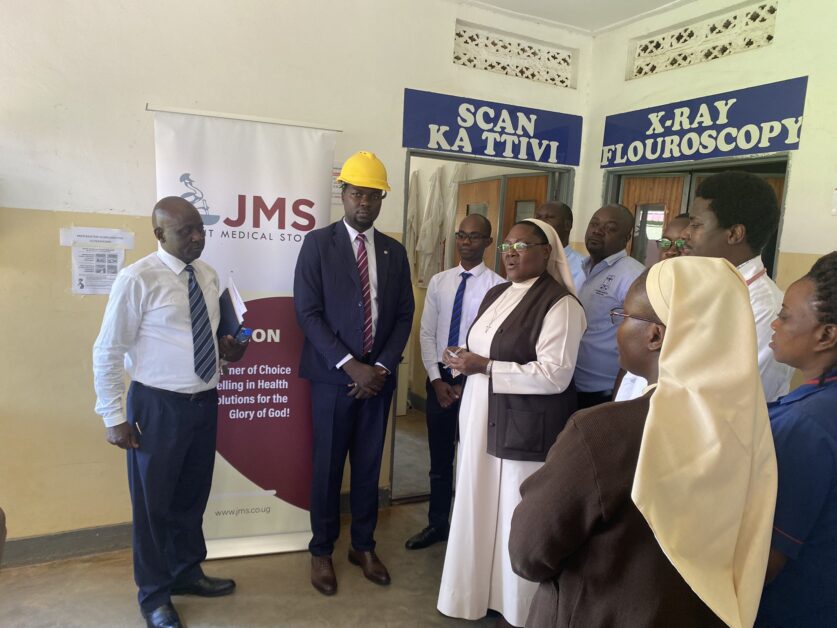
Is there a moment that reminded you of how deeply your work impacts lives?
Yes, when we were setting up our oxygen production plant. We insisted on meeting international standards for medical-grade oxygen, even modifying the machines to meet our tropical climate, as it differs from the point of origin. It cost us more time and resources.
A few years later, my six-month-old daughter fell ill and needed oxygen therapy. Hesitantly, I asked for the oxygen source and to my delight, they told me it was from JMS, which comforted me. Remembering the effort we had put in, tears rolled down my cheeks.
To paint the picture, industrial-grade oxygen isn’t sieved adequately and can contain oil residues that are carcinogenic or harmful to the lungs. Our medical-grade oxygen goes through multiple filtration and verification stages.
In that moment, I realised that our diligence had protected my girl. It reaffirmed my belief that patient safety is non-negotiable, a reason why I cannot just give up on consulting and seeking what I can do better.
You lead technical teams in a fast-evolving field. What leadership lessons has biomedical engineering taught you about innovation, people, and patients?
The biggest lesson is to listen. Listening to users, clinicians, nurses, and patients helps us design solutions that truly work. We must ask intelligent questions and remain open to changing course when new insights arise. Only then can we create technologies and systems that are contextually relevant and impactful.
Beyond healthcare, what does biomedical engineering teach leaders about judgment, especially when under pressure to chase trends, ideas, and quick wins?
When we talk about the “environment” in this context, we are not necessarily referring to ESG, but to the use case. Biomedical engineering teaches leaders to ask what business thinkers call the job to be done.
The “job to be done” forces you to peel back layers until you clearly understand the real need, not the want. For example, if the need is simply to make a phone call, there are many options available.
But if, in a specific context, the phone will only ever be used for calls and nothing else, then investing in a high-end smartphone becomes unnecessary.
In healthcare, that distinction is critical. Over-engineering a solution can make services unaffordable and push them out of reach for the very people they are meant to serve.
The same logic applies when equipping a health centre versus a national referral hospital. The job to be done is fundamentally different.
Recommending referral-level equipment for a facility that will only use 5% of its capability forces the centre to overcharge patients just to recover costs.
This principle extends far beyond healthcare. In design, leadership, and strategy, the discipline is always the same: What is truly needed, and how do we meet that need without unnecessary complexity?
In today’s technology-saturated world, we often start with solutions, such as AI, blockchain, and automation, looking for problems to attach them to.
As a digital transformation expert, I have seen that this is why many digital transformation projects fail. Leaders ask, “Where can we use AI?” instead of asking, “What problem are we trying to solve?”
When you understand the problem deeply, you might discover that it is not a technology problem at all, but an organisational cultural or structural one. Starting from the ground up, rather than top-down, saves resources, time, and credibility.
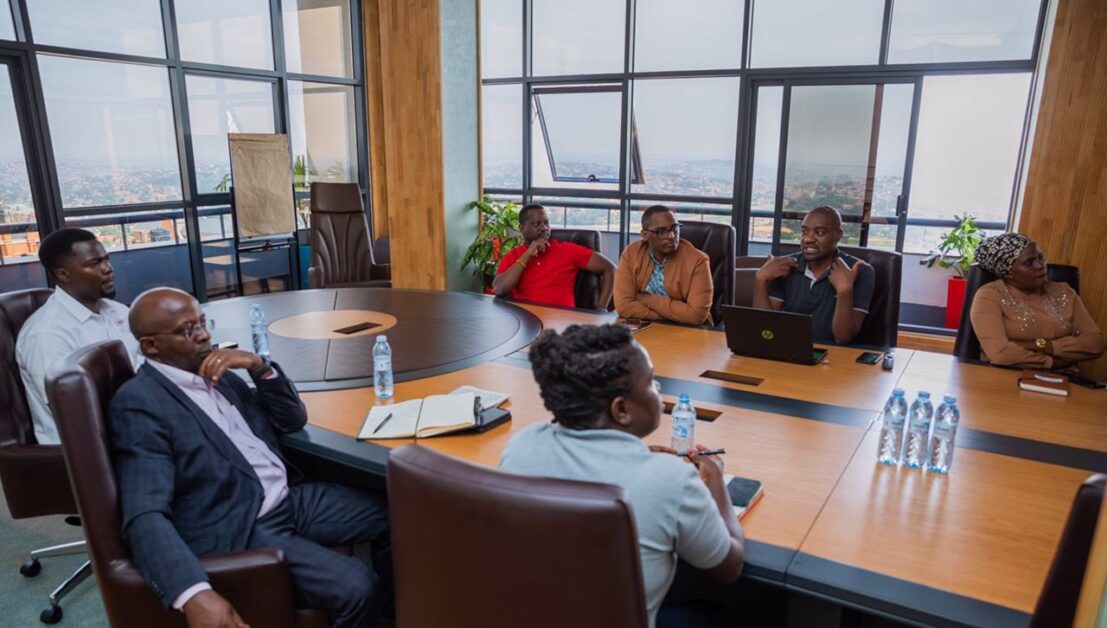
What would change if leaders designed organisations anticipating breakdowns rather than reacting only when crises occur?
First and foremost, leaders would become bolder.
Related
 World Bank Ready to Fund Standard Gauge Railway Project Following Talks with President Museveni
In my experience, risk management often looks convincing on paper until it requires actual budget allocation. That is when true commitment is tested, and often fades. Fail-safe mechanisms are praised in principle but abandoned in practice.
Take the example of succession planning, which is a fail-safe system. Yet many leaders delegate only partial authority when they are away for whatever reason. On paper, everything looks fine, yet when the moment critical decisions must be delegated, trust is tested, and often withheld.
In biomedical engineering, failure to design for failure costs lives. There is no “we’ll fix it later.” The plan B must work just as well as the primary system.
If leaders adopted this mindset, organisations would become more resilient. Instead of reacting to crises, they would be prepared for them. If someone is not equipped to step up, the response should not be pushing them to the back burner, but training and preparation. True commitment to fail-safes builds trust, courage, and continuity.
From your experience, where do leaders most often get it wrong, having strong strategies on paper but overlooking execution realities?
Leaders often become too technical and forget their core responsibility of managing people.
Execution fails when leaders neglect motivation and organisational culture. A strategy on paper is meaningless if people are not internally driven to deliver it.
There is a powerful analogy here. If you want people to build a ship, the most effective approach is not to teach them naval engineering, but to make them desperately want to cross the ocean. Once the desire is strong enough, they will figure out how to make the ship float.
However, motivation must be authentic. Research shows that extrinsic rewards (money, promotions) only work up to a point. Beyond that, what truly drives people is intrinsic motivation, rooted in purpose, transcending material gains.
At JMS, we distilled our purpose to three words: saving lives diligently. That is the reason people wake up every morning.
That is what was embedded in President J F Kennedy’s speech about taking America to the moon. So, even a janitor at NASA could say his job was “to put a man on the moon” because his work (say, keeping dust out of the labs) was connected to a higher purpose.
Leaders often underestimate this responsibility. They focus on technical direction and forget that their greatest task is to cascade values and purpose through that vision speech.
When culture is alive, micromanagement becomes unnecessary. People solve problems because they believe in what they are doing. That is why doctors worked tirelessly during Covid-19, despite being some of the poorly paid professionals.
Without this mindset, the saying: culture eats strategy for breakfast, becomes relevant.
Why is listening often undervalued in leadership, and how does an engineering mindset help leaders ask better questions before making decisions?
In engineering, there is a discipline called requirements engineering. The rule is simple: these are not your requirements but those of the user. Your role is to listen, write, observe, and understand.
Frameworks such as design thinking reinforce this. You immerse yourself in the user’s environment, observe their workflows, and experience their challenges firsthand. All of this is listening.
Leaders often fail because there is an expectation that they must know everything. Unfortunately, many leaders internalise this expectation and speak too soon.
In reality, leaders are more like orchestra conductors. They may not play every instrument or sing well, but they know when each player should come in. That requires deep listening.
The safest assumption to work under is that you do not know. That is why the best leaders listen first. By the time they speak, they are synthesising collective intelligence, not imposing personal opinion.
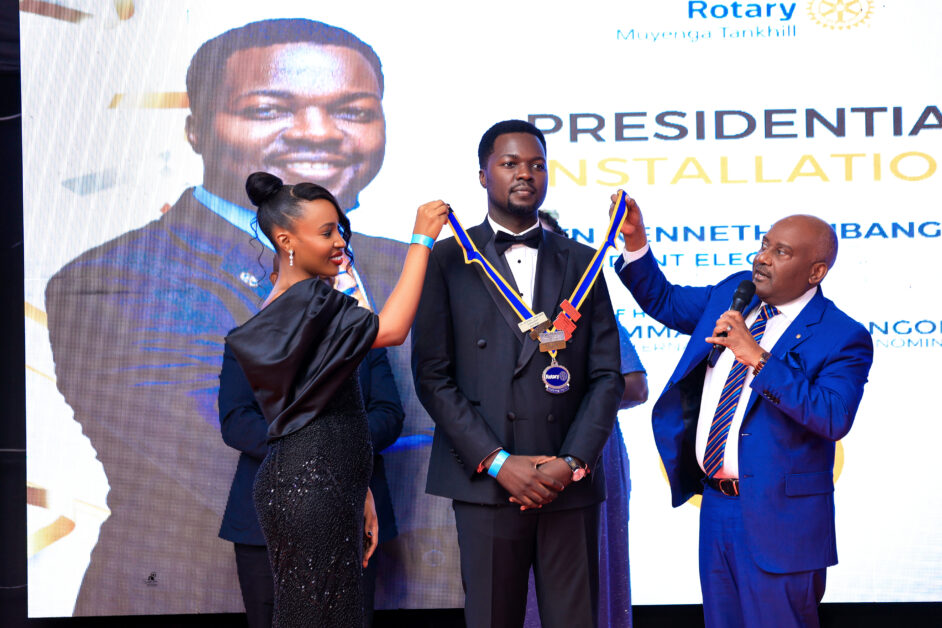
Beyond what you’ve mentioned, are there other principles from your field that continue to shape how you lead?
Yes, intellectual curiosity and critical thinking.
My proudest achievements have come less from technical knowledge and more from critical thinking. Engineering taught me to be curious, never confined to my study forte.
This mindset has allowed me to add value far beyond biomedical engineering. For example, through digital transformation thinking, we developed AgroMavericks, a crowdfunding platform for agriculture.
More recently, an intern and I explored financing healthcare infrastructure using carbon credits through bamboo cultivation.
This project combines environmental impact, sustainable financing, and healthcare delivery. It has nothing to do with biomedical engineering on the surface, but everything to do with problem-solving and value creation.
Leadership at the executive level is not about deal-making but building growth engines; systems that continue to generate value long after you have stepped away.
Ultimately, this is about learning to learn, even when we hit roadblocks, by consistently challenging our minds to generate real value.
That, more than any technical skill, is the lesson that continues to guide how I think about people, systems, and decisions.
You’re also a Rotarian. Rotary’s motto is “Service Above Self.” What does that mean to you personally?
To me, it echoes the Biblical commandment to “love your neighbour as yourself.” Rotary gives that principle structure and accountability.
I’ve reached where I am because others supported me along the way. It’s now my responsibility to pay that forward through mentorship, expertise, and community service.
Rotary has become part of my value system as it provides a platform to pay it forward, as my mentor asked me.
It does not have to be Rotary, maybe Lions or any other entity, because it’s about living beyond oneself and multiplying the impact of others’ investment in you.
Every Rotarian has a defining project. What’s yours at the Rotary Club of Muyenga Tank Hill?
The project dearest to my heart is our solar-powered on-site medical oxygen system for lower-level health facilities.
Our District Governor, Christian Kyeyune Kawooya, is passionate about maternal and child health. Data shows that most childbirths occur at Health Centres III and IV, yet these facilities often lack oxygen and reliable electricity. That is inasmuch as every eight to 10 children and mothers need this oxygen.
The innovation is a combination of technologies yet cost-effective and was made possible through support from the 302 Foundation. The system also has an automatic switch to a backup oxygen cylinder to ensure an uninterrupted supply.
We also equipped the wards with non-electric breathing aids and a patient monitoring system that tracks vital signs remotely via a wearable device. The latter speaks to a tablet and is ideal for monitoring patient conditions, more so babies
Working with six other Rotary clubs, we launched the first unit at Kalangala Health Centre IV, and on that day, the entire island had a blackout.
Our equipment worked flawlessly because it powered the centre. That moment proved how transformative the solution was. It later became the Governor’s flagship project, with more clubs joining to scale it nationwide.
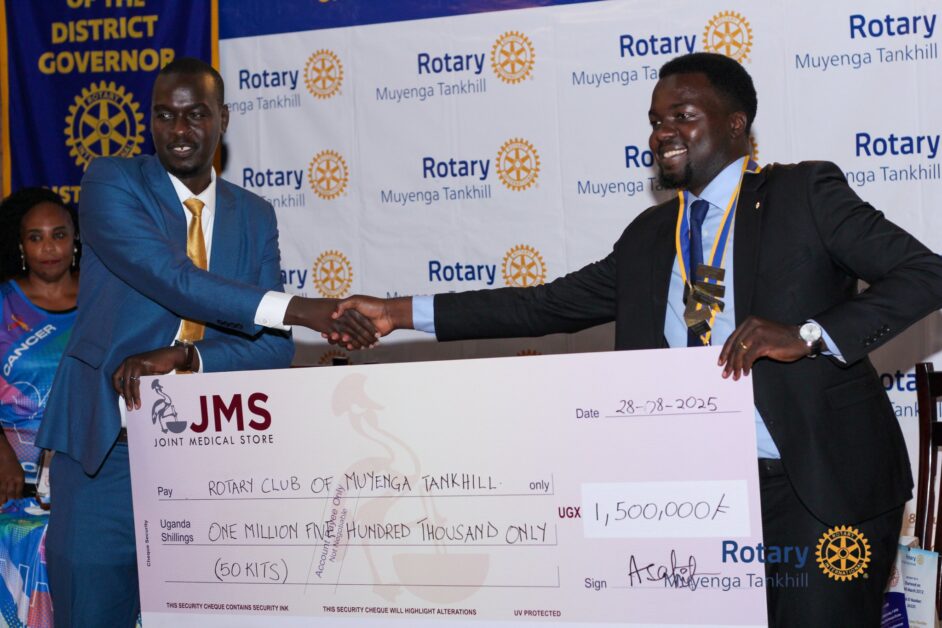
How does your biomedical engineering background influence your community projects and leadership within Rotary?
Engineers swear by efficiency: we are excited by comparisons, doing so much with so little. At Rotary, that mindset translates into maximising the impact of every shilling raised. We measure success by how many lives are changed per resource spent.
Owing to my technical background, I am certain that everything can be done. That allows me to then focus on what truly matters (people, systems, and sustainability).
Technology is rarely the limitation; the real challenges lie in human and organisational factors. Once we address those, implementation becomes easier.
You are a father, team leader and Rotary president. How do you stay balanced?
I’m blessed with great teams at JMS, in Rotary, and beyond. They share the vision and often improve upon it. Collaboration keeps everything running smoothly.
Finally, looking at your twin journeys at JMS and Rotary, how would you like to be remembered?
By my impact. I want the work I do to be tangible, visible, and meaningful; impacting as many lives as possible. It’s not about recognition, but about results that speak for themselves.