Away from the loss of thousands of lives and the devastating impact on healthcare systems all over the world, the other victim of Covid-19 has been the global economy. The disruptive nature of the disease threatens to cripple economies further – especially sectors such as tourism and manufacturing which depend on the physical presence of employees where critical tasks cannot be executed remotely.
For factories, where social distancing is an immediate hurdle, the restrictions on physical movement of persons was initially a threat to continuity.
Daniel Birungi, Uganda Manufacturers’ Association (UMA) Executive Director, says the Covid-19 pandemic has caused significant disruptions in logistics chains and upset the operational and strategic models of several businesses. The uncertainty about the pandemic makes it further difficult for businesses to plan a structured recovery.
According to statistics from the 2018 Economic Outlook report, Manufacturing accounts for 18.5% of Uganda’s Gross Domestic Product (GDP).
Birungi stresses that it was therefore important for the sector to continue running.
“Recognizing the significant role that manufacturing plays in keeping Uganda’s economy running, efforts had to be made to identify solutions to mitigate the risk of the Corona Virus while still continuing to run industries in the country,” he says.
One solution was permitting factories to encamp their employees at the factory premises so that production could continue despite the lockdown.
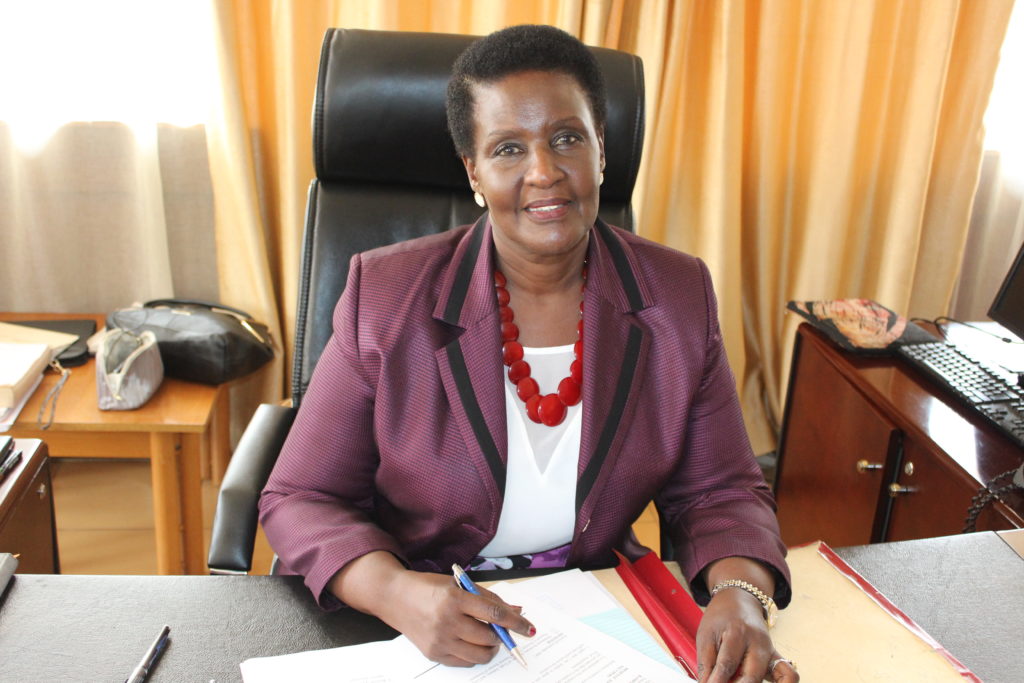
Minister of Trade, Industry & Cooperatives, Hon. Amelia Kyambadde, says this ‘guerrilla’ approach was first advanced by His Excellency, President Yoweri Kaguta Museveni.
“His Excellency said stopping factories or farms would be economic suicide, so we had a serious responsibility to ensure continuity amid safety,” she explains, adding: “As the line minister I had to keep my doors open so that the factories could keep theirs open too.”
“I interacted with a number of these factories and I was amazed at how committed they were to continuing production. I have insisted that all the SOPs be followed to the letter because industry is important but the people must be healthy. So far, I am satisfied with what I have seen and government is committed to continue supporting them,” she says.
Initially a few factories embraced the idea of encamping their workers but it has now become the new normal.
“During the first phase of the lockdown we had over 214 factories encamping workers in Eastern, Central and Western Uganda. Now there are even more that are operational and following the guidelines for safety. As Government we are clear that even in these circumstances our strategy for economic development must rely on industry and manufacturing as the mainstay of the private sector,” Hon. Kyambadde proudly adds.
From the very start of the pandemic, President Museveni’s staunch support for manufacturing has been consistent and unwavering. In one of his regular national addresses he said that his twin-strategy of fighting Covid-19 consisted of protecting both the lives and the livelihoods of Ugandans and ensuring they do not conflict.
“I do not easily join the pessimists in predicting doom for Africa on account of this disease that is easy to prevent, especially here in Africa. There are about 14 production lines of different foods or beverages, where, even if we were to concentrate on just one or two, we would have a very strong durable economy by world standards,” he told the country, in a recent paper on “The Real Economy vs. the Vulnerable Economy”.
The President reiterated that it would be “suicide” to close farms and factories, and insisted that production must continue provided all public health and safety Standard Operating Procedures were followed.

“Let us, without compromise, implement the building of an integrated, independent and self-sustaining national economy, linked to the African economy through co-operation among the African countries. We already have the basics – we have enough electricity, good trunk roads, a lot of educated people, including scientists, and we have a healthy population, of 42 million people that will be 106 million by 2050 in Uganda alone,” he further wrote.
 After Success, Then What? Francis Kamulegeya on His Aptly Titled New Book and Life Beyond Big Titles and Offices
Birungi is now happy that, companies, “both large and small have embraced this initiative and the result has been a continuous supply of manufactured goods to the consumers.”
“Little wonder therefore that projections show the manufacturing sector as having the highest likelihood of recovery post the Covid-19 pandemic. For the manufacturing sector, continued production remains a key focus and appreciation is due to the Government of Uganda for ensuring that the focus on this is retained,” he says.
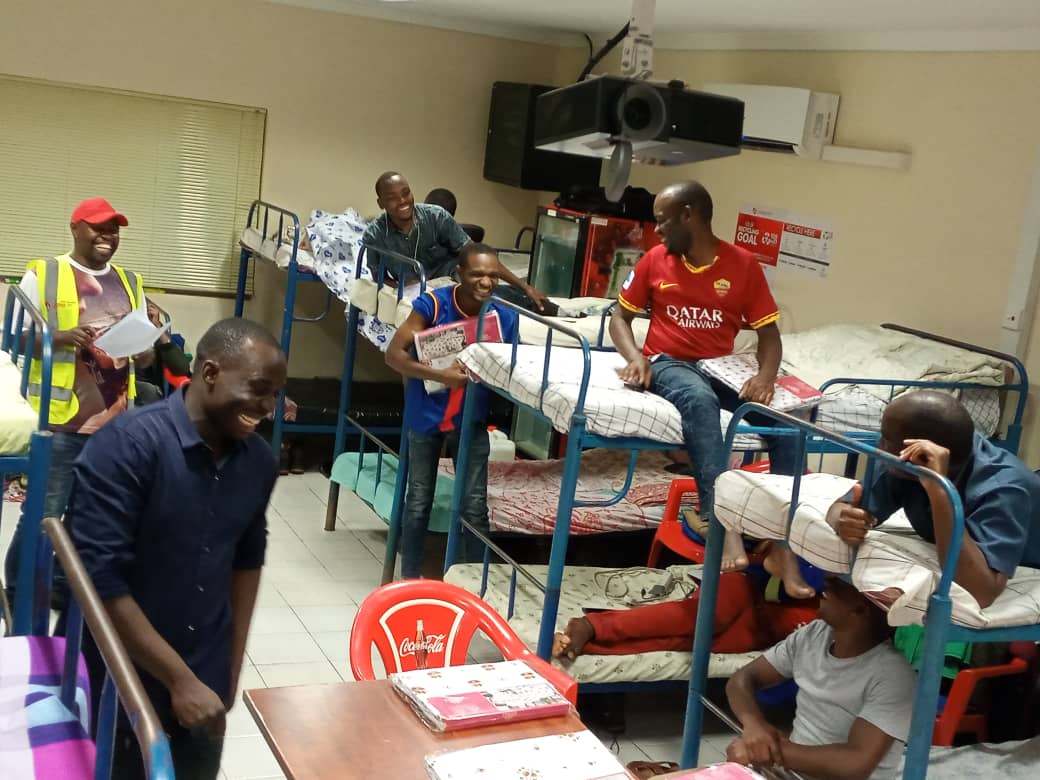
Resilience and optimism: inside the Coca Cola staff encampment facility
One of the companies that has fully embraced the encampment strategy is Coca-Cola Beverages Africa, Uganda, the manufacturers and distributors of Coca-Cola products in Uganda. Their range of products includes Coca-Cola, Sprite, Stoney, Fanta, Fuze Tea, Power Play, Minute Maid and Rwenzori mineral water. The company is the largest soft drinks and water bottler and is also one of the country’s largest tax payers and employers.
“From the beginning, we anticipated this as one of the scenarios likely to play out. So, we quickly turned the plans into reality. Within 24 hours both plants at Namanve, and Mbarara were ready with the right accommodation and sanitation facilities. Our next worry was the people – would they be ready to leave their homes and live at the Plant for the period?” says Simon Kaheru, the Public Affairs and Communications Director at Coca-Cola Beverages Africa, Uganda.
“The response was overwhelming. Within another 24 hours, there were more than 200 employees ready to move in – with their own beddings and comfort items. We made all the necessary arrangements for them including proper sanitation facilities, beds and beddings and entertainment areas. Safety was our key consideration, of course, so the COVID-19 Standard Operating Procedures that had been running before were even intensified,” he adds
Kaheru explained that even with the lockdown being eased, the organisation had braced for a longer time.

“It is prudent, first of all, to lock in these arrangements just in case the government finds it necessary to extend the lockdown even further. Also, we made the decision to continue operating because the President was clear that the economy needed to continue running. Operations like ours are essential in many ways – we have to operate so we can make our tax contributions; we employ thousands who have families, and we support many other businesses as well,” he said.
Khasim Kayongo a Plant Scheduler at Coca Cola’s Namanve Plant who is also the charge of the Camp at Century Bottling Company in Namanve also shares in Kaheru’s positivity.
“Covid-19 truly caught the entire world unawares and left several businesses and lives languishing. I am happy that for us at Coca-Cola Beverages Africa we have a strong culture and traditions that ensured we maintained a sense of normalcy for our people. My chance to support the business by camping at the plant while others work from home was a blessing and I took it up with gratitude,” he told this reporter in an online interview.’
“I thank our management for being vigilant during these hard times through the company COVID-19 task force, and the Government for doing so through the Ministry of Health with guidance from the President. I urge everyone to stay home and stay safe,” he adds.
Philip Asiimwe, a Stores Clerk and a resident at the Century Bottling Plant in Mbarara, says that although he has had to sacrifice family time for business success, he has no regrets whatsoever.
“I do not think that there is any other quality as essential to success of any kind as the quality of perseverance. It overcomes almost everything, even nature. I felt this was important as I made my decision to contribute to the success of the company,” he wrote in a mailed response.
A recent continent-wide survey by global polling giants, Geopoll, showed that 80% of Ugandans were satisfied with the Government of Uganda’s response to Covid-19.