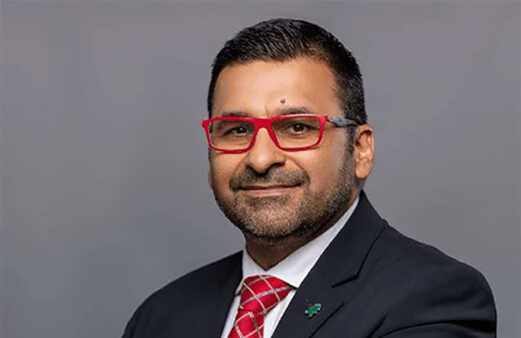
From the humble days at DFCU Bank as a direct sales executive to enabling homeownership through mortgage financing at Stanbic Bank, it was clear that Brian Mutungi Tukahirwa had a gift for sales, anchored in a deeper mission to improve lives.
His journey later led him to Housing Finance Bank, where he advanced the institution’s financial inclusion mandate by designing customer-centric solutions through agent banking.
“I was riding on the first-ever shared platform to pivot into the Fintech space. Here, I supported financial institutions to enhance their financial inclusion through robust agent and card solutions at Interswitch East Africa,” he shares.
Today, Mutungi is championing digital inclusion as the e-commerce country lead for MTN’s Market by MoMo, helping steer the platform across Uganda.
It’s safe to say that he has become a digital financial services expert and e-commerce professional, actively driving digital commerce across the country and the continent.
With a career spanning over 15 years, Mutungi has led transformational work across teams and organisations, fostering commercial growth and operational efficiency.
His leadership is marked by a relentless pursuit of excellence and a zero tolerance for mediocrity.
His expertise cuts across business development, project management, product development, and digital financial services. He is deeply passionate about people and strongly believes that human capital is every organisation’s greatest asset.
Thriving on challenge, Mutungi lives by the African proverb: “Smooth seas do not make skilful sailors.”
Above all, he is a father and a firm believer in Christ.

Why e-commerce?
Mutungi didn’t stumble into e-commerce. It’s a space he has diligently worked towards—one he views as an opportunity for inclusive innovation.
Financial technologies, he believes, can narrow income gaps instead of widening them, especially by spotlighting the ingenuity of Uganda’s informal traders.
“Only those who dare to fail greatly can ever achieve greatly,” he says.
“Being part of the journey for Market by MoMo from inception was a no-brainer. It was an opportunity to start ‘messy—with courage and context’—rather than waiting for foreign funding or a perfect pitch deck.”
Mutungi’s typical day starts with and prayer, dedicating the day to God through scripture.
“I then take a few minutes envisioning a calm and productive day, followed by a morning workout between 6:30 am and 7:30 am. Then I have a quick 15–30-minute check-in call with my team,” he shares.
Powering teams
To Mutungi, Fintechs are both powered by people and built to empower people. Early in his career, he learned that people are the most important asset of any business. As such, working in silos has no place in his vocabulary.
“We don’t need titles to lead. I trust first, then empower my teams to take ownership. I am passionate about their personal growth and often take a keen interest in it,” he says.
He has created a culture of psychological safety, where questions, feedback, and even failures are welcome. For him, productivity is rooted in empowerment.
Recognising the impact of mental health on performance, Mutungi prioritises team wellbeing.
“I have found it imperative to create an environment where team members are free to speak up without fear of judgment. I also promote work-life balance, fostering regular check-ins both as a team and one-on-one.”
Burnout is another productivity killer—and one he actively works to avoid, not just for his teams, but for himself as well.
“I often take time off or short breaks throughout the day and week. I also prioritise quality sleep,” he smiles.
The highs and the hard lessons
Mutungi’s journey has been one of learning, refining, and reinvention—filled with both proud milestones and hard moments.
Among his most memorable achievements was spearheading the agency banking journey for Housing Finance Bank.
“There is a certain joy in starting small and seeing things blossom,” he shares.
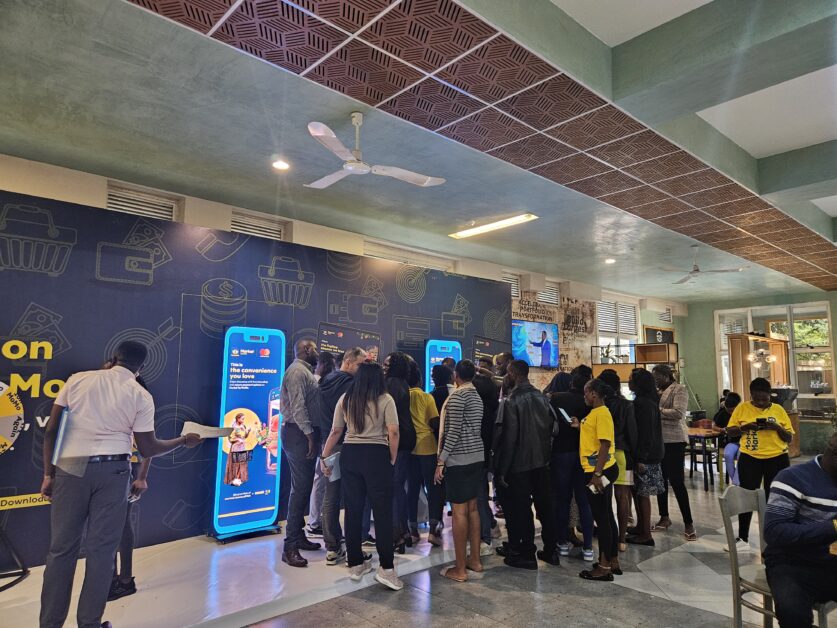
Another landmark moment was the commercial launch of Market by MoMo in November—a bold step in revolutionising online shopping across Uganda and Africa.
“Being the first market to launch across the group is thrilling, despite coming with a lot of weight in defining the blueprint,” he says.
But not all moments were smooth sailing. The startup phase came with significant challenges, especially regulatory setbacks.
“Some days were so tough that throwing in the towel seemed viable. The most significant of all was the regulatory setback we encountered in 2022 on the journey to building Market by MoMo,” he recalls.
“Sleep seemed a luxury then. Nonetheless, thanks to the power of collaboration, we birthed the new vehicle to drive Market by MoMo -‘Group Fin-Commerce’.”

Empowering rural and small businesses
Mutungi believes e-commerce is a gateway for rural traders to reach new markets, break geographical barriers, and innovate.
“They will be in a position to reach urban consumers,” he says, and notes that entrepreneurs benefit from reduced operational costs because e-commerce reduces reliance on physical stalls and expensive transport to urban centres.
It also exposes them to broader markets, encouraging product improvement and innovation.
And with digital transaction records, they can build a credit profile, driving financial inclusion through access to credit.
Sleepless nights and sector cracks
While committed to innovation, Mutungi admits he sometimes loses sleep over whether they’re doing enough, and fast enough, to make an impactful difference.
Ongoing sector challenges compound this anxiety:
Trust and digital literacy issues—many users are wary of counterfeits, scams, and the risks of buying from unseen sellers.
Infrastructure gaps, including poor connectivity, unreliable rural electrification, and an underdeveloped addressing systems that affect last-mile delivery.
 Ruparelia Foundation to Hold Free Eye Camp in Bukedea in Honour of Rajiv Ruparelia
High transaction and logistics costs, which eat into seller margins.
Despite the hurdles, Mutungi remains optimistic.
“The sector remains on an upward trajectory. Opportunities lie in our ability to strengthen infrastructure by investing in roads to address last-mile delivery,” he says.
“We intend to boost trust and literacy through deliberate training, awareness, certifications, and robust partnership programmes.”
The future of e-commerce in Uganda
Mutungi believes Uganda’s e-commerce sector is on a strong upward path, driven by digital penetration, Fintech innovation, and rising consumer demand.
“Projections show that revenues are expected to rise to $123.9 million, with a projected compound annual growth rate of approximately 6.4% over the next 4 years. User penetration is projected to reach 8.6% in 2025, trending upward as more of Uganda’s internet users embrace online shopping,” he explains.
He adds that this growth will be accelerated by increasing smartphone usage, mobile money adoption, and a solid regulatory foundation through the Electronic Transactions Act and Data Protection Act (2019).

MTN’s leap into new territories
Until 2019, MTN Group was a major shareholder in Africa’s e-commerce giant, Jumia Technologies, with an 18.9% holding.
However, in November 2019, MTN said it was almost completing its exit from Jumia as part of a larger plan to raise $1b in asset sales.
The exit could have been a strategic retreat, but one that would also raise capital for the larger business.
Indeed, in October 2020, MTN announced it had completed disposing of its 18.9% stake in Jumia for a value of $138 million.
Almost four years after the exit, MTN launched its e-commerce platform in November last year, starting with operations in Uganda, after which it will launch in other countries.
Whereas Market by MoMo brings new energy to a market that has been dominated by Jumia, it promises to break the mistrust that many Ugandans associate with e-commerce platforms.
Ugandans have for years endured a slow and painful wait, sometimes for months, for goods ordered online to arrive.
Add to this the limited knowledge of what’s even available, and the result has been a frustrating shopping experience, especially for entrepreneurs seeking efficiency and reliability.
But that is starting to change.
In comes the change…
With the rise of the digital economy, a new chapter has begun. One that promises swifter payments, seamless processes, and access at your fingertips.
At the heart of this transformation is MTN Uganda, a brand long known for revolutionising mobile money and now, e-commerce.
Just 220 days ago, on November 19, 2024, Market by MoMo was officially launched by MTN Group Fintech, in collaboration with Mastercard, MTN MoMo, and MTN Uganda.
The platform is a bold belief that “everyone, regardless of their background, deserves the benefits of a modern, connected life.”
“This is a true testimony of the power of collaboration,” says Brian Mutungi Tukwahirwa, e-Commerce Country Lead, MTN Uganda
From the very beginning, Market by MoMo was envisioned as more than just a shopping site.
It’s a one-stop digital marketplace designed to connect thousands of traders to millions of consumers, all in one secure and convenient ecosystem.
“Our digital marketplace is designed to seamlessly connect traders and consumers. The platform offers flexible payment options, including MTN MoMo and major credit/debit cards. Therefore, customers from any telecom provider can sign up and conveniently start shopping,” says Mutungi.
Since its launch, product assortment has grown by 20%, with more than 41,000 products now listed. Equally, there is a 39% rise in seller adoption, with 4,192 traders already onboarded.
This, Mutungi says, has largely been possible due to different partnerships, with major companies such as Uganda Breweries, Stabex International, Grace Textiles, Dembe Trading Enterprise, among others.
In less than a year, signed-up users have risen to 12,500, yet the platform is only available in Kampala and Greater Kampala.
Market by MoMo promises convenience, access, and empowerment, offering free packaging and order processing, nil account management fees, and a dedicated seller hub.
The tough times
But it hasn’t been without hurdles.
“There are several challenges to onboarding businesses. These include technical literacy—business owners struggling with the digital aspects of setting up and managing an online store. Business owners also have trust issues as they are wary of transacting digitally,” says Mutungi.
However, to address this, Mutungi says, they are rolling out training, support services, and fast settlement times.
Looking ahead: A pan-African vision born in Uganda
Uganda holds a unique distinction: It is the first market to commercially launch and host Market by MoMo, paving the way for a broader African rollout.
The vision is clear: “To be the number one go-to platform for goods and services in Africa.”
As the platform evolves, new features will enhance the user experience, making every interaction more intuitive and more impactful. A phased national rollout is underway, supported by more strategic partnerships and continuous feature upgrades.
“We are on a journey of continuous improvement of the platform’s features and user experience to attract more businesses and consumers,” says Mutungi.
From long wait times to instant access. From manual processes to seamless transactions. From doubt to trust.
Market by MoMo is not just a marketplace; it is a movement. A vision for a connected, empowered Uganda and eventually, a digitally thriving Africa.