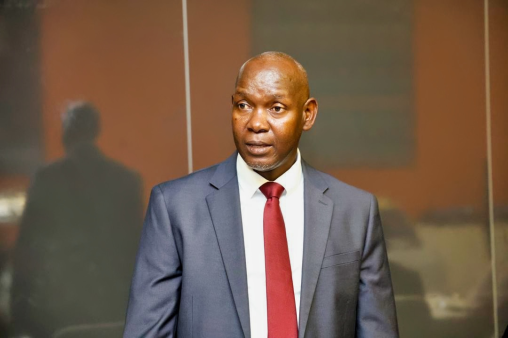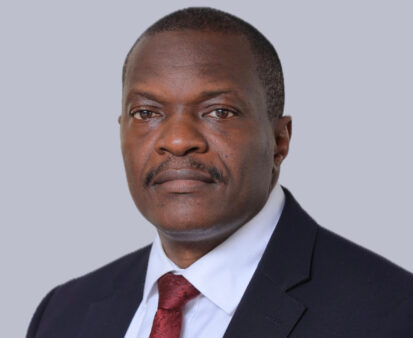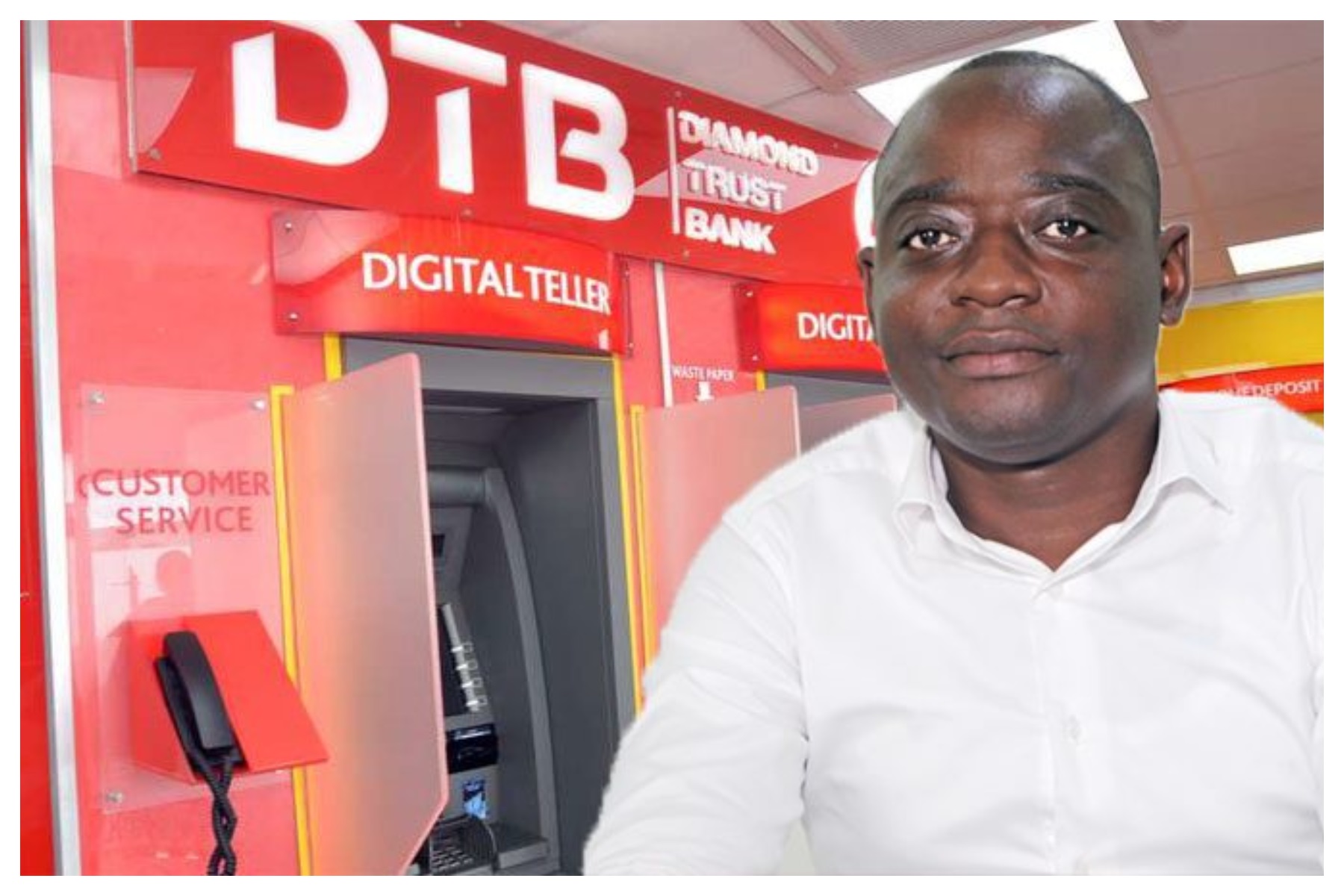
Embattled city businessman, Hamis Kiggundu (commonly known as Ham) and his lawyers, tried to secretly and illegally have three properties at the centre of a commercial dispute with two banks re-transferred into his names, just days after the court win against the Diamond Trust Bank Uganda and Diamond Trust Bank Kenya.
This was revealed by Principal Judge, Dr. Flavian Zeija while delivering his ruling in Miscellaneous Application No. 846 of 2020 brought by the two banks to stay the execution of the orders made by Justice Henry Peter Adonyo in High Court Civil Suit No 43 of 2020 brought by the businessman against the banks. Execution of all orders in the ruling have been halted, pending the hearing and determination of the bank’s appeal in the Court of Appeal.
The Principal Judge’s ruling replaces an interim order, he made on 13th October 2020 apparently after learning of a clandestine move by Ham to quickly transfer the titles back to his names.
“Counsel for the respondents had secretly extracted an order on the day I issued an interim order (October 13th ), which was filed and signed by an Acting Registrar, Lilian Bucyana on the 12th October 2020, without input from counsel for the applicants (DTB Uganda and DTB Kenya) and without court files because the files were already in my custody,” said Dr. Zeija.
The three properties in question are Ham Towers (LRV 3716 Folio 10), located on Plot 923, Block 9, Makerere Hill Road; a residential property at Kawuku (FRV 1533 Folio 3) located on Plots 36-38, Victoria Crescent II Kyadondo; and Land at Kawuku, Ggaba (Block 248 Plot 328) on the shores of Lake Victoria.
According to Dr. Zeija, the law governing extraction of decrees requires the victorious party in a suit to extract decrees from the ruling for approval by the court registrar but the losing party must be involved and actually consent to the said order, but Hamis’ lawyers decided to go it alone.
“It should be noted that the law governing extraction of decrees and orders is set out in Order 21 Rule 7(2) and 4 which provides: It shall be the duty of the party who is successful in a suit in the High Court to prepare without delay a draft decree and submit it for approval of the other parties to the suit, who shall approve it with or without amendments, or reject it without undue delay. If the draft is approved by the parties, it shall be submitted to the Registrar who, if he or she is satisfied that it is drawn up in accordance with the judgement, shall sign and seal the decree accordingly. If all the parties and the Registrar do not agree upon the terms of the decree within such time as the registrar shall fix, it shall be settled by the judge who pronounced the judgement, and the parties shall be entitled to be heard on the terms of the decree if they so desire,” Zeija went at length to explain.

The Principal Judge then said that it was partly for this reason that he was allowing a stay of execution of Justice Adonyo’s orders.
He also said that under the circumstances, there was a great risk that Ham would go ahead and transfer the titles into his names, which would defeat justice.
“ This presents a very great risk as these titles can be transferred upon release of the mortgages and defeat the only security the applicants (banks) have against the respondents (Ham)” said Zeija, adding: “Execution (of Justice Adonyo’s orders) therefore, was a big possibility hence a risk.”
Background
In October 2017, DTB Uganda and DTB Kenya lent the businessman USD5.5 million and USD4.5 million respectively. Following defaults by Ham, on 19th November 2019, DTB Uganda issued Ham a default notices demanding that Ham pay USD6,974,600 plus interest or else the bank would foreclose on Ham Towers. On the same day, DTB Kenya issued Ham a default notice demanding that he pay USD 4,014,444 or else the bank would sell the collateral on the loan.
Following various failed protracted negotiations between the businessman and the banks on how to repay the due loans, in March 2020, the businessman dragged DTB Uganda and DTB Kenya to court.
The businessman asked court and court agreed to declare that since DTB Kenya was not licensed as a financial institution under the Financial Institutions Act of Uganda, then the lending contract between him and DTB Kenya was illegal and invalid. He also asked court and court agreed to declare that by DTB Uganda accepting to play agent to DTB Kenya in the above alleged illegal transaction, and for accepting to be party to an allegedly illegal loan syndication, it too should lose its claim to the USD USD6,974,600 that Ham owed it. Ham also claimed and court agreed with him, albeit with no proof that the banks had over time illegally and without the knowledge of the businessman, deducted a total of UGX 34,295,951,553/= and USD 23, 467, 670.61- altogether equivalent to UGX 120 billion.
On October 07th 2020, Justice Adonyo agreed to all of Ham’s claims and proceeded to declare Ham’s debts as settled by law as well as released all the mortgaged properties. It also ordered the banks to refund the sums of UGX 34,295,951,553/= and USD 23, 467, 670.61 that the businessman alleged was unlawfully deducted from his accounts by the banks.
 Aga Khan Fund Exits Troubled Nation Media Group After 66 Years, Sells Controlling Stake to Tanzanian Billionaire
Following a public outcry against the ruling the Principal Judge recalled the file and on October 13th made an interim order for stay of execution of the decree in High Court Civil Suit No. 43/2020 and MA No. 654 of 2020 pending the determination of the main application for stay of execution.
One of the major grounds for DTB Uganda and DTB Kenya’s appeal was that if the stay of execution was not allowed, there was a serious and eminent threat of Ham going ahead to execute Adonyo’s orders, which would then make the intended appeal in the Court of Appeal hollow.
Dr. Zeija in his 2nd November ruling agreed with the banks’ lawyers that a substantial loss may be occasioned on the banks unless the stay of execution was granted.
“Consequently, I allow this application in terms of the orders sought. Costs shall
abide by the results of the appeal,” he ruled.
In an interesting turn of events, the Principal Judge also slammed an unnamed party who he said had tried to bribe him.
“Before I take leave of this matter, I was flabbergasted by one of the parties sending emissaries to me with financial proposals to influence my decision. This is disgusting to say the least,” he said.
Principle Judge queries some of Justice Adonyo’s orders
The Hon Principal Judge also took time to comment on some of the controversial matters in Justice Adonyo’s ruling. For example, on the question of whether DTB Kenya and DTB Uganda illegally and invalidly syndicated USD10 million in lending to the businessman, the basis of which the judge declared Ham’s debts as settled by law as well as released all the mortgaged property, Dr. Zeija wondered why the said illegality was found on only the part of the banks and not both parties.
“In view of the fact that the trial Judge issued orders in favour of one party in a transaction he found illegal and he made no mention of the sums the Plaintiffs (Ham) borrowed, it will be an important question of law for the court of appeal to determine as to whether the illegality did not apply to the Respondents as well or whether the Respondents are one of those protected by the law the parties were found to have violated,” he said.
He also also opined that Justice Adonyo’s ruling had “far reaching implications on the banking industry in as far as it declares syndicated loans illegal” which is why it was important that a stay of execution be issued.
“In essence, the trial Judge declared syndicated loans illegal. That has a significant effect on the industry if there are other banks that have syndicated loans. This calls for maintenance of the status quo to enable the court of appeal to inquire into this illegality and either uphold the finding or reverse it,” he said.
He also wondered why court awarded Ham, UGX 34,295,951,553/= and USD 23, 467, 670.61 being money that the businessman alleged was unlawfully deducted from his accounts by the banks, without subjecting the businessman’s claims to proof or evidence thereof.
“In view of the fact that the parties had agreed in the Joint Scheduling Memorandum to have an Audit to ascertain the amount deducted from the plaintiffs’ account vis-a-vis what they received and the trial Judge (Justice Adonyo) had appointed ICPAU to conduct the Audit, which order he vacated, it remains to be determined by the Court of Appeal as to whether this was actually a liquidated sum that would be awarded without formal proof,” he opined.