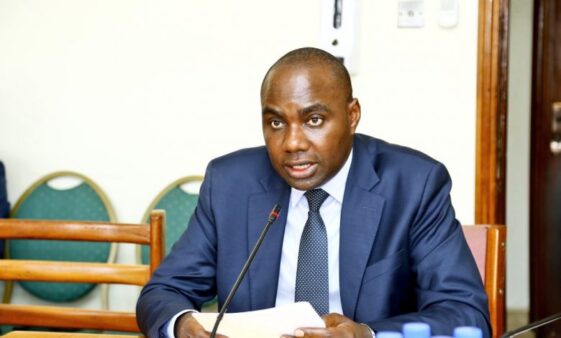
The Finance State Minister, Hon. Henry Musasizi on 1st November 2022 asked Members of Parliament to approve up to UGX3.5 trillion in new borrowing to finance Uganda’s 2022/23 UGX48.1 trillion budget, which he said was facing significant shortfalls.
The first loan request which is up to USD464 translating to about UGX1.7 trillion is to be sourced from the Standard Chartered Bank.
In documents which now stand referred to Parliament’s Committee on National Economy, Standard Chartered Bank will merely be an agent for two financial institutions that will supply the cash, should Parliament approve the loan request.
Whereas Musasizi said Standard Chartered Bank “emerged the best bidder with the lowest cost of financing provided to government,” £272 million of the loan will be sourced from Nippon Export and Investment Insurance (NEXT), a Japanese trade and investment insurance firm, while £182.7 million will be picked from the Islamic Corporation for the Insurance of Investment and Export Credits (ICIEC).
Standard Chartered Bank’s role in the borrowing will be that of “agent and mandated lead arranger for the loan.”
Musasizi defended the loan, saying it is intended to “help pay outstanding infrastructure certificates among others to avoid accumulating arrears during the financial year”.
He also said because of financial constraints, the government managed to only finance seven per cent of the different votes’ development expenditure, which he said will affect budget performance and economic recovery.
NEXT will charge an interest of 2.9 per cent on their facility, whereas their counterpart the ICIEC will reap 3.5 per cent from their credit.
The loan’s maturity period is 10 years, with an additional grace period of four years.
Separately, Musasizi also tabled a USD140 million loan request to be sourced from the International Development Association (IDA). Once approved, this facility will come with a USD60 million grant.
This, he said, will finance the Uganda Digital Acceleration Project (UDAP).
Musasizi said the project is intended to “expand access to high-speed internet, improve the efficiency of Digital Government Services, and strengthen the digital inclusion of the host communities and refugees [where the project will be implemented]”.

Another loan request to be sourced from the same agency is a USD331.5 million loan, which comes with a grant totalling USD276.5 million.
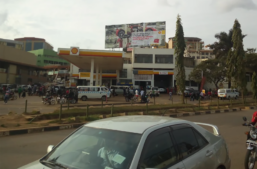 Vivo Puts Two Downtown Kampala Shell Stations up for Sale Amid Congestion Concerns
“This particular facility will be used to “finance the electricity access scale-up projects”.
Minister Musasizi said the loan is critical in electricity access expansion across the country.
“[This loan facility] seeks to facilitate at least one million electricity connections covering households, commercial enterprises, industrial parks, mining centres and public institutions,” said Musasizi.
The two facilities together add up to USD471 million, which is merged with the USD464 Standard Chartered Bank arranged facility totals up to about UGX3.5 trillion.
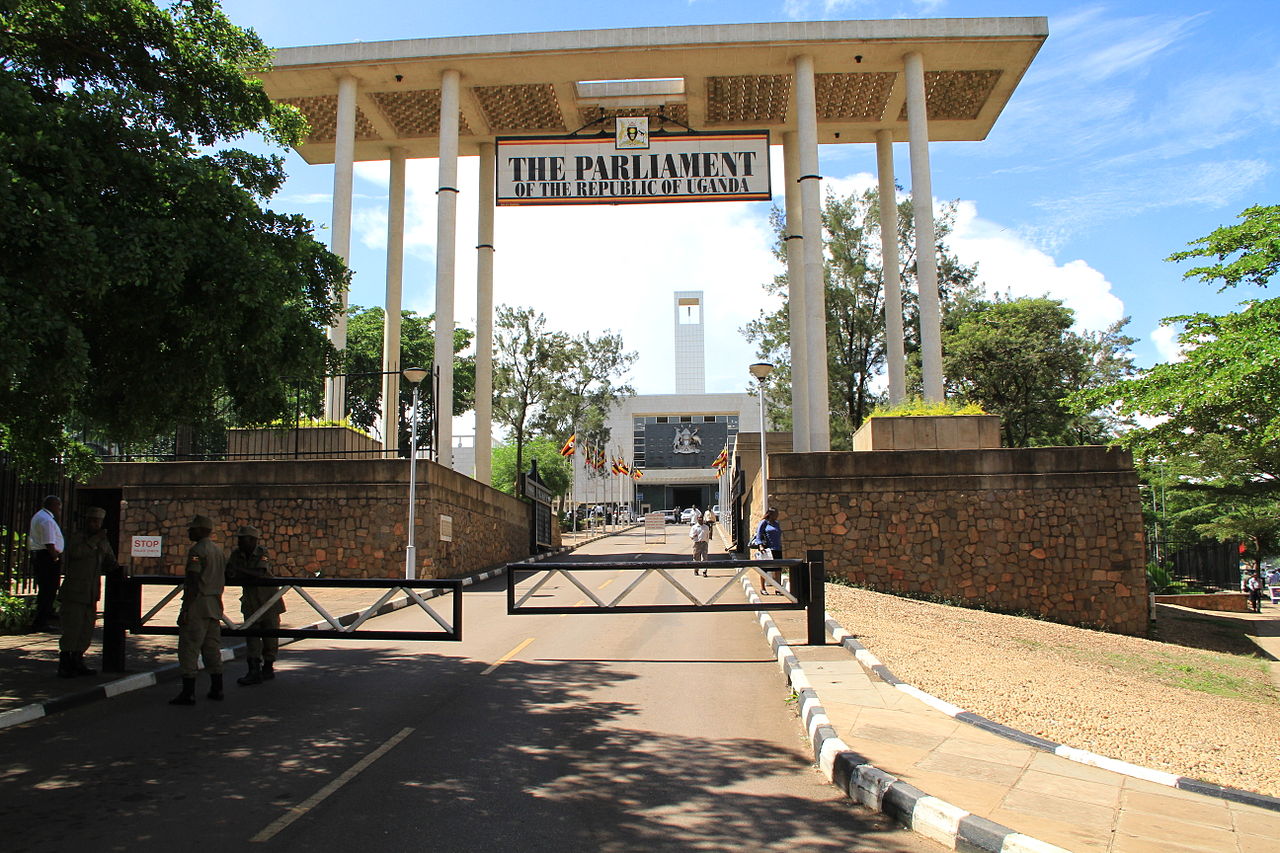
A statement from the Parliament of Uganda has indicated that the relevant Parliamentary Committees will expeditiously prioritise discussing the loan requests and will as soon as possible give their verdict on whether the requests will be approved or rejected.
Mounting public debt stock
Uganda’s public debt stock increased by 22%, from UGX 56.9 trillion in FY 2019/20 to UGX69.5 trillion (USD19.54 billion) by end of FY 2020/21. By June 2022, this had increased by a further 13%, to reach UGX78.8 trillion (USD20.98 billion). Of this, UGX48.1 trillion (USD12.8 billion) is external debt, while UGX30.7 trillion (USD 8.2 billion) is domestic debt.
External debt takes the largest share of total public debt at 61% while domestic debt is 39% of total public debt.
According to Parliament, over the last five years, From the table above, over the last five (5) years the stock of debt to GDP has consistently been on an upward trajectory, cumulatively increasing by 17 percentage points from 30 per cent in FY 2015/16 to 47 per cent in FY 2020/21.
There are concerns that as government sharpens its debt appetite, there is no corresponding impact on economic growth. For example, Whereas in FY 2020/21, the economy grew by 3 per cent, the public debt grew by 22 per cent on account of budget support loans acquired from the IMF and World Bank to support the Government’s response to COVID-19. During FY 2021/22, the economy is projected to grow by 4.6percent while public debt is projected to increase by 13percent, mostly on account of domestic borrowing that increased by 20 per cent
Consequently, the nominal debt-to-GDP ratio grew from 40.76 % in FY2019/20 to 46.98% in FY2020/21 while the present value of Debt-to-GDP increased from 33.1 per cent in FY 2019/20 to 37.5 per cent in FY 2020/21.