Looking back, 10 years ago, the whole concept of credit health was just beginning to take shape—banks were only starting to engage, and technology hadn’t really entered the scene yet. There were hardly any players doing what you’re doing now with mobile credit scores. What challenges did you see back then in the financial ecosystem that pushed you to innovate in this space?
That question is quite personal for me. I’ve been in the FinTech space for almost 15 years, and over that time period, I’ve dedicated myself—and the teams I’ve worked with—to innovating around the real, pressing challenges in the financial ecosystem.
Ten years ago, the system was still very analogue. Let me use that word. Everything was paper-based. Even in the banks, people were queuing up for hours because the processes were manual. There was no real-time access to credit, and very little use of technology to bridge financial gaps. So, we came into the space with a mission to disrupt that, to make access to credit more seamless, real-time, and inclusive.
Every innovation I’ve been part of since then has been in response to one core question: how do we use technology to expand access to credit and reach the unbanked? And the ecosystem has indeed evolved. Back then, we used to say, “data is the new oil” or “data is the future currency”, and today, that’s no longer just a slogan. It’s a reality. Every serious business, including financial institutions, now understands the need to use data to inform decisions.
We’re now seeing more banks launching digital products and embracing new-to-bank capital deployment models. Our work supports this shift by enabling banks and lenders to serve new customers—people who previously had no financial identity—using alternative data.

When I look back at where we started, the FinTech space was in its infancy. There were hardly any digital innovations. In fact, at the time, SMS was considered cutting-edge. We used SMS tools to register customers and even conduct KYC. That was a big deal then. Fast forward to today, we have smartphone apps, USSD platforms, and even WhatsApp chatbots. The tech landscape has grown, and I’m proud that we’ve been part of shaping that journey.
So when I reflect on the last decade, from paper-based systems to the digital platforms we now have, I feel proud that the market has matured and is now more adaptive, more open to what we, as FinTech innovators, are offering. It’s a good time to be building solutions that matter.
Who are the two most important players enabling effective mobile credit scoring in Uganda—those generating the mobile credit scores and those providing the infrastructure that integrates these scores with financial institutions? How have these partnerships helped you reach more financial institutions, and how many have come on board so far? What is the broader significance of what gnuGrid CRB is doing in this space?
I think the first enabling environment is the regulatory environment. We are licensed by the central bank, and that’s where we get our mandate to do what we do. The regulator has contributed significantly to how we operate as a business, from the checks and balances in compliance, the code of conduct, and even the issues around data quality and consent. All those are requirements set aside by the regulator.
The other key contributor is the different stakeholders who support what we do as an entity. We have a lot of partners who believe in what we do, like FSDU (Financial Sector Deepening Uganda), which is one of the institutions really pushing the financial inclusion agenda, and the Mastercard Foundation. That stakeholder environment is also contributing significantly.
And from the private sector, of course, Airtel—specifically Airtel Money—has contributed in a big way. First, by accepting gnuGrid CRB to partner with them, and then by allowing us to rely on their data to build informative credit scores and insights that financial institutions can use to lend and scale.
Within the Airtel Money ecosystem, there are millions of Ugandan customers, most of whom are last-mile users. They are the typical definition of the financially excluded population. So, it’s really a combination of partnerships, collaborations, and the regulatory environment that makes all of this possible.
What role do mobile network operators like Airtel play in solving the financial inclusion challenge—particularly in reaching last-mile populations—and why are they so critical to your model?
Let me paint the picture using Airtel Money as an example. First, there’s the infrastructure—the network infrastructure. The majority of Ugandans have mobile phones, and that device, along with the SIM card—say, an Airtel SIM card—forms the infrastructure that connects last-mile populations to financial services. On that SIM card is Airtel Money, which enables users to transact in a range of ways.
Now, as a subscriber, you interact with Airtel Money—buying airtime, sending money to loved ones, receiving payments, withdrawing cash from agents, or paying merchants. These transactions all occur within your SIM card’s ecosystem and generate digital footprints. At gnuGrid, we study this behaviour—how active you are within the mobile money ecosystem, the transactions you push out and those coming into your wallet.
From this data, we generate two main types of scores:
1. The Behaviour Score: This looks at your loan repayment behaviour within the Airtel Money ecosystem. For instance, have you ever borrowed money? And if so, did you repay—and did you repay on time? We use this to assign a rating. A customer who repays consistently on time is rated Triple A (AAA), which means they’re a high-quality borrower. On the other end, we have Triple E (EEE), which represents the worst-case borrowers with a poor repayment history. Therefore, it’s a spectrum based on demonstrated financial discipline.
2. Income and Spending Proxies: These are indirect indicators we derive from your wallet activity to assess your capacity to earn and manage money.
 I&M Bank Katogo Golf Series returns with Shs 796m boost and an exciting new format
- Inflow Proxy (Turnover): We assess how much money is coming into your wallet, how frequently, and over what period, typically six months. If we see consistent inflows, it suggests you have a reliable income source. That’s a strong sign of a capacity to repay.
- Outflow Proxy (Spending Behaviour): We also look at how quickly you spend what you receive. For example, you might receive UGX 1 million and spend it within minutes or within the same day. That pattern says a lot about your liquidity and financial habits. So, we analyse both inflows and outflows to get a complete picture of your financial behaviour and capacity to manage credit.
Lenders then use this data to build a matrix: they assess your behaviour score (how you handle debt), your inflow proxy (your income potential), and your outflow proxy (your spending behaviour).
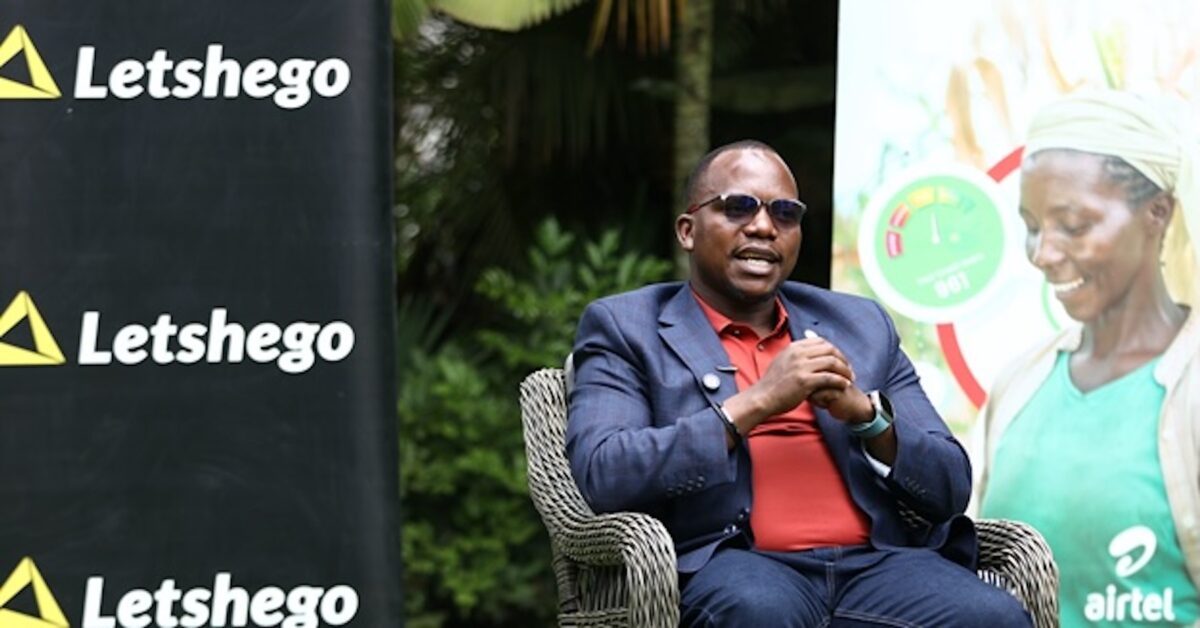
A lender like Letshego, for example, relies on these metrics to determine the interest rate you qualify for and your credit limit. If you’re a Triple A customer, you’re seen as low-risk, so they’ll offer you a more affordable interest rate and possibly a higher credit ceiling. Why? Because the data shows you’ve borrowed and repaid reliably, and you earn consistently.
If your wallet receives UGX 1 million weekly, and that’s sustained over time, it proves you have strong income capacity. Lenders can even offer you a facility that exceeds your average weekly income because there’s evidence that you consistently generate revenue. The entire model is data-driven, real-time, and adaptive to each customer’s actual financial behaviour.
That’s how we’re making last-mile financial access possible—by turning digital behaviour into credit insights that banks and financial institutions can trust.
Would you say more Ugandans today are becoming financially and digitally visible? While there’s progress in formalising the money economy, many people are still transacting outside formal systems. Are we seeing a real shift toward broader digital financial inclusion?
I believe that today, more Ugandans are becoming digitally visible. At the very least, we now have a digital footprint for the majority of the population. Take the NIN (National Identification Number), for instance—it serves as a digital ID. Ten years ago, we didn’t have anything like that. Even acquiring a mobile phone back then was a challenge. But today, digital identity is becoming a norm, and that shift has played a huge role in advancing financial inclusion.
This increased visibility is critical because lenders are now able to extend credit to people they can verify. In the past, it was difficult—if not risky—for banks and lenders to offer loans to individuals they didn’t know. That’s part of the reason non-performing loan (NPL) rates were so high: institutions were essentially betting on the unknown. But now, with access to real-time KYC and NIN data, lenders can validate a borrower’s identity quickly and accurately. That has laid the foundation for a more practical, secure, and scalable model of financial inclusion.
Looking ahead, we’re working on new-to-bank digital credit products for more than 22 financial institutions, mostly banks. What excites me most is that we’re seeing these banks step out of their traditional comfort zones. They’re now willing to deploy capital through digital-first channels, targeting customers who previously had no formal banking relationship.
We’re supporting a diverse mix of institutions—not just banks, but FinTechs as well. And that, to me, is evidence that what we’ve introduced into the ecosystem is working. It’s encouraging institutions to lend in a smarter, more secure way, built on data, identity, and digital visibility.
What opportunities do you see in the markets surrounding Uganda? Are there specific trends, needs, or conditions in neighbouring countries that make them ripe for the kind of solutions gnuGrid CRB is offering?
I think, holistically, the opportunities across the markets surrounding Uganda are broad and very promising, especially for institutions like Letshego. They’re a great example of what’s possible when you scale digital lending in a secure, efficient, and data-driven way. And what’s important to note is that Letshego is not unique in this regard; they represent many other financial institutions across the region that are now looking to expand their reach and impact through digital channels.
When you take Letshego as a case study, you begin to see the kind of foundation we’re building. For entrepreneurs and new players who want to invest in digital lending, the groundwork has already been laid. They no longer have to start from zero. That’s the power of the ecosystem we’ve been part of creating—there’s now a base of knowledge, technology, and market experience that new entrants can build upon.
Another thing we’re actively doing is sharing insights and best practices across the financial services sector. These learnings are not just internal—they’re industry-shaping. They help institutions better understand how to manage risk, how to structure digital lending portfolios, and how to navigate regulatory environments. This benefits the entire ecosystem. By equipping players with practical knowledge, we’re helping them make more informed investment decisions and avoid the high-risk pitfalls that characterised the early days of digital finance.
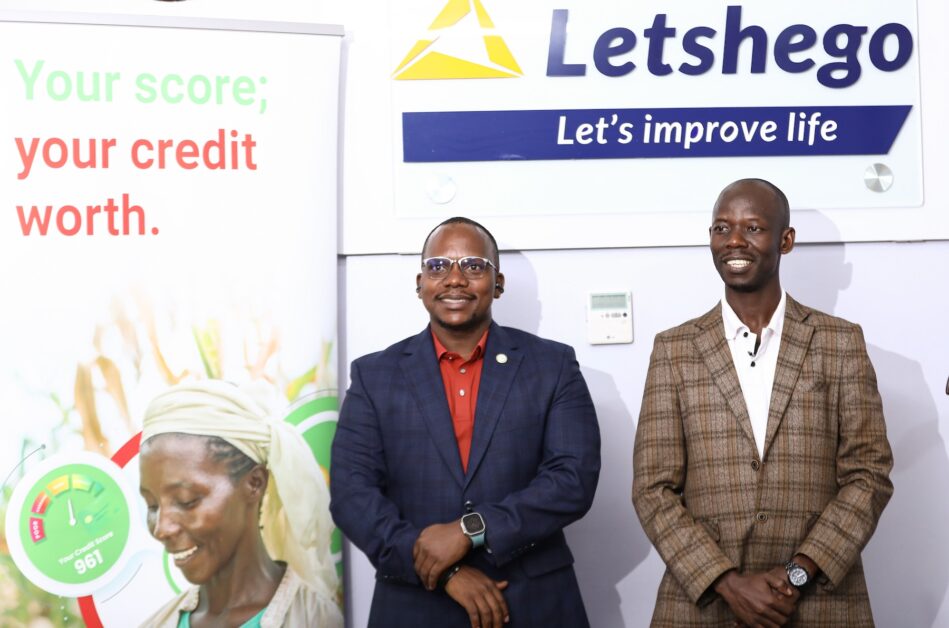
Our approach is not just focused on one segment. In Uganda, we are targeting the entire financial ecosystem, from Tier I (commercial banks) to Tier IV (institutions like SACCOs and MFIs). We recognise that financial inclusion and digital credit access must span all levels. And what’s encouraging is that we are seeing traction across that full spectrum. Institutions that traditionally operated manually are now exploring digital channels. Banks that were once hesitant are now stepping up to experiment with new-to-bank credit models.
Looking beyond Uganda, we’re actively planning to scale into about 16 other countries. And we’re not going into these markets blindly. Some of the institutions we’re currently working with here have expressed willingness to scale with us. That’s significant because it means they’ve seen firsthand the practical, tangible value of what we’re doing—and they’re confident it can be replicated in other markets.
For me, that’s the essence of true scaling: we’re not just exporting a product or a platform—we’re expanding proven partnerships. We’re going into markets that are not entirely unknown because we’re doing it with players who already understand the model, have tested it locally, and are ready to back it regionally. That gives us a strong foundation to build on, and it shows that what we’ve created in Uganda has real regional relevance and impact.