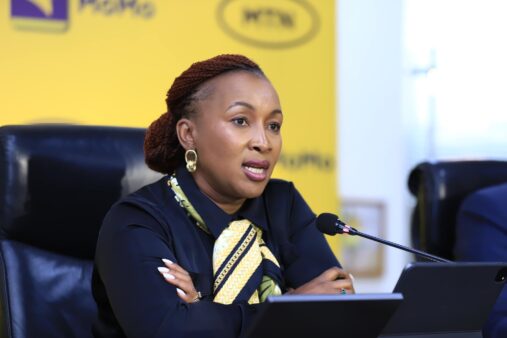
With over 35 years of distinguished leadership across banking, international development, microfinance, and corporate governance, Priscilla Mirembe Serukka has built a reputation as a results-driven leader who blends integrity, courage, and a deep commitment to lifting others.
As Chairperson of Uganda National Airlines Corporation and founder of Women on Boards Uganda, she is driving a transformative agenda to increase female representation and impact in boardrooms — not just in numbers, but in influence.
From steering high-stakes turnarounds to advocating for inclusive leadership, Mrs Serukka brings rare insight into effective CEO–board dynamics, building high-performing boards, and navigating complex governance challenges.
In this candid conversation, she reflects on her career journey, the inspiration behind her women’s leadership movement, lessons from the airline industry, and practical advice for aspiring leaders who want to make a lasting difference.
Who is Mrs Serukka? Share about your leadership journey, values, and personal story?
I am a senior-level leader who is deeply passionate about good corporate governance, upholding high ethical standards, and integrity. I believe in delivering results with every assignment at hand, and I always go the extra mile without the need for follow-up.
In my journey, lifting people has given me profound joy, and the agenda is to help them achieve even more than I. Although it’s been 35 years since my retirement, I continue to serve in various capacities.
My first employment was with Uganda Commercial Bank, where I worked for nine years before realising banking was not my calling. I later transitioned into development agency work, joining the EDF Micro Projects Project, where we focused on rehabilitating communities affected by war.
Six years later, I joined the Stromme Foundation as a Regional Leader, overseeing Uganda, Kenya, Tanzania, Rwanda, and South Sudan. Here, I found fulfilment in lifting people out of poverty.
I worked in remote, hard-to-reach communities that many agencies avoided, yet I found joy in witnessing transformation in people’s lives.
We also initiated projects for school dropout girls, helping some to resume their education and equipping teenage mothers with skills to provide decent livelihoods for themselves and their children.
I have been married to Dr David Serukka for 36 years, and together we have four biological sons, two daughters-in-love, and two granddaughters. Beyond that, we have nurtured many other children. I am also a born-again Christian.
What sparked your vision for Women on Boards, and how did that idea take shape?
The idea was born when I attended a meeting of chairs of State Enterprises in Uganda and found that out of 21 participants, only three of us were women.
Given the level of women’s empowerment and education in our country, I expected more female representation. That thought lingered with me throughout the meeting.
Later, I shared my concern with my friend and coach, Joan Mugenzi. Her response was, “Perhaps this is something you need to take up, given your persona and role as a board chair.”
I began researching the matter and discovered that this was not just a Ugandan challenge but a global one. Findings showed that women occupy only about 23% of corporate board seats, 14% of chairperson roles, and a mere 7–9% of CEO positions worldwide.
Some countries have initiatives such as quotas to ensure more women get on boards. In August last year, this concern weighed heavily on me, and by December, we held our first workshop to discuss the issue of women on boards and explore possible solutions.
One key finding was that although many women are educated, few sit on boards. Among those who do, some remain silent. This highlighted that the problem was not just representation, but impact. We needed to explore what would empower women not only to sit on boards but to add value.
Culture plays a role in keeping women subservient. I recall often getting the least favourable seat, during my time as Regional Director at Stromme Foundation because I was female.
My mother, too, often described my work as “manly.” Yet, in contrast, I observed that Kenyan women were far more assertive.
Boards require equality. If you have the right facts and believe that someone’s point is wrong—even if it comes from a man—you must speak up. It is also vital not to allow yourself to remain silent.
We discovered that people often dismiss points made by women, yet applaud the same ideas when men repeat them with slight variation. People also label women as more emotional than logical, which undermines their credibility.
Beyond this, issues such as punctuality, commitment, and presentation matter. We noted that some women arrive late to board meetings, move in and out frequently, or present themselves inappropriately. These behaviours dilute their influence.
After our workshop, we held a symposium ahead of International Women’s Day, where speakers such as Mr Jimmy Mugerwa, a seasoned board chairperson, and Mrs Mona Sebuliba, CEO of aBi Finance, debated inclusivity.
The conversation highlighted the importance of not only increasing the number of women on boards but also ensuring that women advocate for one another and bring impact. While Uganda is yet to introduce a legal quota for women on boards, advocacy is a crucial first step.
We also realised that we must include men in these discussions, since they often advocate more strongly for one another than women do.
We must also help women break glass ceilings, build confidence to take on strategic roles, and strengthen support systems to navigate life’s pauses—such as childbirth—that can slow career progress.
How are you turning those engagements and results into action?
We have developed a three-day training programme for women on boards, focusing on areas of weakness such as personal branding, networking, and professional presentation. The programme also builds capacity in interpreting financial reports.
Our first training, held at Four Points by Sheraton, targeted 20 participants but attracted 26. It covered artificial intelligence, self-awareness, and the basics of corporate governance.
We welcomed both current board members and aspiring ones. The response was overwhelming.
We also invited Ms Catherine Musakali, Chairperson of the Women on Boards Network in Kenya. We paired novices with experienced members to ensure mentorship continued beyond the event.
Additionally, we conduct online follow-ups in areas that require deeper engagement, and we held the first one in August 2025.
How are you building and leveraging partnerships to advance the Women on Boards agenda?
In August, I attended a Women on Boards Network conference in Mombasa. My desire to learn from their 10 years of experience drove this action. Before that, we had held several online discussions with them.
Key areas of collaboration include preparing board-ready CVs, developing interview skills, and participating in their online training sessions.
We also plan to draw on their pool of mentors and resource people. Beyond Kenya, we are exploring partnerships with similar organisations in South Africa, Nigeria, and New Zealand.
These partnerships will not only strengthen our structure but also prepare us for future advocacy for board quotas, ensuring we are ready to fill those spaces when they open.
What steps are you taking to ensure women in leadership open doors for others rather than gatekeeping?
We are very intentional about mentorship. We encourage women to mentor other women and to lift each other up.
In Kenya, I noticed that their steering committee includes two men who have been part of the movement since its inception. This inspired us to also bring men with influence, networks, and credibility into the fold—men who can amplify the women’s cause.
We are also becoming deliberate about who sits on our steering committee. Initially, we asked for volunteers, but we now seek women of influence who can bring impact.
What key challenges do you foresee in advancing the Women on Boards agenda, and how will you address them?
People often perceive women as ‘making noise’ when they raise concerns, which can lead them to dismiss the movement as mere women’s liberation rhetoric.
However, research consistently shows that organisations with women on their boards perform better in terms of profitability, compliance, and sustainability. Therefore, our response is to demonstrate value.
Another hurdle is managing egos and competing interests. As initiatives grow, more stakeholders become involved, and clashes arise. We are addressing this by starting with like-minded individuals to build strength and credibility before expanding the circle.
That is, without being too stringent, we exclude those who can contribute to the association’s growth.
We also recognise that many people join new movements seeking personal gain. That is why mentorship, coupled with coaching, is central to our strategy.
By helping women secure board seats and succeed, we create success stories that will speak louder than words and justify the existence of Women on Boards.
From your experience, what makes for an effective working relationship between a CEO and their board, and how should each side handle differences in vision or strategy?
Trust & transparency: Open communication, truthfulness, avoiding surprises, and sharing a commitment to the organisation’s mission build an effective relationship.
It’s important to know that people earn trust through consistent words and actions, and through behaviours that show reliability, integrity, and care for others.
The board relies on the CEO for honest, timely information to make informed decisions. The CEO needs confidence that the board provides oversight without micromanaging.
Clear role boundaries: The board governs (oversight, direction, accountability), while the CEO manages (execution, operations). Respecting and understanding these lanes avoids tension. The board and CEO should clearly define the CEO’s roles and boundaries.
Misalignment, disagreement, and strained relations often arise when boards overstep into management, or when CEOs resist the necessary oversight from the Board.
Handling differences: When vision or strategy diverges, both sides should use data, that is, objectivity, stakeholder feedback, and long-term mission alignment to guide debate. Separate the problem from the people, and do not take negative feedback as a personal attack.
Boards should welcome constructive disagreement and resolve it through consensus or majority vote, while the CEO respects the outcome and ensures execution.
The Board and the CEO should have a Shared Vision and alignment on the corporate strategy. A divided leadership team can confuse stakeholders and slow decision-making.
 Preparing for Board Leadership: Why the Fit and Proper Test Matters
Open and frequent communication between the CEO and the Board, especially the Board Chairperson, is key.
The CEO should share not only successes but also risks and setbacks openly. The board, in turn, should approach disagreements with curiosity rather than suspicion, focusing on fact-finding before judgment.
The Board should be able to analyse the problem and the root cause before it seeks to understand or propose a solution.
How does the composition of a board influence a CEO’s ability to deliver results, and what qualities or skills should CEOs seek when recommending new members?
- Influence on CEO delivery: A diverse, skilled, and engaged board provides better oversight, networks, and resources, which strengthen a CEO’s ability to deliver. It will also demand clarity of results. A weak board constrains progress.
Ordinarily, CEOs should not be the ones selecting board members; otherwise, the default is to choose people who will not disagree with the CEO. Whereas this looks like the CEO has an easy time, it will not always be good for the CEO because the CEO receives little challenge.
When seeking new board members, it is important to prioritise individuals who possess strong strategic thinking skills and deep sector expertise, coupled with proven experience in governance.
They must demonstrate independent thinking and unwavering integrity, guiding their decisions with sound judgment rather than personal interest.
Financial and business acumen, along with a keen awareness of risk, are also critical in enabling the board to make informed and sustainable decisions.
Additionally, valuable networks that can support fundraising, strategic partnerships, or advocacy efforts greatly enhance a board’s influence and reach.
Finally, maintaining a healthy balance of gender, age, and professional diversity is essential to avoid groupthink and to enrich discussions with varied perspectives.
What do you consider the top ways a high-performing board adds value to organisational strategy, and how do you measure that value?
The composition of a board strongly shapes a CEO’s ability to deliver by influencing strategy, access to resources, governance, and stakeholder confidence.
A well-balanced board provides strategic guidance, healthy challenge, and credibility, while a weak or misaligned board can hinder execution of the Company Mandate and strategy.
A high-performing board plays a pivotal role in shaping and advancing organisational strategy by providing both oversight and strategic input.
Several key areas reveal its value:
- Strategic guidance – Stress-testing the organisation’s strategy to ensure it remains relevant, sustainable, and aligned with long-term goals.
- Risk & compliance oversight – Safeguarding the organisation’s reputation, financial health, and adherence to regulatory requirements.
- Resource mobilisation – Opening doors to capital, forging strategic partnerships, and influencing policy in ways that support the organisation’s mission.
- CEO support & accountability – Offering coaching, mentorship, and fair performance evaluation, while maintaining independence and ensuring the CEO remains aligned with the organisation’s objectives.
Measuring value: You can assess a high-performing board’s contribution by looking at its achievement of strategic milestones, improved organisational resilience, fundraising success, and CEO retention and performance.
It can also be through regular board self-evaluation processes that ensure continuous improvement.
How should CEOs manage challenging boardroom situations — such as disruptive members, personal agendas, or crisis decision-making — while maintaining constructive discussions?
Managing challenging boardroom situations requires deliberate preparation, clear expectations, and a calm, professional approach.
At the outset, the CEO should work closely with the Board Chairperson to set clear ground rules for respectful and focused dialogue.
This requires agreeing on how to handle differing opinions, maintaining decorum, and following established procedures such as the agenda, timekeeping, and voting protocols.
Everyone should avoid personal attacks or side conversations at all times.
In cases of disruptive behaviour or personal agendas, the Board Chair should intervene, allowing the CEO to remain focused on the substance of discussions rather than the conduct of board members.
Everyone must respect differing viewpoints without showing hostility.
In heated or crisis situations:
- The CEO should stay calm, avoid defensiveness, and model professionalism.
- If tensions escalate, the board can pause the meeting or refer sensitive matters to smaller committees to defuse conflict.
Between meetings, the CEO can engage board members one-on-one to address concerns privately, clarify misunderstandings, and build alignment.
If a director consistently disrupts proceedings or pursues personal agendas, the CEO should raise the issue confidentially with the Board Chair, who bears responsibility for managing director conduct.
Key principles:
- Personal agendas: Always reframe discussions back to the organisation’s mission and shared accountability.
- Constructive climate: Maintain professionalism, avoid defensiveness, and work with the Board Chair as an ally to keep discussions productive and on track.

What common misunderstandings do CEOs and boards have about each other’s roles, and what advice would you give a first-time CEO on working effectively with their board?
Misunderstandings between CEOs and boards often stem from differences in perception, unclear boundaries, and misinterpretation of roles.
One common area of tension is corporate strategy and its implementation. When the board questions lapses in execution, CEOs may feel it is overstepping into operations. Conversely, boards may see resistance or believe that the CEO is sidelining them.
Transparency vs. Oversight is another frequent challenge. While the board has the right and obligation to demand transparency under good corporate governance, some CEOs fear the board is trying to ‘catch them out.’
Boards, on the other hand, may think CEOs are withholding information. The truth is, the board’s role is to ensure accountability, not to micromanage — but this only works when CEOs provide full and timely disclosure.
This also extends to the level of disclosure by Internal Audit and the Company Secretary to the board vis-à-vis the CEO.
Board Support vs. Challenge is also a point of friction. CEOs can view tough questions from the board as a lack of support, while boards may see pushback as defensiveness.
Sometimes, CEOs try to build alliances by engaging individual directors, while board members may pursue personal agendas.
Effective boards act collectively, making decisions as a unified body rather than as individuals influenced by personal relationships or favours.
Common misunderstandings
- CEOs may assume the board fully aligns with management, but the board’s role is oversight and, at times, constructive challenge—not rubber-stamping recommendations.
- Boards may assume CEOs should manage everything alone, overlooking their role in providing support and resources.
Advice for first-time CEOs
- Engage proactively – Share successes and problems early; never withhold the truth, as deception erodes trust.
- Respect the board – Understand its role and authority in governance.
- Learn individual directors’ strengths – Engage them selectively outside formal meetings to leverage their expertise.
- Build a strong relationship with the Board Chair – Have candid, open discussions before and after board meetings to align on expectations, roles, reporting timelines, and boundaries.
- Communicate openly and frequently – CEOs should provide updates on both progress and challenges before the board asks. Boards dislike surprises or being caught off guard by stakeholders.
- Engage between meetings – Use one-on-one conversations to build trust, understand perspectives, and avoid surprises in the boardroom.
- Respect governance boundaries – Allow the board to focus on strategy and oversight while you lead execution. Address grey areas early before they escalate.
- See challenge as value, not opposition – Use probing questions to strengthen your case rather than taking them personally.
- View the board as a partner in stewardship – Not merely an approval authority.
- Ensure team cohesion – Your executive management team must fully understand and align with your vision and execution plan.
- Lead with empathy – Connect human needs with business outcomes to build trust, loyalty, and resilience, which in turn drive performance.
What insights and guidance do you share with women from your journey as Chairperson of Uganda National Airlines Corporation?
The first is courage. I found accepting the role of board chair daunting, especially because the airline faced many challenges and its public image had been tarnished.
Moreover, although I am a governance expert, I am not an aviation professional. It required courage to step into that role.
I encourage women: if an opportunity is legitimate, take it. That is exactly what men do, never waiting to be bold.
I also remind women to build strong networks and remain curious, as learning never stops. Over time, I have acquired a working knowledge of aviation, which has helped me operate more effectively in the sector.
Importantly, I share that we must start small. I began with small boards, including pro bono work and women’s groups at church. These grassroots experiences allowed me to learn, make mistakes, and grow, all of which prepared me for larger platforms.
Lastly, I emphasise integrity. Never compromise it for small favours. Integrity will always preserve you. Uphold ethical standards, remembering that leadership is about service.
What key achievements and impact have you realised during your tenure as board chair so far?
When we took over, Uganda Airlines operated nine routes. Today, we fly 17. Although the airline has made losses, revenues have grown significantly, enabling us to cover 70–75% of our costs. Given the high operating costs of airlines, this is no small feat.
Losses are part of the formative stages of any business and especially a young airline.
The airline needs to expand its revenue base. Currently, it’s mainly passengers and a bit of cargo. This is something we are working on
Our national airline has also boosted investment and tourism by improving connectivity, particularly through direct routes that save time. We have also facilitated the export of fresh produce, although limited by cargo capacity.
Plans are underway to acquire specialised cargo planes, as we currently use passenger aircraft bellies, which restrict volumes.
Given the debate on leasing versus buying aircraft, how do you view the best approach for the airline?
There is a place for both. At present, we lease one aircraft. Starting with new planes was advantageous, much like owning a new car—you only need to service it.
We began with four CRJs (76-seaters) and two Airbuses (260-seaters), which minimised technical issues at the start.
However, as demand grew, these became insufficient, prompting us to lease a mid-range aircraft. Our first lease faced challenges due to delayed approvals from South Africa, the plane source, which disrupted our projections.
There are different lease types, and we began with a “wet lease,” where the aircraft comes with insurance, crew, and other essentials. Though more expensive, it offers speed.
We plan to also venture into “dry leases,” where we only acquire the plane and cater for other needs ourselves. On the other hand, we are looking to acquire more new aircraft, though this is subject to manufacturing queues.
While leasing reduces upfront costs, it is less economical long-term, as older aircraft require more maintenance, leading to cancellations and delays.
Nonetheless, they power operations as we have seen with other carriers. Therefore, it will be a mixture of operational tactics.