Uganda is undoubtedly one of the most endowed countries when it comes to flora and fauna. The country’s 10 national parks, 12 wildlife reserves, 10 wildlife sanctuaries, 5 community wildlife managed areas and 506 central forest reserves are teeming with several animals and plant species. It is one of the very few countries, where you get to see The Big Five Game-– lions, leopards, rhinos, elephants and buffalos. But for emphasis and a little bit of showing off, Uganda prefers to distinguish herself as the home of “The Big Five + 2 game” adding the rare chimpanzees and mountain gorillas.

Regardless of Uganda’s unique endowmentThe World Economic Forum Travel & Tourism Competitiveness Index 2019, ranked us No.17 globally with, known 1,396 species, it is generally agreed that no safari to the wild is complete, without meeting the King of the Jungle himself- usually seen surrounded by Queens of the Jungle and cub princes and princesses.

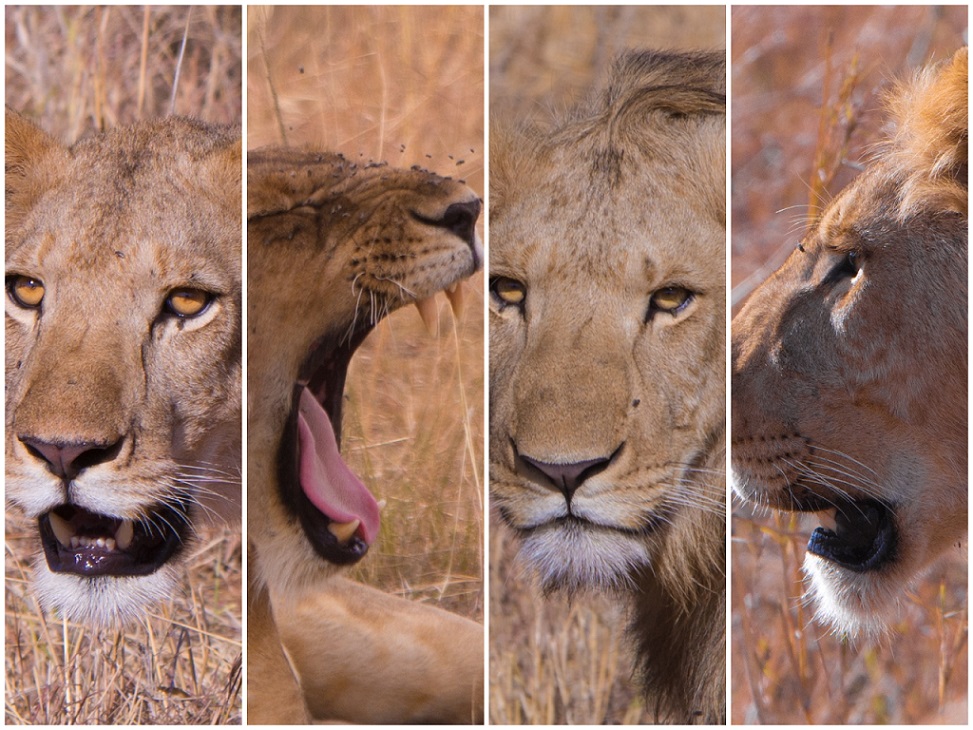
In light of the recent unfortunate incident in the Ishasha Sector of Queen Elizabeth National Park, where 6 lions were poisoned to death (thank God the perpetrators have been arrested and presented before court), CEO East Africa, has partnered with celebrated wildlife and travel photographer, Ivan Ssebuuma, to bring you some very powerful shots from the jungles of Queen Elizabeth National Park, Murchison Falls National Park and Kidepo Valley National Park where visitors can still get up-close and personal with dozens of lion prides going about their lionly business.

WITH ROARVE FROM UGANDA’S WILD: A lioness roars to her pride in the Kasenyi Sector of Queen Elizabeth National Park. Described as a Medley of Wonders and measuring 1,978km², QENP is Uganda’s second-largest and second most-visited National Park.  The park’s diverse ecosystems, which include sprawling savanna, shady, humid forests, sparkling lakes and fertile wetlands, make it the ideal habitat for the classic big game, ten primate species including chimpanzees and birds, all of which provide a good environment for the King of the Jungle to thrive, with plenty of food supply especially antelopes such as Uganda Kob among other wildlife. PHOTO/Ivan Ssebuuma.

THE QUEEN OF THE JUNGLE AND HER ROYAL CUBS: A lion pride rests after a meal in Murchison Falls National Park, in Western Uganda at the northern end of the Albertine Rift Valley. First gazetted as a game reserve in 1926, the park is Uganda’s largest and oldest conservation area, hosting 76 species of mammals and 451 birds. It is also the most visited park in Uganda. The best time to see lions is during park drives in the morning and evenings, although chance sightings are common in the day. PHOTO/Ivan Ssebuuma
THE KING AND HIS QUEEN: A male lion stands watch as his lioness catches a power nap in the hot Kidepo Valley National Park (KVNP). Kidepo is one of three national parks where lions can be seen. For best chances to spot lions in Kidepo, that are most often perched on rocks, it is advisable to go along with a park ranger. The largely dry Kidepo may be low wildlife species, but it compensates visitors with amazing scenery. Some of the common wildlife in Kidepo, include elephants, leopard, bush duiker, jackal, bushbuck, bush pig, ostrich, buffalo and much more, in the Narus Valley. Wildlife is most active in the Narus Valley during early mornings and late afternoon with 6 am and 4 pm being the most optimal times to set off for game drives.  PHOTO/Ivan Ssebuuma

THE CLIMBING LIONS OF ISHASHA: This picture was taken before the unfortunate poisoning incident in which 6 lions in the Ishasha Sector of Queen Elizabeth National Park. Since the incident, several sightings of lions have been seen in the sector. The tree-climbing lions of Ishasha, are a unique attraction and a highlight especially for visitors transiting between QENP and Bwindi Impenetrable National Park to see the mountain gorillas, another Ugandan gem. PHOTO/Ivan Ssebuuma

LION TAKEAWAY: After a hearty meal, a teen lion carries off leftover from a skull meal in the Kasenyi Sector of Queen Elizabeth National Park. The Kasenyi plains that fade into the shores of Lake George, Lake Edward, and the adjoining Kazinga Channel are fertile ground for especially the roaming populations of antelopes, such as Uganda Kobs that lure the King of the Jungle for a regular meal. This creates several unrivalled opportunities for viewing the lions as they prey and play around. It is said, up to 200 lions roam this particular sector. PHOTO/Ivan Ssebuuma

AN AFTERNOON LIONMANTIC WALK IN THE PARK: A lioness and lion take a stroll in the midmorning sun in Murchison Falls National Park. The State of Wildlife Resources in Uganda, a 2018 report authored by Aggrey Rwetsiba, Fred Kisame and Fredrick Wanyama of the Uganda Wildlife Authority (UWA) estimated that there was a population of 493 lions in Uganda. Murchison Falls National Park, Kidepo Valley National Park and QENP harbour the most, if not the only number of lions in the country.  PHOTO/Ivan Ssebuuma

THE REGAL POSE AT NOON: An alert lion in Kidepo Valley National Park on the watch for any approaching danger and or meal. Kidepo Valley National Park lies in the rugged, semi-arid valleys between Uganda’s borders with Sudan and Kenya, some 700km from Kampala. The park contains two rivers – Kidepo and Narus – which disappear in the dry season, leaving just pools for the wildlife.  These seasonal oases, combined with the open, savannah terrain, make the Narus Valley the park’s prime game viewing location. Gazetted as a national park in 1962, it has a profusion of big game and hosts over 77 mammal species as well as around 475 bird speciesPHOTO/Ivan Ssebuuma

HER MAJESTY’S JUNGLE POSE: A lioness seeks shelter from the sweltering afternoon sun in Murchison Falls National Park. Although Murchison Falls National Park can be visited all year round, the best time to visit is in the dry season months of December to February. For an absolute experience, it is also recommended that you use the services of a professional tour and travel firm, which can get you the best-guided experience. PHOTO/Ivan Ssebuuma

THIS IS LION TREEDOM: Lions are known to rest than they are active and can rest for up to 20 hours a day. Animal behaviourists have attributed this strange unlion-like tree-climbing behaviour to attempts to escape from the constant irritation of insect bites on the ground while others have attributed it to an attempt to escape the sweltering heat on the ground level. Regardless of the reasons, tree-sliming lions are a sight to behold. PHOTO/Ivan Ssebuuma

Tagged:
About the Author

Muhereza Kyamutetera is the Executive Editor of CEO East Africa Magazine. I am a travel enthusiast and the Experiences & Destinations Marketing Manager at EDXTravel. Extremely Ugandaholic. Ask me about #1000Reasons2ExploreUganda and how to Take Your Place In The African Sun.

beylikdüzü escort