In many African markets, entrepreneurs often face an uncomfortable choice: play by the rules and risk losing opportunities, or bend them and survive.
For Elizabeth Ntege, co-founder and chief steward of the NFT Consult Group, the decision has never been ambiguous—even when the cost has been steep.
Running a business in Africa, she says, often requires navigating systems where shortcuts, influence, and informal transactions can determine outcomes. Yet Ntege believes the continent’s future depends on leaders willing to take a different path.
“You need a level of humility to understand what you’re doing is wrong, and then ask yourself where the community is that will help you transform it,” she says. “But you cannot do it alone. You have to do it in community. That’s how we begin to change the marketplace.”
Her reflections come from a recent conversation that aired on 24th February 2026 on the global Faith Driven Entrepreneur podcast, where she spoke with Justin Forman, Co-Founder and Executive Director of the Faith Driven Entrepreneur, about the realities of building purpose-driven businesses in Africa’s complex economic environment.
The Faith Driven Entrepreneur is a movement dedicated to gathering one million Christ-following entrepreneurs and equipping them so they can fulfill their call to create and transform the world around them.
Faith Driven Entrepreneur exists to encourage and equip Christ-following entrepreneurially minded people worldwide with world-class content and community. But more than that, Faith Driven Entrepreneur is a movement—a continually growing mass of people who believe they are God’s people sent out to do His work by building businesses that serve His plan.
Today the movement serves entrepreneurs in more than 100 countries, connecting leaders through its daily blog, weekly podcast and monthly newsletter.
What emerges from Ntege’s conversation with Forman is a powerful argument: that integrity in leadership may be difficult in African markets, but it is precisely what the continent’s entrepreneurial future demands.
A Marketplace of Opportunity—and Pressure
Uganda’s capital, Kampala, sits at the centre of one of Africa’s most vibrant yet challenging entrepreneurial environments.
“Kampala is the capital city of Uganda… a country of about 50 million people, about 80% of whom identify as Christians,” Ntege explains.
But beneath the optimism lies one of the continent’s most pressing economic problems—youth unemployment.
“In Africa in general, for everybody who is employed, you’re supporting about six people in the background,” she says. “So when we talk about lack of employment, you’re literally affecting seven people.”
The numbers illustrate the scale of the challenge.
“In Uganda alone we have over 400,000 people graduating every year, and yet we don’t have enough jobs for them to take up.”
That mismatch between education and employment has created a deeply competitive job market.
“For every job we put up, we will get about 500 applications,” Ntege says.
For many graduates, finding work becomes a matter of survival.
When Opportunity Becomes Desperation

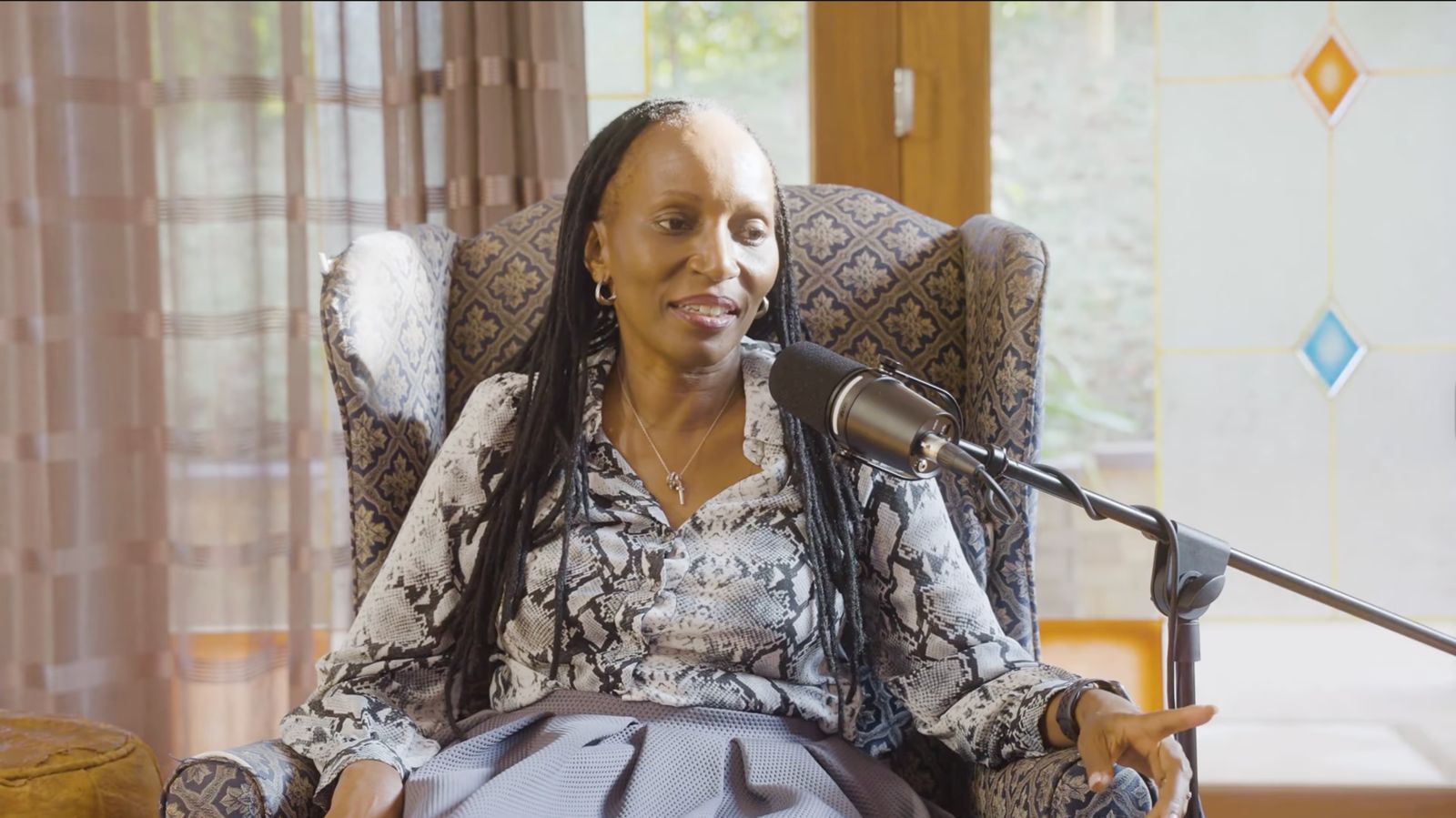
Ntege says one needs a level of humility to understand what they are doing is wrong, and then ask themselves where the community is that will help you transform it
Ntege has spent years observing the realities of the job market through NFT Consult’s recruitment work across Eastern and Southern Africa.
One troubling pattern, she says, is how desperation for employment can lead to unethical practices.
“It is quite common for somebody looking for a job… to get it through who you know.”
In Uganda, there is even a phrase that reflects the reality.
“We have a saying… ‘gamba nogu’—who can I talk to? Who do I know in that company?”
In some cases, job seekers resort to extreme measures.
“We’ve seen instances where people have been given a job and their first payroll… goes to the person who connected them into employment.”
Even more disturbing are cases involving exploitation.
“We’ve seen a level where women are willing to trade sex for a role and continue to be abused in that role as long as they stay there.”
What concerns her most is that many people no longer even recognise these practices as corruption.
“Some people even don’t realize it’s corruption. They believe it is part of the culture of getting a job.”
Building a Business Around Opportunity
Against this backdrop, Ntege and her partners built NFT Consult into one of the region’s leading human resource management firms focused on employment solutions.
“NFT Consult is a human resource management firm focusing on solving the problems of gainful unemployment in the marketplace on the African continent,” she explains.
The company now operates in 12 countries across Eastern and Southern Africa, helping connect young people to employment opportunities.
But the business model extends far beyond recruitment.
NFT Ignite runs employment programmes in collaboration with partners, while NFT Mobility focuses on delivery services designed to create work opportunities for women and youth.
Ntege has even expanded the company’s work into community education.
“We started a community after-school club where we host children from the age of three to 13 within our vicinity to improve their literacy skills and help them with homework.”
The programme, she says, reflects a long-term vision.
“I am building a pipeline for future employees… we have to start from the young people and get the guardrails right from the beginning.”
Partnerships for Job Creation
The scale of Africa’s unemployment crisis means no single organisation can solve it alone.
NFT has therefore partnered with international institutions working to expand employment opportunities across the continent.
One such collaboration is with the Mastercard Foundation, which is supporting initiatives aimed at creating millions of jobs.
“Mastercard Foundation is trying to create about 40 million jobs on the continent,” Ntege says.
Through the programme, philanthropic capital helps bridge the gap between education and employment.
“Companies like Mastercard came up and said, ‘We are willing to pay payroll for these people as long as they are doing something meaningful.’”
 Preparing for Board Leadership: Why the Fit and Proper Test Matters
NFT identifies qualified candidates and places them with credible employers.
“After one year, you’ll have enough experience… and the employer can either keep you on or you move on with that level of experience.”
During that year, participants receive mentorship, networking opportunities and professional development.
“We pack as much experience as possible into that one year so that their CV is enriched.”
When Integrity Comes at a Price
Ntege’s commitment to ethical leadership has not always been easy.
One defining moment came during the COVID-19 pandemic, when NFT faced a major dispute with tax authorities in Tanzania.
The company was presented with a multi-million-dollar tax demand.
“The Tanzania Revenue Authority gave us a three-million-dollar fine for taxes we supposedly owed, which we technically hadn’t made.”
Then she discovered that her advisors were negotiating a bribe to make the issue disappear.
“They were sitting in my conference room negotiating on my behalf how much bribe I needed to pay for this to go away.”
The response was immediate.
“My business partner and I turned to each other and said, ‘We have to shut this down.’”
Closing the operation meant walking away from lucrative contracts.
But the company prioritised protecting its workers.
“We gave all the contracts to our competitors… we didn’t take a penny.”
Many of the affected employees eventually formed their own recruitment agency.
“To date, they are our partners in Tanzania.”
For Ntege, the decision was not optional.
“We were willing to walk away from a two-million-dollar contract rather than compromise our values.”
Faith as a Leadership Compass
For Ntege, the foundation of ethical leadership lies in faith.
Her involvement with the global Faith Driven Entrepreneur movement reshaped how she approached business leadership.
“The number one lesson for me was realizing that God owns my business all my days,” she says.
That realization changed her perspective on risk, responsibility and decision-making.
“It was a relief that I did not have to carry all these burdens… I became more intentional in listening to Him.”
Yet she acknowledges that bridging the gap between faith and business practice remains a challenge.
“Clearly there is no connection from Sunday to Monday for many people.”
Changing that culture requires new conversations about leadership.
“The church has a role to play, but they only have one hour of our time. That’s where entrepreneurial communities come in—to help people learn how to transform their businesses.”
Africa’s Entrepreneurs as Problem-Solvers
Despite the challenges, Ntege remains optimistic about the continent’s future.
Entrepreneurs, she believes, hold the key to solving Africa’s biggest economic challenges.
“If your business is going to survive, you have to be solving a problem.”
And Africa has no shortage of problems that require creative solutions.
“Entrepreneurs are always looking for problems. That’s what excites us.”
Her advice to founders is simple: start with what you already have.
“Look within your resources, your talents, your gifts… and it will work. There’s always somebody willing to co-create and support you.”
The Quiet Power of Ethical Leadership
In many ways, Elizabeth Ntege’s journey reflects a broader shift happening across Africa’s entrepreneurial ecosystem.
A growing number of founders are rejecting the idea that corruption and compromise are unavoidable.
Instead, they are building businesses rooted in purpose, faith and ethical leadership.
For Ntege, the lesson is clear.
Integrity may make the journey harder—but it also makes it meaningful.
“You cannot do this alone. You have to do it in community,” she says.
In a marketplace where shortcuts often appear tempting, her story offers a different model—one where purpose, integrity and faith remain at the centre of entrepreneurship in Africa.