
By Dennis Kahindi
Earlier this year, the Parliament of Uganda passed a 12% excise tax on Internet data, potentially hiking the prices for online access. This tax measure repealed the daily Shs 200 Over the Top (OTT) tax.
According to a World Bank report, the number of individuals using the Internet as a percentage of the population of Uganda stands at a mere 23.71%. Uganda’s low rate of Internet adoption is primarily driven by affordability issues. Taxation — particularly the recently introduced excise duty – will play a pivotal part in the lack of mobile broadband affordability. Reducing the duties paid by consumers would increase affordability.
Yet for almost 10 million Ugandans, the Internet has become an essential component of our everyday social and business lives. The Internet helps us navigate through work, education, church, meetings, entertainment, and research, among other things, making it a mainstay of our lives.
Taxes play an important role in any country. Governments are duty-bound to balance the often-competing objectives of domestic revenue mobilisation and digital development. A force as central as the Internet certainly becomes a sustainable source of revenue critical for financing infrastructure, healthcare, education, and other public services.
However, careful consideration must be given to the broader and long-term economic and social benefits of digital inclusion versus a short-term focus on the Internet for domestic revenue mobilisation.
According to the World Wide Web Foundation, the low rate of Internet penetration is often attributed to the high cost of data. However, data plays a vital role in the transformation of our economy and the reason why Liquid Uganda absorbed taxes such as the 18% Reverse VAT on imported Internet Services and the standard 18% VAT.
While Liquid has previously absorbed these taxes, we are not in a position to absorb a further 12% Excise Duty. We have duly communicated to all our consumers on the same and have included this as a tax line on their invoices going forward.
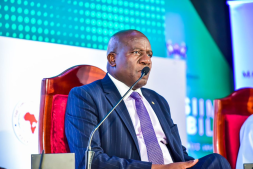 Breaking Barriers: Charles Mudiwa on Intergenerational Leadership at Makerere
 President John F Kennedy once said that “an economy hampered by restrictive tax rates never produces enough jobs or enough profits.” Today, those words echo in our ears as we find ourselves in a situation where taxes are added, resulting in the hampering of our aspirations of realising a ‘digitally transformed economy.’
Internet affordability is usually quoted as “1 for 2”, meaning that 1GB of data should not cost more than 2% of the average monthly income in the country. But, in sub-Saharan Africa, 1GB of data currently costs more than 6.8% of the average monthly income making it three times more expensive when compared to countries globally. This is not sustainable, given the harsh economic times facing Africa.
Uganda has been in and out of lockdowns for the last 18 months. Not only is most of the population still working from home, but even students continue their education via online classes, making internet services critical to ensuring the continuity of both businesses and education. Liquid Uganda has always placed its customers front and centre, and to ensure that our services reach the most
significant portion of the local population, we have been busy expanding our fibre network to reach previously untouched remote areas. Currently, we are the biggest wholesale Internet provider in Uganda with installed capacity of 1,300km of fibre, around 500km of which is in remote areas that desperately need access to high-speed connectivity.
However, with the Internet adoption in Uganda still very low, we need to make significant strides to ensure increased adoption and access to most of the population rather than just a select few. The 12% Excise Tax is therefore a few years too early in the era when we should be driving Africa’s Digital Future.
The author is CEO, Liquid Intelligent Technologies Uganda.