“While Uganda will become an oil producer in the years ahead, we see only a gradual return to the pre-COVID growth trend of c.6%. We now forecast growth of 5.1% in 2022 (6.0% prior) and 6.6% in 2023 (7.0%), when oil-related construction activity should gain momentum,” says Razia Khan, Chief Economist & Head of Research, Middle East & Africa, Standard Chartered Bank
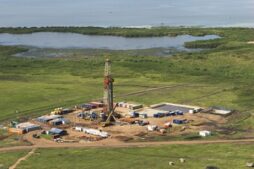
The Final Investment Decision (FID) was announced; first oil is expected in 2025, with an eventual ramp-up in production to 230kb/d. Land purchases related to oil developments are almost complete, and preliminary work on the East African Crude Oil Pipeline has begun.
The Final Investment Decision (FID) for Uganda’s oil and gas Projects by the TotalEnergies EP Uganda, CNOOC Uganda Limited, the Uganda National Oil Company (UNOC), and the Tanzania Petroleum Development Corporation (TPDC) was announced in Kampala on February 2, 2022.
The FID announcement signifies the commitment of the oil companies to invest close to US$10 billion to develop Uganda’s oil and gas resources through the implementation of the Tilenga Project in Buliisa and Nwoya districts; the Kingfisher Project in Hoima and Kikuube Districts (approximately US$6-8bn); and, the East African Crude Oil Pipeline (EACOP) that will cross the ten (10) districts of Hoima, Kikuube, Kakumiro, Kyankwanzi, Gomba, Mubende, Lwengo, Sembabule, Kyotera and Rakai in Uganda.
“We raise our 2021 GDP forecast to education sector, a key driver of services, has yet to reopen after earlier lockdowns. New COVID lockdowns would pose a risk to the outlook.
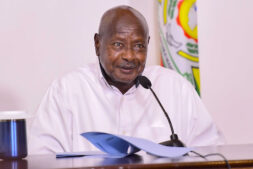 Could Museveni’s Election as EAC Chair Renew Push for Accelerated East African Integration?
…. we now see a smaller current account deficit in 2022 (7.3% of GDP versus 9.0% previously). We see the C/A deficit widening thereafter on higher imports. Inflation remains well behaved, with spare capacity and a strong currency helping to contain price pressures. We update our CPI inflation profile to reflect higher energy prices; we now forecast 3.8% in 2022 (3.5% prior) and 3.7% in 2023 (4.0%). Real yields remain attractive (the nominal yield on the 1Y T-bill is 10.6%); offshore portfolio investor t should continue in 2022, despite monetary tightening in DM,” Khan adds.
She says even with well-behaved inflation, Bank of Uganda (BoU) is expected to tighten policy early, with 100bps of rate hikes in 2022, starting in Q2. However, monetary policy should remain accommodative, with macro-financial support still in place.
“While BoU COVID-related credit-relief measures expired at end-September 2021, we expect the BoU to continue to provide support in 2022 for sectors still affected by lockdowns, and to provide liquidity support to financial institutions that need it. The government has delayed repaying the BoU for its advances during the initial COVID shock; however, with inflation low, this has not raised concerns,” she says, adding:
“Under its current 3Y IMF programme, Uganda will continue to aim for fiscal consolidation, hoping to keep debt-to-GDP below 50%. Revenue has disappointed so far in FY22 (ends 30 June 2022) due to earlier lockdowns. Authorities plan a UGX 3.8 trillion supplementary budget but will make cuts elsewhere to meet debt targets. Even so, we now see a wider fiscal deficit in FY23 (5.8% of GDP; 5.4% prior).”