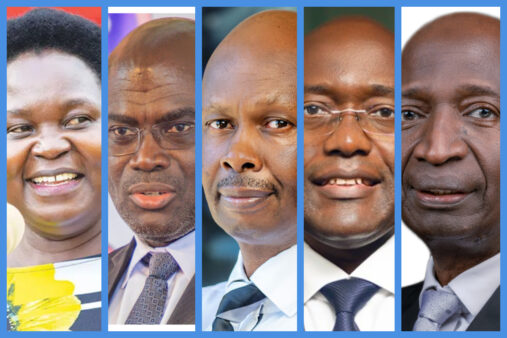
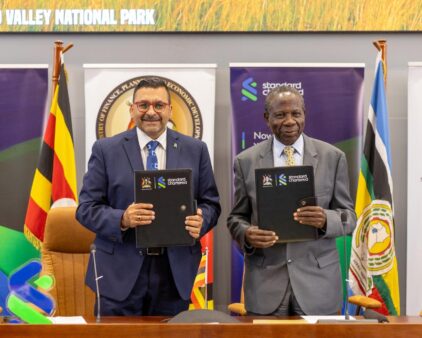
The Ministry of Energy and Mineral Development has instructed the Board of the Uganda Electricity Distribution Company Limited (UEDCL) to carry out a comprehensive investigation into the performance and conduct of the UEDCL’s top management, following major issues raised in a recent audit and performance assessment by the Electricity Regulatory Authority (ERA).
The directive follows a wave of public interest triggered by a letter from Prime Minister Robinah Nabbanja, who stepped in to halt the immediate dismissal of several senior UEDCL managers.
Energy Minister Ruth Nankabirwa had reportedly initiated the terminations, prompting the Prime Minister to call for a more measured and evidence-based approach that would not disrupt the stability of a power sector already grappling with a difficult transition.
In a statement released on December 5, the Ministry clarified that despite the public speculation, no UEDCL staff member has been dismissed as part of the internal review.
The Board has instead been tasked to dig into the issues raised by ERA and report back in a clear, actionable, and time-bound manner.
The Ministry emphasised that the investigation must adhere to standards of transparency, accountability, and fairness, noting that this is a standard internal process rather than a punitive shake-up.
In a separate statement issued by Minister Nankabirwa on December 5th, she dismissed claims about the possibility of introducing a private power operator into UEDCL’s distribution mandate.
“The UEDCL Board is finalising a technical inquiry that I directed following performance and operational concerns highlighted in the ERA report. NO staff member has been terminated and there is NO cause for public alarm,” Minister Nankabirwa said.
She highlighted that the inquiry is being conducted strictly within established governance and regulatory frameworks, warning that, “any officer found in breach of the required standards will be held accountable in accordance with the law.”
The probe now sits squarely with Lydia Ochieng-Obbo, the UEDCL board chairperson who boasts a stellar career in the legal profession.
She is supported on the board by Dr. Brian Isabirye, Mugisha Christopher, Stella Marie Biwaga, Florence Namatta Mawejje, and Ben Ojok.
The inquiry comes at a delicate moment for UEDCL, which is still finding its footing after taking over the national distribution network on April 1, 2025, marking the end of Umeme’s two-decade concession.
That moment was symbolically captured at midnight when “Umeme Yaka” vanished from mobile money menus and was replaced by “UEDCL Light”, signifying a profound shift in Uganda’s power sector.
Energy Minister Ruth Nankabirwa admitted the paradox during the handover.
“We appreciate Umeme for its work in revenue collection and loss reduction,” she said.
“But we must now protect infrastructure and advance reliable power supply for Ugandans.”
Her words carried both gratitude and indictment, a reminder of a partly broken network that Mwesigwa inherited.
For many Ugandans, this was more than a branding change; it was a national test of whether the state utility could keep the lights on.
However, beneath the symbolism lay a grid that had endured years of deferred investment.
Data from UEDCL shows that the state utility inherited more than 47,000 rotting wooden poles, hundreds of overstretched transformers, and several critical substations running beyond safe capacity.
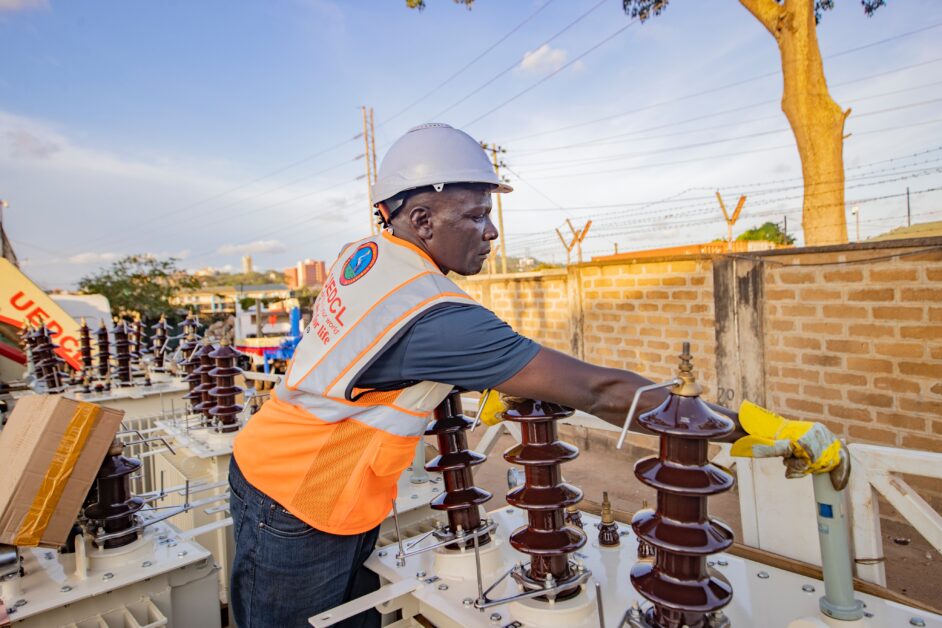
ERA’s performance assessment, which is now at the core of the Board’s investigation, reflects a system straining under aging infrastructure, heavy demand, and years of underfunding. It also highlights the enormous task facing UEDCL’s leadership.
At the centre of that task is UEDCL Managing Director, Paul Mwesigwa, a seasoned technocrat who rose through the ranks as a financial controller, chief internal auditor, and CFO before becoming CEO.
With more than two decades of experience, Mwesigwa has been the face of the transition, balancing political pressure with operational realities.
But the system he inherited was, in his own words, ‘stubborn and yearning for investment,’ a remark he made during an earlier interview with CEO East Africa Magazine.
Mwesigwa led a transition that involved incorporating nearly 2,200 former Umeme employees back into UEDCL. A total of 2,712 positions were approved, and by mid-year, 96% had already been filled.
Induction programs carried out across 100 service centres were designed to merge cultures and restore service discipline. Yet the integration was not without anxiety: Could a rapidly rebuilt workforce sustain performance in a system already under stress?
 Aga Khan Fund Exits Troubled Nation Media Group After 66 Years, Sells Controlling Stake to Tanzanian Billionaire
To accelerate last-mile access in line with ERA and World Bank ambitions, 550 technicians were recruited and deployed nationwide, with plans to add 400 more by the close of July 2025.
It was an aggressive push to meet connection targets without surrendering quality control.
“Every effort is being made to manage change, preserve institutional knowledge, and build a resilient workforce to serve the country,” said ERA CEO Ziria Tibalwa Waako at the license handover in April.
Operationally, outages have defined public perception. A Business Climate Index survey by the Economic Policy Research Centre (EPRC) showed that 42% of Ugandan businesses experienced power instability between April and June 2025.
Ugandans on social media amplified these frustrations. Yet UEDCL’s own monitoring systems paint a more nuanced picture, showing outages accounting for only two percent of network availability, or about 15 hours per month.
The gap between lived experience and system data has become a running theme in UEDCL’s public engagement.
By July, a UEDCL report covering the first 100 days since the transition indicated that UEDCL had replaced 205 transformers and ordered UGX 300 billion worth of new equipment, though deliveries were expected to take several months.
Mwesigwa, in an earlier interview with the CEO East Africa Magazine, promised “serious stability” within a year as the investments come online.
In the meantime, planned maintenance shutdowns and occasional load rationing remain unavoidable.
Financially, the Auditor General’s 2024 report revealed a worrying 70.4% debt ratio, raising questions about whether UEDCL could carry the financial weight of the country’s distribution network.
Yet the company has demonstrated improving fiscal discipline. Monthly sales rose sharply, hitting UGX 2.1 billion, a 104% collection rate, while UGX 220.5 billion in transmission bills to UETCL were cleared on time.
A USD 50 million (UGX 177 billion) loan from Absa Bank, part of a broader USD 74 million (UGX 262 billion) financing package, is expected to cushion the company through early investment cycles.
The infrastructure improvements are beginning to surface. In June, the Mbarara North substation was upgraded from 20 MegaVolt-Ampere (MVA) to 40 MVA, and the Kabale–Kisoro substation doubled its capacity from 2.5 to 5MVA
Another round of upgrades is underway in Kumi District, and the new Magigye substation to ease pressure on Kampala’s expanding suburbs.
Still, at least 11 critical substations were running at maximum capacity at the release of the report. Key affected areas included; Namanve North, Namugongo, Mutundwe, Nkenda, Kasana, and Namungoona, which are within the metropolitan radius.
One of UEDCL’s biggest achievements has been accelerating customer connections. The utility, by September, added 648,404 new customers, growing from 1.78 million to 2.43 million households.
National grid length expanded from 3,431 km to 5,140 km, while installed generation capacity rose to 2,049 MegaWatts, boosted by the commissioning of the Karuma Hydropower Plant.
With national demand at 1,044 megawatts, load-shedding seems to have been avoided for now, except for some pockets of the country.
But even with these gains, energy losses remain UEDCL’s Achilles’ heel. Losses dropped from 19.1% to 16.8% by July. Regional disparities are glaring;while losses in the East hover around 11%, areas in the West exceed 22%.
Distribution energy losses are computed as the difference between the energy purchased and the energy sold, according a brief from ERA.
Meanwhile, vandalism continues to cripple the network, with copper theft, often suspected to involve insiders, emerging as a major threat to ongoing recovery efforts.
It is within this complex and demanding environment that the Ministry of Energy, ERA, and the Office of the Prime Minister are coordinating to ensure stability at UEDCL during the internal inquiry.
The Ministry emphasised in its latest communication that its priority remains ensuring reliable electricity supply, strengthening professionalism across the sector, and restoring public confidence during this transitional period.