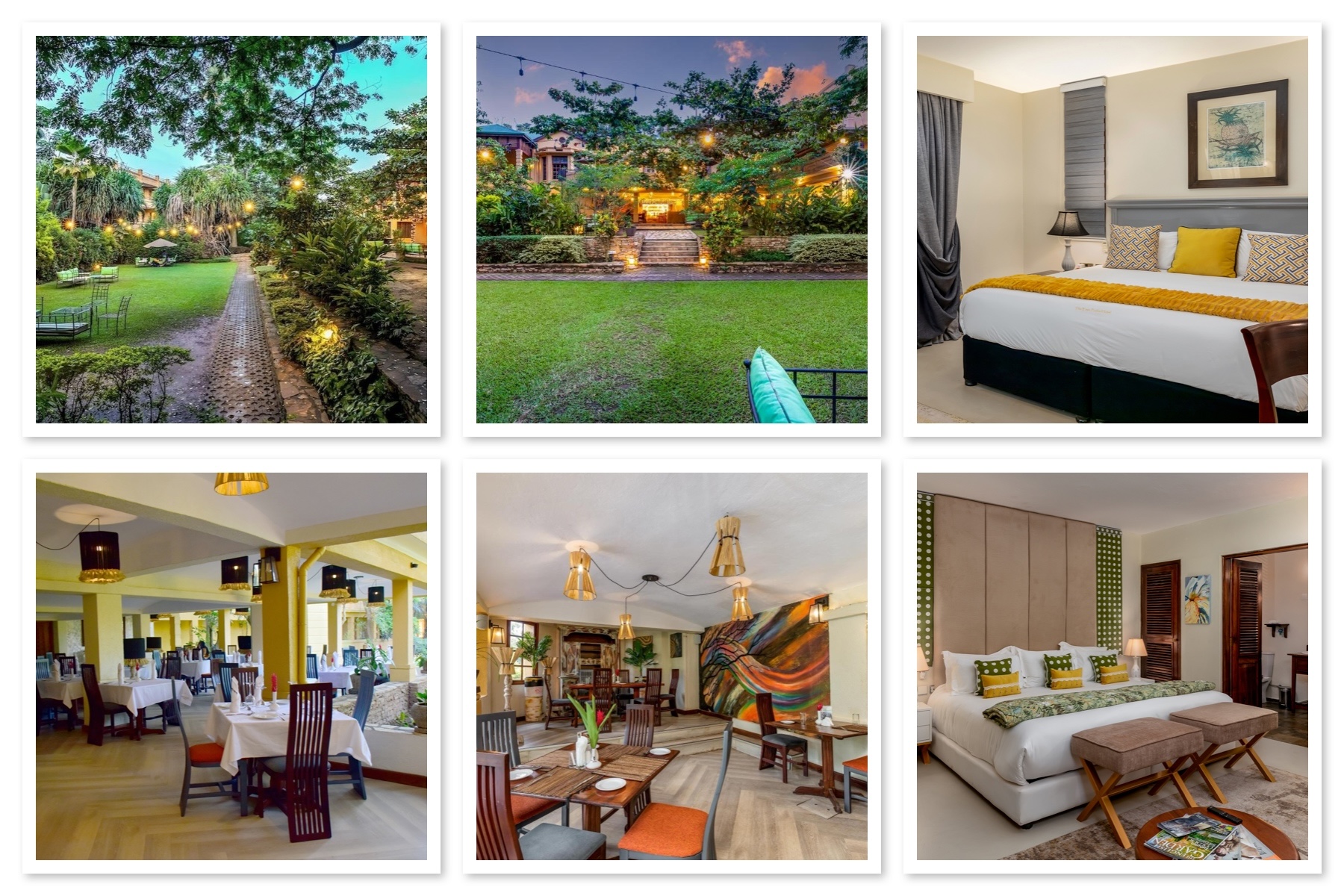
A collage of Emin Pasha Hotel’s timeless charm—lush gardens, tranquil courtyards, and colonial-era architecture—tells the story of a boutique gem in the heart of Kampala, now caught in the storm of Uganda’s tourism sector financing crisis.


The Emin Pasha Hotel, one of Uganda’s pioneering luxury boutique hospitality brands, has been listed for sale alongside other high-value properties belonging to its proprietor, Lokulie Kennedy Erestus Losuk. The sale, announced through a public auction notice issued by Jald (U) Ltd, comes as a result of a loan default and reflects not only the financial distress of the hotel’s ownership but also broader credit and financing pressures affecting Uganda’s tourism sector.

According to the notice, two properties associated with The Emin Pasha Ltd are being put up for auction. The first is Plot 27, Stanely Road in Nakasero, which sits on 3.4 acres and houses the main hotel facility. The second is Plot 29, Akili Bua Road, a nearby parcel measuring 0.339 acres. Both are located in Nakasero, one of Kampala’s most prestigious neighborhoods known for its diplomatic missions, upmarket residences, and commercial establishments.

In addition to the corporate assets, the auction notice also lists two personal properties owned by Lokulie Kennedy Erestus Losuk. These are located in Kisugu, another high-value suburb of Kampala, comprising approximately 2.5 acres in total. The auction is scheduled to take place 30 days from the date of the notice unless the outstanding loan obligations, including accrued interest and recovery costs, are settled in full. Prospective buyers are allowed to inspect the properties by arrangement, and existing occupants are expected to vacate within 14 days to allow for due diligence.

A Mirror of Broader Sector Financing Woes

While the public may view this development as an isolated event, it is emblematic of deeper financial pressures affecting the tourism and hospitality sector in Uganda. Over the past few years, operators have been grappling with rising operational costs, slow recovery in international travel, and limited access to affordable long-term capital. This context has created financial vulnerability, especially for capital-intensive hospitality businesses such as boutique hotels.

According to the Uganda Tourism Association (UTA), the lending environment for tourism enterprises remains highly constrained. Commercial bank loans are priced at interest rates ranging between 16 to 36 percent per annum, while development bank loans, including those from the Uganda Development Bank (UDB), carry rates of 12 to 16 percent. These figures are considerably high for a sector that typically requires patient capital and long-term investment horizons.

Underserved and Underfunded

The challenge is compounded by limited access to credit. Tourism receives only 3 percent of all commercial bank lending in Uganda and just 7 percent of the total disbursed by development banks. The sector also struggles with high levels of non-performing loans. As of May 2024, tourism’s Non-Performing Loans (NPL) to Gross Loans ratio stood at 12.1 percent, contributing 3.6 percent to the total NPLs in Uganda’s banking system. This reality has discouraged further lending and led to a growing perception of tourism as a risky investment.

The Emin Pasha Hotel, nestled in the heart of Nakasero, remains a serene symbol of elegance and heritage, even as it faces auction amid rising financial pressures in Uganda’s tourism and hospitality sector.

The financial constraints are even more acute for small and medium enterprises (SMEs), which dominate the sector. More than 99 percent of businesses in Uganda’s tourism industry are SMEs, most of which are owned or managed by youth and women. Many of these businesses lack the collateral required to secure loans and are unable to access credit despite being at the center of job creation and service delivery in the sector. This situation limits their ability to invest in product development, staff training, digital tools, or infrastructure upgrades that are essential for competitiveness.

The Absorption Gap and Unrealized Potential

Even when concessional tourism-specific funds are made available, they remain underutilized. UTA attributes this to bureaucratic delays, low awareness, and limited technical capacity among operators to prepare bankable proposals. In this regard, the failure to absorb available funds results in missed opportunities to strengthen resilience, especially as the sector continues to recover from the shocks of the COVID-19 pandemic.

The distress sale of The Emin Pasha Hotel and associated assets is therefore not just about one operator’s financial misfortunes; it reveals the broader fragility within Uganda’s tourism financing ecosystem. The government’s own policy targets under the Fourth National Development Plan (NDP IV) project that Uganda’s tourism earnings should grow from USD 1 billion in FY2023/24 to USD 4 billion by FY2029/30. This represents a 300 percent increase and would require a consistent annual growth rate of 32 percent. Yet, at the same time, public investment into the tourism sector is set to decline significantly. The government plans to cut the sector’s budget by 40 percent in FY2025/26, reducing it from UGX 298 billion to UGX 176 billion, with only modest increases projected through to FY2029/30.

Misaligned Ambitions and Financial Realities

This contradiction has raised concerns among industry players. UTA, which represents over 2,500 tourism enterprises across the country, has warned that it is not feasible to expect exponential growth in earnings while investment into the sector remains flat or declines. The association argues that tourism is a strategic sector, not only because it contributes 5.5 percent to Uganda’s GDP, but also because every dollar spent by a tourist generates USD 2.5 in GDP impact—more than many of Uganda’s traditional exports.

As Uganda aspires to position itself as a competitive high-end destination, the collapse of a legacy player like Emin Pasha raises difficult but necessary questions. Is the country investing enough in its tourism infrastructure, marketing, product innovation, and most importantly, its people? Are there appropriate financial instruments to support long-term investment in the sector? And are we doing enough to de-risk tourism financing so that more private players can access affordable credit?

Tagged:
beylikdüzü escort