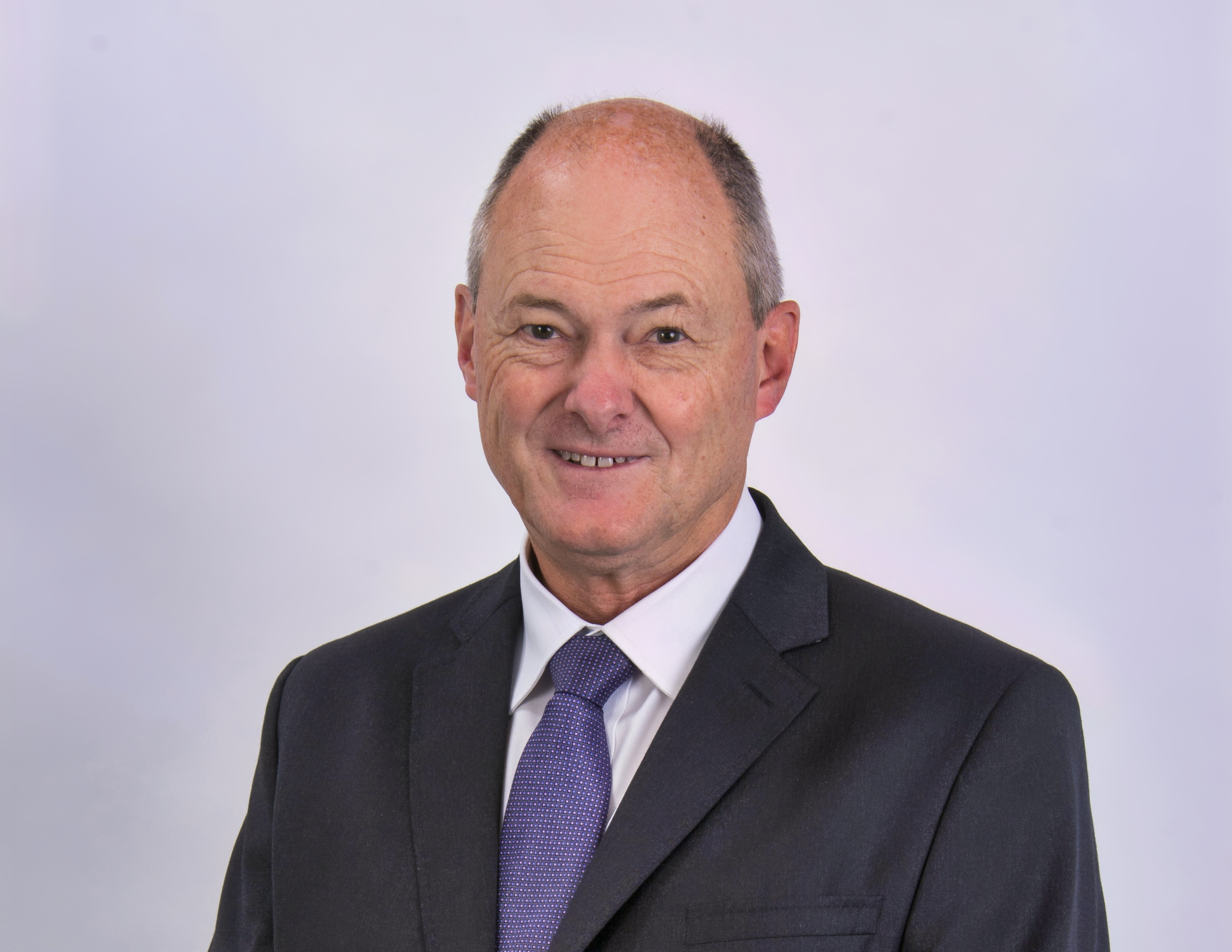
Paul Hanratty - Sanlam Group CEO

The B20 Summit places productivity and resilience at the heart of Africa’s economic future.  Which structural weaknesses in Africa concern you most, and how is Sanlam positioning itself to strengthen resilience against these vulnerabilities?

If you start geographically, there’s a major challenge because of just the sheer size of the place, the fact that the population is actually mostly along the coastline of Africa, with this vast interior. 

 A lot of challenges in terms of infrastructure, movement of goods and people and so on, but I think over time, we would like to see more investment in infrastructure in Africa. We think that’s a key stimulant to the economy.  

But then, there are things that are within our power. So, good governance, sound policy and predictable regulation are really important things that all governments in Africa should strive to have in place, and we should be promoting as many trade links amongst ourselves because we need to help ourselves.

 As an industry, we’re very keen on seeing the promotion of savings and investment because the core of any future is investing for tomorrow, and to do that, you have to generate your own savings.

It’s difficult to attract foreign investment, so we would love to see Africa and our industry doing more to create interest from local communities in saving and then investing it back into those economies to stimulate and grow them over time. 

 So, what we’re doing [as Sanlam] is promote a better understanding and knowledge of financial services amongst people. That’s where people like yourselves [the media] play a massive role in education.

I think the education of people and the power of financial services are very important. I mean, we’d obviously love to see governments doing more to make the industry thrive, and that comes around with incentives, a stable environment, development of capital markets, but also making sure that we police people who transgress because anyone who transgresses undermines the confidence of the public in our industry.

 And that is a big problem for us. Trust is at the heart of everything.

 So, as SanlamAllianz, we position ourselves across the continent to be the trusted partner to educate people and to slowly build up an understanding of the future of why it’s so important for people to take care of their own futures themselves. 

It’s lovely to get help from foreigners, but we must help ourselves first.

What are the key opportunities and risks for SanlamAllianz overall, and do they shift materially in East Africa? 

Yeah, look, I think we see the opportunity as creating a really high-quality service and product to the public at a level that they’re not used to. So, bringing the best of what’s available in the world to bear for the consumer in Africa, and to do it in a way that’s trusted, underpinned by good advice, always putting the customer first and actually acting as a responsible citizen in each country as well. So, investing locally, paying your taxes, all of these are important aspects of what we’re trying to do.

East Africa has massive potential.  We’re still a little bit underweight there.  So, over time, we’d like to increase our presence and invest more in the region, and that will happen with time. 

 How much investment are we looking at in East Africa? 

Well, for us, if you look at our whole portfolio, we love to see East Africa as a relatively small part of it. If we could make it a third of our African portfolio, that would be great, but that’s not the case today. We’re dominated by Egypt, Morocco, Botswana, and Namibia. So, there’s a long way to go.

I see page 11 of the B20 employment and education task force document states that automation is shaping knowledge that employers are ready for. How is Sanlam preparing its human capital for this transition, where risk modelling and customer services are all undergoing AI automation? 

There are a couple of things that you need to think about.  One is, we’re making sure all of our people are trained in how to use the tools that are available. And that’s going to be something that’s going to require continual investment, because these tools are changing by the day, right? 

 We’re training our people to have a slightly different mindset, to be more agile, and to learn for the whole of their lifetime. It’s not, ‘oh, I’ve done my degree, now I’m ready for employment’. It doesn’t work like that anymore! 

And then we are re-engineering our processes over time just to exploit AI and make it more efficient.  We don’t expect to ever retrench people, but rather AI will help us improve productivity and grow our business and create higher-level jobs, ultimately within the organisation.

We run a digital academy where we bring in a lot of youngsters every year and train them up. There’s an increasing focus of the training on the AI aspects. For us, it’s like everything else; we have to invest in people, knowledge, and trust that will lead to some good outcomes.

AI is a very new technology. It’s very hard to predict exactly what’s going to happen, and to some extent, you need to let it be organic.

Have you made some strides in using AI? 

 We’ve got some very good case studies and use cases, but we haven’t yet, like many companies, lifted it to a scale where it makes a difference at the corporate level. 

So, we’ve got a lot of promising use cases, but to scale it up is the next phase I would suggest for us, and that’s actually where East Africa would play a role as well.

I mean, you guys [East Africa] are known for having the best tech skills on the continent.  It should be an area of opportunity for East Africa.  

Take us through your leadership and how you are investing in legacy systems, products, and segments. What frameworks are you using when it comes to short-term profitability and long-term opportunities? 

I think for us, we’re always interested in our long-term rather than the short-term. So, we will always prioritise investing in the business to develop it for tomorrow.

What we don’t ever want to do is to be irrelevant at the same time, particularly when it comes to technology, we don’t believe in investing at the bleeding edge of everything that comes along.

We prefer to sweat the assets that we have.  Quite often, that’s a much better tactic for us. We need to be fairly convinced about new technologies before we leap into them.

We prefer to experiment, pilot, and only really put a lot of money behind new technologies once we’re pretty sure we’ve sweated the old assets. What we are mostly focused on is investing in our people because we think that’s the biggest return on investment for ourselves. 

Which parts of the Sanlam business continue to generate strong revenue today, but you feel that in the next 5-10 years, you need to approach new areas of investment? 

 I think every single one of our businesses has basically great inherent growth. We’re not in fear that we’re over the curve at all in any of our businesses. The reason for that is twofold: one is demographics- Africa’s demographics are very good, and secondly, penetration of the markets is very low; we have a lot of growth ahead! 

We don’t want to jump into new things…we’ve got 20-30 years of growth just in our core businesses. That’s why we love our company so much. It’s because we’re in the sweet spot! 

Let’s talk about sustainability. How is Sanlam integrating sustainability into long-term financial products and risk frameworks?

 The way we think about sustainability is about the sustainability of the whole enterprise, communities and client base around us. So, we’re taking a very holistic approach right from what people typically talk about in ESG, which is mostly the ‘E.’ 

But for us, it’s not just the ‘E’, particularly in Africa, the ‘S’ is very important;  gender equality, healthcare, early childhood development, human rights and investing in people to get them out of poverty. All of these things are important! 

But we also emphasise having great products that put our customers at the centre. Having very happy customers ultimately equals building the brand. 

Looking after our capital and protecting our balance sheet is equally important. If we allow our balance sheet to become impaired at any point, that undermines the sustainability of our business. 

We see financial education as absolutely crucial in stimulating this cycle of savings and growth.

So, we’re going to be measuring all of these things in a single index from next year, where we look at absolutely everything, because when people talk about sustainability, a lot of them think, ‘oh, well, that’s just the green issue and the environment. ’ It’s not!  

If you don’t take care of the people, you won’t take care of the environment. All of these things are very important in building a sustainable future. If you take shortcuts, you’re going to undermine sustainability.

So, you need leaders who are looking long-term, not focused on short-term results and not focused on materiality and greed, but who are actually happy to earn and build an income over a long period of time. This culture is at the heart of sustainability. 

What worries you or keeps you awake as a CEO? 

I mean, you know, from a company point of view, I believe that we have to be restless all the time because if we sit still, we’ll be overtaken by somebody.

So, we’re paranoid about absolutely everything, right? It’s like a sports team. If you think you’re number one and we can just cruise, you’re not going to be number one for long.

So, we’ve got to keep pushing, but if you ask me, What are my biggest fears right now?, I would say the youth of the world. It’s a massive problem! 

We’re not creating enough purpose and jobs for youth. I think AI has huge opportunities, but if it’s not well managed, it’s very concerning because it can wipe out jobs as well at scale. 

Then I get concerned about the African continent being left behind in the progress race. I think it’s very important that we keep going ahead.  Those are probably the things that worry me! 

What are your thoughts on cybersecurity? 

 Look, cyber is a massive issue, and it’s going to get worse with AI. If you ask most of us, we’ll tell you it’s in our top three risks, and we’re spending a lot of money on it. And I think it’s almost a fact that you’re never going to be completely able to eliminate the risk of it.

It’s unproductive and creates zero, more like a crime tax on society.  Our total IT spend is probably 20% of our total expenses, and we’re spending a quarter to a third of that on cyber.

We’ve yet to have any penetrative attack on our system.  No one has been able to penetrate our system, but that doesn’t mean that we are complacent.

I don’t know if you saw recently, Jaguar Land Rover had an attack on their business, and it completely destroyed a big chunk of their earnings for one year.  It’s a massive setback for that company and an example of where things can go badly wrong.

Sanlam has been aggressively making acquisitions across the continent. What strategic gaps are those acquisitions feeding, and how are you also positioning Sanlam for the whole of the insurance landscape? 

We think in Africa that insurance will be a big industry. We [Sanlam] want, with Allianz, to be the dominant platform on the continent. There isn’t another one, actually.

There’s the odd foreigner who owns a bit here and there.  Most insurance businesses are localised, so we want to be the go-to for Africans, which means that we do acquisitions in the bigger economies to create a platform for the future, where if you say insurance, savings or investment, it’s SanlamAllianz!

Tagged:
About the Author

Paul Murungi is a Ugandan Business Journalist with extensive financial journalism training from institutions in South Africa, London (UK), Ghana, Tanzania, and Uganda. His coverage focuses on groundbreaking stories across the East African region with a focus on ICT, Energy, Oil and Gas, Mining, Companies, Capital and Financial markets, and the General Economy.

His body of work has contributed to policy change in private and public companies.

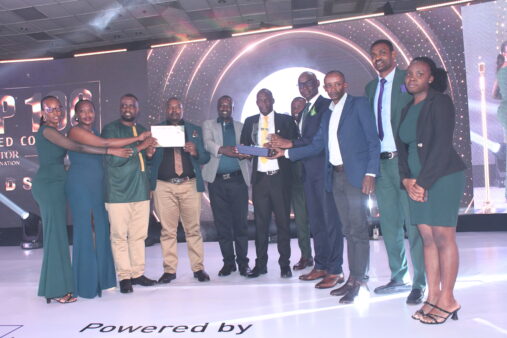
Paul has so far won five continental awards at the Sanlam Group Awards for Excellence in Financial Journalism in Johannesburg, South Africa, and several Uganda national journalism awards for his articles on business and technology at the ACME Awards.

beylikdüzü escort