Over the last three years, Uganda’s economy has shifted from a slow recovery to fast-paced growth.
At the heart of this transformation is capital: not just in the form of money, but machinery.
And quietly but decisively, dfcu Bank has set itself as the engine behind much of this momentum.
Through its Vehicle & Asset Financing(VAF) programme, dfcu is doing more than writing loans.
It’s funding tractors in Lira, refrigerated fish trucks bound for Entebbe, electric bodas on Kampala streets, and hundreds of income generating tools across Uganda.
These aren’t just machines; they’re catalysts. And increasingly, they are powered by dfcu.
From financing to impact: A new industrial plan
VAF isn’t a conventional loan product.
It’s a plan for inclusive industrialisation, built on a bold proposition: finance any movable, insurable, and uniquely identifiable asset.
That includes everything from CNC machines and irrigation kits to buses, solar systems, and EVs.
In an economy where capital goods are scarce and expensive, dfcu’s offering translates to immediate productivity.
One grain thresher can slash post-harvest losses by 50%.
A single school van can unlock access to education for dozens of children.
A food processor can turn subsistence farming into a scalable enterprise.
The impact? Tangible. The approach? Highly flexible.
With loan tenors of up to 84 months, adjusted grace periods, and repayment terms aligned to cash flow cycles, dfcu’s financing architecture is designed to grow with the borrower.
As Uganda’s vehicle market alone is projected to triple by 2034, dfcu is laying the financial rails for the country’s next economic leap.
Why asset financing, why now?
dfcu launched its first asset-financing product more than 20 years ago—long before “financial inclusion” became a boardroom mantra.
The mission then was straightforward: help Ugandans acquire tools that produce value.
Today, that mission has matured into a nationwide ecosystem of credit, technical support, and risk-sharing.
From solar kits in drought-hit eastern Uganda to cranes in the oil-rich Albertine region, dfcu’s VAF portfolio is a mirror of the country’s development priorities.
In Kampala’s dense suburbs, electric boda riders finance battery swaps via fares earned through apps.
In rural districts, clinics are keeping vaccines viable with financed cold chain vans. Schools are expanding fleets to grow enrollment.
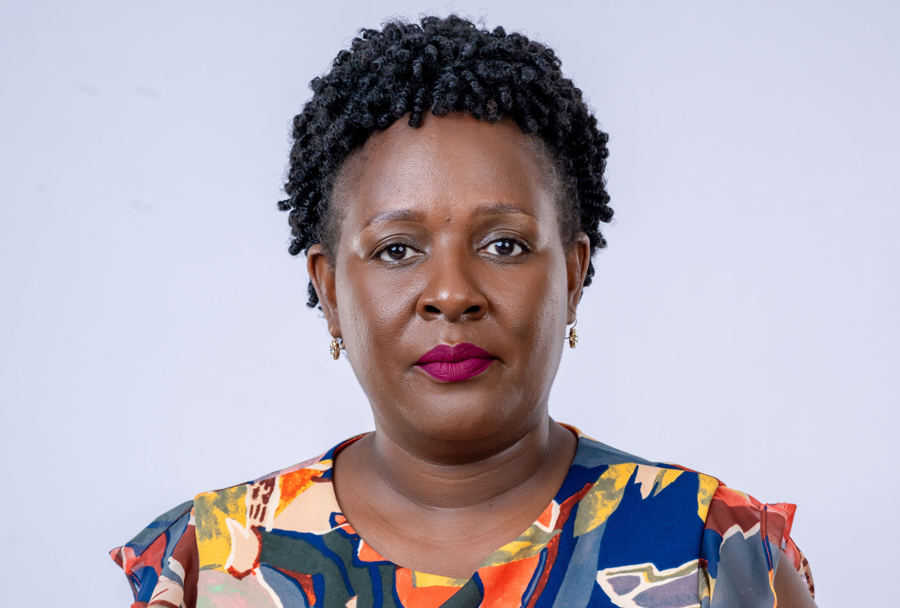
“The trend is clear,” says Gloria Ssuuna Namutebi, Senior Manager, Vehicle & Asset Finance at dfcu Bank.
“Clients want assets that earn—tools that turn every shilling of debt into several of revenue.
Our role is to structure credit so that cash flows from those assets comfortably service the loan.”
To do this, dfcu goes beyond traditional underwriting. It looks at farming cycles, contractor pipelines, ride-hailing data, and seasonal earnings, turning what would be credit gaps into financing opportunities.
Serving the real economy – broadly and boldly
dfcu’s Asset Finance portfolio now spans salaried professionals, SACCOs, small-scale transporters, and an increasing number of women entrepreneurs.
It finances everything from hair salon equipment to manufacturing lines.
But the real story is what’s being financed and why.
Motorcycles are enabling e-commerce delivery. Solar kits are powering clinics.
Irrigation systems are insulating farms from climate shocks.
 Telling the Stories That Matter: Why Women’s Voices Must Be Seen, Heard and Celebrated
Food-processing units are scaling agro-value chains. These are not luxuries. They are economic enablers.
To unlock access, dfcu now accepts alternative credit signals like mobile money flows, ride-hailing income, and market-day takings.
This is reshaping what it means to be bankable in Uganda’s semi-formal economy.
The road to green: electric, efficient, future-proof
As Uganda pivots toward sustainability, dfcu is aligning VAF to the green transition.
Partnerships with electric vehicle (EV) suppliers, battery-swap networks, and ride-hailing platforms are already in motion.
The bank is financing e-motorcycles, charging infrastructure, and off-grid electric mobility solutions.
Through this, it backs both individuals and businesses seeking to modernize sustainably.
“We’re preparing for the future of transport,” Namutebi says.
“Our goal is to power mobility that is clean, cost-effective, and inclusive.”
Risk managed, growth unlocked
In a high-growth but volatile market, risk management is key.
Every asset financed under VAF is fully insured.
Clients are able to spread premiums over 10 months through dfcu’s Insurance Premium Financing (IPF) solution.
This smart integration ensures continuity even in times of distress, protecting both the customer and the bank.
It has also contributed to lower defaults and stronger portfolio performance.
Ecosystems, not just equipment
With over 60 years of leasing experience, dfcu has deep insights into asset lifecycles and customer needs.
Strategic alliances—with World Navi (Japan) and Mac East Africa (Isuzu)—ensure that customers access reliable, pre-conditioned vehicles with strong after-sales support.
These aren’t just dealer arrangements—they’re value chains.
Many partners offer buyback guarantees, maintenance plans, and real-time asset monitoring that make dfcu’s financing safer, smarter, and scalable.
Sectors in focus: where the future is being built
dfcu is targeting five high-impact sectors with its VAF strategy:
- Agriculture – Mechanisation through tractors, irrigation, and processing units
- Transport & Infrastructure – Financing fleets, logistics, and construction machinery
- Manufacturing – Equipment financing for SMEs scaling production
- Education & Health – Buses, cold chain vehicles, and operating assets for mission-driven institutions
- SMEs & Women Entrepreneurs – Special initiatives under dfcu’s Grow programme supporting women-led businesses
“We see women as critical drivers of local economies. Our financing helps them own and operate productive assets,” Namutebi adds.
The power of partnerships
dfcu’s strength lies not just in capital, but in collaboration.
It works closely with dealers, insurers, importers, and platform providers to deliver holistic financing solutions.
Letters of credit for vehicle importers, co-branded campaigns with partners, and bundled service offerings have helped dfcu grow its VAF client base.
“Our partnerships are strategic. They create scale, reduce friction, and deepen customer value,” Namutebi affirms.
Financing the future, today
dfcu’s VAF model is more than credit; it is a tool for national development.
By enabling access to tools that produce, transport, irrigate, or build, the bank is scaling Uganda’s productive base—one financed asset at a time.
In an economy where talent and ambition often outpace access to capital goods, dfcu’s approach is rewriting the playbook.
The machines it finances don’t just move goods—they move the economy.