The Democratic Republic of Congo on Tuesday, March 10th confirmed its first case of coronavirus, bringing the number of countries in sub-Saharan Africa with confirmed COVID-19 cases to seven.
Quoting the DRC Health Minister, Eteni Longondo, Reuters reported that the patient is a Congolese citizen who lives in France who returned to Congo on March 8th with no symptoms of the virus, only to test positive later.
The patient and those around him have been placed in quarantine, Longondo told media.\
“What I’d like to tell people is not to panic,” Reuters quotes the Minister as saying. The minister also said that people should wash their hands regularly and stay at least one meter apart from people who have a cough.
“It is sad to hear that just as the DRC appears to be near ending its worst Ebola outbreak, a new virus is threatening the health of its citizens,” said Dr Matshidiso Moeti, World Health Organization (WHO) Regional Director for Africa in a statement. “However, some of the readiness efforts put in place during the Ebola outbreak may help the country respond to COVID-19. WHO is here to support you, just as we continue to do in the Ebola response.”
WHO has provided technical and material support to countries in Africa, including the DRC since the COVID-19 outbreak was declared to be a public health emergency of international concern. WHO has provided testing kits to the National Institute for Biomedical Research (INRB) in Kinshasa and other national laboratories as well as training to laboratory technicians. Thirty-nine laboratories in the WHO African region can now test for COVID-19. WHO has dispatched personal protective equipment for health workers, as well as thermometers and other essential supplies for screening and handling suspect cases at airports and other points of entry.
Sub-Saharan Africa has been the least hit continent yet- although since February some cases have been reported in Nigeria, Senegal, South Africa, Cameroon, Togo and Burkina Faso. North African countries have registered dozens of cases.
Uganda has NO suspected or confirmed case of #COVID19 as of today.
Nonetheless, Uganda has been on high alert.
According to the Ministry of Health, a total of 1,296 travellers, Chinese, Ugandans and others travelling back home have been identified as high-risk and identified for purposes of follow up.
A total of 765 travellers are under self-quarantine, of which 456 have completed the mandatory 14 days of self- isolation. So far, samples from 20 persons who presented with signs and symptoms similar to that of COVID-19 have been tested. All tested negative.
A statement from the Ministry of Health said that Uganda remains at high risk of importation of COVID-19 from the affected countries. By then the DRC case had not been confirmed which heightens the risk.
 Ruparelia Group Wins Key Entebbe Land Case, Clearing Path for the New Mega Speke Resort and Convention Centre, Entebbe
This is mainly due to travel, trade, and social linkages with the affected countries as Uganda maintains an open-border policy.
In order to reduce the risk of Importation of the COVID-19, the Ministry of Health is undertaking the following measures;
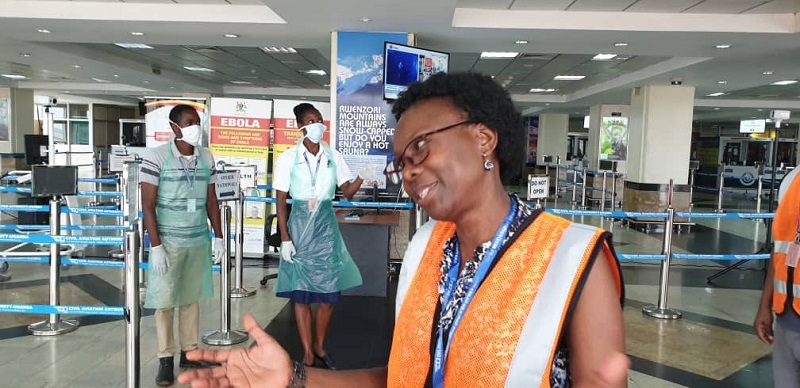
- Screening of all passengers entering through Entebbe International Airport and other border points of entry which Include; Busia, Malaba, Cyanika and Egeru.
- All travellers coming from the COVID-19 affected countries are required to undergo mandatory self-quarantine for 14 days.
Given that on average, about 300 Congolese formally cross into Uganda- it remains to be seen what measures the Government of Uganda will announce to combat the highly contagious COVID-19.
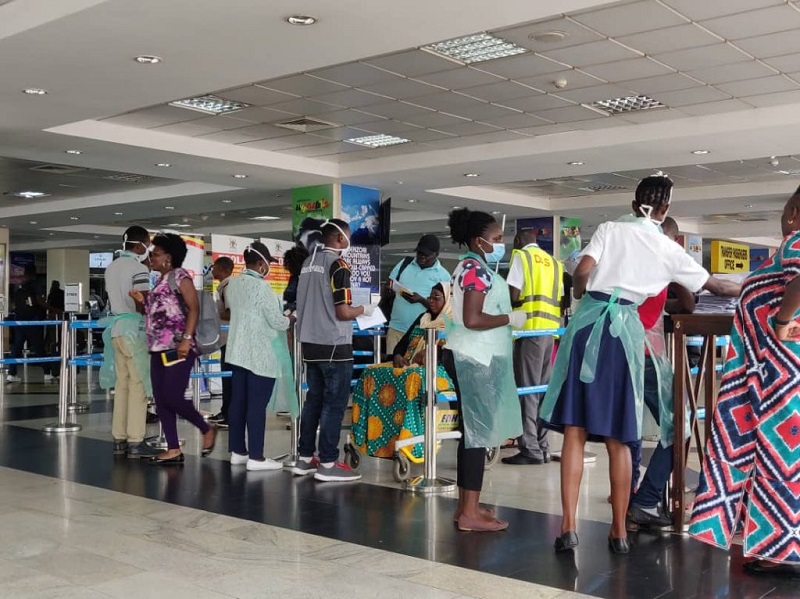
I visited Entebbe International Airport this evening to monitor the ongoing #COVID19 screening process of all travellers. I am impressed with the health workers undertaking screening & airport is moving smoothly.
Lanes are clearly marked according to the different categories pic.twitter.com/fzWSciqE5W— Dr. Jane Ruth Aceng (@JaneRuth_Aceng) March 8, 2020
On March 7th Uganda issued fresh guidelines on the organisation of safe mass gatherings that among others includes notifying ministry of health to ensure a risk-assessment is done of the premises beforehand and the provision of adequate hand-washing facilities.
President Yoweri Museveni yesterday tweeted in support of the fresh guidelines.
“The Ministry of Health has issued guidelines for all mass gatherings in the country. Please take note and cooperate accordingly. We have no suspected or confirmed case of coronavirus and we still can avoid it,” he said.
Some of the public gatherings mentioned, include: sporting events e.g football matches, betting; religious events e.g. Prayer congregations, crusades, pilgrimages etc.; social/cultural events e.g. funerals, weddings political events e.g. rallies, campaigns, national events.