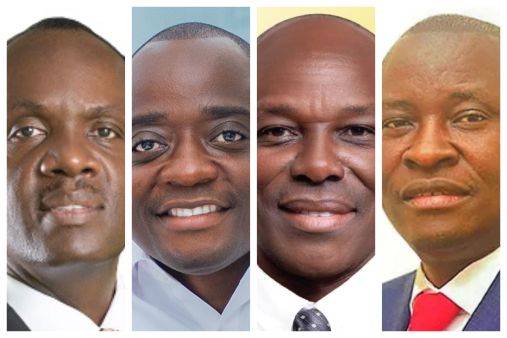
This week, on Monday, 24th 2021, the 11th Parliament of Uganda elected Rt Hon. Jacob L. Oulanyah and Rt Hon. Anita Among as its Speaker and Deputy Speaker, respectively.
On my behalf and behalf of the Simba Group of Companies, I would like to congratulate, them for winning the direct trust of the entire 11th Parliament and indirectly, through the Members of Parliament, the trust of all Ugandans.
In the same breath, I would like to congratulate all the new MPs in the 11th Parliament for making it to the August House.
Before I go further, I would like to, in a distinct way pay special tribute to the 10th Parliament, under the leadership of the outgoing Speaker, Rt. Hon Rebecca Kadaga and her Deputy Rt. Hon Jacob Oulanyah, for diligently playing your role in building this our motherland.
There is not enough space to enumerate all the achievements, of the 10th parliament- but the fact that the economy grew by an average of 5.6% between 2016/17 and 2018/19, before being slowed down by Covid-19 in 2019/20 and 2020/21 to 2.9% and 3.1% respectively, is an indicator of your role in creating the right laws and holding the executive to account. It is also a fact that regardless of the Covid-19 pandemic, the Ugandan economy has been more resilient in withstanding the projected Covid-19 shocks.
Particularly the steadfastness of Rt. Hon. Kadaga on especially the major economic issues of the day will forever be etched in the books of parliamentary history. Your legacy as the first woman to be elected Speaker in the history of the Parliament of Uganda will forever inspire the Ugandan girl child for many decades to come.

In my view, the election of Rt. Hon. Jacob Oulanyah, an agricultural economist, lawyer, and knowledgeable politician as well as that of Rt. Hon. Anita Among, herself an accountant and lawyer, is good for ‘business continuity and succession planning for the ruling government, especially at this critical time when the government has just kickstarted its National Development Plan III -2020/21 – 2024/25. At the same time, the government is also beginning to come to grips with both the health and economic effects of Covid-19 and as such, there is a need for continuity in what so far has been a stellar performance by a joint effort of the Executive and Legislative wings of Government.
From politicking to securing our future
The inauguration of President Yoweri Kaguta Museveni on May 12th, 2021, together with the election and swearing-in of a new Speaker and Deputy Speaker, as well as the nationwide swearing-in of various local government leaders, in effect, marks the end of the political season that started last year.
It is now time for action—It is time to start working on securing the future, promised by the government.
If this was a business- I would imagine, the first few days of this government/parliament would be dedicated to designing a new corporate strategy for the next five years, but thankfully, there is already an existing strategy- the National Development Plan III (2020/21-2024/25).
Over the lifetime of the NDP III, the government wants to achieve an average annual economic growth rate of close to 7 per cent, create an average of 512,000 jobs annually and increase income per capita to USD1,198. The government also wants to lower the poverty rate to 18.87 per cent as well as reduce income inequality (Gini coefficient) to 0.37, amongst other targets.
The government has decided that for this to happen, all government plans must focus on creating enough jobs for its working-age population as a top priority.
As of FY2016/17, the working population was 15 million persons but with total employment estimated at 9.1 million. According to government estimates, an estimated 700,000 people are entering the labour market every year out of whom only 238,000 (34 per cent) are absorbed. If the government is to meet its target of creating about 2.5 million over the NDP III period, it is important for everybody—the parliament, the executive and yes, the judiciary to commit to uplifting the private sector that provides 60% -70% of all formal jobs, according to the Uganda Bureau of Statistics (UBOS).
Government Business Unusual and Private Sector Reforms
According to government estimates, due to Covid-19, our GDP in 2020/21- the first FY of NDP III, will grow by 3.1%, more than 50% below the required annual 7% growth for Uganda to attain the 2024/25 targets. More critical is the fact that key service subsectors that provide the bulk of jobs, such as tourism and hospitality, education, and trade, remain depressed.
And with one year of the 5 years, gone, it is important that all arms of government, must work twice harder. For the elected Members of Parliament and certainly the Executive- this is time to put aside the political differences and focus on Uganda and Ugandans.
While the private sector figures out how to work around challenges such as the prohibitive cost of money, corruption, taxation etc, we all yearn for an innovative parliament that is more concerned about driving reforms that make it convenient and competitive for our private sector to thrive now and in the future. This is the real meaning of securing our future.

For example, the private sector could use some reforms that make it possible for the government to function and deal with the private sector as a whole, otherwise, it does not make sense for the same government that for example owes a business money in domestic arrears through one Ministry or Agency, to be the same government that garnishees the same businessman’s accounts through Uganda Revenue Authority (URA) over tax arrears.
The private sector could also use significant reforms in public procurements such that over and above emphasizing and enforcing national content, local companies find it easier, fulfilling and empowering to do business with their government. For example, the need for an advance guarantee for domestic government contractors as well as an increased threshold in advances provided to the private sector say to 50% would come in handy during such tough times.
With advancements in national and business registration and identification and the traceability that comes with this, there is enough reason for the government to make it easy for its citizens to do business with it. Imagine if government contractors were able to get an unsecured 50% advance for government contracts with no need to collateralize their homes and all their lives savings.
Better still, if our government was able to, by an act of parliament or a statutory instrument make it a punishable offence to age a government invoice beyond 45 days! All these are reforms that do not necessarily require more money but innovation within government processes and the right goodwill- but would have a significant impact on the private sector.
This is possible; we have in the past seen significant reforms coupled with government’s investment in ICT transport and energy infrastructure that has significantly turned around both the experience and cost of doing business. For example, with One-Stop Border Posts (OSBPS), together with the Centralized Document Processing Centre (DPC), Regional Electronic Cargo Tracking System (RECTS), Authorized Economic Operator Programme (AEO), and implementation of the Single Customs Territory and Uganda Electronic Single Window (UESW), the government has been able to reduce turn-around time at the border from 3 days in FY 2015/16 to 2 hours in FY 2017/18. The time taken to clear and transport cargo from Mombasa has also reduced from 18-22 days in FY 2012/13 to 4-6 days in 2017/18.
In the energy sector, we have seen immense turnaround as well- it used to take over 180 days to apply for and get an electricity connection from the then UEB, but today, barring for the challenges, associated with the Electricity Connections Policy (ECP) Umeme now takes up to 3 days. Better still, a connection application can be made online.
10 years ago, it used to take over 18 days to register a business but today the Uganda Registration Services Bureau (URSB), but today, it takes about 4 hours, if you have all the required paperwork.
All these reforms are good, and the private sector welcomes them, but we need so much if we are to enter in the top fifty ranks of the World Bank’s Ease of Doing Business and the World Economic Forum’s Global Competitiveness Index!

Netflix Strikes $82.7 Billion Deal to Take Over Warner Bros., Redefining the Global Entertainment Landscape