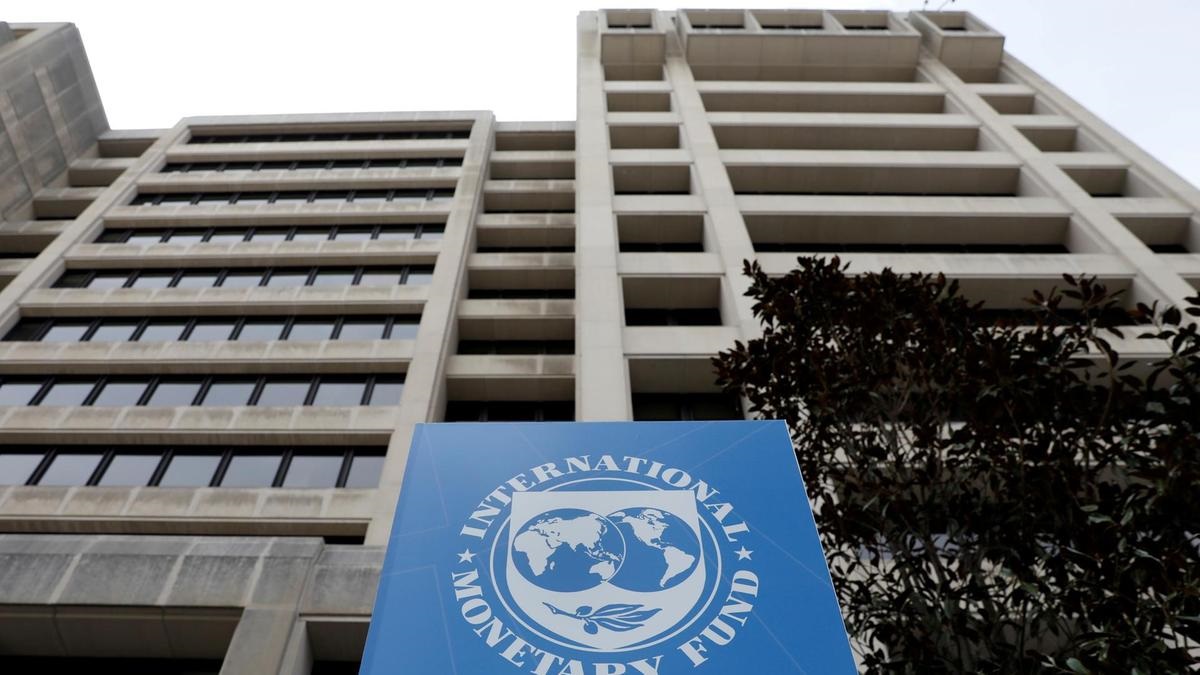
The Executive Board of the International Monetary Fund (IMF) on Wednesday, May 6th approved a disbursement of USD491.5 million (UGX1.87 trillion) under the Rapid Credit Facility (RCF) to help deal with the effects of Covid-19.
According to an IMF media release, the money is to “finance the health, social protection and macroeconomic stabilization measures, meet the urgent balance-of-payments and fiscal needs arising from the COVID-19 outbreak and catalyze additional support from the international community.”
“The Ugandan economy is being severely hit by the COVID-19 pandemic and, in particular, such key sectors as services (tourism), transport, construction, manufacturing, and agriculture. The challenging external environment is curtailing remittances and foreign direct investments. The pandemic has also exacerbated the challenges posed by heavy rains in early 2020 and the ongoing locust invasion,” reads the statement from IMF.
“To contain the impact of the pandemic, the authorities have increased health spending, strengthened social protection to the most vulnerable, and enhanced their support to the private sector. The Bank of Uganda has appropriately reduced interest rates and provided liquidity to safeguard financial stability, while maintaining exchange rate flexibility,” further said the statement, adding: “The weakening economic conditions emanating from the Covid-19 pandemic have put significant pressures on revenue collection, expenditure, reserves and the exchange rate, creating urgent large external and fiscal financing needs.”
Catalyse growth and support budget deficits
Following the Executive Board’s discussion on Uganda, Mr. Tao Zhang, Deputy Managing Director and Acting Chair, issued the following statement:
“The global COVID-19 pandemic is expected to severely hit the Ugandan economy through several channels, with detrimental effects on economic activity and social indicators. The external and fiscal accounts are expected to deteriorate, creating substantial urgent external and fiscal financing needs.
“To limit the pandemic’s human and economic impact, the authorities have promptly adopted bold preventive measures to contain the spread of the virus, and scaled up health spending to strengthen the health system’s capacity. Interventions to support the more vulnerable have also been introduced. In addition, the Bank of Uganda has swiftly introduced policy measures to support liquidity, preserve financial stability and support economic activity. The authorities are encouraged to continue to step up social protection programs to cushion the impact on the vulnerable population and to protect health spending allocations over the medium term.
“A temporary widening of the fiscal deficit is warranted in the short term to allow for the implementation of the response plan. Despite a temporary worsening of debt indicators and heightened vulnerabilities, public debt is expected to remain sustainable. The authorities remain committed to ensuring debt sustainability, including through their efforts to enhance revenue collection and strengthen public investment management.
“The authorities are committed to managing transparently the resources received and will strengthen transparency and accountability. They plan to report separately on the use of the funds, undertake and publish an independent audit of crisis-mitigation spending and publish large procurement contracts.
“The IMF’s emergency financial support under the Rapid Credit Facility, along with the additional donor financing it is expected to help catalyze, will help address Uganda’s urgent balance of payments and budget support needs.”
The IMF said it continues to monitor Uganda’s situation closely and stands ready to provide policy advice and further support as needed.
 Could Museveni’s Election as EAC Chair Renew Push for Accelerated East African Integration?
“The authorities have also committed to put in place targeted transparency and accountability measures to ensure the appropriate use of emergency financing,” IMF further said.
Recently, the European Union extended a grant of €30m (about Shs120b) to the Uganda government to help the country respond to the Covid-19 effects.
Appearing in Parliament on March 19th, 2020, Hon Matia Kasaija, Uganda’s Finance Minister said that Covid-19 will significantly affect Uganda’s economy, and would, as a result, be faced with a preliminary additional financing gap of approximately UGX370 billion (equivalent to approximately USD 100 million in FY 2019/20) and UGX350 billion (approximately USD90 million in FY 2020/21).
Government expects Uganda’s growth prospects, to reduce to between 4.6per cent and 5.1per cent- from 6.0per cent, thereby pushing up to 2.6 million back into poverty.
At the time, the government said it planned to borrow a combined USD190 million (UGX725 billion) from World Bank in budgetary support for FY2019/20 and FY202/21.
Uganda’s Deepening Debt
Although the news comes as a relief to many anxious Uganda, it will further exacerbate the country’s worrying debt status.
The stock of total public debt grew from US$ 12.55 billion (UGX 46.36 Trillion) at the end of June 2019 to US$ 13.33 billion by the end of December 2019 (UGX 48.91 Trillion). This represents an increase in nominal debt to GDP from 36.1per cent in June 2019 to 36.97per cent in December 2019. The nominal total public debt is projected to increase to 40.9per cent of GDP in FY2019/20, before peaking at 49.5per cent in FY2023/24.
The Auditor-General, in his report to Parliament for the Financial Year ended 30th June 2019 said that Uganda’s debt situation was becoming worrying, with 97per cent of all the new money borrowed, going to servicing maturing obligations and interest.
In the recently passed FY2020/21 National Budget, interest payments for Uganda’s burgeoning debt took up the third-largest chunk- UGX4.1 trillion, up 32.5 per cent from UGX3.1 trillion.