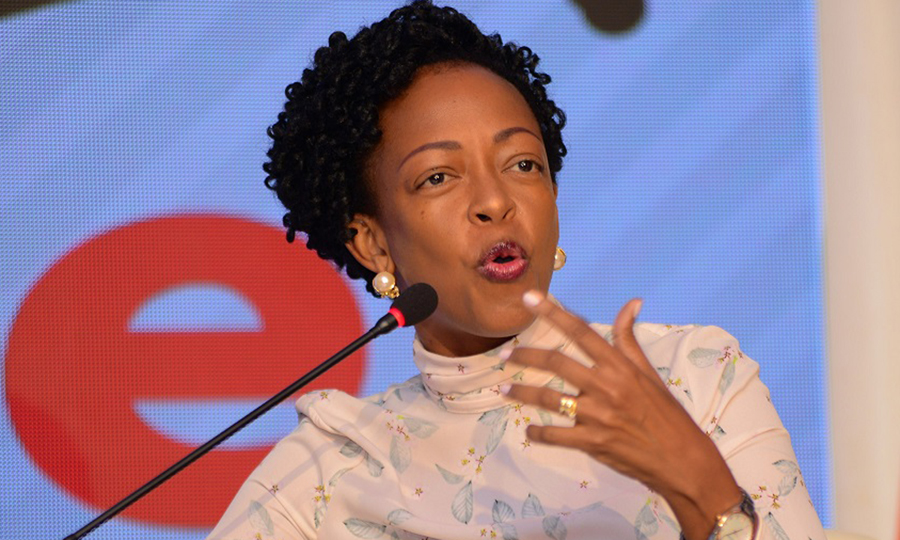
When Juliana Kagwa assumed office as Chief Executive Officer of Uganda Tourism Board (UTB) in June 2025, she stepped into one of the most demanding leadership roles, one defined by pressure, numbers, and hard expectations.
Her appointment was widely welcomed. She arrived with a reputation for strategic discipline and execution at a moment when tourism had been elevated from a “nice-to-have” sector to a central economic growth pillar.
But six months on, as Uganda rolls off 2026 shocks, the environment around her has tightened sharply. Expectations are no longer rhetorical. They are quantified. And that is why Kagwa is firmly in the hot seat.
The scale of the ambition she inherited
Uganda’s tourism ambition is now explicit and unusually bold. Under the National Destination Marketing Strategy (2024/25–2028/29), government expects tourism revenues to rise from $1.45 billion to $5 billion within five years, a more than three-fold increase.
To achieve this, Uganda is targeting a fundamental shift in the structure of its tourism economy. The leisure tourism share of international arrivals, currently just 15.7%, is expected to double.
Average international leisure spend, which today stands at roughly $168 per visitor per day (about $1,052 per trip), is projected to rise dramatically toward $5,000 per trip over the medium term.
Length of stay, currently about 8.7 nights for international leisure visitors, is also expected to increase.
These are not incremental goals. They imply a repositioning of Uganda as a premium, high-value destination, competing head-to-head with far better-funded regional rivals.
That is the scale of ambition Kagwa inherited on day one.
Volume without value
The baseline is sobering. Uganda receives approximately 1.27 million international visitors annually. Yet only about 199,700, just 15.7%, arrive for leisure.
The remaining majority are regional travellers, business visitors, or people visiting friends and relatives.
This composition matters because value follows motivation. Leisure tourists stay longer, consume more experiences, and spend more across accommodation, transport, guiding, food, and activities.
Regional and visiting friends and relatives travel stabilise volumes, but they deliver far lower value per visitor.
The geographic mix reinforces the problem. Roughly 80% of Uganda’s international arrivals come from Africa, largely short-haul and price-sensitive markets.
High-value long-haul markets remain marginal: the United States accounts for about 1.9% of arrivals, while Europe contributes just over 3%.
Put differently, Uganda’s tourism challenge is not demand; it is conversion into high-value demand. Rebalancing this mix is central to Kagwa’s mandate.
MICE: the underused lever
If Uganda has a shortcut to higher value per visitor, it lies in MICE tourism.
Today, Uganda attracts just 7,725 MICE delegates, representing 0.6% of international arrivals. Yet the paradox is striking: Uganda already commands around 21% of the East African MICE market and ranks seventh in Africa.
By the 2028/29 financial year, Uganda aims to be among Africa’s top five MICE destinations, using conferences and exhibitions to drive higher spend, reduce seasonality, and convert business visitors into leisure tourists.
MICE visitors typically spend more, stay longer, and travel year-round. But MICE (Meetings, Incentives, Conferences, and Exhibitions tourism) success requires coordinated branding, airline access, venue readiness, aggressive bidding, and sustained international sales, none of which happen automatically.
For Kagwa, MICE is both an opportunity and a test: a segment where strategy can genuinely move the needle, but only if execution is relentless.
The budget paradox
Here is where the pressure becomes structural.
In the 2024/25 financial year, Uganda allocated approximately $76 million to the tourism sector, a 15% increase over the previous year. On the surface, this signalled renewed commitment.
But only 2–2.5% of that total budget is allocated to destination marketing through UTB.
 Deal Makers: Meet Deloitte Advisors Behind Absa’s Acquisition of StanChart’s Wealth and Retail Business in Uganda
In real terms, Kagwa controls just $1.5–1.9 million per year to market Uganda globally.
That budget must cover international advertising, digital marketing, trade engagement, influencer programmes, market research, data analytics, brand governance, and crisis communication.
Most tourism funding flows instead to conservation, infrastructure, regulation, and training, critical functions, but ones that do not directly generate demand.
The contradiction is stark: Uganda expects tourism revenues to grow at an implied compound annual rate of about 32%, while marketing resources are growing by less than 5% in real terms.
This mismatch defines Kagwa’s operating reality.
Competing on a tilted field
Uganda’s competitive environment is unforgiving.
Tanzania deploys tourism marketing budgets estimated at over $200 million annually. South Africa’s tourism authority operates on more than $140 million.
Rwanda invests aggressively, over $30 million, in brand partnerships, events, and airline-led promotions. Kenya combines state spending with the reach of a national carrier that markets the destination daily.
Uganda is competing for the same long-haul travellers with a marketing budget that would struggle to sustain a single major campaign in those markets.
This is not simply a question of efficiency. It is a structural asymmetry that places extraordinary pressure on leadership, prioritisation, and execution.
The internal and structural headwinds
The National Destination Marketing Strategy is candid about the constraints UTB faces internally.
Uganda suffers from weak global brand awareness, fragmented storytelling, and limited digital conversion capacity.
Experience packaging remains uneven. Crisis communication during travel advisories is underdeveloped. Data and market intelligence are thin. International representation is minimal.
Compounding this, UTB operates with limited institutional capacity relative to its expanding mandate.
Kagwa does not control visa policy, airline routes, security perceptions, or access infrastructure, yet she is expected to deliver national revenue targets that depend heavily on all of them.
This is leadership under constraint: full accountability, partial control.
Why Kagwa is in the hot seat
Kagwa was not appointed to manage a steady state. She was appointed to deliver a structural leap.
Uganda is betting that precision targeting can compensate for limited budgets, which disciplined brand strategy can outperform brute-force spending, and that smarter conversion can unlock value even in a constrained environment.
It is a high-expectation bet, made sharper by the fact that tourism now underpins jobs, foreign exchange, conservation financing, and regional development.
That is why Kagwa’s role is exposed. Success will be measurable. Failure will be visible.
The moment of truth
Now, more than six months into her tenure, the grace period is over.
Stakeholders are no longer listening for promise. They are watching for traction—market penetration, brand coherence, improved conversion, stronger MICE outcomes, and rising value per visitor.
For Kagwa, 2026 and beyond will not be judged by intent, but by results. The fanfare is done. The expectations are quantified, and the country is watching.