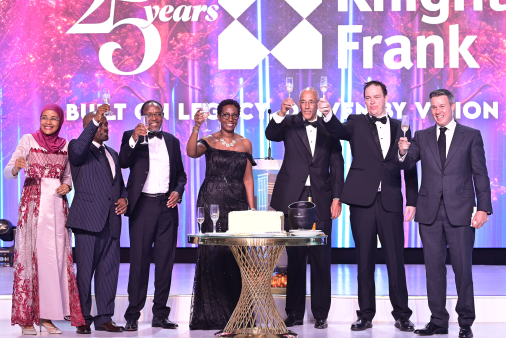
As Knight Frank Uganda marks 25 years, how would you sum up what this milestone represents — for you as a leader, and for the legacy you’ve helped build?
Twenty-five years is a long time in any business, but in Uganda’s property industry, it represents generations of transformation, perseverance, and growth. For Knight Frank Uganda, the journey has been one of faith in potential, discipline in execution, and unwavering belief in the power of professionalism to shape an entire sector.
It is humbling to look back, 25 years ago, the industry was informal, fragmented, and largely undocumented. Today, we operate in a dynamic, data-driven environment. To have been part of that transition, and to have helped set the standards that define it, is an incredible privilege.
You are celebrating 25 years under the theme “Built on Legacy, Driven by Vision” What informed this theme?
The anniversary theme — “Built on Legacy, Driven by Vision” — captures both gratitude and aspiration.
Our 129-year legacy since our foundation in London is the culture we have built on, characterised by professionalism, integrity, and consistency. That foundation has earned the trust of clients and partners across East Africa. However, we are also driven by a vision, a forward-looking ambition to innovate, lead, and create a meaningful impact for the next generation of property professionals.
It is a message of stewardship. Celebrating what has been achieved while preparing for what is next.
How did Knight Frank establish its presence in Uganda, and what vision guided its local beginnings? Looking back, what were the toughest challenges in setting professional standards in a largely informal market?
Knight Frank opened its Ugandan office in 1998 (as East Africa Property Agents (EAPA) and officially rebranded as Knight Frank in November 2000, when the property sector was still finding its footing. The vision was simple yet bold. To bring international standards of real estate practice to a growing African market, ensuring transparency and professionalism in valuation, agency, and property management.

When we began, there were no reliable data sources, few trained professionals, and a limited understanding of property as an asset class. We were introducing systems, ethics, and accountability that were hardly known in the market.
It was not an easy path. Establishing credibility in a market that was both young and sceptical demanded resilience. However, it also demanded leadership that understood both worlds: the discipline of global practice and the nuances of local realities.
Your career at Knight Frank began 25 years ago as a young valuer, rising through various ranks and experiences. Looking back, what experiences, challenges, or key decisions in those formative years most shaped your leadership style — and how did they influence the values and culture that continue to define the firm today?
Twenty-five years ago, I was young and relatively inexperienced, but what I may have lacked in c-suite experience, I made up for in innate leadership drive, focus, and determination. My style then was extremely driven, focused, and results-oriented—rooted in a deep desire to prove myself and deliver excellence. I led with energy, conviction, and a clear sense of purpose, pushing boundaries and inspiring others to do the same. I made many mistakes and learnt that asking for help was not a sign of weakness. Looking back, that combination of a fear of failure and relentless pursuit of results laid the foundation for the leader I have become today.”
My personal journey from valuer to Managing Director reflects that evolution. I was fortunate to start at the very core of what we do. Valuation, which teaches you the fundamentals of property, market behaviour, and risk. Those early years instilled in me a respect for detail, for people, and for the responsibility that comes with our professional advice.
Looking back over two and a half decades, what were the three most consequential milestones for Knight Frank Uganda?
Over time, key milestones defined Knight Frank Uganda’s trajectory. The professionalisation of property valuation, the introduction of research-led market reports, and the management of landmark developments that shaped Kampala’s skyline and retail landscape. Each stage reflected growth, not just for the firm, but for Uganda’s real estate industry.
How would you define Knight Frank Uganda’s core value proposition — who you serve and what sets you apart? How do your research products, like market updates and sector dashboards, influence client decisions and national policy? How do you measure success beyond rental income and occupancy?
Today, Knight Frank Uganda stands as a full multi-disciplinary global real estate firm, managing properties, advising investors, valuing portfolios, and shaping market insight through research. Its core value proposition remains rooted in trust and expertise.
We exist to give our clients confidence, whether they are local developers, institutional investors, or multinational occupiers. Our role is to interpret the market accurately and help clients make decisions that stand the test of time.
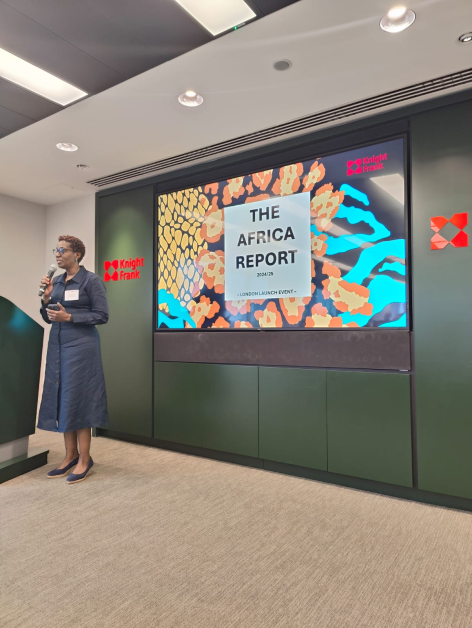
Knight Frank’s research publications, quarterly market updates and sector dashboards have become trusted references for both private and public stakeholders.
Data is power. We use research not only to guide client strategies but to inform policy conversations about urban development, housing, and investment. Over the years, we have seen our insights influence national discussions on real estate taxation, infrastructure, and planning.
Property management remains another cornerstone. Knight Frank manages a portfolio that includes many of Uganda’s flagship commercial, retail, and residential properties. Yet for me, success is measured beyond occupancy or rent. We measure success in relationships, in the quality of experiences our tenants and property owners enjoy, in the efficiency of our operations, and in the sustainability of the spaces we manage.
Looking back over Knight Frank Uganda’s 25-year journey, what would you identify as the key factors that have driven the firm’s success — and of those, which mattered most in the early years, which are most important today, and which do you think will be decisive in the near future?
I would attribute it to three factors. People, reputation, and adaptability.
In the early years, reputation mattered most, being known for professionalism and integrity. Today, innovation and data intelligence are critical. But the future will depend on how we nurture people. The next generation of valuers, managers, and advisors who will carry this legacy forward.
How has Uganda’s real estate industry evolved over the past 10–15 years — in demand, financing, product mix, and professional standards — and what key policy or market reforms are still needed for the sector to match leading regional markets?
Uganda’s real estate sector has evolved dramatically in the last 15 years. Demand is increasingly shaped by a growing middle class, the expansion of retail and logistics, and renewed interest in suburban mixed-use developments. However, challenges remain.
 What East Africa’s Senior Executives Are Reading in 2026 — and Why It Matters

Access to long-term financing, gaps in policy implementation, and the prohibitive cost of credit continue to constrain growth. But these challenges are not unique. There are opportunities to innovate.
Which market practices or innovations from other countries would you most like to import to Uganda?
The ones that stand out for me are Kenya, which has led in institutional investment and REITs, Ghana in housing finance reform, and South Africa in sustainability and green building. Uganda’s strength lies in its agility. We can learn from others and adapt more quickly.
What Uganda now needs is a stronger ecosystem. Professional licensing, digitised land records, and better linkages between real estate and capital markets. When that alignment happens, Uganda’s property sector will unlock enormous value, not just for investors, but for citizens seeking secure and dignified housing.
What key constraints still hold back Uganda’s real estate industry, and how does Knight Frank manage risks like inflation, currency shifts, and high lending rates? Beyond the economics, what ethical or reputational issues persist — and how can the industry raise its professional standards?
The real estate sector is not immune to macroeconomic headwinds, including currency fluctuations, inflationary pressures, and high interest rates. But Knight Frank’s approach has been to plan ahead, diversify, and guide clients through data-driven strategies.
We cannot control macro risks, but we can manage exposure through insight. We constantly monitor market indicators and maintain transparency with our clients so they can make informed, resilient decisions.
With regard to ethical standards, Knight Frank remains a strong voice for integrity.
Valuation integrity, professionalism, and transparency are non-negotiable. We have spent years building systems that ensure accountability. The industry’s long-term credibility depends on that.
What does the next 10 years look like for Knight Frank Uganda? What would success look like in 2035? How are you innovating and reinvigorating yourselves to deliver that future?
If the first 25 years were about building credibility, the next decade will be about transformation. Knight Frank Uganda’s vision for the future focuses on digital innovation, sustainability, and community impact.
We are embracing technology in everything we do, from digital property management platforms to data analytics that anticipate market shifts. The future is about insight, speed, and precision.

Equally central is Knight Frank’s commitment to ESG (Environmental, Social, and Governance) priorities. Sustainability is no longer optional. We are working to integrate energy-efficient systems, support inclusive urban planning, and invest in the communities around our properties. Our measure of success will not just be profitability, but how much positive impact we create.
Success will be seeing Uganda’s real estate industry fully formalised. Transparent, professional, and globally competitive, with a new generation of Ugandan property experts leading the way.
If you had a single message to policymakers, investors and developers about the potential of Uganda’s real estate sector, what would it be?
My message to investors and policymakers is clear. Uganda’s property market is the next frontier for smart capital. But to unlock its potential, we need consistency in policy, accessible financing, and a commitment to standards. The opportunity is vast; we just need the right framework to harness it.
In one paragraph, what does Knight Frank Uganda do best, and for which stakeholders?
We connect people to opportunity, property owners to tenants, developers to investors, and vision to reality. Our strength is in trust. Clients know that when they work with Knight Frank, they get professionalism, transparency, and insight backed by 129 years of global and 25 years of local experience.

As MD and custodian of Knight Frank’s legacy in Uganda, what do you want your 25-year legacy to be?
As Managing Director, when I reflect on my own legacy within the broader institutional story, I hope my tenure will be remembered for helping to raise the standards, both professional and ethical, of real estate practice in Uganda, and for opening doors for more women to lead in what was once a male-dominated industry. Leadership is about leaving the door wider open than you found it and keeping the ladder grounded for others to climb up.
What keeps you optimistic about Uganda’s property sector?
Uganda’s youth and energy. There is a great deal of ambition, creativity, and a hunger to learn. If we channel that into professionalism, our sector will be unstoppable.
Biggest risk that keeps you awake at night?
Complacency. The danger of thinking the work is done. The market changes fast. We must stay curious, innovative, and agile.
Best piece of advice for a young property professional?
Master your craft, protect your integrity, and never stop learning. The property industry rewards those who are disciplined and authentic.