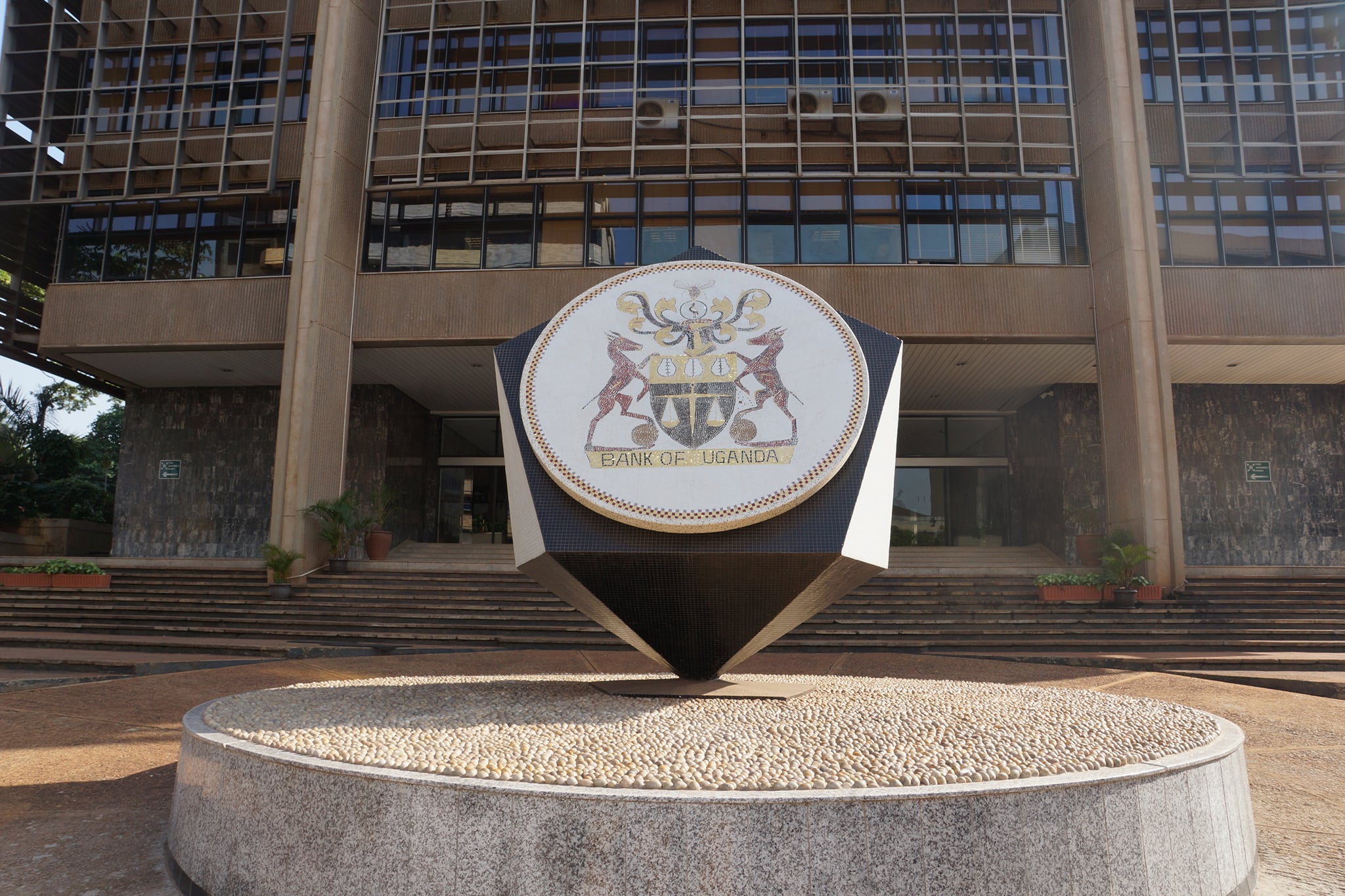
Ugandan supervised institutions (SFIs) that did not meet the revised capital buffers by June 2023, are on course to comply, by the June 2024 final deadline, Bank of Uganda, Uganda’s central bank has said.
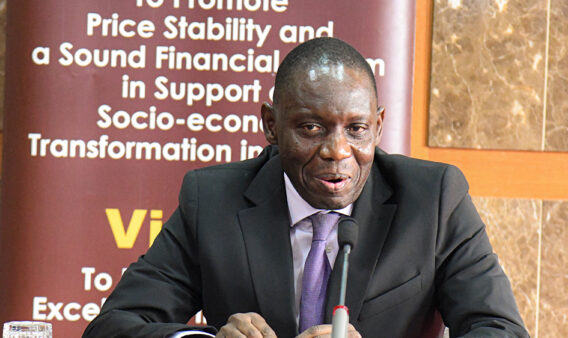
“As you are aware, BOU is pursuing a phased approach for SFIs recapitalization, which means the final capital target is UGX150 billion for Tier 1 (commercial banks), and UGX25 billion for Tier 2 (Credit Institutions), by June 2024. In between, intermediate targets were set at, UGX120 billion for Tier 1, and UGX15 billion for Tier 2. All commercial banks and Credit Institutions have made good progress and are on track to meet the June 2024 capital requirements, in line with their individual capital restoration plans,” Dr. Egesa told CEO East Africa Magazine in an email.
On the 16th of November 2022, the Financial Institutions (Revision of Minimum Capital Requirements) Instrument 2022 was signed into law by Uganda’s Minister of Finance, Planning and Economic Development (MFPED), Hon. Matia Kasaija. The instrument increased the minimum capital requirements for banks by 6 times or 500% from UGX25 billion (USD 6.7 million) to UGX150 billion (approx USD 40.2 million).
The increment would however be tiered, starting with a minimum capital buffer of UGX120 billion (USD32.2 million) by the 31st of December 2022 and then UGX150 billion by the 30th of June 2024.
Commercial banks are also required to have minimum capital funds unimpaired by losses (core capital) of UGX 120 billion by 31 December 2022, and UGX150 billion by 30 June 2024.
Under the same statutory instrument, minimum capital requirements for credit institutions were also increased by 25 times or 1900% from UGX1 billion (USD268,000) to UGX25 billion (USD6.7 million) by 30th June 2024. Similarly, the increments are tiered, starting with a minimum capital buffer of at least UGX20 billion (USD5.4 million) by the end of December 2022.
Micro Deposit-taking Institutions (MDIs) were also required to increase their minimum capital to at least UGX8 billion by 31st December 2022 and UGX10 billion by June 2024.
Minimum capital buffers were last revised in 2010 under Financial Institutions (Revision of Minimum Capital Requirements Instrument), 2010.

As of December 2022, out of the 25 banks, as per published financial results, at least 10 banks didn’t meet the thresholds on share capital while 11 did not meet the thresholds on core capital. Eight (8) banks did not meet both.
However, all Domestically Systemic Important Banks (DSIBS)⏤ Stanbic Bank, Centenary Bank, Absa Bank, Standard Chartered Bank, dfcu Bank and Equity Bank, which according to the Central Bank, jointly accounted for 64.6 per cent of total banking sector assets as at end December 2022, were compliant on both their share capital and core capital requirements.
Eight other non-DSIB banks also met all of the capital thresholds for the first phase.
Section 86 of the FIA 2002 mandates that non-compliant financial institutions have to submit to the Central Bank, within 45 days, a capital restoration plan to restore the financial institution to capital adequacy within the next 180 days.
 Aga Khan Fund Exits Troubled Nation Media Group After 66 Years, Sells Controlling Stake to Tanzanian Billionaire
During these 180 days, the Central Bank may prohibit the financial institution from awarding any bonuses, or increments in the salary, emoluments and other benefits of all directors and officers of the financial institution. It may also appoint a person, suitably qualified and competent in the opinion of the Central Bank, to advise and assist the financial institution in designing and implementing the capital restoration plan, and the person appointed shall regularly report to the Central Bank on the progress of the capital restoration plan.
Where a financial institution has been ordered by the Central Bank to submit a capital restoration plan or to add more capital, and the financial institution fails, refuses or neglects to comply with the order or to implement the capital restoration plan, the Central Bank can among other regulator measures, prohibit the financial institution from opening new branches and or impose restrictions on the growth of assets or liabilities of the financial institution as it shall deem fit.
The Central Bank may also restrict the rate of interest on savings and time deposits payable by the financial institution to such rates as the Central Bank shall determine. The Central Bank also has the discretion to remove officers of the financial institution responsible for the financial institution’s noncompliance. It may also order the financial institution to do any or such other things that the Central Bank may deem necessary to rectify the capital deficiency of the financial institution.
Buyouts and license downgrades on the horizon
Industry observers have suggested that some acquisitions⏤ by either domestic banks or foreign ones looking to enter the Ugandan market could be in the works since most affected banks are at the bottom of the market and may find it hard to raise capital in the short time allocated. The last 10 banks only control 7.6% of industry assets compared to the top 10 which control 82.2%.
“The Return on Equity of the Ugandan Bank sector – I believe it’s about 15% across the board, so it’s not a super attractive sector from a macro perspective and indeed quite fragmented with top 5 banks controlling about 80% of assets’ profitability, etc. Most of the banks affected by the revised capital buffers are the squeezed banks with no market share to speak of and no deep-pocketed shareholders,” one expert told CEO East Africa Magazine.
“But even deep-pocketed shareholders are looking for a return both in absolute terms and in ROE. They will not put good money after bad, especially given all the other opportunities elsewhere. This leaves these banks limited options and the most likely will be to downgrade the license. There might be that outlier that convinces a new investor to come in,” the expert added.
“Mergers or consolidation is also unlikely as adding two low ROE banks seldom makes a healthy bank. And the customer bases are generally niche-oriented. In some cases, an exit may make more sense to those banks that wish to preserve capital and exit unattractive markets like Uganda,” they concluded.
According to our sources, Access Bank Plc (Access), one of Africa’s largest banking groups, is set to acquire Uganda’s Finance Trust Bank. Access Bank Plc, which has been on an acquisition spree on the African continent, according to our sources is “dotting the I’s and crossing the t’s as well as securing regulatory approval by both the Central Banks of Nigeria and Uganda” and the deal will be “announced soon”.
Finance Trust Bank was one of the banks that needed a significant capital boost, following the Central Bank of Uganda’s six-fold increment of capital buffers for financial institutions.