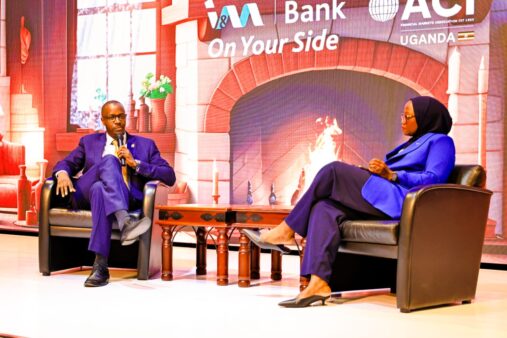
In today’s rapidly evolving workplace, organisations are discovering that people, culture, and strategy must move in harmony to achieve sustainable success.
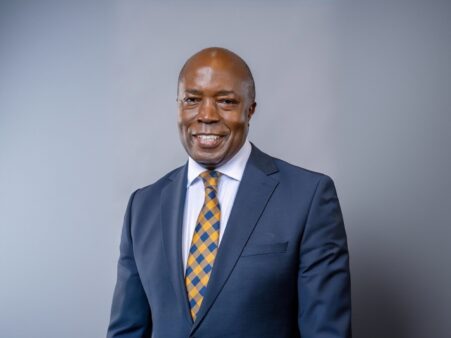
Abdul Makubuya, a senior manager of organisational development at NSSF, shares candid reflections on what truly motivates employees, how culture drives retention, and the future of leadership in an era that demands openness, innovation, and collaboration.
What is the difference between organisational development and human resources?
If I were to put it simply, in a hotel setup, HR are the people serving what the chef has prepared, while we in organisational development we work behind the scenes, conceptualising and ensuring the chef’s menu aligns with client needs.
For example, we recently developed our Fund strategy, which we call 95, 95, 95, One Day, $20 Trillion.
From an organisational development perspective, we ask: What does it mean to achieve 95% customer satisfaction, 95% employee engagement, and 95% performance?
From an HR perspective, that translates to: How do we create structures that enable employees to bring their best selves to work?
That involves having the right performance systems. When those systems fail, organisational development steps in to close the gaps, assessing competencies and identifying what needs to change to align with the strategy.
organisational development serves as the backbone of HR, gathering insights on what people think and using that data to inform HR strategy.
This enables HR to engage employees more effectively, improving both engagement and profitability.
At NSSF, each department has a Human Resource Business Partner who handles issues such as rewards and benefits, freeing the chief of people to focus on strategy.
For HR, rewards and benefits include training, remuneration, and change management; for organisational development, the emphasis is on development and talent management.
Unfortunately, many organisations have a Learning and Development Officer but lack an organisational development manager, yet training is only one small component of organisational development.
The heart of organisational development is strategy. Every day, we ask: How can we ensure performance is delivered? What needs tweaking? What must change?
At NSSF, with a workforce of about 650 employees, nearly 50% have never worked elsewhere and about 70% occupy entry-level roles.
We realised that to grow internal talent, we needed to create opportunities within. That led to our Job Shadowing Policy, which allows employees to spend hours working alongside others to understand their roles.
We also introduced Job Secondment, where an internal employee can temporarily fill a vacant role to gain experience before a replacement is hired.
How does organisational culture shape employee retention at NSSF?
Traditionally, culture has been defined through values posted on the wall, but often, those values don’t translate into daily behaviour.
Even borrowing another organisation’s values doesn’t guarantee shared understanding.
After our last strategy cycle, we began preparing for our next 10-year plan, 95-50-50, meaning 95% stakeholder satisfaction, UGX 50 trillion in assets, and 50% employment coverage among Ugandans. We realised our values needed rethinking.
For example, teamwork had come to mean that each department operated as its own team. That wasn’t the collaboration we wanted.
So, through focus groups with all 650 employees, we asked: What do you like about us? What don’t you like? What behaviours should define us as we move forward?
The outcome was a unifying principle: We are members first. As NSSF employees, we are also Fund members. Every decision should be made with the mindset of a customer.
From that reflection, we redefined teamwork as collaboration, one body, one mind, diverse opinions.
Regardless of department, we are one NSSF, working toward the 95-50-50 goal. Our diversity is our strength.

Beyond salary, what truly keeps employees happy and committed?
I once vowed never to work for a government institution, assuming they were rigid and slow-moving.
But a conversation with Richard [Byarugaba], our former MD, changed my perspective, his vision for NSSF was bold, innovative, and entrepreneurial.
One of the most motivating aspects of NSSF is that if you make yourself available, the Fund allows you to innovate.
We have implemented initiatives that wouldn’t be possible elsewhere. Unlike multinationals where ideas flow from global headquarters, here we create and execute our own.
 World Bank bans PwC Africa, Rwanda and Kenya affiliates from Bank Group-financed projects over fraudulent practices
We launched an Innovation Drive and Brilliant Ideas Campaign, and the results were clear: when people see their ideas implemented, they become genuinely motivated.
As author Daniel Pink put it, people are driven by autonomy (the desire for self-direction), mastery (the urge to improve at something that matters), and purpose (the wish to contribute to something greater than themselves).
When all three align, people come to work excited. We also use first names across the organisation.
It may seem small, but it breaks barriers. Titles can discourage open dialogue, especially in a multigenerational workplace. Respect isn’t about titles, it’s about connection and mutual understanding.
What makes an employee stand out as a gem in an organisation?
We must accept that not everyone will stand out. Jack Welch once said that 20% of employees deliver 80% of results, those are the exceptional ones.
But every employee can bring value if they’re empowered to do their best. I remember someone once asking, “You scored 90, but did you do your best?”
The real question wasn’t about perfection, it was about effort. That’s what matters.
Structures that empower people to give their best create engagement and trust.
Yet, when leaders dismiss employees’ ideas or voices, performance suffers. Too often, managers say, “Your job is to do; mine is to think.”
That kills initiative. If people feel unheard, they stop caring — even when they see mistakes unfolding.
How can employees take charge of their own growth?
They must understand that the workplace has changed. Promotions no longer come automatically with tenure. If you don’t bring your best, someone younger and more driven may become your boss.
Define success for yourself. Don’t live by society’s definition. That’s why interviewers ask, “Where do you see yourself in five years?”
They’re checking if you have direction. Until you take ownership of your growth, no organisation can nurture it for you.
Organisations are also becoming leaner, so sometimes growth is lateral, not vertical. The older generation talked about climbing ladders, but sometimes, the person above you isn’t moving soon. Growth today is about expanding skills, not just titles.

How can leaders manage turnover without hurting morale?
Trends like “quiet quitting” come and go, but we must contextualise them. In Uganda, we often panic about issues like AI-driven job loss, yet very few organisations have advanced AI systems.
We shouldn’t lose focus on trends that don’t yet affect us directly.
That doesn’t mean ignoring the future, but we should first fix our basics. Let’s ensure our systems, structures, and people management work effectively before worrying about what’s coming a decade away.
What role will culture play in the future of work?
The future of work will belong to independent thinkers. Leaders must become comfortable being challenged.
Can you sit in a room and let a junior say, “Abdul, you’re wrong, and here’s why,” without taking offence?
The CEO of LEGO once said that when he took over, the company was near collapse.
He turned it around by learning to listen to employees. Seven out of ten times, they told him what he already knew. But the two times they didn’t, those insights saved the company.
If you don’t create an environment where employees can speak openly, you’ll never hear the things you don’t know.
Leadership today demands vulnerability, admitting, “I don’t know; what do you think?”
Sometimes, I remind people that I might be a manager simply because I was born earlier, but someone younger could do the job better.
True leadership is about listening, collaboration, and creating an environment that allows others to grow. That’s how teams thrive, through shared ideas and mutual respect.