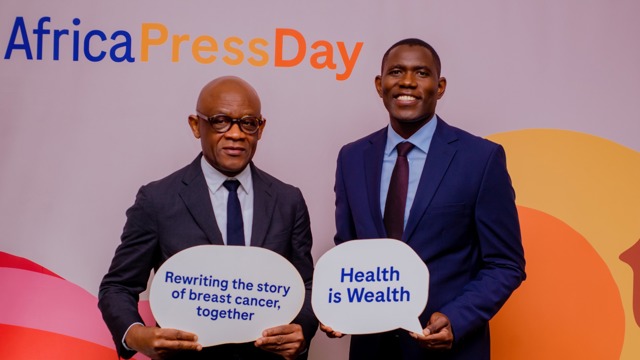
Investing strategically in the health of Africa’s women will unlock billions of dollars in economic growth, save lives, and strengthen communities, according to speakers at Africa Press Day, held in Nairobi on March 4-5.
Convened by the healthcare company Roche, the 2026 edition of Africa Press Day brought together journalists from nine African countries, along with policymakers, economists, health experts, and development finance leaders. They discussed evidence and case studies proving how public-private partnerships and strategic investments in health systems, especially in women’s health, can build human capital, productive workforces, and resilient economies.
In a keynote address, Kenya’s Principal Secretary, State Department for Medical Services, Ministry of Health, Dr. Ouma Oluga, urged the media to help shape an informed narrative about improving health: “When a health story is being told, what is most important to portray? Is it what is killing people? Is it the solutions that should stop what is killing people? Or is it the in-between—the administrative, resource, and policy actions that link the two?”
As African governments increasingly focus on economic diversification and productivity, speakers argued that health investment must be treated as core economic policy — not simply a social expenditure.
Health is Wealth: The Economic Case for Investment
To demonstrate the returns on investing in women’s health, Roche unveiled research from the WifOR Institute showing how the aggressive form of HER2+ breast cancer (responsible for up to 20% of cases on the continent) caused over USD10 billion in lost productivity across seven African countries including Algeria, Côte d’Ivoire, Kenya, Morocco, Nigeria, South Africa, and Tunisia from 2017-2023.
Nearly 90% of these losses came from women in their prime working years. The research also showed how every dollar invested in innovative cancer treatments can generate up to USD12.40 in economic returns, primarily by restoring women’s productivity and allowing for longer, healthier working lives.
Maturin Tchoumi, Pharma International Area Head, Roche Africa, said: “Breast cancer is a rising threat to African societies and economies. The evidence clearly shows that investing in women’s health is not a cost or a social expense, but a powerful economic driverthat underpins productivity, resilience, equity, and sustainable growth across the continent.”
 Rajiv Ruparelia Legacy Lives On in UGX 1.7 Billion Bukedea Eye Camp for 2,000 Patients by Ruparelia Foundation & Partners
Health Is Equity: Closing the Diagnosis Gap
Extending quality cancer care to all African women, regardless of geography or income, was a key theme of the event. This included closing the gaps in breast cancer screening and early diagnosis that lead to around 77 per cent of African women being diagnosed in the later stages of the disease when it is much harder – and more expensive – to treat.
H.E. Dorothy Nyong’o, First Lady of Kisumu County, Chair of the Africa Cancer Foundation, and member of the Africa Breast Cancer Council, highlighted Kenya’s EMPOWER initiative for breast and cervical cancer, which delegates visited at a local hospital. It has digitized the patient journey via 76 physical and virtual clinics, speeding up diagnosis and treatment. Since its founding in 2019, EMPOWER has reached over 235,000 women, enabling 3,225 to receive treatment, and been adopted by the National Cancer Institute of Kenya as a nationally integrated platform.
H.E. Dorothy Nyong’o said: “Tackling breast cancer is not just a moral issue; it’s a strategic choice. Kenya’s EMPOWER initiative highlights how partnership and digital innovation can create a step-change in women’s healthcare. It offers a blueprint to other African countries for public-private collaboration that drives systemic, equitable, and lasting change.”
Health is Resilience: Strengthening African Health systems
Throughout the 2026 Africa Press Day, speakers highlighted several initiatives aimed at strengthening health systems across the continent. These included Women’s Integrated Care Services (WICs) in Kenya and Côte d’Ivoire, pilot programmes designed to integrate women’s cancer services into primary healthcare systems to improve efficiency and access to care. Participants also pointed to home-grown pandemic preparedness efforts, such as the development of sustainable and integrated diagnostic facilities and laboratory networks that enhance countries’ ability to respond to future health emergencies. In addition, discussions underscored the growing role of African-led science including advancements in genomics and locally driven research in advancing health innovation and supporting the continent’s pursuit of greater health sovereignty.