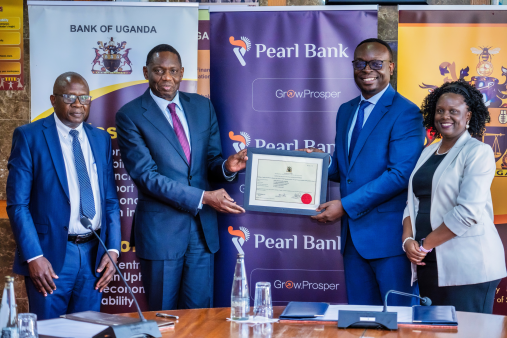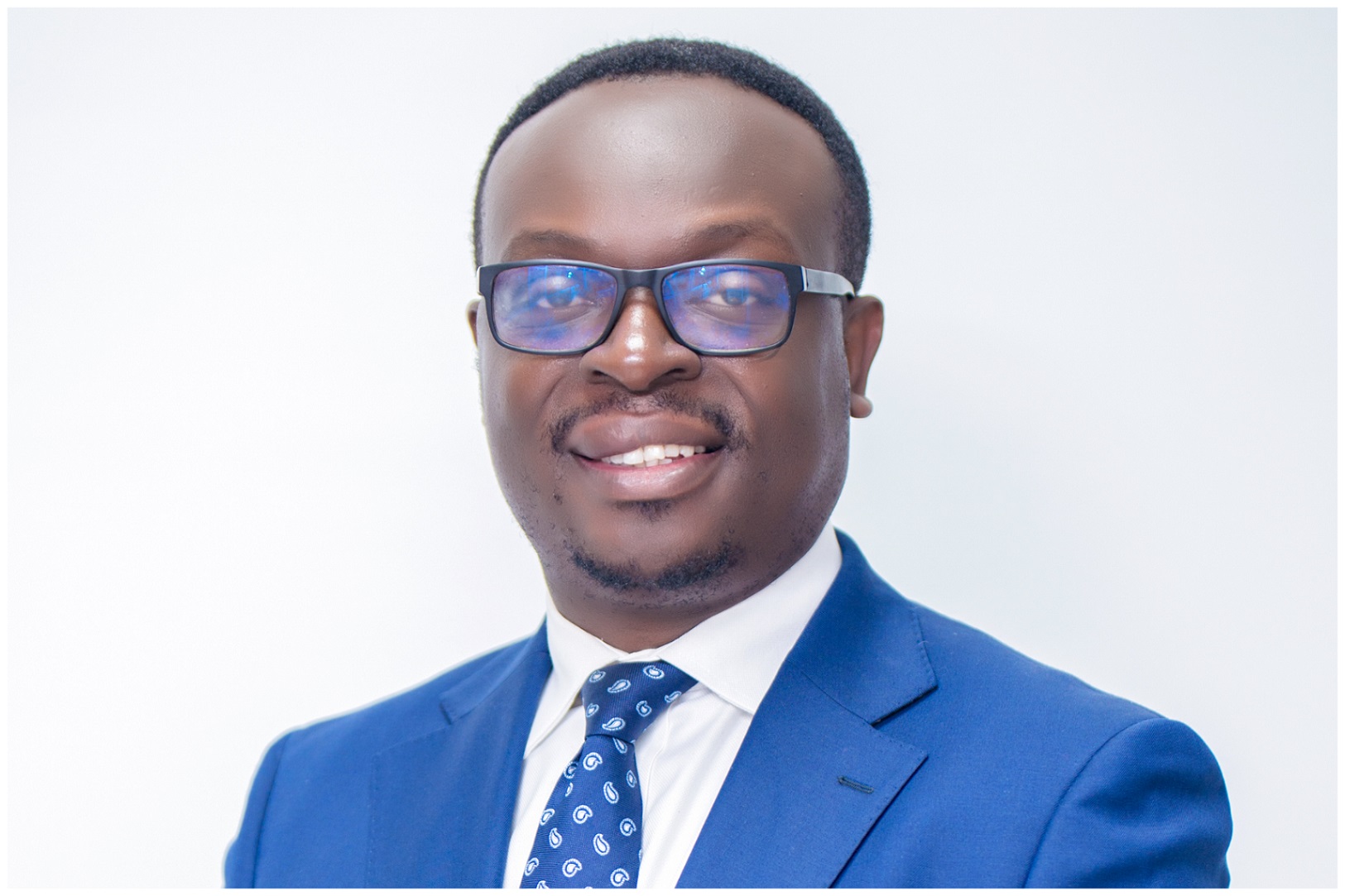
In this interview with CEO East Africa Magazine’s Muhereza Kyamutetera, Kakeeto says, much as the tier-one is the holy grail that he has been chasing, attaining it, marks the start of a whole new journey― a journey of new goals and new expectations; but one he has spent the last two years preparing for. Thanks to these two years of house-cleaning and great improvements in performance, PostBank will hit the road running, in the top half of the industry’s key players, a good place to be, but also the most competitive.
2021 was a tough year, not much different from 2020- all overshadowed by the pandemic. How was the bank impacted by the pandemic?
2021 has also been a challenging year, because of the COVID pandemic. There was a second lockdown mid-year, which affected our customers’ businesses consequently affecting our business as well. We however continued supporting specific sectors that we believe are very vital to the economy, especially agriculture—PostBank has a partnership with Uganda Development Bank (UDB) to finance export promotion, industrialization, import substitution which are key sectors in line with the National Development Plan III.
The education and tourism sectors went through a difficult period, and we supported them through restructuring their loans in line with Bank of Uganda guidelines.
We also finalized our restructuring process and are currently focusing on capacity building and staff growth. The bank has also implemented various measures to improve its risk management framework in preparation for growth.
During this year, PostBank supported a number of government initiatives such as making digital payments for COVID relief. This was the first time government was paying citizens digitally. We partnered with telecommunication companies and paid close to half a million Ugandans over three weeks. Subsequently, we were called upon by the government to support collections for COVID-19 testing at the airport which was an emergency project. We set up infrastructure in a record time and are currently receiving COVID-19 testing fees. We have also renewed our contract with the World Food Programme (WFP) to support payments in the refugee settlements with the enhancement of services to include digital payments. The project is under the Office of the Prime Minister but supported by World Food Programme (WFP) as the main donor. We thank the government for entrusting us with these critical assignments and we are proud to be of service to our motherland.
In terms of improving the customer service experience in 2021, we embarked on upgrading our core banking system, a project that will be concluded in February 2022. Alongside that, we embarked on upgrading our ATM switch to enable us to offer a variety of services at our ATMs and this project shall be completed by the end of this month. We also started the journey of changing our ATM Suite; migrating to more intelligent ATMs or what you call recyclers that enable instant deposits and a range of other services. So far, we have acquired 24 ATMs and by end of Q1 2022, we would have changed all our ATMs.
To take more services to the underserved, we also opened new branches in 2021, starting with the Mukono branch at the beginning of the year, followed by four mini branches in Kamdini (Oyam District), Rushere (Kiruhuura District), Butogota (Kanungu District) and Kyazanga (Lwengo District). We also opened the Corporate Branch at Forest Mall in Kampala.
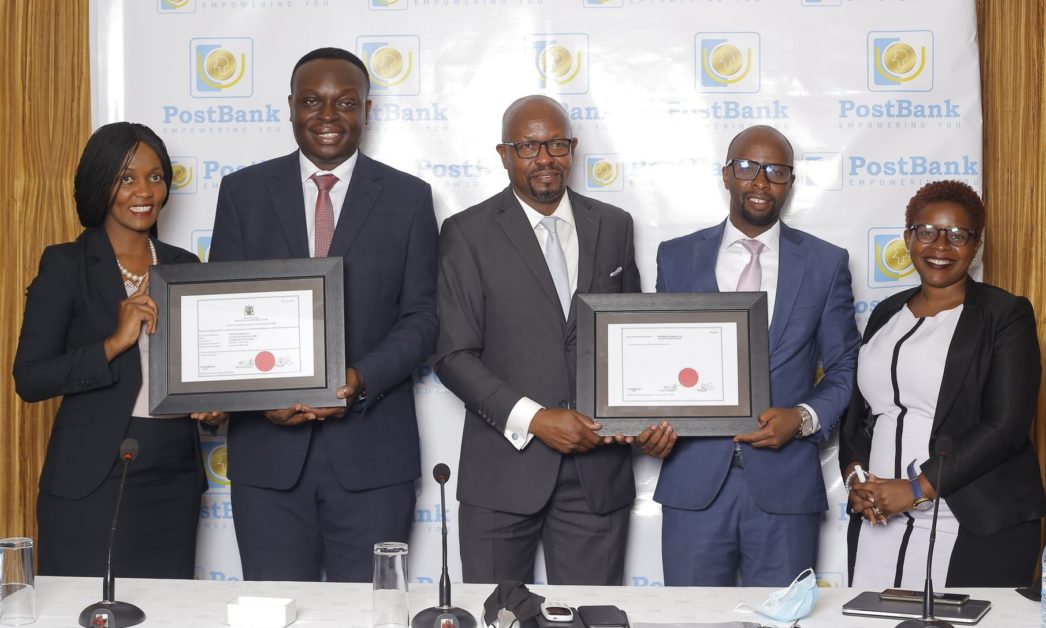
These were the major activities of 2021 and on the back of these activities, our performance looks promising. Subject to audited results, we forecast growth in deposits, loan book, revenue, and profitability despite Covid-19. We are forecasting growth across all major parameters.
Congratulations on finally attaining the tier one license. What has the journey been like? What has it taken?
The bank had applied many years ago, I think around 2008 or 2009, to become a tier-one financial institution, but at the time, the Bank of Uganda had concerns that had to be addressed for the bank to move to tier one. So, the first thing we had to do was to go through the concerns of the Bank of Uganda and address them to their satisfaction. Additionally, as a bank, we reviewed our policy framework, Governance, how we are set up right from the Board, the functioning of the Board and Senior Management.
We had to strengthen Risk Management— in banking, we say, “you push risk ownership to the first line of defence,” so that risk awareness and risk management are bank-wide. We had to deal with staff behaviour. When you go up to tier one, the expectations on compliance are a lot more stringent. So, you must prepare yourself and the team to be able to live up to the expectations, especially on the compliance side.
We had to hire the right people. When we started staff restructuring, that was the goal in mind ―that the team, the senior team that comes on board needs to have the right experience and exposure to be able to compete well with other tier-one commercial banks in preparation for operating in that competitive environment.
So, all that work has been done but now tier-one comes with additional responsibilities and expectations. We shall continue focussing on our target market of MSMEs. There are certain aspects of the business that we must develop— for example, we must develop the treasury both in terms of technology and the people. So yes, we have the licence, but we still have a lot of work to do to get ourselves to become and remain competitive.

In summary, the journey to tier-one has comprised of strengthening governance, improving risk management, improving customer experience, and growing the capacity of our staff. We believe it is a journey because there is a lot more to improve for us to fully optimise our potential.
So now that the tier one license is in place, and you have joined the big league, what changes? Why is this important for the customer, for the industry, and most importantly, for the shareholders, the taxpayers?
 Letters to My Younger Self: Robinah Siima — “Success Is Quieter, But Richer”
Our biggest motivation to become tier one was and has always been that it offers the bank more opportunities to mobilise deposits. If you don’t mobilise deposits which are the heartbeat of a bank, you cannot continue lending which in turn stifles growth. So, if we are to lend to more Ugandans and continue aggressively growing the loan book like we have been doing in the past, we need a very clear mechanism for growing our deposits base to enable us to achieve the kind of growth we want to.
For our customers, they’ll be able to enjoy a wider variety of products. There are new products and new customer solutions that come with being a tier-one bank. As a bank, we expect to improve our liquidity position because we shall be playing in the interbank market and have access to the clearinghouse which has its advantages for both the bank and its customers.
For the shareholders and other stakeholders, I think that the bank can continue supporting the masses, MSMEs and Agriculture on a wider scale, enhancing and diversifying the existing partnerships with both Government and the donors to extend financial services to Ugandans especially the underserved and support the Government on specific strategic interventions considered as priorities.
On the competitive landscape, where does the new license place you in terms of industry ranking and market share?
According to the audited financials for the last year 2020, out of 25 banks, PostBank was ranked No.11 in terms of size of the loan book: the 14th in deposits and the 10th by revenue. The 2021 results for banks will be made available in March and April 2022.
Regardless, we will proudly remain a bank focusing on the masses, with Micro Small and Medium Size Enterprises and agriculture being our core areas. Given the structure of the economy, if agriculture is ignored, you can’t serve MSMEs effectively. This is backed by the fact that most of these MSMEs are involved in the agriculture chain – production, trade, processing, distribution, storage, logistics etc. Therefore, PostBank will remain an MSME bank with agriculture, as a key focus. We shall retain the target market we had as a tier-two institution, but hopefully on a bigger and deeper scale.
I do believe as a CEO when you joined the bank in 2019, there are specific things you wanted to achieve- both for yourself and for the bank. In these two years, is everything moving according to plan?
Yes, everything is moving according to our strategic plan. I remember close to two years ago; the objective was to always take the bank to another level and that has been very clear. I gave an interview to CEO East Africa Magazine, and I talked about certain things like changing our customer experience. We had long queues and I committed to getting rid of the long queues in one year and indeed they are gone. We committed to making sure that a customer who comes to PostBank, should experience what they enjoy in the rest of the other banks, and I know we are getting there.

The Summit Lounge at the PostBank Forest Mall Branch caters to premium customers. PostBank’s Summit Business and Personal Accounts offer convenient, personalised, and flexible banking solutions for affluent non-individual and individual entities, respectively. PHOTO/Courtesy
Customer experience is not definite, it is a journey. We have worked on a number of things that have improved the customer experience, reduced the queues and ensured that people have access to their money in real-time. We always wanted to reduce over the counter transactions and before COVID-19 last year, over 90% of our transactions were in the banking hall―over the counter but today, that has come down to 40%. That means that 60% of our customers can serve themselves, via our self-service channels- agency banking, mobile phones, ATMs and so on. Our goal is to bring down over the counter transaction volumes to 20%.
We committed to invest in the appropriate technology, revamp our digital journey, and restructure our organogram and all these are either moving well or have been completed. We have accomplished what we wanted to do in two years, but tier-one comes with additional work in terms of continuing to strengthen governance, improving risk management, processes, and technology. The team is fully committed and competent for the task ahead.
It has taken a commitment from our shareholders the government, the Board of Directors, Staff and more importantly our customers who have stuck with us from many years ago, and through the past two years when we implemented a lot of these changes.
The space you are entering into is not only good at what they do, some of them if not all them are also backed by deep pockets from their parent companies. For PostBank to make a meaningful breakthrough in this league and do all these things that you have said need to be done, you will certainly need much more support from the government, your shareholder. What would you want your shareholder to do for you to ensure that the fire keeps burning?
You are correct when you say that PostBank will require support from the shareholders as the bank is a good strategic investment that is supporting vital sectors in the economy. It is also a significant taxpayer as well as tax collector and has in the past demonstrated the ability and willingness to support government interventions. As you rightly mentioned, the banking sector is very competitive and therefore the bank must continue improving its performance to be able to remain relevant to its target customer base.
PostBank will be required to grow its issued share capital in line with the recent BOU proposal to increase the minimum Tier 1 share capital. Additional capital would expand the scale of operations, improve the bank’s resilience to shocks and widen the available opportunities to support government interventions. However, this is a discussion between the Board and the shareholders.