Parliament has struck a blow to the government’s plan to antagonize the wealth creation by creating a Parish Development Model (PDM) whereby all the funds were expected to be put in one pool to fund improved production of 18 commodities for the market.
The commodities that the government want to develop and market under the PDM are; Coffee, cotton, cocoa, cassava, tea, vegetable oil/ oil palm, maize, rice, sugarcane, fish, diary, beef, bananas, beans, Avocado, Shea nut, Cashew nuts and Macadamia nuts.
In approving the recommendations of the Budget Committee, Parliament voted to all the existing wealth creation programs and instead asked the government to implement the PDM in a phased manner starting the coming Financial Year.
Parliament was considering the Budget Committee report on the budget estimates for the Financial Year 2021/2022 with a resource envelope of UGX44.77 trillion.
“We recommend that Parliament approves reinstatement of existing wealth funds as proposed by the Committee. This is in order not to disrupt the gains achieved under the existing wealth funds” reads part of the report.
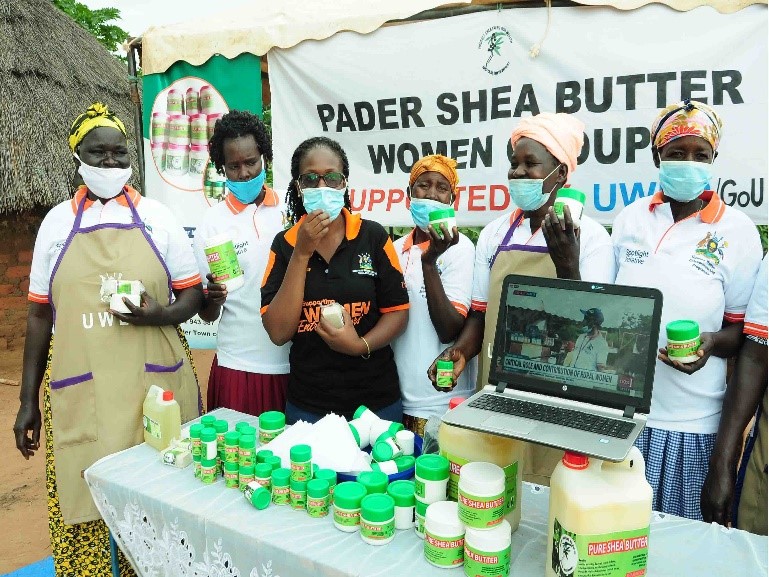
The development comes about two weeks after Parliament approved a motion moved by the Leader of the Opposition, Betty Aol Ocan, urging that the government not to include the Uganda Women Entrepreneurship Fund (UWEP) in the widely contested PDM.
Youth livelihood Fund, Uganda Coffee Development Authority (UCDA) funding coffee growing; Peace Recovery and Development Plan (PRDP) fund and Luwero-Rwenzori Development Program, are the wealth creation funds that government plans to convert into a kitty for PDM.
To the government, the PDM that the Ministry of Finance had allocated UGX200 billion in the next financial year, is a strategy for organizing and delivering public and private sector interventions for wealth creation and employment generation at the parish level as the lowest economic planning unit.
Created after a Cabinet approval early this year, it is expected that the PDM will be implemented in two phases beginning with the coming financial year with the three key targets.
These are; accelerating implementation of area-based commodity development planning in order to realise quantity and quality of agricultural products required for industrialization and exportation; extend the whole of government approach for development to the parish level in a consolidated manner; and, localizing Vision 2040 and the National Development Plan for effective measurement and management of development interventions.
MPs however, as it was during a heated debate two weeks ago, concurred with the government on the seven pillars for the PDM but said it would not be viable to implement wholesomely without being tested or piloted.
The seven pillars of the PDM are; Production, Processing and Marketing; Infrastructure and Economic Services; Financial Inclusion; Social services; Community data; governance and administration; and, mindset change.
“A phased approach to implementation of the Parish Development Model. In the Financial Year 2021/2022, implementation of the PDM should start with preliminary activities for establishment of the necessary support structures and systems” adds part of the recommendations.
While appreciating that the pillars of the PDM are essential for poverty reduction, the MPs asked the government to in preparation for its roll out, key activities that include recruitment of Parish Chiefs in all the 10594 parishes across the country. Also among the demanded activities prior to implementation of PDM are; establishing and training of Parish Development Committees; setting up of the Community Information Systems (CIS); and, mobilization of the masses at national and local government level.
Much as the PDM was carrying a pillar on mindset change, another appropriation for community mobilization and mindset change has been made in the national budget as a standalone programme. The Ministry of Finance provided for UGX56 billion to run this programme in the next financial year.
State Minister for Finance in charge of Planning, David Bahati said the government is ready to take into account the recommendations of Parliament.
“We accept and we shall implement it in a phased manner beginning with the preliminary activities as has been agreed with by this Parliament” Said Bahati.
The Minister, however, did not explain to Parliament where the phased manner of implementation of the parish model will start.