
The Constitutional Court has restricted the application of Section 15 of the Tax Appeals Tribunal Act, limiting its application to only cases where the tax dispute is about the amount of tax payable.
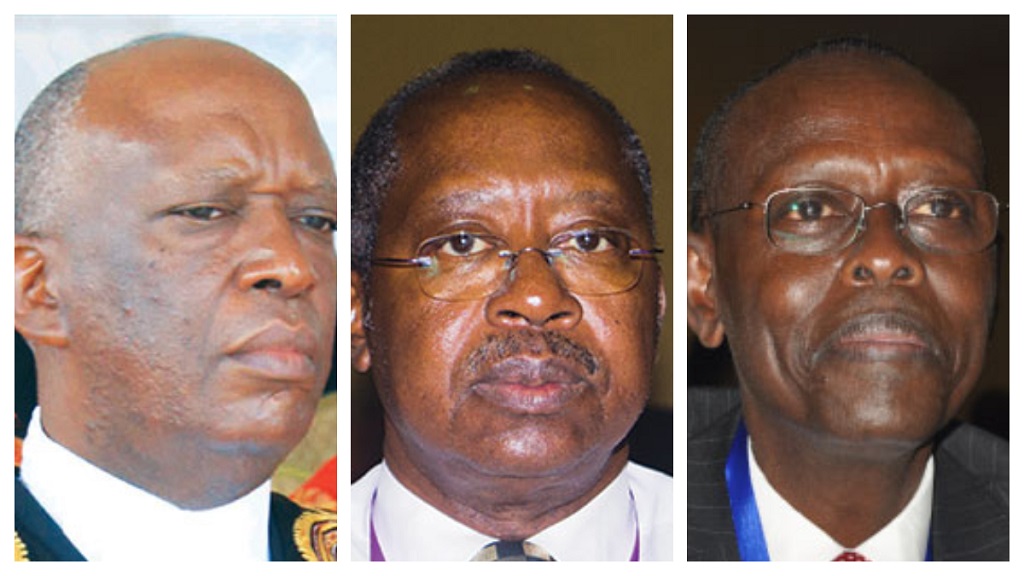
In a majority 3 of 5 ruling, Justices Kenneth Kakuru, Egonda-Ntende and Ezekiel Muhanguzi ruled that, “Section 15 of the Tax Appeals Tribunal Act – in so far as it compels an objector to a tax assessment whose challenge is not with regard to the amount of tax payable, to pay to the tax authority 30% of the tax assessed – is inconsistent with Article 44 of the Constitution; hence it is unconstitutional.”
Justices Owinyi-Dollo (Deputy Chief Justice) and Hellen Obura dissented.
The ruling follows Petition No.3 of 2009 by Fuelex (U) Limited against Uganda Revenue Authority (URA). The Constitutional Court is mandated by Article 137 of the Constitution to determine the consistency of any law with the provisions of the constitution.
Fuelex was represented by Birungyi, Barata & Associates.
The matter came to the constitutional court by way of reference from the Tax Appeals Tribunal where Fuelex (U) Limited had objected to a UGX160, 525, 530 tax bill by URA. As a preliminary objection, Fuelex raised the issue of the constitutionality of the 30% mandatory payment before seeking justice.
Fuelex argued that Section 15 of the Tax Appeals Tribunal Act that requires a taxpayer who has lodged a notice of objection to an assessment to pay 30% of the tax assessed, or that part of the tax assessed that is not in dispute, whichever is greater, before they can get justice, is inconsistent with the constitution. The lawyers particularly singled out the constitutional right to a fair hearing enshrined under Article 44(c) of the constitution.
In a majority decision by the Constitutional Court delivered on 24th July 2020 Justices Kenneth Kakuru, Engonda-Ntende and Ezekiel Muhanguzi agreed with Fuelex lawyers and ruled that a law that requires one party to a civil dispute to pay 30 percent of the amount of money that has been determined as payable by the adverse party, places on the objector at a disadvantage. The three justices further reasoned that the 30 percent requirement places upon the objector a burden that the adverse party, in this case, URA, does not have to bear.

“The right to a fair hearing is non-derogable, under article 44 of the Constitution,” ruled Justice Kakuru, adding that: “Article 44 of the Constitution makes it clear that no law shall abridge, limit or lessen, shrunk or otherwise derogate the right to a fair hearing. It is not subject to the limitation imposed under Article 43 of the Constitution.”
Kakuru reasoned that although the law provides that in the circumstances URA loses the objection, URA has to refund the 30%, it is usually too late.
“For an objector who doesn’t have the 30% his/her objection, however plausible cannot be heard and therefore he/she cannot get an opportunity to be heard. Once an opportunity to be heard is denied on account of failure to raise the 30% of the assessed tax, URA is at liberty to recover the whole of the disputed sum whether that amount is legally owing or not and irrespective of what decision the Tax Appeals Tribunal would have made. This, in my humble opinion, cannot be consistent with the right to a fair hearing envisaged under Article 44 of the constitution.”
“The framers of the 1995 Constitution purposefully intended to ensure that parties before courts of law are placed at the same footing. Section 15 of the Tax Appeals Tribunal Act, derogates from the principle and right of fair hearing enshrined in the 1995 Constitution,” Justice Kakuru further ruled.
The ruling is a big relief for taxpayers since they will now not be required to pay 30 percent of the assessed tax, except if the dispute is on the amount of tax payable. Previously a party could only be heard before the tribunal if they paid 30 percent of the assessed tax or the tax not in dispute.
The Constitutional court, however, did not outlaw the requirement of payment of the tax that is not in dispute.
Just a week ago, the Tax Appeals Tribunal in the case of Century Bottling Company v Uganda Revenue Authority overruled a decision of the URA Commissioner General rejecting Century Bottling Company’s request to pay the 30% in instalments.
In April 2020, Century Bottling Company dragged URA to court, objecting a UGX60 billion claim on it by URA. The company then requested to pay the 30 percent (UGX 18 billion) in instalments, a request the URA Commissioner General had rejected. Under the Tax Procedures Code Act 2014, the Commissioner-General has the discretion to accept payment of taxes in instalments.