At Entebbe International Airport, where aircraft movements mirror the pulse of trade, tourism, and global connectivity, a quiet but critical engine keeps operations running seamlessly behind the scenes—ground handling. At the centre of this ecosystem is Menzies Aviation, a global aviation services company operating in over 250 airports across more than 65 countries, delivering passenger, ramp, and cargo services that enable airlines to move millions of people and tonnes of cargo safely and efficiently every year.
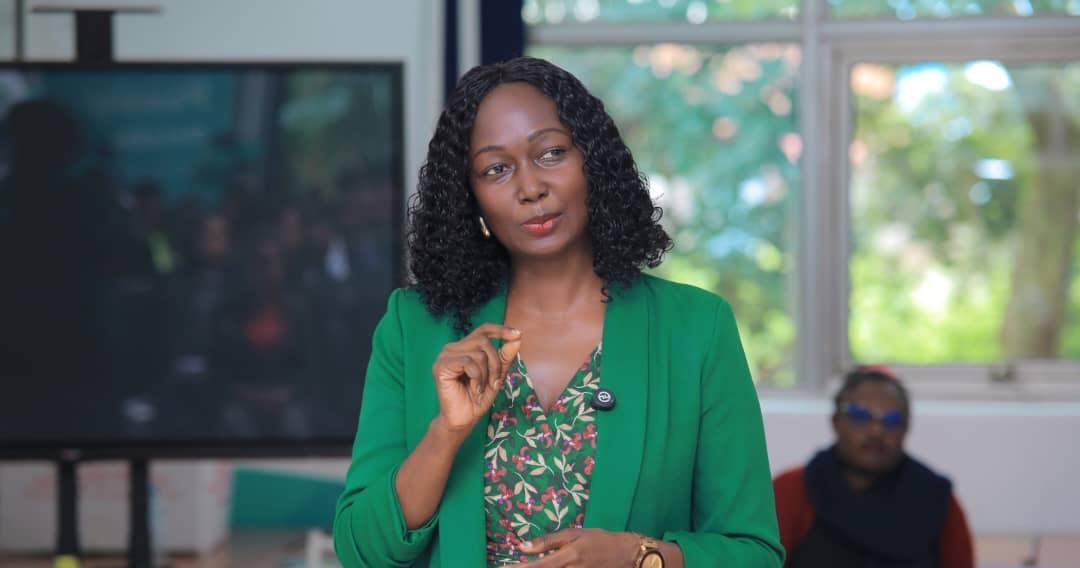
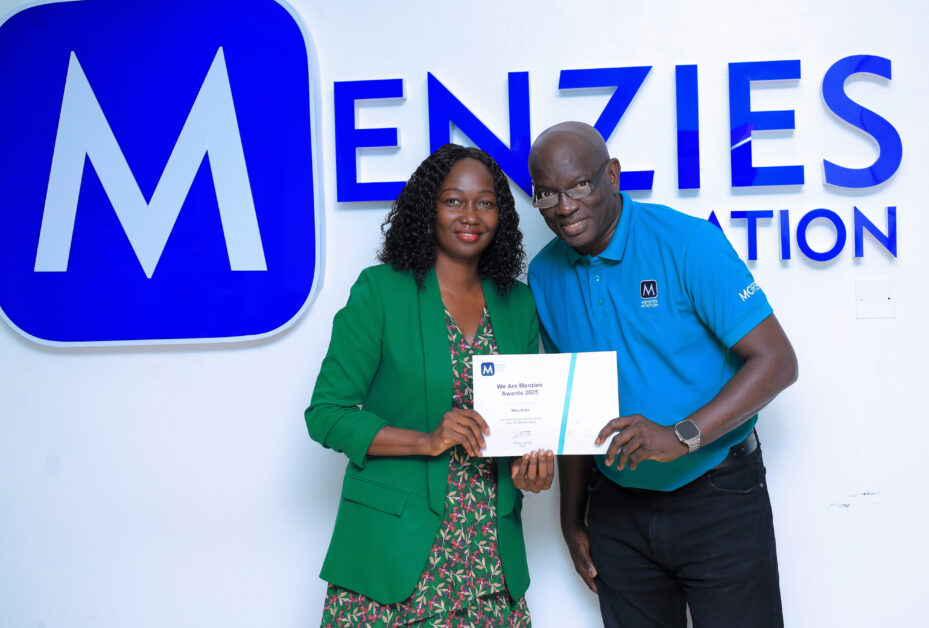
In Uganda, Menzies Aviation is the country’s leading ground handler, playing a pivotal role in facilitating international travel, supporting airline operations, and powering the logistics backbone of the economy. Steering this complex, high-stakes environment is Mary Efata, a finance-trained executive whose career has cut across banking, advertising, and now aviation—industries defined by precision, pace, and performance.
Having risen through the ranks from Finance Manager to General Manager, Efata represents a new generation of leaders who combine analytical discipline with people-centred leadership. Her journey—from balancing teller books in her early career to overseeing one of Uganda’s most critical aviation operations—reflects a philosophy grounded in clarity, planning, and accountability.
In this conversation with CEO East Africa Magazine, she opens up about the leadership lessons that shaped her, the realities of managing in a high-pressure aviation environment, and why, in both business and life, “numbers do not lie”—but people, purpose, and planning ultimately determine what those numbers become.
Beyond your titles and roles, who is Mary Efata?
I would describe Mary as someone who seeks clarity and strives to provide it. This is reflected in my natural instinct to bring order, to organise situations, people, and everyday processes. I understand that there is never a point of complete clarity, but it does not have to be fully defined; having a sense of direction is enough. That is how I operate, ensuring there is always some direction.
As a leader, how do you strike a balance between creating order and not imposing it?
The reality is that you cannot lead a team without direction. In the absence of order, everyone moves in their own direction.
People naturally look to the leader for clarity. It may not always be the final answer, but there must be a clear sense of direction. Otherwise, you risk expecting results without ever defining what success looks like. I have also found that people perform better when they understand where they are going.
Sometimes, creating order simply means asking the right questions or reaching out to someone who can provide direction. Even in times of crisis, whether a pandemic or a geopolitical situation, you must find clarity. As a leader, you need that clarity yourself, because without it, you cannot lead your team.
What keeps you awake at night?
Impact and legacy. I often ask myself why I go to work each day and why I do what I do. Sometimes I like the answers, and sometimes I do not, but I hold myself accountable to ensuring they are aligned with the kind of mark I want to leave. I do not want to simply pass through situations; I want to shape them, to change lives, and to make a difference that lasts.
At what point do you feel satisfied with your work?
I have learned over time that success is not defined solely by the outcome. I used to wait until something was fully completed before allowing myself to feel a sense of satisfaction. Now, I recognise and value progress at every stage: the beginning, the middle, where resilience and sustained effort are required and the end, where results are realised.
Leadership has taught me that success is rarely immediate. The time something takes is not a reflection of inefficiency, but often of the complexity and obstacles navigated along the way. What matters is perseverance. As a result, I am intentional about recognising both progress and key milestones, not just the final outcome.

What is one piece of advice that shaped your journey?
It is the simple idea of always having a plan. Early in my career as a bank teller, I faced a situation where my receipts did not balance, and I was short by UGX 1 million. Looking back, I do not know how it escalated into a police-led interrogation in the General Manager’s office. At the time, however, I was overwhelmed and found myself sobbing through the interrogation.
When the General Manager stepped away, the policeman in charge told me something that has stayed with me: “Young lady, tears will not help you. Give him a payment plan.”
Since there were two of us in the booth that day, we agreed on a plan to each pay Shs 500,000 over three months.
That moment changed my thinking. When things go wrong, emotions do not help; you need a plan.
And advice that almost held you back?
This was after completing a major academic milestone, when I was considering my next step. Someone I respected advised me that the programme I had planned to pursue was not necessary. I took the advice on board for a while, but ultimately chose to return to that path.
That experience taught me to weigh advice carefully. Respect for someone’s perspective does not necessarily mean it is the right direction. Had I followed that advice, I would have been behind.
What pivotal moments shaped your leadership journey?
One lesson that has stayed with me is that situations will always arise—both good and bad. In all of this, I must have a plan. It does not have to be fully defined, but there must be a plan.
Another defining moment came while I was working at Ignition, an advertising agency. It had rained heavily, and I chose to wait it out, assuming others would do the same. When I arrived at 10:00 a.m., I was surprised to find that most of my colleagues, many without cars, had arrived at least two hours earlier.
Around lunchtime, the Managing Director, Nicola Brown, spoke to me. “I come from the UK, where it rains often. Rain is not an excuse to arrive late. You will always have situations, but you must find a way.”
That moment stayed with me. Circumstances will always exist, but it is your response that matters.
How did you transition from managing one department to general management?
It was not an overnight shift. The journey began years ago while I was working in the advertising industry. I was exposed to different parts of business beyond finance, and I realised that I thrive in environments where I am not confined to one role.
For instance, during periods when business was slow, the leadership at Ignition organised advertising campaign competitions and encouraged everyone to participate, regardless of their job description. In one of these, I pitched a sanitary pad campaign, which won first place. That was the seed that sparked my desire to be involved in every part of the business.
A similar experience occurred at Fireworks Advertising, where, as Head of Finance, I worked closely with consultants across IT, HR, and legal, while also overseeing administration and procurement functions. This broadened my exposure and strengthened my ability to operate across functions.
At a certain point, I reached a crossroads in my career: whether to deepen my path in finance or transition into general management. The latter was more compelling, and I therefore aligned my mindset, training, and experience towards that path.
When the opportunity came along, I made a deliberate decision to learn as much as I could. Coming from a finance background into a more operational aviation environment, I adopted a consultative leadership style. This allowed me to draw on the expertise of more seasoned colleagues and make more informed decisions.
From an organisational perspective, transitions at Menzies Aviation are not left to chance. There is strong support through mentorship and coaching, which complements individual effort and makes the transition more structured.
The transition, therefore, was not seamless, but it was intentional and supported.
What key leadership lessons have you learned?
Leadership is largely about people. From the book Surrounded by Idiots, I learned that people tend to fall into four broad groups, and the leader is not excluded. Regardless of the industry, the personalities you encounter are often similar, and you must learn how to work effectively with different types. There is no one-size-fits-all approach.
It is also important to be intentional about the kind of leader you want to be. I have worked in environments where aggressive communication was the norm, and I found myself almost adopting that style. I had to step back and ask whether that was truly who I wanted to be. That experience reinforced the importance of values and the need to lead with them.
I have also learned that leadership is inherently influential, and teams often reflect their leaders. If something is happening within your team, it is always worth looking inward, taking ownership, and leading the change required.
What are the opportunities and challenges in Uganda’s aviation sector?
Compared to the global industry, Uganda’s aviation sector still has significant potential for growth. In my view, the aviation industry reflects the broader economy; if there are multiple areas of economic growth, there will continue to be opportunities for expansion within aviation, particularly through increased trade and tourism.
However, there are still challenges, particularly around infrastructure and operational costs, which may limit the pace of this growth.
What do you love and find challenging about your work?
Interestingly, I see strong similarities between aviation and the advertising world. Both are fast-paced and dynamic, which is what excites me, but also what stretches me.
In such environments, the work is time-bound and requires precision, and yet aviation does not allow for any compromise on safety as the consequences can be significant.
This, in turn, places a strong emphasis on people. You must work with the right individuals, be well-equipped, trained, and continuously empowered to deliver.
Some of these dynamics make my work both rewarding and demanding.
How important is financial management in driving organisational growth?
It is extremely important. Financial management provides a clear and objective view of how a business is performing. It shows how resources are being utilised and where inefficiencies lie.
There is a saying that numbers do not lie, and I believe that. When interpreted correctly, they guide decision-making, instil discipline in operations, and support sustainable growth.
As one working in a male-dominated world, what unique challenges have you faced, and how did you overcome them?
I did not initially experience my career through a gender lens, largely because I was not aware of it. Equal opportunity was the norm in the environment I was in, and at the start of my career, we related to each other simply as professionals working alongside one another. I have also been fortunate to work in environments where I did not feel treated differently.
My awareness of the gender lens grew over time, particularly through increased exposure to conversations, content, and statistics on the subject. This made me more conscious of the disparities, including moments where I found myself on an all-male executive committee. I began to view this within the broader context that the presence of women in the workplace, particularly in leadership, is still relatively new.
I often liken it to a marathon. Many people start the race, but not everyone reaches the finish line at the same time, or at all. This reflects the journey of women, particularly in the workplace. The smaller numbers at senior levels raise important questions: where does the drop-off occur, and what contributes to it? Factors such as coaching, mentorship, sponsorship, and guidance all play a role. At the same time, individuals may make different choices along the way.
Overall, I use this knowledge to improve myself and to support the women around me, ensuring that we grow together.
What advice would you give young Ugandan women aspiring to leadership?
There is room, and it is possible. The statistics are improving, which shows that opportunities do exist.
It is also important to be clear about what you want and to pursue it boldly. Understand that growth takes time and be willing to go through the journey. Mentorship is key; it helps you avoid unnecessary mistakes and provides guidance along the way.
I volunteer with Girls 4 Girls, where we take a “village” approach, supporting one another throughout the journey.
Build your skills early and make the most of those formative years. Above all, be courageous.
Throughout your career, who have been those mentors and how have they influenced your leadership approach?
Most of my role models and mentors have come from the advertising industry, where I learned resilience and the importance of working through bottlenecks. Advertising agencies operate in a highly resource-constrained environment, so effective resource management is critical. If you do not manage your resources well, you simply cannot deliver.
At Ignition, Nicola taught me to always find a way to accomplish what needed to be done. She never gave up, and “impossible” was not part of her vocabulary.
Caleb Owino of Fireworks also had a significant impact on my development. He taught me a great deal about resource management and gave me my first leadership opportunity as a Finance Manager. The role came with exposure across different areas of the business, which broadened my perspective. Caleb was also deeply committed to people’s growth, and from him, I learned the importance of continuously developing both myself and others.
As I transitioned into aviation, Nouamane Zahouani, the former General Manager of Menzies Uganda and now Vice President for East and Central Africa, has been a strong influence. He has an exceptional work ethic that is both visible and contagious, often pushing you beyond what you thought was possible. At the same time, he has demonstrated the importance of empathy, consistently advocating for the growth and development of his teams.
How do you cultivate talent and encourage growth among your team?
I have learned from leaders at Menzies that when you encounter exceptional talent, you should never overlook it. It is important to take notes, capture their name and maintain contact, because you never know when you may need their expertise.
Menzies Aviation also has structured leadership programmes that create opportunities for growth. This is particularly important given the fast-paced nature of our work; without structure, key development areas can easily fall by the wayside.
In addition, we intentionally create pathways for progression. It is not enough to equip people with knowledge; there must be opportunities for them to apply it. This is why internal promotion mechanisms are so important.
On a personal level, I invest in mentorship and guidance, often sharing my own experiences to demonstrate that growth is possible.
Ultimately, this means supporting people closely, showing them the ropes, recognising potential, aligning it with opportunity, and allowing room for learning, including the ability to fall and rise.
What is your vision for your leadership at Menzies Aviation Uganda?
Menzies has a strong foundation built over 30 years and is the largest ground handler in Uganda. My role is to strengthen and sustain that position.
My focus is on maintaining leadership in ground handling, aligning with global standards, and driving continuous improvement. I am particularly passionate about working with people, ensuring the team is clear on our direction and fully aligned in delivering our goals.
Looking at your younger self, what inner shift had to happen for you to be the leader you are today?
Starting out as an accountant, I was excited to leave university and begin my career. I was particularly drawn to the advertising industry because I saw it as dynamic and engaging, and I believed I could apply a structured role within an exciting environment.
Looking back, I could not have chosen a better starting point, given who I have become today. Accounting gave me a strong foundation in attention to detail, structure, and clarity, as well as the ability to analyse situations with precision.
One of the major shifts for me has been in how I engage with detail. Earlier in my career, I was very hands-on and personally immersed in it. As I moved into leadership, I had to step back and allow the team to take ownership of the details. My role now is to ensure that the right level of detail is captured and understood, and to interpret it in a way that informs decision-making.
Another shift has been moving from focusing on specific issues or producing reports to understanding how the figures impact the business and the broader environment. This has expanded my perspective from a micro view of data to a more macro, and ultimately global, understanding.
How have you built resilience over the years?
Resilience is built over time through experience, mentorship, and mindset. There are moments when the pressure is intense, and the responsibility feels overwhelming.
However, leadership requires you to keep going because others depend on you. You learn from past challenges, draw on experience, and remind yourself that you must move forward.
I also draw strength from my faith, particularly from scripture that reminds me, “If you faint in the day of trouble, your strength is small.” It challenges me to remain steady, even in difficult moments, and to keep showing up with strength and clarity.

Have you ever doubted yourself?
Yes, particularly when I make mistakes in my financial roles. Those moments can shake your confidence, because accuracy is critical in finance. What helps is shifting from doubt to ownership.
Instead of dwelling on the mistake, I focus on corrective actions, asking what needs to be done to ensure it does not happen again. That shift is what restores confidence.
What does your typical workday look like?
My day typically starts with reviewing my schedule, which then guides how I plan and prioritise across both work and personal responsibilities. From that, I structure my day to include managing communication, attending meetings, and intentionally making time to engage with the team on the operational floor, even if not daily.
I rely heavily on structure and planning. It helps me stay in control, maintain balance, and keep a clear mind so I can focus on what truly matters.
How do you balance work and personal life?
I have learned to think in terms of seasons. There are times when work requires more attention, and times when family takes priority. Balance is not about doing everything at once, but about understanding what matters most at a given time.
I also rely on systems, technology, and, most importantly, a strong support network of people. In reality, balance is not achieved alone; you need the right people around you.