
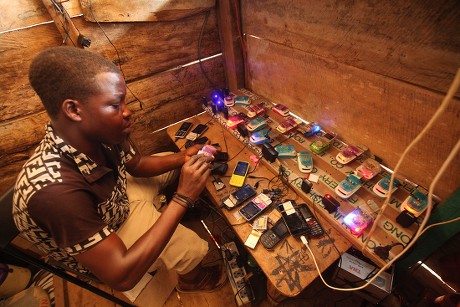
By mid-afternoon in Obongi Town, small crowds gather at makeshift charging points. Phones are handed over, names are sometimes scribbled down, and a fee of UGX 500 is paid, if there is still space.
Some devices will not be charged that day. In this part of northern Uganda, near the South Sudan border, mobile network coverage exists.
But for many people, it is unreliable in practice for a simpler reason: there is not a single electricity pole.
When phones cannot be charged, connectivity disappears, not because the signal is gone, but because the device goes off.
“We don’t have any electricity here,” says Cosmas Adebo, a welding business owner.
“People use generators and solar systems, but they are expensive to install and operate, and access is hard.”
“Most people charge their phones at these points,” he notes. “But phones crowd, and sometimes they are not charged at all. During rainy seasons, phones may not charge at all. Most people just have their phones off.”
For many, that means more than missed calls. It means missed income.
The 2024 National Population and Housing Census shows that Obongi District has a population of 142,983. Of these, roughly 12,000 are Ugandan nationals, while an estimated 120,000 are refugees, mostly from South Sudan.
In a district where both host communities and displaced populations depend heavily on mobile phones for trade, mobile money, and communication, the inability to keep a device powered is not a minor inconvenience.
It is a direct constraint on economic activity. And it reflects a wider national pattern.
Uganda’s digital economy is expanding. Network coverage reaches most of the population. Mobile money is central to everyday transactions. Digital transformation sits at the core of the country’s long-term growth strategy.
Access is not the same as use
Across the country, some Ugandans remain effectively offline, not because they are outside network coverage, but because the conditions for meaningful use are missing.
Devices are costly. Power is unreliable. Charging is inconsistent. The result is an economy where digital infrastructure exists, but participation lags behind. The cost is largely invisible.
Every uncharged phone is a missed payment, a delayed transaction, a lost customer. A trader cannot confirm an order.
A worker cannot receive money. A farmer cannot check prices. Businesses slow down, markets remain smaller, and productivity gains fail to materialise.
At scale, this is not just a connectivity gap. It is a drag on economic output. Uganda’s digital economy is no longer short on scale. It is short on power.
That is the contradiction running through the country’s own policy and market data. On one hand, Uganda has achieved 96% 4G population coverage, including 98% in urban and peri-urban areas and 89% in rural areas, according to GSMA.
Uganda’s telecom sector has expanded rapidly. By the fourth quarter of 2025, the country had 57.3 million registered mobile subscriptions, including 47.1 million active lines, alongside 18.5 million mobile internet subscriptions.
Mobile money continues to dominate digital transactions, with 53.6 million registered accounts and 36.3 million active users. Smartphone adoption has reached 20 million devices, reflecting the growing centrality of mobile technology in everyday life.
At the same time, the scale of activity is significant. Mobile money transactions hit 2.48 billion in a single quarter, while the sector generated UGX 1.66 trillion in revenue over the same period, according to the Uganda Communications Commission’s Q4 2025 Market Performance Report.
The ICT sector itself is growing at 14.8%, contributes about 9% of GDP, and supports 2.3 million jobs.
These are not the numbers of a digitally marginal country. They are the numbers of a country that has already built a large and increasingly sophisticated digital system.
And yet the lived experience of that system is uneven.
A September 2024 Quality of Service report by Uganda Communications Commission shows a widening disparity in network performance across the country.
Districts such as Kampala, Wakiso, Jinja, Mbale, and Hoima consistently deliver strong call reliability and stable data services, while Kisoro, Rukungiri, Isingiro, Yumbe, and Kotido continue to experience dropped calls, weak connections, and, in some cases, limited network availability.
The pattern reflects where infrastructure investment has concentrated, and where it has not. This is not just a telecom story. It is a systems story.
Electricity as the system beneath connectivity
GSMA’s analysis for Uganda identifies “inadequate complementary utilities such as electricity and road access” as a barrier to ICT rollout, alongside weak interoperability of government systems and high costs of equipment and internet access.
The International Telecommunication Union’s last-mile assessment says the telecom and energy sectors still operate in silos, missing opportunities for infrastructure sharing that could cut capital costs, speed up broadband expansion, and improve service quality.
At the country level, the National Financial Inclusion Strategy says low usage of digital financial services is linked in part to limited smartphone penetration, inadequate access to connectivity and electricity, and unreliable service, with women and other underserved groups disproportionately affected.
This is the deeper story. Uganda’s digital bottleneck is no longer primarily about whether a network signal exists. It is about whether the system beneath that signal works.
The UCC numbers make that clear. A country with 57.3 million subscriptions but only 18.5 million active internet users is not facing a simple access problem.
It is facing a conversion problem. Millions of Ugandans are within network reach but are not yet participating fully in the digital economy.
And for many of those Ugandans, the gap is not about technology. It is about everyday reality.
It is about whether a phone can stay charged long enough to be useful. It is about whether a small business can rely on a connection to complete a transaction.
It is about whether access to a network translates into access to opportunity. From an operator’s perspective, this gap is visible on the ground in different ways.
MTN’s operational assessment shows that a large part of the connectivity gap is not about coverage, but about usage, and that electricity is a major driver of that gap.
Airtel Managing Director Soumendra Sahu frames the issue from the user side, noting that in off-grid areas, “users prefer feature phones with limited usage but longer battery life,” reflecting a practical response to unreliable power.
The question of connectivity, he argues, often begins with a simpler one: how will a user charge their smartphone?
The growing penetration of home solar systems is helping to bridge that gap, but the underlying constraint remains.
Both telecom infrastructure and user devices depend on reliable power. When electricity is limited or unstable, networks become more expensive to run and harder to use consistently.
Nearly half of Uganda’s population still lacks access to reliable electricity, increasing reliance on off-grid power, while telecom infrastructure in off-grid areas depends on diesel generators.
Despite Uganda’s high coverage levels, the core constraint remains a usage gap driven by affordability, devices, skills, and power. In practice, coverage alone does not guarantee connectivity.
And that gap is not abstract. It is rooted in how public resources are actually allocated.
Even within government planning, key enabling sectors remain underfunded relative to national ambitions, with significant gaps in areas such as energy, human capital development, and innovation when measured against NDP IV targets, according to the Budget Committee report on the National Budget Framework Paper for 2026/27–2030/31 financial year.
At the same time, the same report shows that industrial growth is being driven by investments in infrastructure such as roads, schools, hospitals, and industrial parks, reinforcing the point that physical systems, not digital signals, are still doing the heavy lifting in economic expansion.
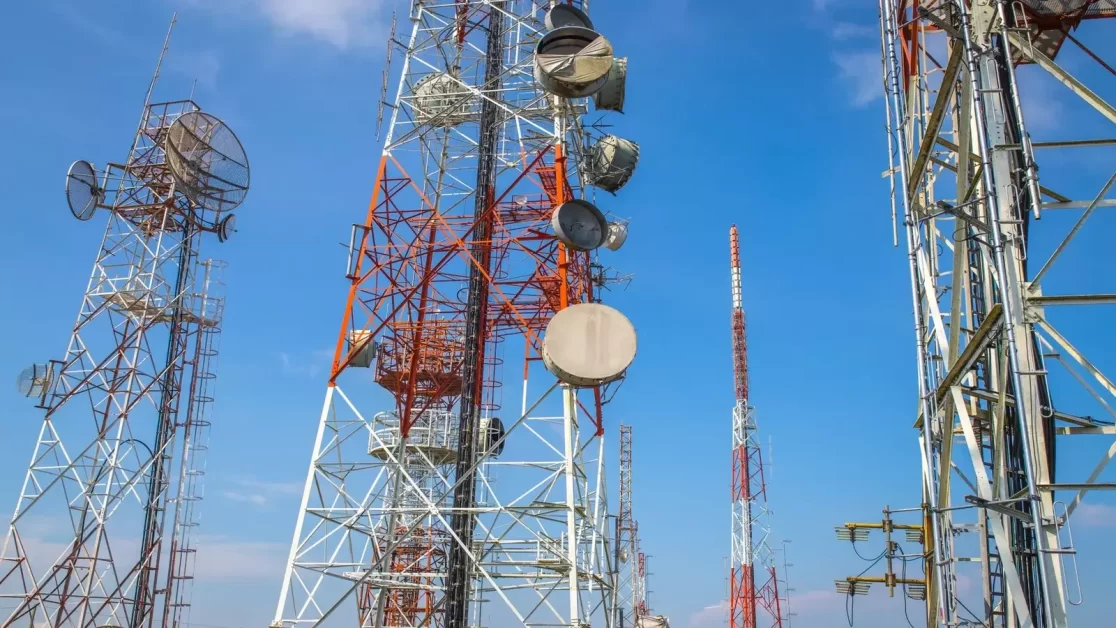
That gap between ambition and allocation is where electricity enters the picture. Telecom infrastructure is often discussed as if it stands alone, but every tower, switching centre, and fibre node sits on top of an energy system.
And in Uganda, that relationship is direct. As Julianne R. Mweheire, the UCC director of economic regulation, content and consumer affairs, explains: “Uganda’s telecommunication infrastructure footprint has largely developed along the power grid because of the need for reliable energy.”
UCC data shows Uganda currently has more than 5,120 telecom towers, but about 1,300 of these are not connected to the national grid.
These sites rely on diesel and solar power, raising operating costs and limiting returns on investment.
“Where power is scarce, telecom operators face high costs with low returns on investment,” she notes.
The distribution of this infrastructure reflects the country’s economic geography. Nearly half of all telecom towers are concentrated in urban and commercially viable areas, while the rest are spread thinly across rural regions where demand and profitability are lower.
Tower companies such as ATC and TowerCo of Africa typically align their tower investments along existing power lines. In off-grid areas, some have built independent energy systems, including solar installations that in some cases extend limited benefits to surrounding communities.
Mweheire’s analysis indicates that each telecom tower consumes an average of 3,800 kilowatt-hours of electricity per month, costing about UGX 2.8 million.
The absence of grid connections for more than 1,300 towers translates into an estimated UGX 42 billion in lost annual electricity sales for the power sector.
“Communication infrastructure should be viewed as an anchor for guaranteed power demand and revenue,” Mweheire argues.
Once a country approaches near-universal population coverage, the economics of digital expansion stop being driven mainly by spectrum and tower count.
 Ugandan Banks Reject Sovereignty Bill, Cite Seven Grounds
 They are driven by operating costs, reliability, and the ability to power the network cheaply enough to make usage affordable.
GSMA’s report pushes directly into that territory. It notes that the policy environment must address the underlying barriers to coverage and quality of service, including the energy challenge.
It also finds that if Uganda revised some coverage rules and enabling policies, 4G population coverage could rise from 96% to 99% by 2030 more cheaply, while adding four million unique mobile internet users.
Affordability, then, is not just a consumer issue. It begins upstream in infrastructure costs.
That is why one of the most revealing figures in this story is not about subscriptions or coverage, but about energy management at the tower site.
GSMA reports that MTN upgraded 3,339 cell sites to solar and hybrid clean power in 2024, generating significant monthly savings.
This is where the story shifts from telecoms to infrastructure coordination.
The Budget Committee reinforces this structural point in a different way. It explicitly identifies electricity, transport infrastructure, irrigation, and social services such as education and health as core enablers of growth, placing power not as a sectoral issue, but as a foundational economic input.
In other words, Uganda’s own fiscal planning framework already recognises that digital transformation cannot outpace its infrastructure base.
ITU last-mile assessment makes the same argument from the telecom side. Telecom and energy are still planned too separately, even though power transmission corridors and towers could serve as shared infrastructure for telecom deployment. That matters enormously once you move beyond headline national averages.
The last-mile economics of power and connectivity

MTN Uganda’s network planning experience shows that sites near the grid are cheaper and easier to maintain, while those far from the grid require alternative power solutions that increase costs and slow deployment.
Rural deployment costs are driven largely by tower construction, power, and backhaul, with power emerging as one of the most significant cost drivers in the last-mile expansion model.
Soumendra notes that while operators have regulatory obligations to cover populations regardless of energy source, the presence of grid electricity significantly reduces the sunk cost of connecting an area, reinforcing the economic advantage of grid-connected expansion.
About 58% of existing sites are within one kilometre of the grid, but 91 percent of the new sites needed for expansion are beyond one kilometre, meaning the remaining rollout challenge is fundamentally a last-mile problem in which electricity becomes the dominant constraint.
The economics of that last mile are even clearer when operating costs are considered.
MTN’s cost analysis shows that off-grid sites cost about $55,000 annually to operate, compared to $38,000 for on-grid sites, with energy alone accounting for roughly $25,000 versus $8,000.
From MTN’s analysis, power is not just a component of cost. It is one of the largest cost drivers for rural deployment, shaping both capital investment and long-term operating expenses.
MTN Uganda’s investment is larger in scale, with capex reaching UGX 834.6 billion, or UGX 549.4 billion excluding leases.
This supported 365 new sites and a 52% expansion in fibre to 27,037 kilometres, alongside increases in 4G coverage to 88.6% and 5G to 19%, again primarily concentrated in urban and high-demand areas. Active data users rose to 12 million, with continued growth in fintech usage.
Airtel Uganda’s 2025 results show capital expenditure rising to UGX 252.5 billion, supporting 258 new sites, expanded 5G coverage to 364 sites, and 1,600 kilometres of additional fibre.
All sites are now 4G-enabled, with 5G largely concentrated in major urban centres such as Kampala, Wakiso, Jinja, and Mbale.
The company added 1.4 million data users, bringing its total to 8.7 million, reflecting growing smartphone adoption and data demand.
Much of that expansion, particularly beyond urban centres, still depends on off-grid power systems.
Diesel dependence does not only increase costs. It also introduces operational risks, including supply instability and maintenance complexity, particularly in remote areas.
Since most future sites will be off-grid, these higher costs are not marginal. They are central to the economics of rural expansion.
They also shape the quality and consistency of service that users ultimately experience. “If you solve the quality of power, you will have largely solved the quality of network services,” Mweheire says.

This has direct economic implications, particularly for mobile money services that depend on uninterrupted connectivity. Every outage translates into lost transactions for agents and users alike.
From his side, Soumendra points to the operational reality behind those conditions. The company targets 99.99% network availability, often having to “oscillate between energy sources” to maintain service.
While diesel is not preferred, it remains unavoidable in certain cases. He also notes that power instability is not only a rural issue, but increasingly affects urban areas as well.
This creates a clear gap in user experience between areas that are covered and areas that are sustainably serviceable.
It also reinforces another critical point from MTN’s analysis: as network costs rise, including from the rollout of next-generation technologies such as 5G, the cost per gigabyte is likely to increase, directly affecting consumer pricing.
The Tenfold Growth Strategy makes the broader macroeconomic point in another way. It presents Uganda’s ambition to become a $500 billion economy by 2040 and explicitly states that part of that path is to build a knowledge economy.
But the Budget Committee warns that planned interventions under NDP IV may not be fully executed because of resource shortfalls.
That is a profound clue about where Uganda’s next digital constraint lies. The inclusion story tells the same truth at the household level.
In areas with limited electricity, smartphone adoption remains low, restricting access to digital services such as e-government platforms, financial tools, and information systems.
“Building high-speed communication infrastructure in areas without power risks locking communities out of the digital economy,” Mweheire warns.
The imbalance is also shaping social patterns, with populations increasingly migrating toward areas with better electricity and connectivity.
That means the digital economy’s power problem does not stop at the tower. It travels all the way into the financial lives of households and small businesses.
And this is why the UCC figures matter so much at the start of the story. The market exists. It is large, active, and deeply embedded.
What the numbers do not show on their own, but what the Budget Committee, GSMA, ITU, UCC’s own regulatory insights, and operator realities from both MTN and Airtel collectively reveal, is why that market has not yet translated into deeper, more evenly distributed digital productivity.
The reason is that Uganda’s digital transition has outpaced its infrastructure coordination.
Past policy frameworks have not always aligned the two sectors. Under the National Development Plan III, communications targets were set higher than electricity access, creating a disconnect that is now being addressed.
“Countries that succeed in digital transformation prioritise energy targets above communication infrastructure,” Mweheire says.
Looking ahead, the stakes are rising. Uganda is preparing for next-generation technologies such as 5G, which demand both widespread and stable power supply.
With plans to roll out an additional 1,200 telecom towers over the next three years, the need for coordination is becoming more urgent.
“The communications sector is ready to co-invest with the energy sector to accelerate power delivery,” Mweheire reveals.
The irony is that Uganda’s digital economy increasingly depends on an electricity system that is still undergoing basic repair.
On paper, the country has made significant progress. Installed generation capacity now exceeds 2,000 megawatts, with nearly 98% sourced from renewables, primarily hydropower. Peak demand, at just under 1,000 MW, suggests a system with surplus capacity.
But that surplus does not translate into reliable access.
National electrification stands at about 51.5%, with a stark divide between urban access at 76.4% and rural coverage at just 42.4%. This is the gap UEDCL is stepping into.
After taking over national distribution in 2025, the utility acknowledged inheriting an ageing, overloaded network, with frequent outages, weak substations, and infrastructure operating beyond its functional life.
It is now pursuing a $994 million investment plan focused on stabilising the grid, expanding last-mile connections, and modernising obsolete assets.
At the same time, demand is rising rapidly, and hundreds of thousands of new customers are being added annually.
This reveals a deeper structural issue. The challenge is not only a digital divide, but a sequencing problem in development.
Uganda has built telecom scale, mobile money scale, and policy ambition, but the usefulness of that entire ecosystem still depends on whether electricity distribution is reliable enough at the last mile.
Until those investments translate into consistent, everyday power at the household and small-business level, millions will remain connected in theory but offline in practice.