Uganda has taken a major step in restoring its wildlife heritage after relocating rhinos to Ajai Wildlife Reserve in the West Nile sub-region for the first time in more than four decades.
The initiative is expected to strengthen conservation efforts and expand the country’s tourism potential.
Uganda Wildlife Authority (UWA) recently relocated four southern white rhinos from Ziwa Rhino Sanctuary in Nakasongola District to Ajai Wildlife Reserve in northwestern Uganda. The transfer marks the first internal translocation of rhinos between protected areas in the country.
The relocation forms the first phase of a broader national programme that will see 20 rhinos introduced into Ajai as part of Uganda’s strategy to rebuild its rhino population and restore the species to habitats where it once thrived.
Ajai Wildlife Reserve, located about 40 kilometres east of Arua, historically served as one of Uganda’s rhino strongholds before the animals were wiped out in the 1970s and early 1980s due to poaching, political instability, and habitat loss.
Rebuilding a species lost to poaching
Uganda once hosted both the northern white rhino and the eastern black rhino across regions such as West Nile, Acholi, Karamoja, and parts of the Albertine Rift. However, rampant poaching and years of political instability drove the species to extinction in the country’s wild landscapes.
The last rhino recorded in Uganda was killed in 1983 in Kidepo Valley National Park’s Narus Valley.
Efforts to restore the species began in 1997 with the establishment of Rhino Fund Uganda and later the creation of Ziwa Rhino Sanctuary in 2005 as a protected breeding ground.
From just six founder rhinos introduced from Kenya and the United States, the sanctuary’s population has grown to more than 40 animals under intensive monitoring and protection.
The four rhinos relocated to Ajai are being closely monitored as they adapt to their new habitat. The remaining 16 animals are expected to be moved in phases once the first group stabilizes.
Conservationists say establishing multiple rhino populations across the country is critical to reducing risks such as disease outbreaks, natural disasters, or habitat pressure that could threaten a single population.
Why the relocation was necessary
According to the UWA, the relocation was necessary to support long-term conservation goals.
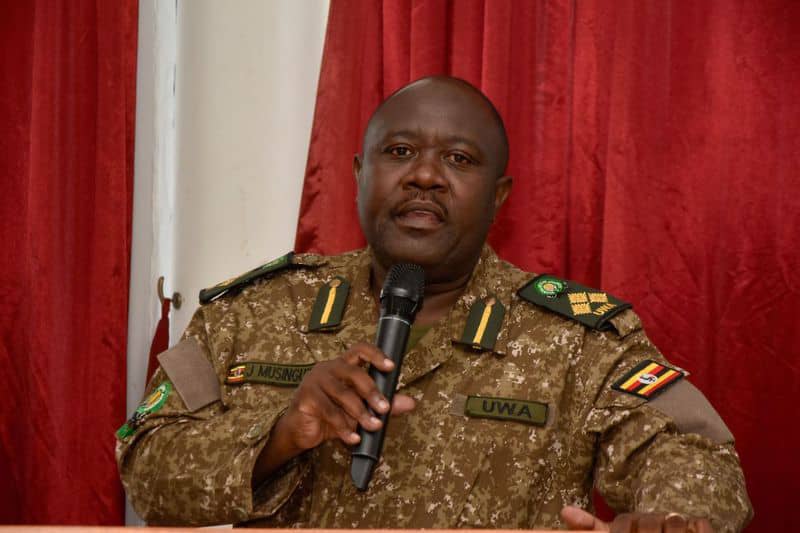
UWA Executive Director James Musinguzi, said the move aligns with strategic priorities identified by the Ministry of Tourism, Wildlife and Antiquities during its 2025 management retreat.
“One of the key priorities was the reintroduction of rhinos into the wild. Rhinos are part of the ‘Big Five’ animals and are major attractions for tourists visiting Uganda,” he said, adding that the reintroduction programme is not limited to the southern white rhino.
“The eastern black rhino, which is indigenous to Uganda, is also being reintroduced. These efforts are aimed at diversifying tourism products and services,” he said.
Another factor behind the relocation is the ecological limit at Ziwa Rhino Sanctuary.
“As a sanctuary, Ziwa has a smaller home range compared to national parks and wildlife reserves. Once it reaches its carrying capacity, it cannot sustainably accommodate additional rhinos,” Musinguzi explained.
Relocating the animals to larger conservation areas allows them to expand their natural range, breed more freely and support population growth.
Strengthening Uganda’s tourism offering
The return of rhinos to Ajai Wildlife Reserve is also expected to strengthen Uganda’s tourism competitiveness.
Rhinos are part of Africa’s iconic “Big Five” animals; lion, elephant, leopard, buffalo and rhino, which are among the most sought-after species for international safari tourists.
For years, Uganda’s national parks lacked one member of the Big Five because rhinos were confined to Ziwa Rhino Sanctuary, a privately managed conservation area rather than a national park.
Reintroducing rhinos into protected ecosystems such as Ajai Wildlife Reserve moves Uganda closer to offering a complete Big Five safari experience across its national parks.
Reviving tourism in West Nile
Ajai Wildlife Reserve has historically attracted far fewer visitors compared to Uganda’s flagship national parks such as Murchison Falls, Queen Elizabeth and Bwindi.
The reserve spans about 148 square kilometres of wooded savannah, wetlands and papyrus swamps, supporting wildlife such as Uganda kob, hippos, leopards and sitatunga antelope.
With rhinos now added to the ecosystem, conservation planners expect Ajai to emerge as a new safari destination capable of attracting both domestic and international tourists.
Beyond wildlife tourism, the initiative carries symbolic importance for the West Nile region, which has experienced decades of conflict and economic marginalization.
By positioning Ajai as a tourism asset, government hopes to stimulate local economic activity and promote more balanced regional development.
Dr Musinguzi said the economic impact could extend beyond conservation.
“Diversifying tourism products strengthens revenue generation, which in turn supports national economic growth. Increased tourism earnings enable government to provide better services to citizens,” he said.
After more than 40 years of absence, the return of rhinos to Ajai Wildlife Reserve signals not only the revival of a lost species but also the emergence of a new frontier for conservation and tourism in northern Uganda.