As Uganda heads into the much-awaited Presidential and Parliamentary elections this Thursday, January 15, 2026, the country will be voting in a process that has been financed through one of the largest single public-sector undertakings outside the annual national budget.
The Ministry of Finance’s Pre-Election Economic and Fiscal Update issued in December 2025 noted that government appropriated and released a total of UGX 1.116 trillion to institutions responsible for implementing the 2026 electoral roadmap.
By November 2025, UGX 838.16 billion had already been spent on election-related activities.
These figures place the 2026 elections among the most financially significant public programmes currently under implementation by the state.
How the elections were financed
The financing of the 2026 elections was structured over three financial years, beginning in the 2023/24 financial year and continuing through the 2024/25 and 2025/26 financial years.
In the 2023/24 financial, Parliament approved UGX 76.12 billion for election-related activities.
This allocation rose significantly to UGX 312.4 billion in the 2024/25 before peaking at UGX 728.2 billion in the 2025/26 financial year, the election year.
Cumulatively, these appropriations brought the total election envelope to UGX 1.116 trillion, all of which, according to the Ministry of Finance, had been fully released to the implementing agencies by late 2025.
This multi-year financing framework enabled electoral institutions to plan procurement, logistics, staffing and operations of polling day, embedding election-related expenditures within successive national budgets.
Which institutions received the funding
Election financing is concentrated in three public institutions. Of the total amount released, the Electoral Commission received UGX 838.709 billion, the Uganda Police Force received UGX 263.031 billion, and the Uganda Prisons Service received UGX 14.979 billion.
Together, these institutions account for the entire election budget.
By November 2025, the Electoral Commission had spent UGX 606.588 billion, while expenditure by the Uganda Police Force stood at UGX 222.828 billion.
Over the same period, the Uganda Prisons Service had spent UGX 8.745 billion.
These expenditures cover the operational requirements of the electoral process, including voter registration, procurement of election materials, logistics, security deployment, personnel costs, polling operations, and post-poll preparations.
Election spending in the wider fiscal context
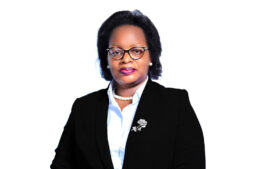 Driving Transformation: Mercy Kainobwisho’s Five-Year Turnaround Has Transformed URSB From Legacy to a Digital Powerhouse
The scale of election financing coincides with a period of fiscal pressure. In the first quarter of the 2025/26 financial year, government recorded a fiscal deficit of UGX 4.16 trillion, which was nearly 30% higher than originally planned.
A combination of weaker-than-expected revenue collections and higher capital spending drove the increase.
During the same period, domestic revenue collections fell short of target by UGX 392 billion, with customs revenue underperforming by UGX 202.7 billion, partly reflecting lower import volumes and fuel consumption.
Despite these pressures, funding for election-related activities was released in full as approved by Parliament, underscoring the priority accorded to the electoral process within the fiscal framework.
How election funding compares with other government priorities
Election spending also stands out when compared with allocations to other sectors during the same period.
In the first quarter of the 2025/26 financial year, the government released UGX 20.5 billion for tourism development, UGX 26 billion for mineral development, including oil and gas, UGX 139.13 billion for science, technology, and innovation, and UGX 215.28 billion for agro-industrialization.
Over the same period, cumulative election-related expenditure had already reached UGX 838.16 billion, illustrating the relative scale of the electoral programme within the broader national expenditure profile.
Elections and economic stability
The Ministry of Finance has stated that the objective of the fiscal and economic framework for the financial year 2025/26 is to preserve macroeconomic stability during the election period while sustaining economic growth.
Government is targeting 6.6% GDP growth in the financial year and has positioned the conduct of elections as part of the broader environment necessary to maintain investor confidence, economic continuity, and orderly public administration.
Within this framework, election financing is treated as a necessary component of maintaining stable political and economic conditions during a sensitive period in the national cycle.
What the figures indicate
By the time voting begins, the majority of financial resources allocated for Uganda’s 2026 elections will already have been utilised, with the remaining balance covering the final stages of voting, tallying, dispute resolution, and post-election administration.
From a public finance perspective, the figures indicate that the 2026 elections constitute a major, fully financed government programme that has been implemented alongside Uganda’s wider economic and fiscal operations.