
Josephine Olok’s father wanted her to do something like engineering, but her love for tech and computers told her different things.
She had an in-depth desire to work with machines and to create and innovate, which called her to technology.
“I was drawn to STEM from a young age because I loved math and sciences. I had a fascination with technology and problem-solving,” she says.
And while her father’s hopes were dashed, he ultimately empowered her, which speaks about the power of family support in achieving dreams.
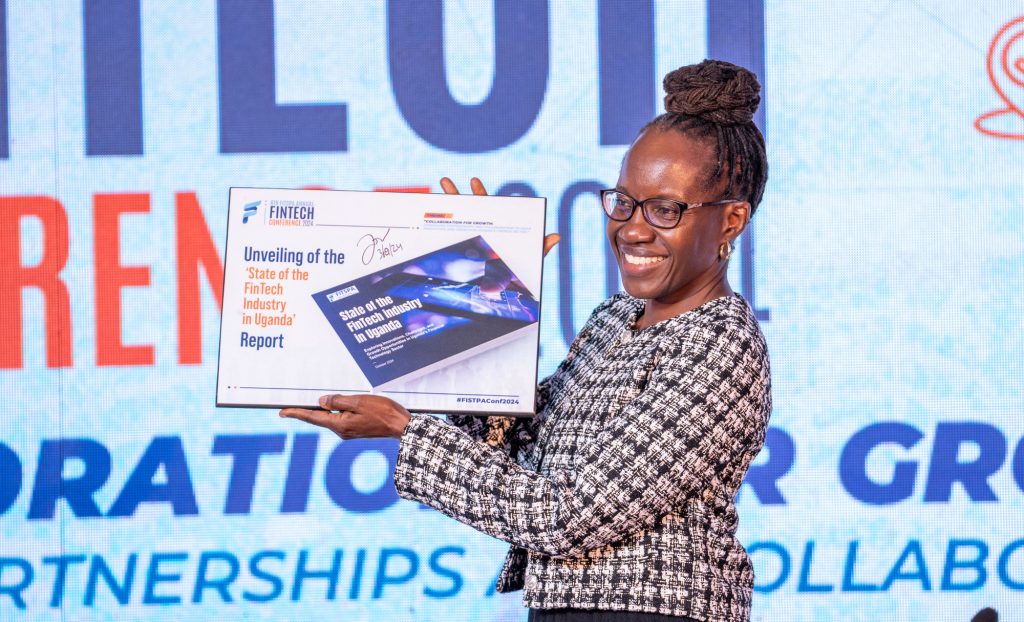
“I am currently the director and co-founder of LumJo Consultants, a company established to address the gap in fit-for-purpose, locally available, developed, and supported software,” she says.
The birth of LumJo Consultants
In 1995, when the company was first established, Ugandan-made software was limited.
This was mainly due to the limited access to capital, insufficient incubation ecosystems, brain drain, and a general lack of awareness about software development.
So, what powered her to believe that there was hope at the end of the tunnel?
“We were software enthusiasts, and we believed that the demand for locally developed and supported software would catch on,” she says.
That, coupled with ecosystem maturity, government initiatives, private sector investment, and IP protection, has created more fertile ground for growth.
Today, we see more Ugandan-built software, and Olok says there is a rising pool of talented developers (often self-taught or emerging from local incubators).
That is not forgetting an increased demand for localised tech solutions addressing unique challenges, as well as greater access to internet and mobile technology.
As one interested in growing Ugandans beyond coding to feeding software demand, Olok says LumJo emphasise a holistic, problem-solving approach to tech product development.
“Our developers understand client problems before proposing technical solutions, focusing on user research, interactive design, and sustainable deployment to build reliable applications.
We also provide mentorship on business model development and user experience design, ensuring that the technical solutions are not only robust but also viable and user-friendly,” she says.
The goal is to empower developers to think like entrepreneurs, creating sustainable products that truly address local Ugandan challenges.
The struggles of Uganda’s tech sector
However, Olok says intellectual property continues to plague the market, yet that’s the only way a developer continues to earn from their labour.
Therefore, she and the team prioritise proactive contractual legal agreements, including confidentiality agreements and nondisclosure clauses, clearly outlining ownership and usage rights from the outset.
“We have found that building a strong community around our solutions often provides the best defence. We also advocate for stronger IP frameworks through industry engagements,” she says.
And just when the developers think they have got it all under wraps and ready to fly, artificial intelligence is here to disrupt the operation cycle.
But Olok is quick to remind us that AI is not a threat but a significant opportunity for Ugandan developers.
“The threat lies not in the tech itself, but in being passive consumers. We must become creators, adapting AI to our realities to prevent deepening digital divides,” she says.
Therefore, Ugandan developers can leverage AI to build solutions tailored to local challenges, contexts, and languages in sectors like agriculture, healthcare, education, and financial inclusion.
These are areas often overlooked by global AI.
Advocacy at work
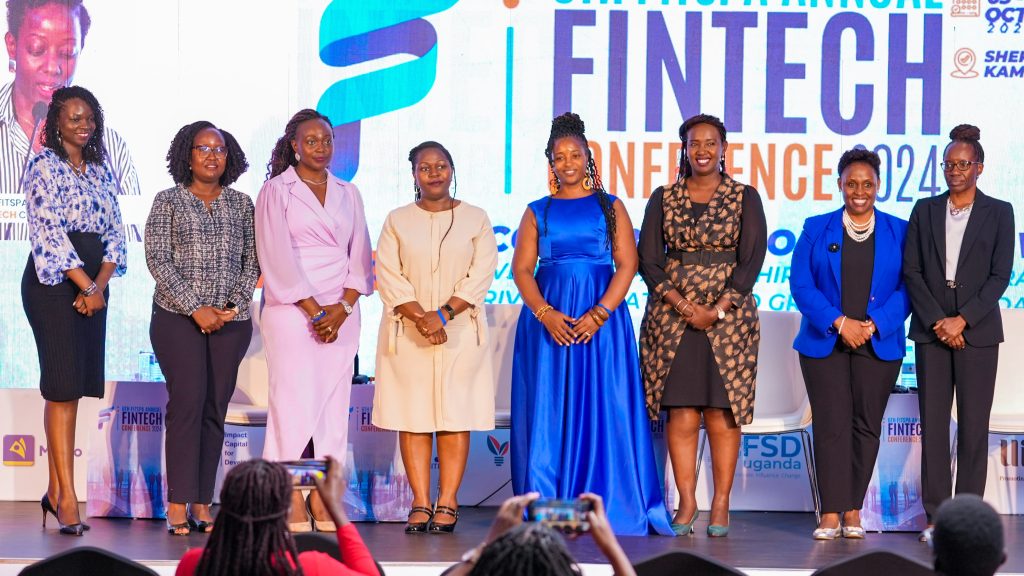
Olok is a firm believer in working through challenges to improve lives, and that is part of what she did during her tenure at FITSPA.
Tackling critical challenges such as the regulatory environment, access to funding, investor readiness, and talent was part of her contribution to the space.
“The FinTech ecosystem has seven regulators, and many Fintechs are multi-regulated.
 Five Years of Ambition: MTN Caps Strategy Cycle With Strong Growth
Therefore, we worked with regulators to streamline complex compliance and advocated for balanced policies.
We facilitated partnerships and training to enhance operational and governance capabilities, building trust with investors and customers,” she shares.
However, a streamlined regulatory system is useless without ways to capitalise the talent.
Therefore, Olok also contributed to connecting Fintechs with investors to improve access to capital and collaborated with institutions to develop relevant skills.
“We also fostered collaboration and knowledge sharing, including a community for FITSPA Women, to address shared challenges,” she says.
Juggling yet sane
With several hats to wear, hence several responsibilities, one wonders how she does it. She says it takes understanding what is expected of you and doing it without micro-managing your teams.
“In the boardroom, the focus is on strategic oversight, governance, and risk management, which requires me to stay updated on market trends and regulatory landscapes through industry reports, executive training (AI, ESG, risk, and cybersecurity governance), and networking.
For tech work, I dedicate time to personal learning, experimenting with new tools (especially AI), and collaborating with my team at LumJo to stay current with emerging technologies.
Both roles complement each other, requiring deliberate, continuous learning,” she says.
Lessons
Olok has worked in different spaces, mentored many people, and begun a company that powers tech growth in Uganda.
Surely, she has garnered lots of experience and she says empowerment through practical application is powerful.
“Seeing young developers apply concepts to create solutions and nurture innovation has been incredibly rewarding,” she says.
“I have learned that patience, resilience, and consistency are essential; growth stems from courageous action, iterative problem-solving, and learning from setbacks. Ultimately, leadership means serving others and enabling them to thrive.”
For the tech woman…
Olok says they should start where they are. “Don’t wait to feel ready. Find a problem that interests you and try to solve it with technology, no matter how small,” she says.
That is followed by developing strong technical and business skills as you need both to develop a product and sell it. Then, you must build a supportive network, including mentors, as they will advise you, connect you to opportunities, and more.
But you must never be afraid to advocate for yourself and your ideas because you are your greatest cheerleader.
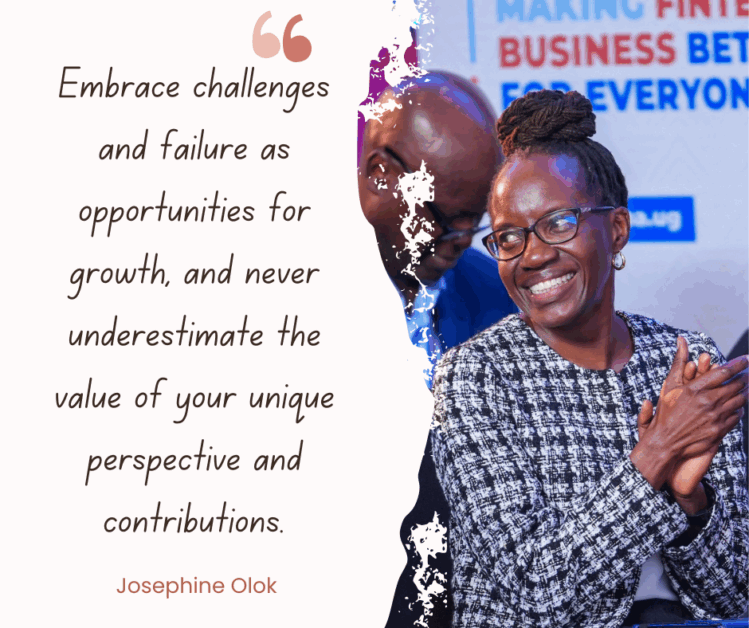
Embrace challenges and failure as opportunities for growth, and never underestimate the value of your unique perspective and contributions.
She reminds them that tech is fast-changing and an exciting place to be in. “Don’t be intimidated; you have every right to belong,” she says.
Who is Josephine Olok?
She is a board chair, non-executive director, committee chair, board audit and risk committee member, director, and co-founder.
Olok has 15 years of board-level experience across public and private sectors with particular experience in fintech, banking, multimedia, insurance, manufacturing, oil & gas, and software industries.
At the executive level, Olok has over 25 years of experience, where she delivered and implemented IT business strategy and digital transformation projects.
This is with entities like Tullow (Kenya, Uganda), Barclays, Equity, Posta, Africa Online, United Nations World Food Programme (Sarajevo, Kampala), Bank of Uganda, and ICL Uganda.
Olok supports and mentors women and girls to encourage them to pursue STEM careers and is a Project Girls for Girls mentor.
She also volunteers in education projects as an IT project manager. As a member of the UK Commonwealth Alumni Advisory Panel, Olok provided input to strategy to support Commonwealth Scholars.
The wife and mother of two is also a published poet who enjoys reading, walking, and playing tennis. “Ultimately, my drive comes from serving people and communities using technology,” she says.