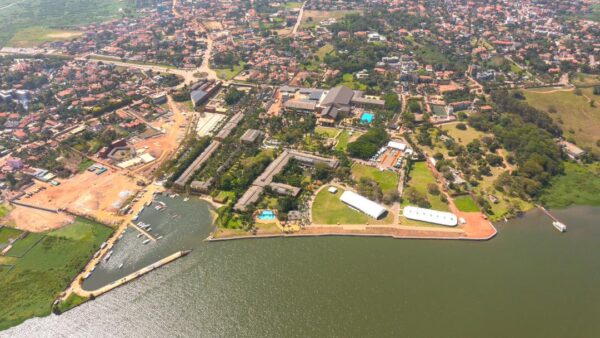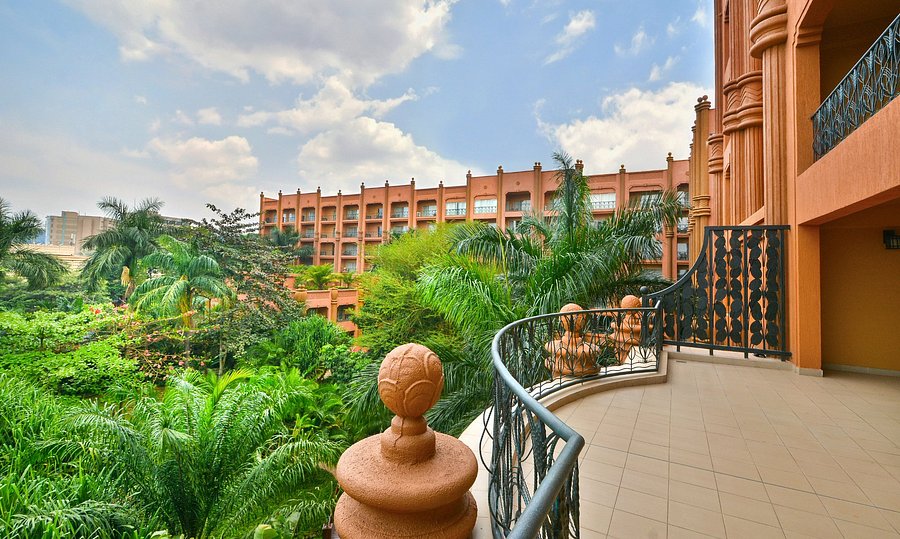
Nile Hotel International, a government-owned company that holds valuable land and buildings mostly for leasing purposes – including the spot where the five-star Kampala Serena Hotel sits — is making money.
But not enough to impress everyone. In fact, its slow pace is starting to raise eyebrows.
On the surface, things look good: Nile Hotel made a profit of UGX1.029 billion after tax in the year ended June 2024 and plans to pay shareholders more — UGX271.6 million in dividends – up by 70% from the previous year.
A nice bounce back after Covid-19, it seems. But look a little closer, and the shine starts to fade.
The company’s profit didn’t come from doing more business — it came from cutting costs.
Nile Hotel reduced its expenses by 30%, from UGX1.98 billion to UGX1.43 billion, while revenue only grew by 9%.
That pushed its operating margin up to 54% from 30% the year before.
Impressive at first glance — until you realise it’s not growing, but just spending less.
Auditor General Edward Akol, says Nile Hotel is using a smaller chunk of its income to keep the lights on, which is another way of saying: this company is slimming down to stay afloat.
Then there is another issue – asset productivity. Nile Hotel sits on prime government property, yet its return on assets was just 0.62% — just up from 0.36% the year before.
In plain terms, it’s not making much money from the valuable assets it owns.
Nile Hotel management agrees, but says it is working with the hotel operators to bring in more income, and has started a study to see how it can invest for the long term.
From margin to mirage?
The margin widened from 30% to 54%, driven mostly by cost-cutting, not business growth — something the Auditor General praised but also flagged.
While the margin widened, the business didn’t. This performance was more about austerity than agility, a reflection of tightened belts rather than expanded vision.
“The company is using a lower proportion of its revenues to cover operating costs,” which is good – but those revenues themselves are stagnant or overly dependent on passive streams.
And therein lies the rub: Nile Hotel’s core operations hinge on a concession model — it leases its premises to a private operator (Serena Hotels) and earns income from that.
There’s little evidence of new income-generating ventures, capital investments, or strategic innovation.
The business is surviving on rent, not reinventing itself, more like maintaining the status quo — “winning by default, not by design.”
In a post-Covid world where agility and reinvention are the currencies of sustainability, Nile Hotel’s margin success looks less like a bold leap forward and more like a conservative shuffle.
It may be trimming fat — but it’s not building muscle.

The asset efficiency puzzle
Return on Assets (ROA) — arguably the clearest window into value creation — tells a far less flattering story.
For the year under review, Nile Hotel posted a ROA of just 0.6192%, up from 0.3654% the year before, a marginal uptick of 0.003%, but still well below the required return, as explicitly stated by the Auditor General.
To put it in concrete terms: for every UGX100 million tied up in assets, the company is generating less than UGX620,000 in profit — a performance that borders on financial idling.
And this is no ordinary portfolio of assets. We are talking about prime public real estate in central Kampala — such as Serena Hotel, one of Uganda’s flagship hospitality brands.
Yet the yield from these assets remains startlingly underwhelming.
“Nile Hotel is not making enough income from the use of its assets.”
That’s more than a fiscal red flag — it’s a strategic indictment.
What this signals is a company sitting on gold but mining dust. The infrastructure — built with public funds and envisioned as part of Uganda’s long-term tourism strategy — isn’t being optimized.
Instead, it functions more like a passive holding, quietly collecting lease payments rather than exploring how to sweat its assets, grow value, or drive tourism-linked economic activity.
And in an era where asset-light models are outperforming sluggish incumbents, Nile Hotel’s capital looks, in essence, like dead weight disguised as stability.
Its management acknowledges the gaps and points to a feasibility study and long-term investment ambitions.
Liquidity: safe but static
Nile Hotel’s liquidity ratio — the classic barometer of short-term financial health — rose modestly from 1.097 to 1.322. That places the company just above the minimum desirable range (1.2–2), signaling it can meet its short-term obligations without resorting to external borrowing.
On the surface, that looks like a win. But scratch beneath the decimal, and a different story emerges.
This is not the liquidity of a nimble enterprise — it’s the liquidity of a conservative landlord. Nile Hotel’s model is built around predictable, passive revenue from concession fees.
The Auditor General attributes the uptick in current ratio largely to a slight reduction in current liabilities — from UGX6.104 billion to Shs6.092 billion — rather than a surge in current assets or operational dynamism.
 Driving Transformation: Mercy Kainobwisho’s Five-Year Turnaround Has Transformed URSB From Legacy to a Digital Powerhouse
In essence, the company’s liquidity is stable not because it’s growing aggressively, but because it’s standing still.
Dividend delight, development delay
A 70% increase in dividend payout — from UGX159.35 million to UGX271.6 million — makes for an impressive headline, particularly for a government hungry for non-tax revenue.
It’s the kind of uptick that looks good in budget speeches and board reports. But beneath the applause lies a looming question: Is this surge in payout sustainable, or is Nile Hotel cannibalizing long-term potential for short-term optics?
The profits that underpin the dividend are real — the company posted a UGX1.029 billion surplus, up from UGX0.927 billion the previous year.
And the Auditor General commended management for the performance.
But crucially, these gains emerged from existing arrangements and cost-cutting, not from expansion or innovation.
As the audit report confirms, the improved performance was driven largely by “reduction in expenses and increased income,” not by any bold new revenue streams or strategic reinvestments.
Nowhere in the report is there mention of capital expenditures, asset renewal, marketing reinvention, or digital transformation — the very ingredients required to position a hospitality business for future relevance and growth.
Instead, the business model remains rooted in a passive concession structure — a financially safe but creatively stagnant arrangement.
If Nile Hotel were a private-sector asset, this dividend might be met with cautious applause — followed by tough questions from shareholders about reinvestment strategy, brand positioning, and long-term return on equity.
In the public sector context, it begs an even bigger question: Is the government extracting value, or simply drawing cash from a slow-burning asset that isn’t being allowed to evolve?
The post-Covid rebound: real or rebound-lite?
The audit on the Holding doesn’t trumpet transformation — it simply notes a “recovery to pre-Covid revenue levels” as if that is, in itself, an achievement.
But that’s a low bar. Recovery is not reinvention. And in a sector reshaped by digital bookings, experience-based tourism, and rising regional competition, catching up to 2019 is not a strategy.
In response to the damningly low Return on Assets (0.6192 percent), Nile Hotel offered familiar comfort: a feasibility study is underway, and the company is “working with its associate and concessionaire” to explore improvements.
But that reads more like administrative inertia than strategic boldness. The company has had nearly two decades of stable lease income, with little exposure to market shocks, a strategic location, and a captive audience.
Yet it is only now — post-Covid — proposing to “study” its options?
The challenge here is that feasibility without urgency is delay disguised as planning.
And for a national asset sitting at the intersection of government ownership, tourism development, and commercial real estate, that kind of indecision carries an opportunity cost.
Uganda’s paradox of public assets
Nile Hotel’s story is not an isolated case — it fits squarely into Uganda’s broader paradox: a country rich in state-owned commercial assets, from hotels to warehouses to factories, yet governed by a public-sector ethos that treats them less like engines of transformation and more like inherited estates.
They earn — but do they innovate? They exist — but do they compete? Nile Hotel, like many of its peers, operates within a framework of minimal risk and modest ambition.
The books are in order. The dividends are growing. But the value creation? That is debatable.
The Auditor General’s report paints a picture of discipline, not dynamism.
The company runs a tidy balance sheet, yes, but not an ambitious one.
There’s no mention of market repositioning, no new ventures, no forward-leaning business models. It is, at best, a caretaker of public assets, not a curator of national opportunity.
And therein lies the deeper challenge. As Uganda races toward goals of industrialization, tourism expansion, and private sector-led growth, the role of state enterprises like Nile Hotel are ones that are looked at those that must evolve.’
One thing is they are mostly quiet earners tucked away in audit reports rather not strategic players — deploying capital aggressively, partnering with innovators, and thinking beyond concession fees to build brands, create jobs, and amplify Uganda’s competitive edge.
The Auditor General’s report is filled with compliments — and, to be fair, many are deserved.
Nile Hotel has kept its books clean, trimmed its costs, and turned a respectable profit.
But read between the lines, and a more sobering message emerges: Nile Hotel is a ‘sleeping giant.’
Its profits are rising — but its pulse is slow. Its margins are widening — but its ambition remains conspicuously flat.
What we see is a company that performs well within the narrow confines of its current model — but shows little urgency to stretch beyond it.
The dividend payout is growing, but the Return on Assets remains anemic. Liquidity is stable, but asset productivity is not.
And while management talks of feasibility studies and collaborative marketing, the underlying question lingers unanswered: What exactly is Nile Hotel’s vision in a post-Covid, investment-hungry, competition-intensified hospitality economy?