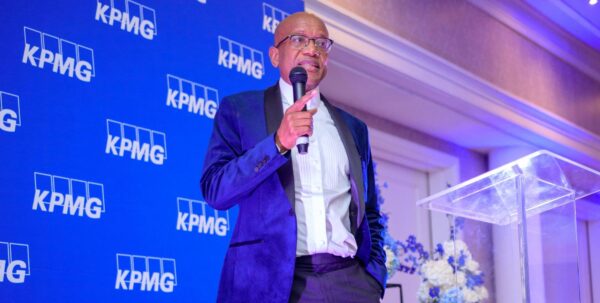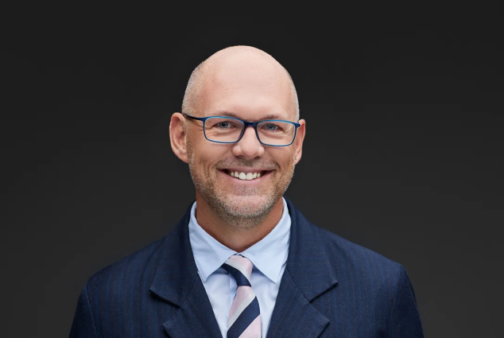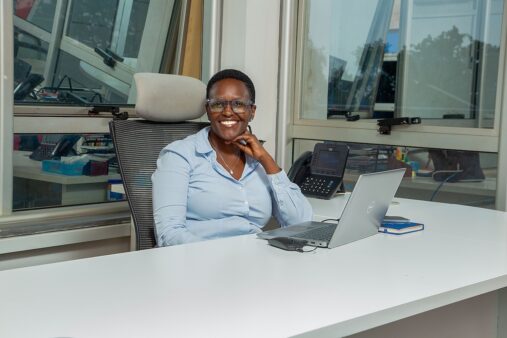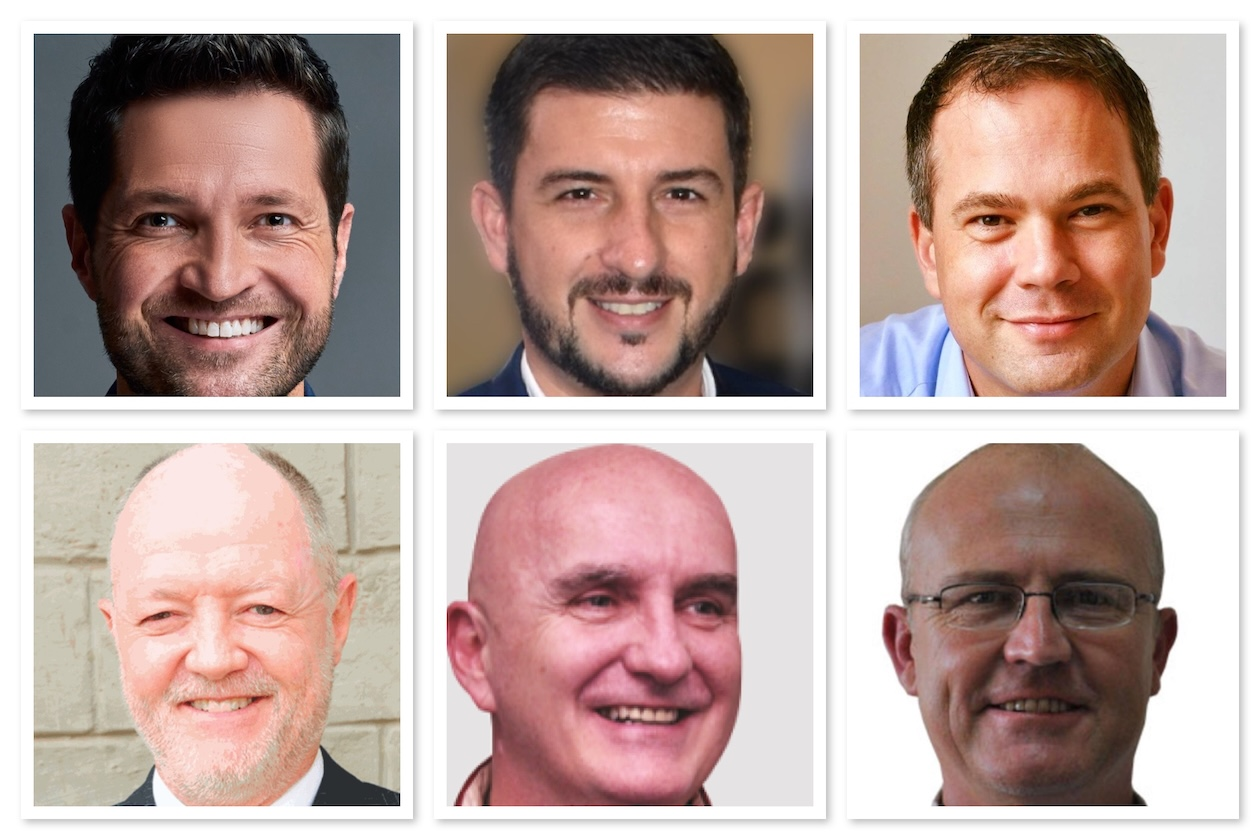
Three years after taking charge at Nile Breweries Limited (NBL), Adu Rando, the Brazilian Managing Director credited with accelerating the brewer’s digital transformation, has been promoted to Global Director, BEES MarketPlace Africa — AB InBev’s flagship B2B e-commerce platform.
He assumes the new continental role in January 2026, giving him time to acclimatise his yet-to-be-announced successor and ensure a smooth leadership transition at Uganda’s largest brewer.
Rando’s elevation is both personal and symbolic. It underscores Nile Breweries’ growing strategic importance within AB InBev’s African portfolio — while also continuing a visible pattern: five Managing Directors in ten years since the global giant acquired SABMiller in 2016.
The Rotational Rhythm of AB InBev
To some, this rhythm reflects agility, mobility, and global alignment — hallmarks of AB InBev’s high-performance culture. To others, it raises questions about continuity, local grounding, and the long-term cohesion of one of Uganda’s most strategic manufacturing entities.
| Managing Director | Tenure | Duration | Ownership Era |
| Nick Jenkinson | 2005 – May 2014 | ~9 years | SABMiller |
| Greg Metcalf | May 2014 – March 2017 | 2 years, 10 months | SABMiller → AB InBev Transition |
| James Bowmaker | March 2017 – March 2018 | 1 year | AB InBev |
| Thomas Kamphuis | April 2018 – January 2021 | 2 years, 9 months | AB InBev |
| David Valencia | January 2021 – January 2023 | 2 years | AB InBev |
| Adu Rando | February 2023 – October/November 2025 (expected) | ≈2 years, 8–9 months | AB InBev |
Under AB InBev’s global management system, executives rotate frequently across regions and functions. The logic is clear: fresh perspectives prevent stagnation, and cross-market exposure sharpens adaptability. In that sense, Rando’s promotion — from Kampala to a continental role — is not an aberration but part of a deliberate talent-mobility model.
Since 2016, Nile Breweries has been led by five successive Managing Directors, each steering the company through a distinct phase of transition and growth. This includes Greg Metcalf, who partly led under SAB Miller and partly under AB InBev.
Bridging Two Eras: Greg Metcalf on Steering Nile Breweries Through Transition
To understand the deeper shifts at Nile Breweries, one must revisit the 2014–2017 transition period, when Greg Metcalf— an industry veteran who had successfully turned around SABMiller’s struggling Ghana business — took the helm in Uganda.
Coming from Ghana, where he had spent five years rescuing a near-bankrupt operation and turning it into a market leader with soaring volumes and a new US $100 million brewery under construction, Metcalf arrived at Nile Breweries to find a very different challenge. “Nile Breweries didn’t need reinvention. But some things needed shaking up,” he recalls, adding: “Profitability was down and market share was trending softer – in spite of a new brewery having been built in Mbarara”.
“From the outset, our focus was on the brands. We determined that brand positioning had become inconsistent, and each brand was struggling to resonate with consumers,” he further recalls.
He and his team began a disciplined campaign to rebuild brand distinctiveness and operational excellence. “We spent a lot of time revitalising brands, so that each had a very distinct identity, and we ensured those identities were strongly supported by an unforgiving quality regime that produced excellent products, each with its own character,” he told CEO East Africa Magazine in an email interview.
“Driving continuous improvement brought out the best in our teams and restored confidence across the business.” Within two years, Nile Breweries had rebounded, delivering handsome gains in market share, revenues, and profitability, and earning regional recognition for its working-capital efficiency under SABMiller Africa.
“Our efforts were very successful. NBL turned the corner to produce handsome gains in market share and growth in revenues and profitability”.
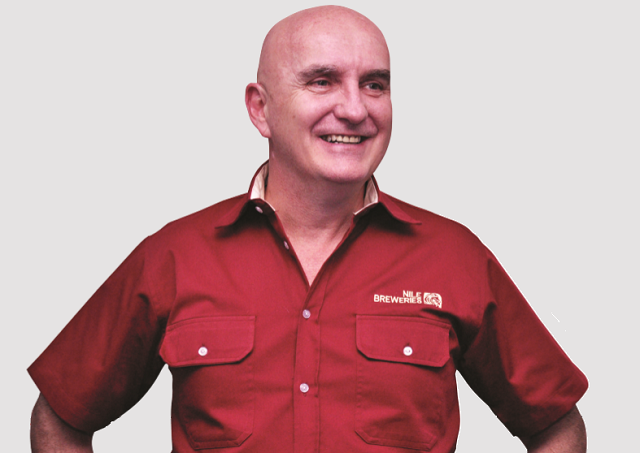
Then came the AB InBev merger — a corporate earthquake that could have destabilised even the best-run operations. Yet, Metcalf remembers, “the Ugandan team was remarkably resilient. Change didn’t rattle them as much as one might expect. They embraced the new structures well. The AB InBev people we met were confident, relatable, and deeply passionate about beer.”
That vantage point — straddling two global brewing philosophies — gives Metcalf a unique perspective on what changed and what endured. “SABMiller’s strategic global philosophy was best captured in the slogan ‘Think globally, act locally,’” he explains. “Local Managing Directors were the primary decision-makers, supported by head offices in Johannesburg and London. We benchmarked globally — Colombia was a favourite — but execution was local, built on trust and empowerment.”
AB InBev’s model, he observed, moved decisively in the opposite direction: a leaner, centralised system where decisions flowed from global or regional headquarters and country teams focused on flawless implementation. The result was greater uniformity and efficiency, but less autonomy.
Metcalf argues that the two approaches naturally produce different leadership rhythms. “It stands to reason that an autonomous local executive team could not be effective if they were replaced every 2–3 years,” he said. “SABMiller would generally work on a 4–5 year cycle for their executive placements — longer if circumstances dictated. This allowed executives to develop deep local insights and a solid relationship with their local teams”.
He likens it to football management. “The most successful managers are those who’ve spent time with their players, fans, and systems”.
He however says, AB InBev’s model seems to be designed for a different game — one built on speed, scale, and cross-functional mobility.
“AB InBev’s centralised operating philosophy allows them to move key people around more frequently. It’s important to understand why this is done. One of the underlying principles AB InBev explained to us was their talent development program. They believe strongly in identifying talent at a young age, and fast tracking those people through a process of multi-skilling. A person might begin a career in accounts, then be moved to sales, then distribution, then marketing, etc. They believe this model helps them build super-performers. You can see how that model suits executive placements of shorter duration. It allows them to keep the talent program moving in a positive direction.”
After reflecting on both worlds, Metcalf offered a characteristically measured conclusion:
“Your questions then ask me to contribute my opinions on the effectiveness of the SABMiller vs AB InBev models. This is hard for me to do. I worked with the AB InBev team for only about 18 months before electing to move on. I had only a brief glimpse into their working model. So I would be foolish to judge them on that basis. As someone who thrived in the autonomous model SABMiller practiced, I certainly enjoyed it. I would, however, note that SABMiller itself had been taking steps towards more centralisation in the couple of years prior to the AB InBev merger. Although the autonomous model worked well, it can be very hard to find talent suited to that level of autonomy. So I do think we may have seen that model evolve even if AB InBev had not come along.
My experience with AB InBev was that they were an organisation full of confidence. They have a very successful track record and believe their vast global footprint generates masses of learnings that can be applied most effectively around the world through a centralised, ‘top-down’ approach. I do not have enough experience with them to comment on whether their model will prove right or wrong in the long term.
In conclusion, I think — and I do stress this is my opinion only — that the more rapid changes in leadership you are witnessing are not causes for concern. I think you are merely witnessing a model that places different demands on the leadership role, and favours mobility of talent over deep local connections.”
A Pattern of Exits: Three SABMiller Veterans, Three Choices to Leave
Despite the resilience mentioned by Greg Metcalf — a long-serving SABMiller executive — he too chose to leave Nile Breweries in early 2017, only months after AB InBev’s global acquisition was completed. His exit was voluntary, a professional decision that reflected both personal timing and the shifting corporate winds.
He was succeeded by James Bowmaker, another SABMiller alumnus who had served the company with distinction across South Africa, Tanzania, and Uganda. Bowmaker had been Finance Director at Nile Breweries from 2011 to 2014, later Sales and Distribution Director, before assuming the top job as Country Director for Uganda and South Sudan under AB InBev from March 2017 to September 2018- according to his linked account. However much of his last four to five months were served alongside Thomas Kamphuis, his replacement who assumed the reigns in April 2018. Despite achieving measurable gains — including a 2% market share increase and the rollout of new route-to-consumer efficiencies — Bowmaker, too, would choose to leave both Nile Breweries and AB InBev altogether after only about a year and a half. His departure, like Metcalf’s, was professionally amicable but symbolically resonant: another seasoned SABMiller manager opting not to continue under the new corporate order.
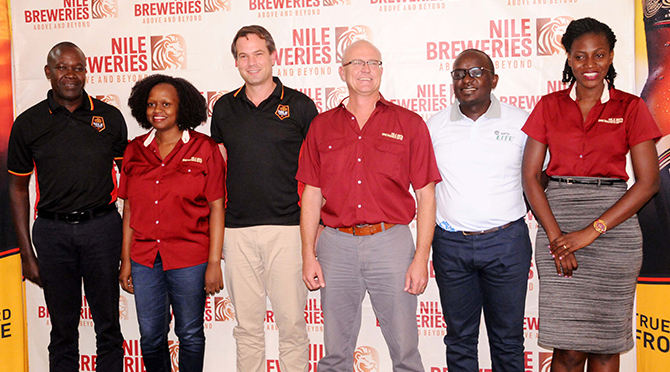
Biwmaker went on to work for Dashen Breweries in Ethiopia and Tongaat Hulett in Zimbabwe before becoming the Managing Director for Coca-Cola Beverages Africa in Kenya in May 2023.
Bowmaker’s replacement, Thomas Kamphuis, a Dutch national and fellow SABMiller veteran, having joined in May 2008 as International Senior Brand Manager, rising to become a Marketing Director for Zambia Breweries (a SABMiller operation) in April 2015. Following the AB InBev acquisition, he in January 2017 became the Marketing Director for East Africa based in Dar es Salaam, from whence he was appointed Managing Director for Uganda and South Sudan in April 2018.
In his 2020 interview with CEO East Africa Magazine, Thomas Kamphuis reflected on the magnitude of change that came with the AB InBev integration. He described the shift as one that demanded “new ways of thinking, sharper discipline, and faster execution,” explaining that “SABMiller was a decentralised organisation while AB InBev is a centralised organisation and this is the biggest difference between the two… we have centralised many processes and roles that are not very market specific.”
 Afreximbank Extends $50 Million Debt Financing to Spiro Electric Mobility Company
He praised the company’s emphasis on innovation and efficiency, noting that “the focus on technology is one of the things that really distinguishes AB InBev… we communicate more than ever but with hardly any time and money lost in travelling… we are also moving very fast on artificial intelligence and machine learning.”
Yet Kamphuis was candid about the cultural shift this entailed. “Culture is a very strong element in AB InBev… our culture is about personal accountability or as we call it ‘ownership’ and about meritocracy,” he said, before acknowledging that “some of the people that struggled with this culture have since left… we have been very careful in explaining the culture and giving people time to adjust.”
He also admitted that the new structure disrupted long-standing networks and ways of working inherited from SABMiller: “I had worked for SABMiller for 12 years before the acquisition and had developed a strong network… many of the people in the head office roles left; many of them were my friends but they were also part of my internal network. So initially the work became harder as I had to rebuild my internal network,” he said, adding, “the shift in accountabilities as a result of the centralisation is quite complex and turned out to be harder than anticipated.”
No wonder, Kamphuis himself eventually had to exit the business and the AB InBev Group in early 2021 — after less than three years at the helm — and return to the Netherlands to lead his own company, Pluim en de Haas BV, marking the third consecutive SABMiller-era executive to leave AB InBev’s system by choice.
Greg agrees with Kamphuis, acknowledging that the early transition years were marked by structural and relational friction.
“You have asked about top-level support during the transition. Without question, there were challenges. I was there at the very heart of the transition,” he recalls. “At that time, we had seen very few AB InBev people take on head office functions in our regional Johannesburg offices. Instead, we had mostly the same SABMiller department heads carrying on the same roles. However, the nature of their roles had changed dramatically. Whereas under SABMiller they were mostly there for support and guidance (because most country operations were autonomous), under AB InBev they became the decision makers. That was a very significant change in approach and mindset.”
He admits this shift in authority “created some challenges in getting decisions made, especially when circumstances required urgency and decisiveness.” What had once been an accessible and relationship-driven support structure suddenly felt procedural and layered.
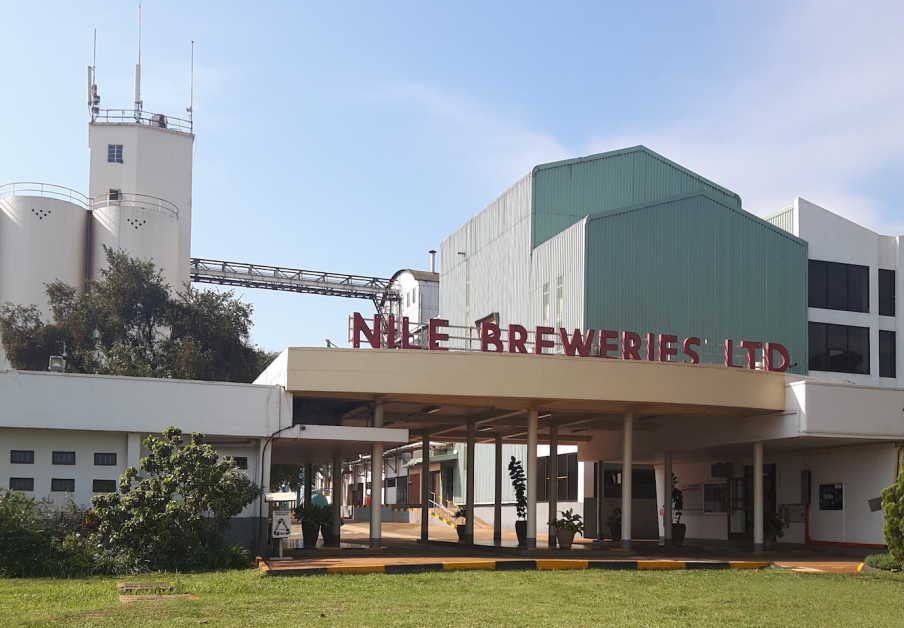
“I experienced first-hand how some of these functionaries struggled with this new dynamic,” Greg adds. “I would imagine this challenge would have eased, and probably disappeared completely, as more AB InBev people moved into the Africa business, and as some of the old SABMiller functionaries learned to be more comfortable with their new roles. However, I do not have first-hand experience in this regard.”
His reflection reinforces Kamphuis’s own admission that relationships at the centre — once defined by familiarity and trust — had been replaced by new hierarchies and decision frameworks. For many transition-era executives, this recalibration of power and process was as disorienting as the broader cultural change itself, highlighting the invisible complexities behind the merger’s human dimension.
No wonder all three SAB Miller veteran executives, Metcalf, Bowmaker, and Kamphuis — one by one left Nile Breweries and the AB InBev Group altogether.
Even other senior managers were forced to leave by this culture shock. One of them is Daniel Ogong, the company’s long-serving Marketing Director, who had been one of Nile Breweries’ most visible and respected local executives.
“I was asked to stay on at NBL, but I refused and decided to leave,” Ogong is quoted in a Daily Monitor interview. “The option for me to leave was informed by the change in the structure of ownership and operations at NBL… NBL was operating autonomously of SABMiller… with the ability for us to make decisions on new products, market growth, and strategy. However, with the new shareholders, that autonomy was taken away.”
The New Era: Leaders Born in the AB InBev System
After the departure of Thomas Kamphuis, Nile Breweries entered a new phase — one now defined less by transition and more by assimilation into the AB InBev culture.
David Valencia, who succeeded Kamphuis in December 2020, represented a distinct generational shift. Though he had begun his career under SABMiller, he had spent almost equal time under AB InBev.. He joined SAB Miller in Ecuador as an intern in 2009, quit briefly and rejoined in June 2013 in Mozambique. By the time AB InBev completed the acquisition of SAB Miller, he in January 2017 was appointed Director, Southern Africa Tech Sales and Route to Market, and then Director Mozambique Sales and Route to Market Southern Africa in August 2017. It is from here that in he was appointed Managing Director of Nile Breweries. By this time, Valencia was already deeply embedded in AB InBev’s systems and philosophy.
Unlike his SABMiller predecessors, Valencia’s trajectory within the group continued upward. After Uganda, he was appointed Director of Commercial Strategy for Africa, based in Johannesburg — a role overseeing sales expansion across 16 markets.
His successor, Adu Rando, who took over in early 2023, was a true AB InBev insider — a Brazilian national who had spent nearly two decades within the group across Ambev and AB InBev, serving in markets as varied as China, Tanzania, and Greater Africa. Rando’s steady climb through the organisation — from Sales Manager in Brazil to Route-to-Market Director for Greater Africa, and eventually Managing Director of Nile Breweries — embodied the quintessential AB InBev leadership blueprint: broad functional exposure, multi-market rotation, and consistent fast and furious delivery.
In October 2025, Rando was promoted to lead AB InBev’s BEES MarketPlace Africa, based in South Africa, marking another step up within the brewer’s global leadership structure. He takes the new assignment in January 2026.
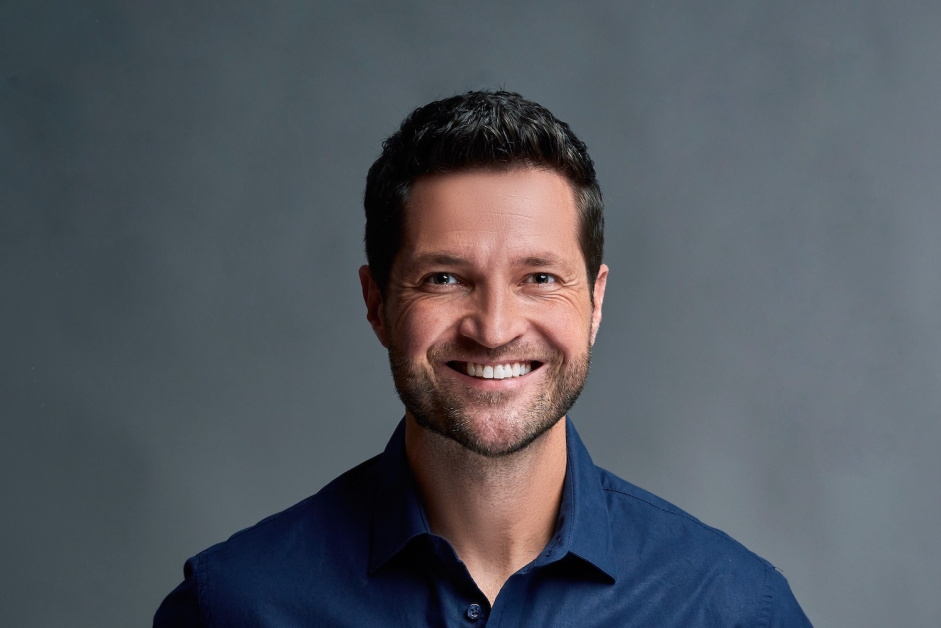
This progression — from Greg Metcalf to Valencia to Rando — captures a generational and cultural inflexion point for Nile Breweries. The early SABMiller-era veterans (Metcalf, Bowmaker, Kamphuis) had each chosen to leave AB InBev’s new culture as they also struggled perhaps to fit in and create better relationships across the networks. By contrast, the new wave of leaders (Valencia, Rando) have thrived within it, reflecting a fuller cultural alignment with the company’s mobility-based talent philosophy.
Governance, Digitalisation, and the New Nile Breweries
Rando’s tenure has been a period of transformation, steering AB InBev Uganda’s operation into the digital frontier.
Under his leadership, the BEES platform digitised more than 80% of Nile Breweries’ orders, giving thousands of stockists and retailers access to ordering, payments, and promotions via mobile. Uganda became one of the fastest-adopting BEES markets globally.
Rando also deepened local sourcing to 99%, linking Ugandan farmers to barley, sorghum, and cassava value chains, and launched GRIT (Growing Retailers Innovatively Together), training more than 1,300 small retailers to boost retail performance and sustainability.
His tenure also coincided with the exposure of a multi-billion-shilling fraud in the marketing department — a scandal that pre-dated his leadership but was investigated and prosecuted under his watch, marking a rare display of transparency in Uganda’s private sector.
A Transition at a Delicate Time
Rando’s upcoming transition comes as Nile Breweries navigates post-restructuring recovery amid a shifting competitive landscape. Uganda Breweries Limited (UBL), its Diageo-backed rival, has appointed Félicité Nson as Managing Director, signalling renewed competition between the two global titans.
For Nile Breweries, the incoming Managing Director will inherit a company that is digitally empowered, operationally lean, and ethically reoriented — but one where stability and local continuity will be essential to sustain momentum.
For Uganda’s brewery sector, the answer may lie somewhere in between. The AB InBev decade has delivered efficiency, innovation, and governance discipline; the SABMiller era provided local depth, relationship capital, and stability.
As Nile Breweries prepares for its next leadership chapter, it stands as both a symbol of transformation and a case study in global integration — one where each Managing Director leaves a distinct legacy, and the story of beer in Uganda continues to blend global vision with local soul.