From the time Uganda hit the first commercially viable oil finds at Mputa-1 well on 6th January 2006, the word on everyone’s lips has been “first oil”.
Cabinet in 2008 passed the National Oil and Gas Policy (NOGP) 2008 which laid out a path for ensuring that Uganda’s oil and gas resources would be dedicated to poverty eradication and the creation of lasting value to society. This would be possible through “high standards of transparency and accountability in licensing, procurement, exploration, development and production operations as well as management of revenues from oil and gas.”
Pursuant to the NOGP, parliament enacted the Petroleum Exploration, Development and Production Act of 2013. The act provided for the creation of two institutions― the Uganda National Oil Company (UNOC) to take care of the commercial interest of Government in the oil and gas sector on the one hand, and the Petroleum Authority of Uganda (PAU) to regulate and monitor the industry. The Ministry, on the other hand, would retain its policy-shaping and licensing role.
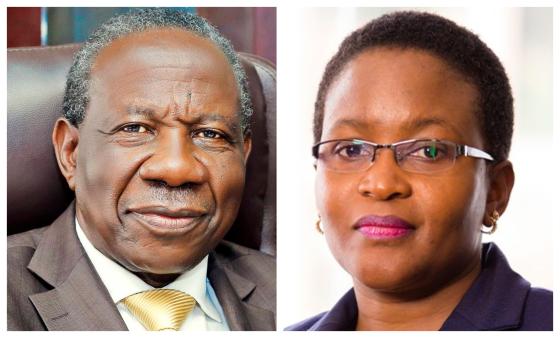
Five years since the creation of the Authority, in October 2015, Ernest Rubondo, the PAU Executive Director, says that the developments in the oil and gas sector are paying off handsomely, even when the oil is yet to flow.
“The wait has been worth it,” Rubondo told CEO East Africa Magazine in a recent interview.
“What we may see as delays, has given Ugandans a good learning curve that has prepared us for both the opportunities before and during the production. All in all, Ugandans have had an opportunity to prepare themselves, and certainly, the Government has prepared itself,” adds Rubondo.
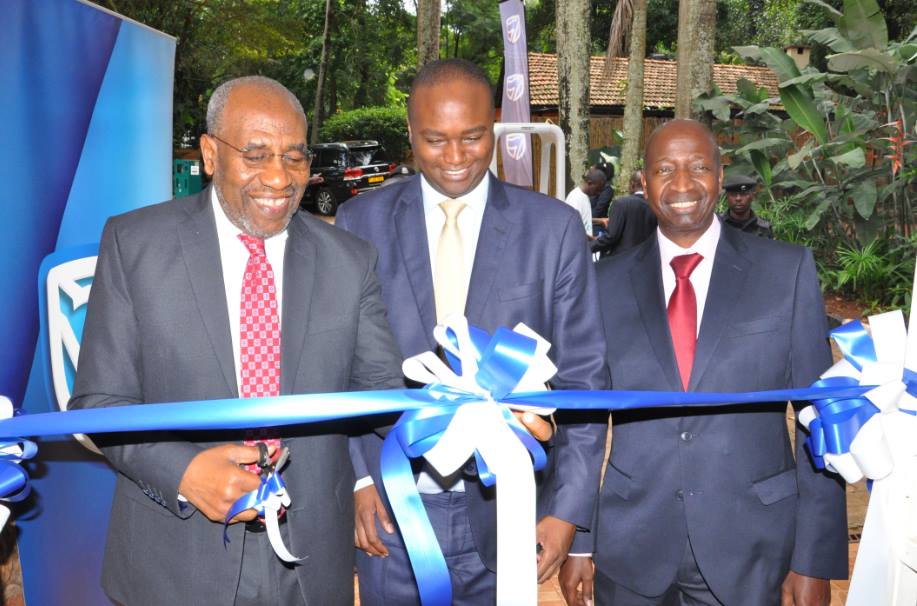
“Many people thought that the value of the oil and gas resources was only the revenue we are going to earn from producing and selling the crude oil, but today, even before the commercialisation of the oil starts, out of the USD3.8 billion that has been spent, Ugandan enterprises have taken in about 28%― Ugandans have been able to provide goods and services worth over USD1 billion. We are now working towards ensuring that the participation of Ugandan business and individuals, increases from 28% to 40% of the USD15-20 billion that is to further be spent before first oil,” adds Mr Rubondo.
“I want to believe that if we as a country had rushed to focus on producing as quickly as possible without setting a strong foundation, this other aspect of value would have been lost,” he concludes.
The above financial and economic benefits, according to Mr Ali Ssekatawa, the Director for Legal and Corporate Affairs at the PAU have been enhanced by a deliberate national content development agenda run by the Authority.
“Oil and gas is a new sector in Uganda. To have Ugandans meaningfully participating in the sector is both a function of policy and a series of conscious hands-on handholding initiatives spearheaded by PAU and our partners,” Ssekatawa says.
“Over the last 5 years, the PAU has actively been involved in the identification, registration, skilling as well as promoting the visibility of Ugandans and Ugandan entities that wanted to be involved or were already engaged in the supply of goods and services to the oil and gas sector. The critical aspects monitored include employment, capacity building, enterprise development, and transfer of technology,” further explains Mr. Ssekatawa.
At the centre of the PAU’s regulatory role in national content development, is the 2017 creation of the National Supplier Database (NSD)- a register of entities and persons with interest to provide goods, works and services to the oil and gas sector in Uganda as well as the National Oil and Gas Talent Register (NOGTR), created in 2019, which brings together prospective employees and employers in the sector.
Today, 1,775 companies, out of which 1,042 are Ugandan, are qualified and registered on the NSD, up from 513 in 2017 when the NSD was established. The NOGTR, on the other hand, has over 2,800 individuals and 108 companies registered.
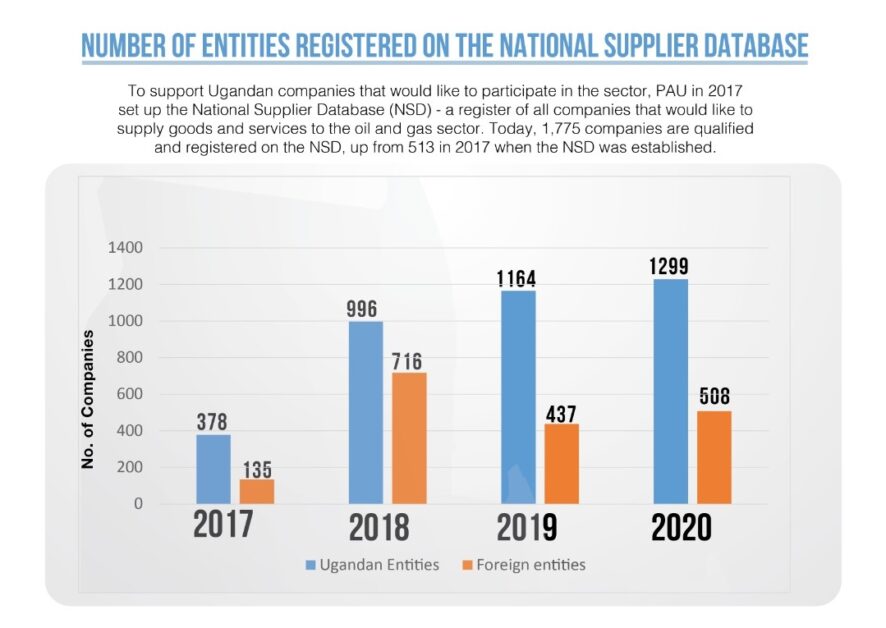
“Out of the USD 198,795,426 spent by the international oil companies between 2017, when the NSD was created, and 2019, a total of USD 84,958,919 was spent in-country. Over this period 2017-2019, indigenous companies have steadily increased their share in the total procurement spend by the IOCs, from 28% in 2017 to 72% in 2019,” Ssekatawa adds.
Ssekatawa also says that over 9,000 employment opportunities have been created directly and indirectly through the IOCs, contractors and other service providers. Out of these, the percentage of Ugandan nationals that are directly employed by the oil companies is 81%, with Ugandans consisting of 59% of all management positions.
“The host communities are prioritised in the supply of especially unskilled and semi-skilled labour that is required during implementation of oil and gas activities in their areas,” he adds.
Improved quality of life, infrastructure, and service delivery by Government
Other than the commercial benefits, Ugandans, especially communities from the Albertine Graben have also benefitted immensely from government and private investments in infrastructure, education, health, skilling, and technological transfer, among others.
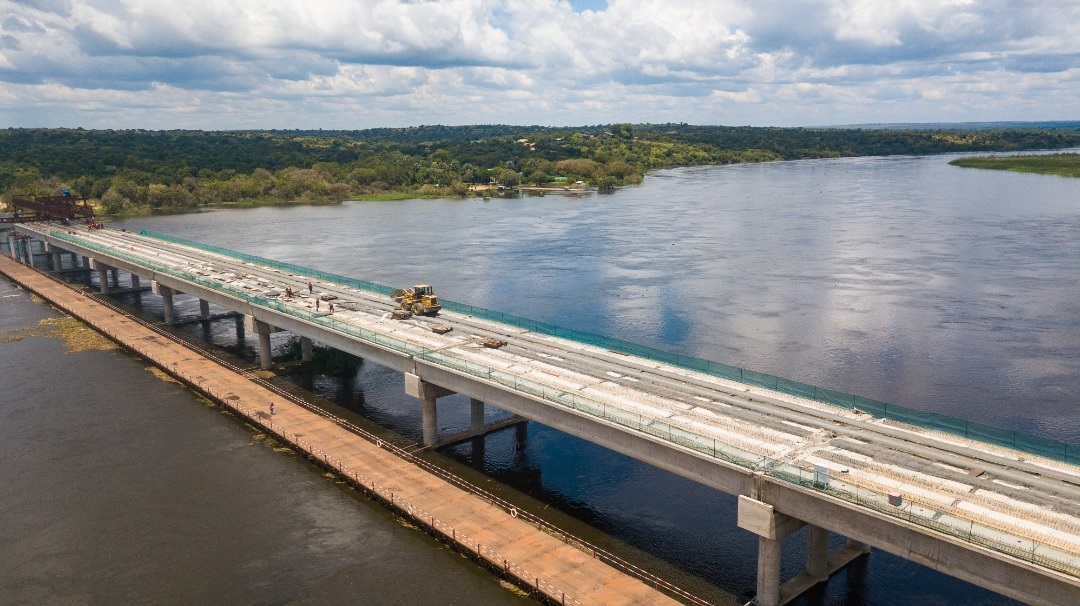
One of the biggest investments by Government, is the USD900 million ploughed into about 700 kilometres of 12 oil roads in the Albertine Graben. The roads are Masindi (Kisanja)-Park Junction; Tangi (Pakwach) junction-Paraa-Buliisa; Wanseko-Bugungu Roads; Hoima-Butiaba-Wanseko; Buhimba-Nalweyo-Bulamagi and Bulamagi-Igayaza-Kakumiro roads (93km). Others are: Masindi-Biiso; Kabaale-Kizirafumbi; Hohwa-Nyairongo-Kyaruseha;Lusalira-Nkonge-Lumegere-Ssembabule; Kabwoya-Buhuka and Ntoroko-Karugutu roads. As of November 2020, progress on these roads was 60%.
Government also plans to upgrade the Ndandamire-Bikongoro-Ngwedo; Kasinyi-Kisomere, Bikongoro-Kigwere; Uduuki-Ngwedo; Kizikya-Kijangi-Kijumbya; Uriibo-Ngwedo; Avogera-Kasinyi; Bikongoro-Kibambura and Uduuku-Avogera roads, all in Buliisa district.

Government is also constructing the Kabaale International Airport in Buseruka, Hoima District, at a cost of USD800 million. On completion, the airport will be Uganda’s second international airport, besides Entebbe International Airport. Other than facilitating the mobilisation of equipment for construction of the Uganda Oil Refinery, the new airport will unlock several agriculture, and tourism opportunities in the entire western region. The airport is currently at 45% completion.
To facilitate further infrastructure upgrades and the enhancement of service delivery, in 2020, the Albertine Graben was declared a special planning zone by the Government. As a result, the Ministry of Lands, Housing and Urban Development has supported nine (9) urban centres to develop physical plans. These include: Wanseko and Biiso in Buliisa District as well as Kigorobya, Kiziranfumbi, Kyangwali, Kabwoya, Butema, Kyarushesha and Buhuka in Hoima and Kikube Districts.
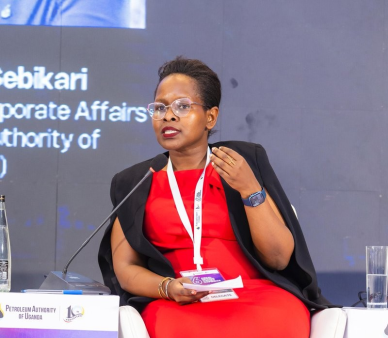
Gloria Sebikari, the Manager, Corporate Affairs and Public Relations at the PAU, in another interview with CEO East Africa Magazine, said that other than transport infrastructure, Government and partners have invested significantly in improving the quality of life in the area by investing especially in social services infrastructure especially water, electricity, education, health and housing.
 Ruparelia Group Wins Key Entebbe Land Case, Clearing Path for the New Mega Speke Resort and Convention Centre, Entebbe
For example, the Government of Uganda through the Ministry of Energy and Mineral Development (MEMD) has relocated Kyapuloni Primary School and constructed two new schools. The schools cater to the needs of communities affected by the Refinery project. The Government also built and handed over forty-six (46) permanent houses for Project Affected Persons (PAPs) under the refinery project. For the Tilenga Project, Total E&P Uganda Limited (TEPU), has completed the construction of 30 resettlement houses for PAPs.
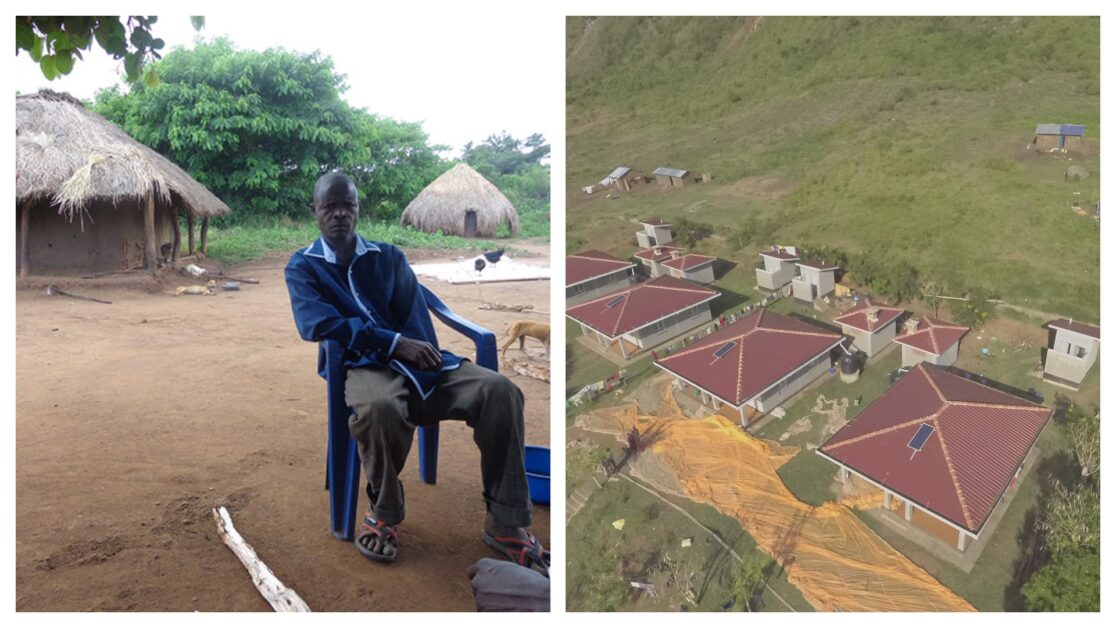
To provide access to clean water, Government in 2017, dug and or rehabilitated 28 boreholes in the villages of Kasinyi, Kirama, Avogera, Avogera, Kigwera NorthEast, Kityanga, Kilyango, Uduku 1, Uduku II, Kijumbya, Kisansya west, Kisomere, Ngwedo farm and Kiyere among others. The rehabilitation of the boreholes improved access to clean water to the host communities in Buliisa District. In addition, the Wanseko-Kirama water project is underway to improve access to clean water for the PAPs and host communities.
Government, through MEMD, has also intensified its efforts of increasing access to electricity. Due to the high demand of electricity that will be required to power oil and gas activities, the Nkenda–Fort Portal–Hoima High Voltage Power Line was constructed. The line connects the high voltage substation at Nkenda, Kasese District, to another high voltage substation at Kabaale, Buseruka sub-county, Hoima District.
Education, Skilling and Technological Transfer
The Government established the Uganda Petroleum Institute, Kigumba (UPIK), following a directive from His Excellency the President of the Republic of Uganda in 2009. UPIK was set up to meet the labour needs of the oil and gas industry, and to maximise participation by Ugandans in the sector. In addition, the institute was established to spearhead the development of highly specialised skills training programmes which are key for the development of Uganda’s economy and the emerging oil and gas sector. The institute undertakes various oil and gas courses in Upstream Petroleum Operations, Downstream Petroleum Operations, Health, Safety and Environment (HSE) and Electrical Maintenance. UPIK is also mandated to train technicians in oil and gas operations and maintenance programmes.
To complement UPIK, the Uganda Technical Institute, Kichwamba, has also been upgraded to an internationally accredited and recognised institute to undertake oil and gas trainings.
Through the Albertine Region Sustainable Development Project (ARSDP), a Government of Uganda programme, at least 600 trainees from thirteen (13) districts of Uganda have been selected to benefit from bursaries for skills training from accredited public and private institutions. Target skills include construction, agro-processing, tourism and hospitality sectors. The districts are Nebbi, Buliisa, Hoima, Nwoya, Masindi, Kibaale, Kakumiro, Kagadi, Kyenjojo, Kabarole, Ntoroko, Bunyangabu and Kiryandongo.
Additionally, seventy-nine (79) youth from Buliisa and Kikube Districts were also helped to acquire skills in various vocational disciplines like hairdressing, welding and metal fabrication, plumbing, bricklaying, concrete practice, and tailoring. The Government, through the Albertine Graben Skilling program has trained over 72 technicians in oil and gas-related courses. The plan is to have more than 200 trained before FID is reached. In addition, different agencies, including World Bank, GIZ (SOGA project), and the Enable/BTC programme have trained and internationally certified a combined 700 technicians.
Livelihood Restoration Programmes
The objective of Livelihood Restoration Programmes is to mitigate the economic displacement impacts related to the land acquisition process. The Government has invested significantly in restoring, transitioning, and improving the livelihoods of the PAPs.
Some of the key restoration programmes under implementation by the licensed oil companies, include:
- One hundred (100) PAPs have been supplied with improved cassava (NARO CASI 1) which is high yielding, resistant to diseases and matures in six (6) months. This has boosted food security and increased food at household level and for sale to increase household incomes. The cassava previously grown by the PAPs would mature in two (2) years.
- Twenty-two (22) PAPs were given two (2) Boran bulls and two (2) Boer goats for crossbreeding. In addition, a demonstration garden was set up for them to learn best and modern methods of crop growing.
- One hundred (100) beehives were supplied to ten (10) PAPs and harvesting and sale of honey is ongoing.
- Twenty (20) PAPs have benefited from the ongoing fisheries development programme. For example, 700kgs of fish were harvested on 5th August, 2020 from three (3) of the twelve (12) cages installed at Kiina village in Buhuka Parish, Kikuube District.
- 40,000 tree seedlings were supplied to forty (40) PAPs.
- 510 PAPs and host community members benefited from business development and financial literacy training. The training helped PAPs plan for the compensation money, avoid wastage and change their mindset on compensation monies.
- 876 host community members and PAPs in Buhuka Parish, Kikuube district participated in HIV/AIDS training and awareness. Fifty (50) community resource persons were also trained to continue with awareness and counselling to prevent the spread of HIV/AIDS and other sexually transmitted diseases.
Efforts by the oil companies and other private sector organisations
Government efforts in social services have also been supported by the oil companies and other partners. For example, to improve accessibility to health services to the people and cater for the population pressure/influx, Tullow Oil Operation Pty (TUOP) built a general hospital in Buliisa District in 2009. The hospital was accredited by the Ministry of Health on 1st July, 2014.
TEPU also plans to upgrade Avogera Health Centre in Ngwedo Sub County, Buliisa District to cater for the increasing population around the Central Processing Facility (CPF) in Kasinyi village. This will also improve access to health services for the host communities and district.

Recently, following the outbreak of COVID-19, Total Group and its two affiliates Total E&P and Total Uganda Limited donated foodstuffs, medical items and support worth US$70,000 to aid in the fight against COVID-19 in Uganda. USD50,000 was specifically directed towards recommended activities at national level while US$10,000 went towards boosting preparedness and monitoring activities in Buliisa and Nwoya Districts, each. The execution of the activities was managed in consultation with the District COVID-19 task force.
To support ongoing efforts by Government to build capacity of manpower in the Albertine Graben, the IOCs, in partnership with the Government, have also promoted education through scholarship programmes for Primary, O-level, A-level and University education. The scholarships target ten (10) girls from Buliisa and Nwoya districts, and fifteen (15) A-level science students from Buliisa, Nwoya, Pakwach/Nebbi and Masindi.
CNOOC Uganda Limited has also, since 2005, through their Best Performers Awards programme awarded 200 scholarships.
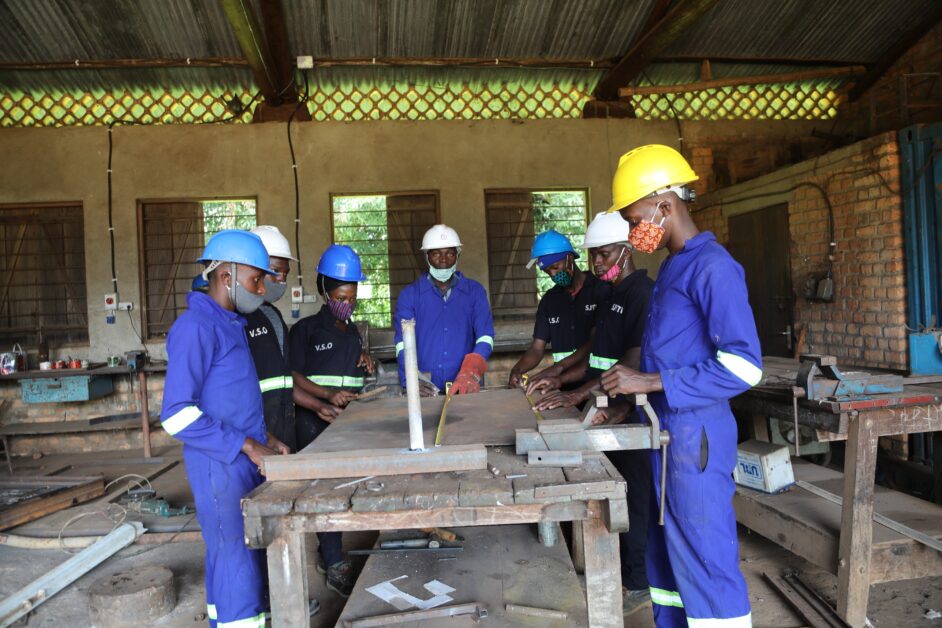
The Joint Venture Partners (CNOOC, TUOP, TEPU) continue to train 50 welders per year, selected from the oil and gas operational areas. All this is undertaken to prepare and empower people, especially in Albertine region for oil jobs.
A resource centre with a computer laboratory was built at the Buliisa District Local Government premises, which promoted technological advancement. In addition, the sector has set up two (2) mini-computer labs with 15 computers each at Buliisa Primary School and Ndandamire Primary School in Buliisa District. This has enhanced the computer skills of the students within the district.
Dr Jane Nambakire Mulemwa, the PAU Board Chairperson, reiterates that oil and gas is a God-given resource that has the potential to turn around Uganda’s social-economic welfare and she is committed to ensuring that PAU delivers lasting value to Ugandans. She also calls upon Ugandans to adequately prepare themselves to maximise benefits from the sector.
“It is the mandate of the Authority to ensure that as many Ugandans as possible do participate,” she says, adding: “My appeal to fellow Ugandans is: organise yourselves, acquire the necessary skills, come together because this is also a very intensive sector, and quite often an individual company may not have all the required resources as individuals to raise the necessary capital and/or skills.”