By Silvia Nyambura
In May 2012, Kolin, a Turkish construction company was awarded a contract to build the Hoima-Kaiso-Tonya road that leads to the oil rich Buliisa district of Uganda.
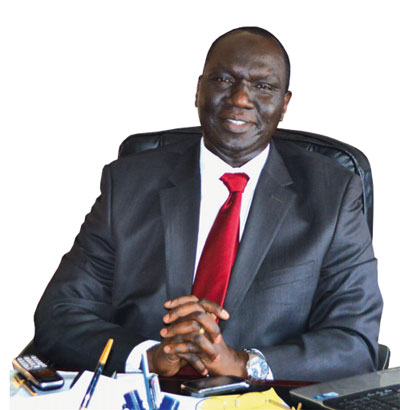
One year down the line, the company’s Country Director, Bruhan Nassur tells The CEO Magazine’s Silvia Nyambura that with one foot in the door, Kolin has its eyes on the region’s opportunities in: energy, port operation, mining and tourism.
Briefly tell me about Kolin Construction Company?
Kolin Construction Company is a subsidiary of the Kolin Group of Companies founded in Turkey in 1977 .The group’s business portfolio includes infrastructure and transportation projects as well as agriculture, energy, housing and industrial plants projects.
Kolin Construction which operates primarily in the construction sector is the driving force of the Kolin group incorporated in Uganda in 2012 having been contracted to rehabilitate the Hoima-Kaiso Tonya road.
Additionally, the group also conducts activities across sectors like energy, port operation, mining and tourism service sectors. Currently we are working in over 8 countries including Turkey, Libya, Serbia, Azerbaijan, Jordan, Georgia and now Uganda.
In the Sub Sahara region we have visited Ethiopia, Sudan, Kenya, Tanzania, Zambia and Rwanda and we are interested in seeing what opportunities these countries have to offer our company.
Kolin is a new company in Uganda, how did you beat off the other companies that have been in Uganda and know their way around the corridors?
We went through the pre-qualification stage in which there were over 20 companies that had been prequalified for the 9 priority roads at the time. Each company had different interests for each of the road projects.
Kolin pre-qualified for 3 roads, the Hoima Kaiso-Tonya, Rukungiri-Kihihi and Nakapiripirit-Moroto roads, but since this was the company’s first project in Sub Sahara Africa, we chose to start with the Hoima Kaiso Tonya road because we did not want to over stretch ourselves.
The decision was made because we wanted to settle down, mobilize our resources and test the market. The bidding stage for this particular road involved 3 pre-qualifying companies and we presented the lowest bid so we got the contract.
Our philosophy is to build for civilization while empowering the people and a good example is that I am a Ugandan heading a multinational company which is what we stand for.
One year down the line, what is the progress?
We are doing very well. We had a few problems with the community but we have a target to finish earlier than the initial stipulated time of December 2014. With road construction there cannot be a measurement scale for how many kilometers or what percentage is covered since everything is done in stages.
The first stage is earth movement which is the most difficult part and I am proud to say we have finished it. We have just begun asphalting which is the second phase of the project and although it is easier than the first phase, it also has several stages. Generally we cannot say a certain percentage is finished but we are supposed to finish the entire project by December 2014.
 The Smartphone Tax Trap: Is Uganda Pricing Millions Out of the Digital Economy?
Is Kolin looking to invest in other roads in Uganda?
We do not have a particular project we are eyeing at the moment but we are definitely going to invest as opportunities present themselves. We have over 120 construction equipment and we do not plan on shipping back.
We have the capacity to do over three jobs at a time, so we are not saying we need particular jobs we are saying as long as there is infrastructure related work; we will be interested to invest.
As earlier said, with infrastructure, Kolin is involved in dam construction, energy, water treatment and so on. Additionally, we invest in trade and tourism and when the opportunity presents itself we will definitely go into it.
Kolin’s philosophy when working in a particular country is to reinvest 80 percent of profits earned in that same country. When we complete our current project, we will look at our accounts to determine how much we want to reinvest in Uganda.
You’ve been accused of delayed compensations. What are you doing about it?
The reality is challenges like this never end even after the project is finished. We are employed by the government through Uganda National Roads Authority (UNRA) so we cooperate and understand their difficulties in solving challenges like this. Currently we have a major compensation challenge but UNRA is doing its best to see that it is solved in the shortest time possible.
What other challenges have you encountered in your first project in Uganda?
The demand for local employment has been a challenge because the kinds of jobs the locals sought at the beginning were jobs they did not have the capacity to do and we took a lot of heat for it. Being our first project, our biggest priority is to deliver good quality work within the shortest time possible which is why we took the decision to bring in foreigners.
Currently we have over 800 people working with us and only 170 of those are foreigners. We are reducing the number of foreigners as we progress by training locals who have shown great potential for example our best machine operators currently are local.
We are pressed for time so we do not have classroom training instead we are doing hands on training. Apart from employing local people, 99 percent of our food comes from the local farmers because as I said earlier most of our workers are local so they eat local food.
The other 1 percent is the cheese and other food consumed by the foreign workers that is not available in Uganda. The rest of the food like vegetables and meat we get locally. We are also working very closely with the Kingdom of Bunyoro to identify opportunities of working together to develop this region.
Do you have any plans to invest in the Ugandan Oil Industry?
Yes. We have companies that we can partner with such that we can be in charge of construction of the necessary infrastructure and they can do the drilling.