By Ronnie Wonder
The Capital Markets Authority (CMA), Uganda Securities Exchange (USE) among others have over a period tried to educate the public on the basics of the stock exchange with the view to luring them to invest in the market. The business community has also been targeted in this awareness campaigns to help them appreciate the role of capital markets as a cheaper source of productive capital compared to loans from Commercial Banks.
In spite of the immense benefits accruing from dealing in capital markets, which act as financial resource mobilization vehicles to permit efficient resource mobilization, private companies and individuals have not yet tapped into the benefit of utilizing this cheaper productive capital.
As of June 2014, the active number of shareholders on the market stood at 40,000 meaning the involvement of Ugandans in placing funds in the securities of public listed companies is still largely ailing.
Meanwhile, business in Uganda’s financial markets continued to grow with CMA reporting transaction values jumped to Ushs 492 billion last year, from Ushs 252 billion in 2013. As of May this year, a new stock exchange – ALTX Uganda – is expected to open shop for trading, a move that could boost business in Uganda’s debt and equity markets.
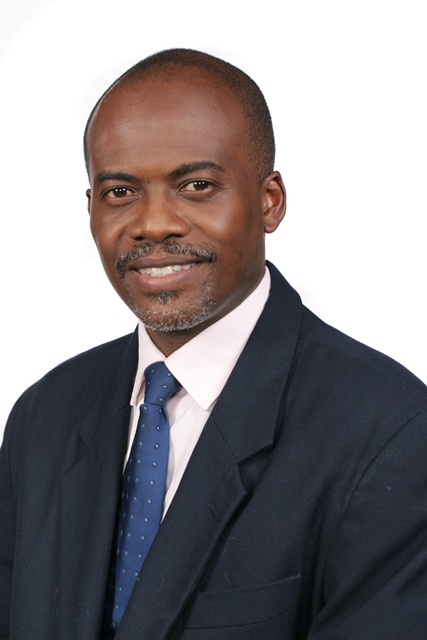
In this interview with The CEO Magazine, Keith Kalyegira, the Chief Executive Officer of the Capital Markets Authority speaks on the challenges and prospects for the industry in Uganda in particular and in the context of the East African Community (EAC).
Despite all interventions, why is the capital markets sector still limping in Uganda? How else is the authority going to increase awareness and scale up calls for investment opportunities available in the lucrative capital markets? What unique challenges does the industry face?
The capital markets sector is growing. We have seen upward growth in all aspects of measure including market capitalization, number of listed companies, turnover at the main exchange, funds under management, and many other areas.
The Authority is specifically focusing on growth for the next 2-3 years and our desire is to see the market capitalization increase to at least 10% of GDP over the next 5-7 years.
We have embarked on a market development campaign in which we are reaching out to Ugandans through speaking engagements, seminars and other alternative avenues like the new media channels, to invest part of their savings in the capital markets.
Our target is to reach out to 20,000 investors by the end of the next financial year. To match this demand, we are also engaging potential issuers, particularly the medium sized firms that need development capital to consider raising long term patient financing from the capital markets.
Besides, the seminars we are organizing, we are continuing to work with stakeholders like the Uganda Investment Authority, Private Sector Foundation Uganda and other business associations and bodies to help Ugandan businesses appreciate the financing opportunities in the capital markets, especially those looking for long term patient capital.
 Letters to My Younger Self: Robinah Siima — “Success Is Quieter, But Richer”
Among items due for harmonization is setting up uniform capital adequacy rules applicable to stock brokers, investment banks, fund managers and all other intermediaries licensed to operate across the region. Will harmonization/convergence save the face of the capital markets industry in Uganda? Besides how will it be pursued with the different levels of development of the EAC partner states’ bourses?
We believe that interconnection of the markets will enable the large institutional investors to view the East African market as one market across which they can invest seamlessly. This should help attract additional capital into our region, thereby increasing the liquidity of the companies listed in our region.
Harmonization of the capital markets is simply part of regional integration; it’s not just about the capital markets but the economic benefit that will arise from an integrated economic sector, which will allow for free flow of labor and capital among other things. ‘Integration does not mean that individual country bourses will be abolished, but rather, that they will be interlinked to allow for smooth and faster trades or transactions across the entire region’. I believe once the common currency goal is attained, we shall eventually see one regional securities market.
In a bid to open up Uganda’s capital markets industry in light of domination by Umeme and Stanbic coupled with the inability of players to exit the market at will, you intend to prioritize demutualizing the stock exchange and fully automate operations by July this year. What is the progress on this so far?
The exchange is the lead on this, they are the ones demutualizing, not CMA.
However, this is an initiative CMA supports because of the benefits of demutualized exchanges versus traditional exchanges owned by their members who are also the main users of the exchanges’ services. Demutualized exchanges find it easier to attract capital for operational improvements which ultimately translate into increased liquidity of our listed companies.
The market has over the years struggled to attract more listings yet companies out there are seeking to raise money. How are you going to balance this in light of regulation to be reviewed – opening up Uganda’s capital market to competition from regional players?
We are cognizant of our role, which is both regulation and promotion of the market.
While market development is going to be a critical area of focus, we have no intention of compromising our regulatory role whatsoever.
The capital markets are a sensitive area and investors must always feel secure to invest their savings in a market that is supervised and controlled. ‘Integration to us does not bring competition, but will rather create a platform where markets complement each other’.
We are already working together as a region through the regional umbrella bodies for the regulators (East African Securities Regulators Association) and that of the exchanges (East African Securities Exchanges Association) to address market development related issues.
The challenge for the capital markets has and still is attracting more Ugandans to buy, sell or even raise money. Should Ugandans brace for good times ahead? Which new investment options are abound?
As noted earlier, the market has been growing over the past 16 years and there is no doubt that it will continue to grow. The capital markets require patience and with our continuous public education endeavors, the future is bright.
As you know, our contractual savings are also growing at a high rate with over 6 trillion lying with NSSF and CMA licensed fund managers, projected to get to about 15 trillion over the next 5 – 7 years. These funds need to be channeled into viable investment projects – something that will best be achieved through the capital markets. So the future is promising.
