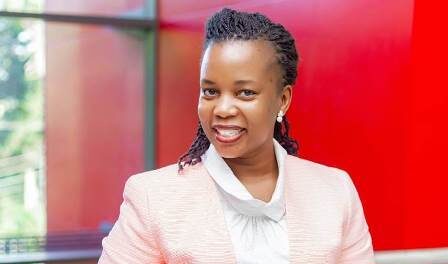
By Sheila Awori
The government and corporations cannot author Uganda’s growth story on their own and this disparity is most noticeable in the lives of women and girls. Despite aggressive national initiatives to reduce hunger, poverty and economic opportunity, millions of households still face daily challenges. This reality is more severe for women and girls, according to the 2024 UBOS Uganda National Population and Housing Census, which is funded by UNDP. They account for a disproportionate portion of the estimated 2/10 Ugandans who still live below the poverty line; the burden is highest in rural and northern regions, where poverty rates exceed 30% in some districts. Economic growth has not benefited everyone equally, and women and girls continue to bear a disproportionate share of this burden.
Development cannot be assigned. Policies by themselves are unable to feed a family, educate a female child or provide a stable income for a household led by a woman. Cooperation must be deliberate, large-scale and coordinated with women serving as both beneficiaries and advancers. This is corroborated by the Edelman Trust Barometer 2026, which shows that trust is moving toward businesses that have a genuine, local impact. Business is currently the most trusted institution in the world, surpassing both the government and the media, with confidence levels averaging over 60%. Nearly seven out of ten respondents anticipate that corporate leaders will actively participate in addressing societal issues rather than remaining on the sidelines. Communities, particularly women communities, are no longer moved by promises. They are watching for any movement.
Government-led initiatives such as youth livelihood programs, parish development models, and agricultural assistance interventions are laying important foundations. However, their revolutionary potential can only be fully realized when the corporate sector intervenes with deliberate, gender-intentional participation. Investing in women economic participation is not a charitable endeavour. It’s a growth strategy.
It’s time for organizations to look inward and ask a more difficult question: Does our vision help women? Making money is not the only objective of any organization. What if that objective were seen as a duty, a viewpoint that made problems like food poverty, gender inequality and women unemployment our own to solve instead of someone else’s?
Governments and NGOs are far too often left to handle the SDGs, despite the fact that they are a common global framework. SDG 5, Gender Equality, is something that we all share. To do so, a shift from passive alignment to active ownership is required. In addition to addressing inequality, institutions must take into account how they are specifically advancing women and girls within their value chains, employment policies, supplier ecosystems and community investments.
The first step is to focus. Institutions don’t have to deal with every problem at once. They can choose one measurable commitment, like closing the gender pay gap, empowering women to assume leadership positions, supporting women-owned SMEs, or ensuring local girls continue their education. When that commitment is incorporated into strategy, tracked against KPIs and supported from the top down, intention becomes transformation.
 When Hormuz Closes, Africa Pays First
In this case, senior leadership and board composition are very important. When women hold positions of decision-making authority, the distribution of resources changes. Priorities shift. The effect also intensifies. Executives and boards will find that their approach to performance and purpose is drastically altered when they begin asking how their companies are directly addressing women economic exclusion.
The opportunity is already available. Institutions have a big influence through their supply chains, partnerships, investments and hiring practices. The question is whether that influence is being used for gender-specific purposes or if half of the population is being left behind. As the Edelman research shows, trust is now founded on both skill and ethics If organizations act in accordance with what society truly demands and if they publicly support women inclusion, they will become more relevant and trustworthy.
Therefore, this Women Month call to action is not ceremonial. It’s structural. Beyond well-meaning statements, institutions must integrate gender inclusion into their core strategy, budgets, leadership pipelines and impact metrics, surpassing well-meaning statements. Uganda’s development story won’t be complete until every woman and girl is both visible in its pages and equipped to write.
Sustainable development is not someone else’s responsibility. Neither is gender equality. We own it, all of us.
The writer is a marketing, strategy and sustainability expert. She serves as Business Marketing Manager at KCB Bank Uganda.