Christine Alupo, Bank of Uganda’s communications director, says foreign exchange market was liberalised in the 1990s, paving way for the licensing of foreign exchange bureaus as opposed to forex being officially allocated by the central bank.
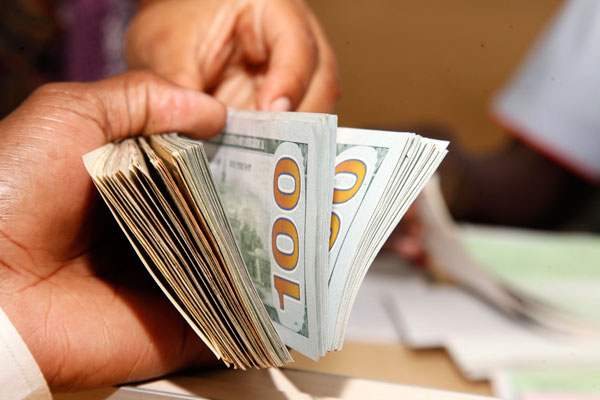
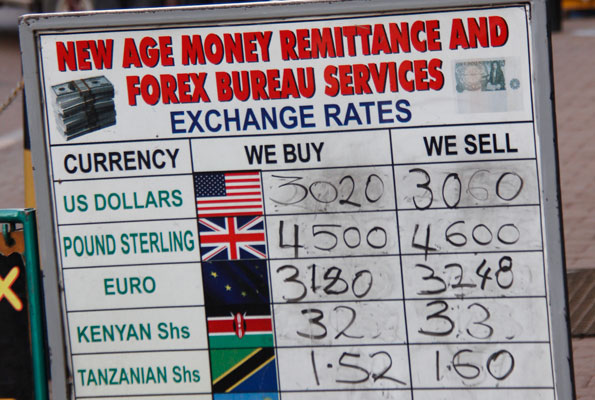
Ronald Namisi scanned the currency notice board outside a forex bureau on Nakivubo Lane in downtown Kampala. The rate appeared to be favourable for his bargain. He had a total of US Dollar 200 in three denominations of 100 dollar bill and two 50 dollar bills, to exchange into Uganda Shilling.
From quick calculations, he saw himself walk in there and out with at least UGX680,000 for his dollar bills’ worth. But that was never the case; the crispy clean and smelling dollar bills fetched him just UGX608,000.
“I tried to protest but there was nothing I could do. They said the smaller denominations were of lower value,” said Namisi.
A spot check by the CEO Magazine at forex bureaus in downtown confirmed that the exchange rates for smaller foreign currencies, especially the US Dollar, or even for old bills, is never the same.
Unfortunately for clients, currency trading noticeboards do not reveal this information, but generalise every trading for the day or time. This leaves many who change money feeling cheated.
A forex trader in downtown, who preferred anonymity in order to speak freely, told this magazine that forex bureaus buy smaller bills at lower rates because the dealers also buy them cheaply.
“But difference is small though, not like what you are saying,” the currency exchange teller said of Namisi’s experience.
But why?
There are many reasons, said the currency exchange dealer.
“Everyone has independent business. When you buy them cheap you sell them cheap. Also, the smaller the bills, the bulkier they will be if, say, you needed to transact with $1,000 compared to the same amount of bigger denomination. Now imagine people who buy up to $100,000, that’s too heavy to carry,” the teller said.
Salim Mohammed, of Moha Forex Bureau in Kampala, says when a person comes with 100 and 50 notes the customer sells it easily, the small bill is rather hard to sell but the rate is negotiable for forex dealers who buy at a lower rate and sell at higher bill rate.
Paula Susan Namayanja, a customer relations officer at KCB Uganda, says there is no re-valuation in the business.
“That’s why if one is selling at UGX6 million and makes UGX7 million, it might nit be a big deal as such but in bank business, we look at continuity of since we deal with entities and other financial institutions yet forex bureaus deal majorly with individuals,” she said.
But does it amount to cheating int he real sense of the word?
 Africa Takes The Stage: From Raw Supply To Brand Ownership
Mohammed disputed assertions that currency traders ‘cheat,’ saying instead: “It’s a business; a forex bureau can’t operate at a loss they have to make a profit off the transactions to stay relevant in business.”
Mohammed advises clients to consult from those in the business to understand how the rates work before they trade.
Currency trading is a business which, in competition with other similar businesses, makes its profit by selling currency at a higher exchange rate than a rate at which it buys the same currency, as well as any commission or fee it may charge.
In setting its exchange rates, it must keep an eye on the rates quoted by competitors, and may be subject to government foreign exchange controls and other regulations.
The exchange rates charged at bureaux are generally related to the spot prices available for large inter-bank transactions, and are adjusted to ensure a profit.
Some dealers told this magazine that small bills have extra charged pressed upon them compared to big notes, so they buy them cheap to compensate or cover for the charges.
So is the central bank aware of this? Quite so.
Christine Alupo, Bank of Uganda’s communications director, says foreign exchange market was liberalised in the 1990s, paving way for the licensing of foreign exchange bureaus as opposed to forex being officially allocated by the central bank.
“This policy decision meant that government shifted from a fixed foreign exchange regime to a floating foreign exchange regime, under which the foreign exchange rates are market-determined,” Alupo said.
“Under this regime, players make the decision on the exchange rates they will charge in a competitive environment. Since the forex dealers are doing business for a financial return, they charge rates which they feel adequately compensate them for the low demand.”
Because of the free market policy, forex bureaus have different pricing for the low denomination bills because of their relatively higher handling costs on the part of forex dealers.
“Low denomination US Dollar bills are not in high demand by the public given their low transaction value. This increases the holding cost on the part of the forex bureaus,” Alupo said.
The dilemma in the business of handling foreign currencies is worsened by the fact that physical cash management involves repatriation of notes to the issuing authority at intervals for replenishment, especially to get clean bills that are fit for circulation.
“In the case of foreign currency, this is an external exercise,